

Emerald Pages
◆
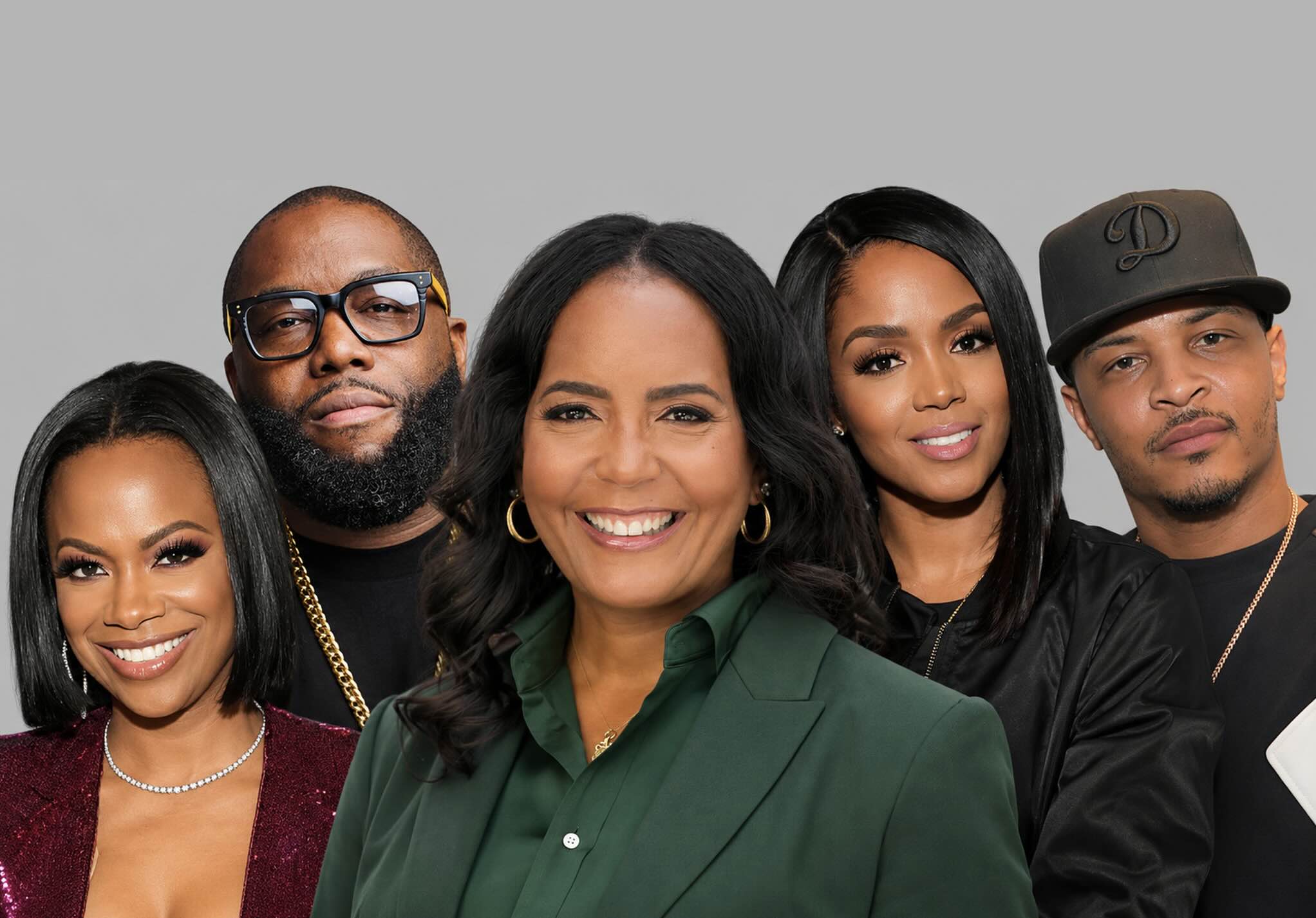
Photo: Baller Alert
A newly elected governor's transition team is, by design, a temporary body. It audits state agencies, prepares a budget, vets cabinet candidates and drafts the first 100 days. But who sits on that team signals whose expertise a governor trusts—and whose she doesn't.
On that measure, Governor-elect Keisha Lance Bottoms' "Georgia's Promise" roster reads like a corporate board retreat with a red-carpet afterparty. The 10 core co-chairs include Home Depot co-founder Arthur M. Blank, former Walgreens Boots Alliance CEO Rosalind Brewer, former Coca-Cola Enterprises executive Vicki Palmer, CARE USA CEO Michelle Nunn, filmmaker Tyler Perry and a handful of former elected officials. The honorary co-chairs add U.S. Senators Raphael Warnock and Jon Ossoff alongside former Atlanta Mayor Andrew Young and former Governor Joe Frank Harris.
Further down the roster, the pattern holds. Local officials like Savannah Mayor Van Johnson and Chatham County Sheriff Richard Coleman sit alongside Atlanta entertainment figures Kandi Burruss, T.I. and Killer Mike. The seven policy committees—covering education, health and human services, economic development and housing, transportation, public safety and more—are filled with business owners, faith leaders, attorneys and television personalities.
The Lived-Experience Gap
What the roster does not include, according to publicly released names as of late November 2026, is a single academic economist or sociologist among the announced co-chairs or featured committee members. Nor does it list grassroots tenant-union organizers or recently evicted residents among the high-profile appointees.
That absence matters most on housing. Princeton University's Eviction Lab data, highlighted by the Atlanta Regional Commission, shows more than 142,000 eviction cases filed across five core metro Atlanta counties in the 12 months ending May 2026. Atlanta has one of the highest levels of income inequality in the United States, with rapidly rising rents and persistent displacement of longtime working-class residents.
Instead of tenant organizers or eviction-defense attorneys, the housing and affordability portfolio is handled through the "Lower Costs, Creating Opportunity" committee, which includes real estate developers like Rod Mullice—nearly 30 years in real estate, housing and transit—and real estate executive Clark Seydel. The transition co-chairs include Carmen Chubb, an affordable housing leader and former Georgia Department of Community Affairs official, and Rashad Taylor, a former City of Atlanta equity official.
- Executive-heavy leadership: Core co-chairs are drawn from Fortune 500 boardrooms, major nonprofits, former elected office and entertainment—not from tenant unions, labor ranks or academic research.
- No named academic economists or sociologists: Economic and budget planning is guided by corporate finance veterans and real estate executives rather than researchers who study wage stagnation, corporate consolidation or eviction dynamics.
- No named grassroots tenant organizers: Groups like the Housing Justice League and frontline legal aid attorneys are absent from the announced roster, despite the scale of the eviction crisis.
- Entertainers as economic ambassadors: Bottoms defends figures like Tyler Perry and Killer Mike as major Georgia employers and philanthropists—but celebrity reach is not the same as lived economic precarity.
Managing Poverty, Not Changing It
When boards and transition committees are populated by corporate CEOs, real estate developers and high-level administrators, the resulting policies tend to focus on managing symptoms—charity programs, public-private partnerships, modest subsidies—rather than changing the underlying economic rules around wages, corporate landlords and taxation.
Advisors who do not rely on public transit, worry about rent hikes or navigate hourly wage instability, often view poverty as an administrative problem to be solved from the top down rather than a structural issue experienced daily by working families. On committees handling housing, transit and economic opportunity, an absence of rank-and-file union members, public transit riders, hourly service workers and tenants who have directly experienced housing instability silence the voices that would ground policy in the daily realities of the people it is meant to serve.
Some local organizers point back to Bottoms' tenure as Mayor of Atlanta from 2018 to 2022, arguing that while her administration launched housing funds and public-private initiatives, the city continued to experience rapid gentrification, rising property taxes and displacement of longtime working-class residents.
What a Complete Team Would Look Like
A transition team built to address structural affordability would include a counterbalance to corporate and real estate executives:
- Grassroots tenant organizers and eviction-defense attorneys—leaders from groups like the Housing Justice League and frontline lawyers from Atlanta Legal Aid Society who know the loopholes corporate landlords use in magistrate court.
- Rank-and-file labor leaders and frontline workers—service and hospitality union representatives, MARTA riders and transit operators, and educators who face low pay and student housing instability.
- Structural economists and housing policy researchers—scholars who study wage stagnation, corporate consolidation and regressive tax structures, plus community land trust practitioners and analysts tracking institutional investor ownership of single-family rentals.
- Healthcare and safety-net navigators—community health workers and county caseworkers who see how medical debt and Georgia's lack of full Medicaid expansion push families into bankruptcy and eviction.
Pairing academics with grassroots leaders matters because each brings a distinct expertise. Grassroots leaders bring ground-truth knowledge of how policies play out in eviction courts, on delayed bus routes and inside low-wage workplaces. Policy-focused academics bring systemic evidence and data—modeling how real estate speculation drives up rent and evaluating which anti-poverty programs have proven track records. Together, they push policy away from surface-level charity and toward measurable structural fixes like tenant right-to-counsel laws, community land trusts, and targeted regulation of corporate landlords.
The Team Is Incomplete—Literally and Structurally
As of late November 2026, "Georgia's Promise" is still actively building out its working subcommittees and reviewing thousands of public applications ahead of Bottoms' January 11, 2027 inauguration. Transition Chief Operating Officer Jon Keen noted on November 24, 2026, that the team is still reviewing applications from Georgia residents to fill out working subcommittees and administration roles. The initial roster primarily reflects top-level co-chairs, political allies and headline committee appointees rather than the full working group that will draft detailed agency recommendations.
That leaves an opening. Because a transition team only advises and does not govern, the real test of whether Bottoms fills these gaps will come through three upcoming milestones: whether grassroots advocates, legal aid attorneys and policy researchers are added to working subcommittees over the next several weeks; who she selects to run key agencies like the Georgia Department of Community Affairs, which controls state housing funds and vouchers, and the Department of Labor; and whether her first budget and legislative priorities reflect structural relief for renters and low-wage workers or default to business-friendly, top-down programs.
Bottoms campaigned on lowering costs through Medicaid expansion, expanded childcare subsidies, higher teacher and state worker pay, and statewide eviction-prevention and rental-assistance programs. Whether "Georgia's Promise" becomes a vehicle for that agenda—or a boardroom that manages these issues without changing it—will depend on who is ultimately invited to the table.
No Ads. By Us. For Us.
This article was made possible by readers like you. We hope it inspired you to support Emerald Book, so we can continue producing content like this.
We will never show you ads, sell your data, or require a subscription to consume our content. Your gift helps us keep the truth accessible.
Click the Support button to give a gift of any amount today.
Thank you for making this work possible.