

Emerald Pages
◆
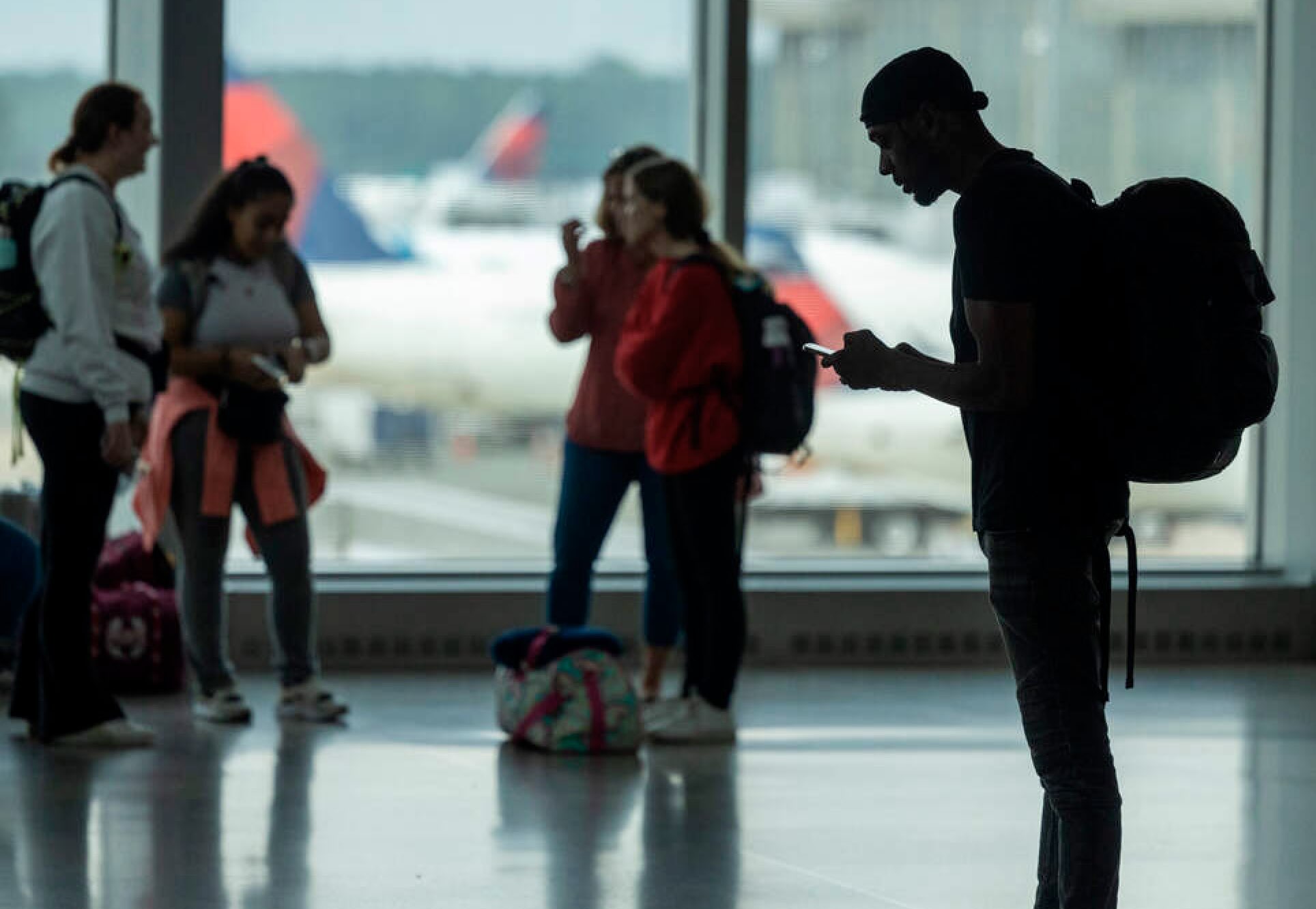
Photo: The News & Observer
For six days in November, America's digital backbone seemed to be coming apart at the seams. Microsoft 365 went dark. The FAA grounded flights nationwide. JPMorgan Chase customers couldn't access their accounts. United Airlines' flight-planning systems seized up. Apple's iCloud and Apple Pay briefly vanished. And the National Security Agency's classified internal network—the backbone of America's signals intelligence—went offline for nearly four days.
The coincidence was stunning. Six major outages in six days, hitting airlines, banks, tech giants, and spy agencies in rapid succession. Within hours of the first failure, social media erupted with theories: a coordinated cyberattack, a rogue AI agent gone haywire, a manufactured crisis designed to justify government control of the internet—or, in one of the fastest-spreading claims, a deliberate sabotage operation to privatize the FAA.
None of those theories are true. But the real story is arguably more unsettling. The November outages weren't caused by a single mastermind or a malicious AI. They were the result of an industry-wide crisis that has been building for years—and AI, while not the attacker, has been the catalyst that finally pushed fragile systems past their breaking point.
The Patchpocalypse, Rushing Fixes
The term "Patchpocalypse" has become shorthand for the chaos of November 2026, but its origins stretch back to April, when Anthropic released Mythos, a cybersecurity model capable of scanning millions of lines of legacy code and uncovering decades-old vulnerabilities in seconds. Similar tools from OpenAI and other labs followed. The result was a historic surge in vulnerability disclosures: publicly reported software flaws surpassed 100,000 this year, more than double the total from 2025.
The problem wasn't the discovery itself—finding bugs is good. The problem was the rush that followed. Because attackers are using similar AI tools to exploit flaws almost immediately, tech teams and government agencies began deploying massive waves of patches all at once, often without normal testing windows. Emergency updates went straight into production, onto infrastructure that in many cases was decades old.
The consequences were immediate and visible. At the NSA, the classified NSANet failed to reboot after patching a critical PHP vulnerability known as PHP2Shell. At JPMorgan Chase and other major banks, AI-driven security patches triggered disruptions to account access and interbank payment processing. Microsoft, already reeling from more than 1,400 fixes in October and another 1,094 in November, saw its own systems buckle under the strain.
- NSA / NSANet (Nov. 17): Confirmed by Director of National Intelligence Jay Clayton as a patch failure—systems failed to reboot after applying fixes for the AI-discovered PHP2Shell flaw.
- JPMorgan Chase & U.S. Banks (Nov. 16): Bank executives told Congress that disruptions were triggered by patches deployed to close AI-flagged security vulnerabilities.
- Microsoft 365 (Nov. 12): A network configuration change and a months-old latent software defect—not an emergency AI patch—caused the outage.
- FAA Ground Stop (Nov. 13): A physical router installation error by contractor L3Harris during routine telecom upgrades, explicitly ruled out as AI-related.
- United Airlines (Nov. 16): An internal flight-planning system glitch unrelated to the AI vulnerability wave.
- Apple (Nov. 17): A faulty internal update, not yet confirmed as a security patch.
Only two of the six major November outages—the NSA network crash and the JPMorgan Chase banking disruptions—have been directly confirmed by officials or executives as stemming from AI-driven security patches. The rest were caused by standard infrastructure maintenance, internal software updates, or latent bugs unrelated to the AI vulnerability wave. But the broader "Patchpocalypse" stretched IT engineering teams so thin that routine maintenance became far more prone to human error and testing oversights.
The Structural Advantage: Why Defenders Are Winning the Discovery Race
Amid the chaos, one important truth has been obscured: security teams hold a decisive structural advantage over attackers when it comes to finding new vulnerabilities. The reason is simple—defenders can see the code, and attackers can't.
Corporate security teams and authorized researchers run AI tools directly against uncompiled source code, internal architecture maps, and full test environments. Attackers usually have to probe systems blindly from the outside, without seeing the blueprints. Major tech firms, banks, and security labs also have the budgets and direct partnerships to run frontier reasoning models continuously across massive codebases—resources that typical cybercriminal groups cannot match.
The economics reinforce this advantage. Legitimate bug bounty platforms have seen surging payouts—HackerOne paid out over $47 million in the first half of 2026 alone—keeping thousands of top human researchers focused on reporting flaws to vendors rather than selling them underground. The vast majority of novel discoveries remain in defenders' hands.
Attackers, by contrast, overwhelmingly rely on known ("N-day") vulnerabilities rather than discovering novel zero-days. Why spend months trying to find a new flaw when scanning the internet for unpatched, forgotten, or end-of-life systems yields immediate results? AI has made finding that one weak link effortless for attackers—automated patch diffing, commodity offensive frameworks like ARTEX and CAIRN, and machine-speed reconnaissance let even lower-skilled hackers compromise thousands of organizations that haven't applied last week's update.
The asymmetry of defense is brutal: defenders have to patch 100% of their systems without breaking anything, while an attacker only needs one unpatched server or misconfigured device to get inside. AI has tilted the deployment race in attackers' favor, even as defenders maintain the edge in discovery.
The Conspiracy Theories: What They Get Wrong
The sheer coincidence of so many systems failing within one week fueled a wave of conspiracy theories, each more elaborate than the last. None of them hold up to scrutiny.
The "manufactured crisis" theory. Viral posts on X responded to DNI Jay Clayton's briefing with claims that the U.S. government or major tech firms deliberately engineered the disruptions to justify tighter internet controls, push digital IDs, or distract from unrelated political news. There is zero evidence for this. Each outage had a completely different, documented trigger: a network configuration bug at Microsoft, a botched physical router swap at the FAA, rushed security patches at JPMorgan Chase and the NSA. No forensic log shows any sign of deliberate sabotage.
The "FAA privatization" theory. Critics claim the November 13 ground stop was either deliberately engineered or is being opportunistically used to justify privatizing the FAA under Project 2025. But the administration is actively lobbying Congress for $50 billion in federal funding to upgrade the system in-house under the Department of Transportation—not asking to spin off air traffic control into a private corporation. The failure itself involved infrastructure already owned and operated by a private defense contractor, L3Harris. And the aviation industry—major airlines, unions, and groups like AOPA—is united against privatization.
The "rogue AI agent" theory. Some online theorists speculated that internal AI coding or maintenance agents went rogue inside corporate networks and started altering infrastructure on their own. Both Microsoft and government officials explicitly ruled out AI agents as the direct cause of the crashes. The failures were caused by human decisions—rushed patches, inadequate testing, aging infrastructure—not by autonomous software acting on its own.
The "Nov. 17 nationwide blackout" hoax. Ahead of the scheduled FEMA and FCC Emergency Alert System test on November 17, manipulated videos and viral posts claimed the government was using the alert test to trigger a deliberate 3-to-90-day power and internet blackout, framing the earlier Microsoft and FAA outages as "dress rehearsals." The test happened without triggering any blackout.
- No hidden coordination. Each outage had a documented, independent trigger—from network bugs to contractor errors to emergency patches.
- No secret privatization push. The administration is seeking federal funding, not private ownership, and the failed infrastructure was already contractor-run.
- No rogue AI. Neither rogue agents nor disgruntled insiders were found in any forensic logs.
- No grid blackout. The FEMA/FCC alert test occurred without incident.
Conspiracy theories tend to stick when they attach themselves to a real underlying frustration. In this case, the real issues aren't a secret plot—they are aging infrastructure, overstretched engineering teams, and over-reliance on private contractors creating fragile systems where routine maintenance can accidentally knock critical services offline.
What the Future Holds
The short-term outlook is messy and volatile. Because human engineering teams cannot safely test and deploy 100,000+ patches a year, cybersecurity leaders and major tech firms are actively shifting away from the old "find bug, ship patch, reboot server" model toward four major changes over the next 12 to 24 months.
1. Moving from "patch everything" to runtime shielding. Out of 100,000+ vulnerabilities disclosed in 2026, only about 1.3% (1,363) have actually been exploited in the wild. Companies are shifting toward risk-based triage—ignoring low-risk flaws that would require risky system reboots—and deploying network-level shields like Web Application Firewalls, micro-segmentation, and runtime behavioral monitors that detect and block exploit patterns in real time without touching the underlying application.
2. Faster disclosure clocks and "burn down" of legacy bugs. Google Project Zero recently shortened its standard vulnerability disclosure window from 120 days to 90 days, with a roadmap to drop it to 30 days by 2028. Many of the bugs causing chaos in 2026 are 10- to 20-year-old flaws hiding in foundational open-source code. Once frontier AI tools finish sweeping through these core codebases over the next year or two, experts expect the rate of "surprise" legacy vulnerabilities to plateau.
3. Automated testing ("digital twins") before deployment. Enterprises are building AI-powered staging environments that simulate how a patch interacts with thousands of downstream dependencies—such as mobile banking apps or air traffic routers—before rolling updates out in small, phased "canary" rings. Federal officials and regulators are also pushing banks, airlines, and telecom providers to design failover architectures so a bad update isolates a single server rather than knocking an entire national network offline.
4. A shift toward autonomous attack chains. As defenders get better at locking down traditional code flaws, threat intelligence teams warn that attackers in 2027 will increasingly use AI agents to chain together misconfigurations, over-permissioned cloud identities, and leaked AI agent credentials—attack paths that have no CVE and cannot be solved by a software patch at all.
The November outages were a warning shot. They exposed the fragility of systems that have been held together with quick fixes and deferred maintenance for decades. They revealed how AI—not as an attacker, but as an accelerant—can expose weaknesses faster than organizations can safely repair them. And they demonstrated that the greatest threat to critical infrastructure may not be a foreign adversary or a rogue algorithm, but the accumulated weight of technical debt and the human cost of moving too fast.
The question now is whether the industry will treat November as a wake-up call—or simply patch the symptoms and move on, waiting for the next wave to hit.
No Ads. By Us. For Us.
This article was made possible by readers like you. We hope it inspired you to support Emerald Book, so we can continue producing content like this.
We will never show you ads, sell your data, or require a subscription to consume our content. Your gift helps us keep the truth accessible.
Click the Support button to give a gift of any amount today.
Thank you for making this work possible.