

Emerald Pages
◆
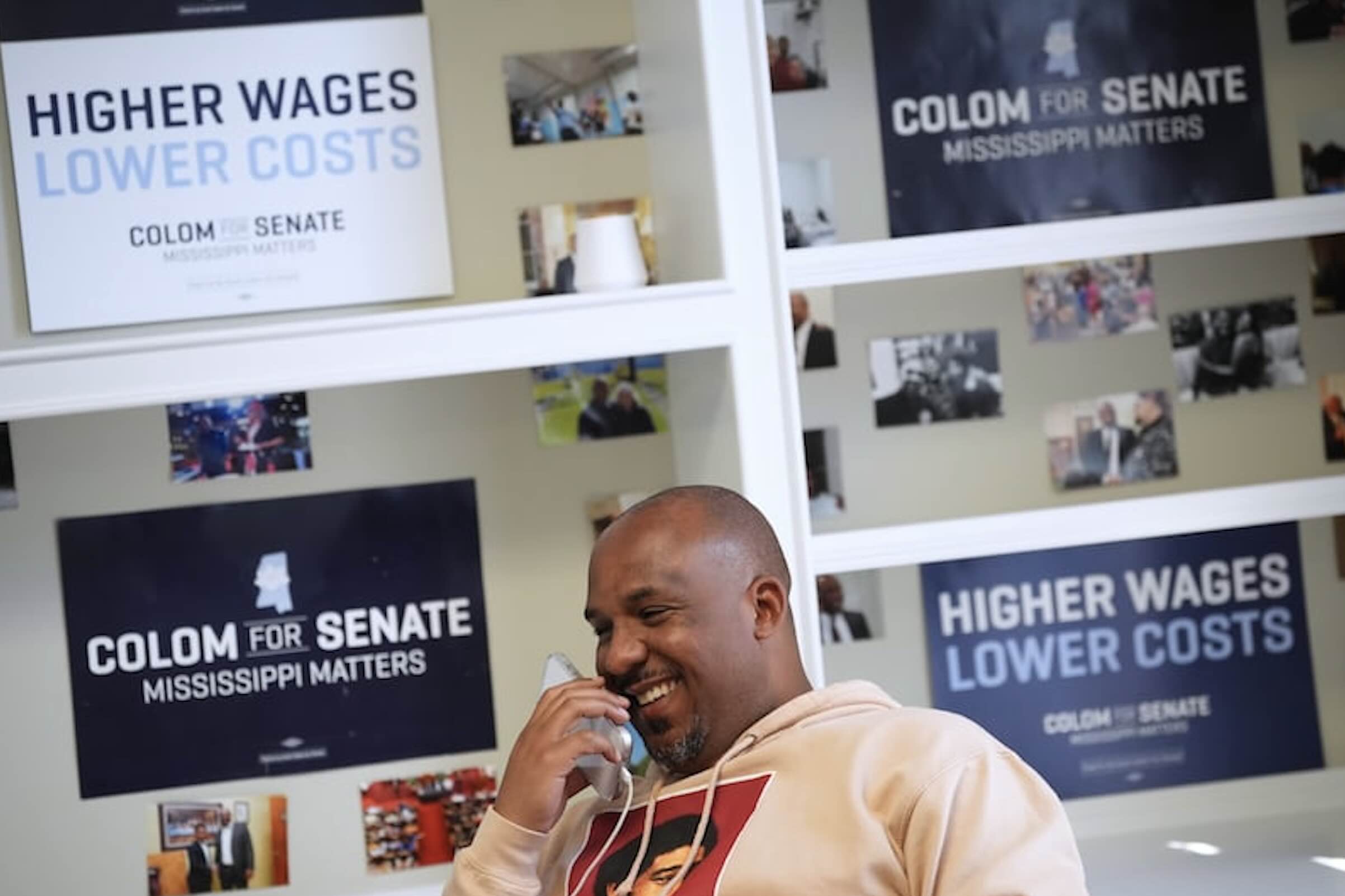
Photo: Ellen Schmidt
Scott Colom's upset victory in Mississippi's 2026 Senate race did more than end a 44-year Democratic drought in the state. It handed a Democrat—the first Black senator elected from Mississippi since Reconstruction—a rare set of levers over a state budget that depends on Washington for more than 40% of its funding. For Black Mississippians, who make up roughly 37% of the population and face some of the starkest economic gaps in the country, those levers are not abstract. They connect directly to income, health coverage, housing, and the survival of rural hospitals and HBCUs.
The numbers tell the story of what is at stake. Black Mississippians have a median household income of $39,434—roughly 30% below the state's overall median of $56,447 and more than $15,700 below the national median for Black households. Nearly 29.3% live below the federal poverty line, almost three times the rate for white, non-Hispanic residents. About 15.8% of Black residents under 65 lack health insurance, compared with 12.5% of white residents, in a state that has not expanded Medicaid. Black homeownership in Mississippi (57.5%) beats the national Black average (45.1%) but trails white homeownership in the state (79.9%) by more than 22 percentage points.
Because federal transfers account for 40.79% of Mississippi's FY 2027 appropriated budget—about $13.11 billion out of roughly $32.15 billion—a senator from the state sits at the source of the money. But the mechanics matter. Most formula funds, from Medicaid to highway dollars to TANF block grants, flow to state agencies in Jackson, where the Governor and Legislature decide how to distribute them. Colom cannot simply redirect a state check to a local city. What he can do is use four concrete tools that bypass or constrain that bottleneck.
Send Money Directly to Local Projects
Through Congressionally Directed Spending—earmarks—Colom can submit requests to the Senate Appropriations Committee for specific local projects. If approved in the annual federal budget bill, the money goes directly to the local city, county, school district, or nonprofit, bypassing the state legislature entirely. That means dedicated federal funds for municipal water upgrades in majority-Black cities like Jackson, Greenville, or Clarksdale; campus improvements and research labs at Jackson State, Alcorn State, and Mississippi Valley State; and direct support for Federally Qualified Health Centers keeping care accessible in rural counties where hospitals have closed.
Act as a Federal Fixer for Local Leaders
Many small towns, Black farmers, and community nonprofits miss out on federal money simply because they lack the staff to navigate complex applications. Colom can hire dedicated staff in his Mississippi offices to alert local mayors and nonprofits to federal grants, help them submit competitive applications, and intervene directly with federal agencies when disaster relief, small business loans, or USDA farm assistance are delayed. A senator's official letter of support carries real weight when agencies decide which local applicants win competitive grants for infrastructure, education, broadband, and small business development.
- Federal funds cover roughly 77% of Mississippi's Medicaid budget—the single largest driver of federal aid to the state.
- Federal grants fund roughly 23% of the state's public education budget and pay for nutrition programs like SNAP.
- Federal transfers account for 33% of combined state and local government revenue in Mississippi, 7 percentage points above the national average.
- Black Mississippians: $39,434 median household income; 29.3% poverty rate; 15.8% uninsured under 65; 57.5% homeownership.
Write the Rules on Pass-Through Money
Most of the 40% federal funding Mississippi receives is formula money sent straight to state agencies. Colom's committee assignments—he has said he wants a seat on the Senate Agriculture Committee, which oversees farm subsidies, SNAP, and rural development—give him direct input into the federal laws that govern these programs. He can push for rules requiring states to spend a certain share of funds in high-poverty or underserved areas, advocate for enhanced federal incentives or alternative public-option pathways that bypass state-level Medicaid expansion roadblocks, and shape federal reimbursement rates so rural hospitals can afford to stay open. He can also vote against cuts to Medicaid and SNAP and negotiate bipartisan compromises with Mississippi's senior senator, Roger Wicker, on shared priorities like disaster aid, military base funding, and rural broadband.
Expose Misuse of Federal Funds
Because state agencies spend federal taxpayer dollars, they are subject to federal rules and civil rights laws. Colom can formally request investigations by the Government Accountability Office or federal Inspectors General, or ask the U.S. Department of Justice to examine whether state agencies are violating federal civil rights laws or misspending grant money—scrutiny similar to what followed Mississippi's TANF welfare scandal. The threat of a federal audit, or the risk of losing future federal grants, gives a senator strong leverage when negotiating with state officials. Using Senate committee hearings and national media attention, he can also publicly highlight disparities in how state leaders allocate federal infrastructure or education dollars.
Colom's leverage is amplified by his political situation. Democrats hold a narrow Senate majority and rarely win in the Deep South, so party leaders cannot take his vote for granted. He has already signaled he will use it: in mid-November 2026, he announced he was withholding his endorsement in the Senate Democratic leadership race until candidates prove they will invest in the rural South and put him on key committees. On close party-line votes—budget reconciliation, judicial confirmations, leadership elections—one senator can demand specific policy concessions or funding commitments for their home state. As a moderate Democrat representing a red state in a divided government, he is also positioned as a potential swing vote on bipartisan bills, giving both Democratic leaders and the Trump administration an incentive to court him with Mississippi-specific projects. And any single senator can place a hold on presidential nominees, delaying confirmation until the administration addresses concerns or releases delayed grant money.
The constraints are real. Mississippi's Governor and Legislature still control state income taxes, public K–12 school funding formulas, state minimum wage laws, and how the bulk of federal block grants are spent inside the state. Closing deep racial gaps in median household income, homeownership, and private-sector investment takes sustained effort across federal, state, and local governments—and private business investment—over many years, not a single six-year Senate term. Colom also frames his agenda around "working people" and the "rural South" rather than race-specific programs, pitching saving rural hospitals, fixing municipal water, and raising the minimum wage as universal economic fixes. But those policies disproportionately benefit Black Mississippians, and his narrow victory—driven by a surge in Black voter turnout, especially among Black women—gives him a strong electoral incentive to deliver tangible local improvements.
The realistic takeaway is that Colom's seat gives Black Mississippians a direct advocate at the highest level of federal decision-making for the first time in over a century. He cannot transform the state's entire economy overnight. But his leverage can stop billions in federal healthcare and safety-net dollars from disappearing, channel millions directly into neglected local infrastructure and HBCUs, and force greater accountability over how federal money is spent in Mississippi. Whether the statistics move depends on whether he spends his political capital that way.
No Ads. By Us. For Us.
This article was made possible by readers like you. We hope it inspired you to support Emerald Book, so we can continue producing content like this.
We will never show you ads, sell your data, or require a subscription to consume our content. Your gift helps us keep the truth accessible.
Click the Support button to give a gift of any amount today.
Thank you for making this work possible.