

Emerald Pages
◆
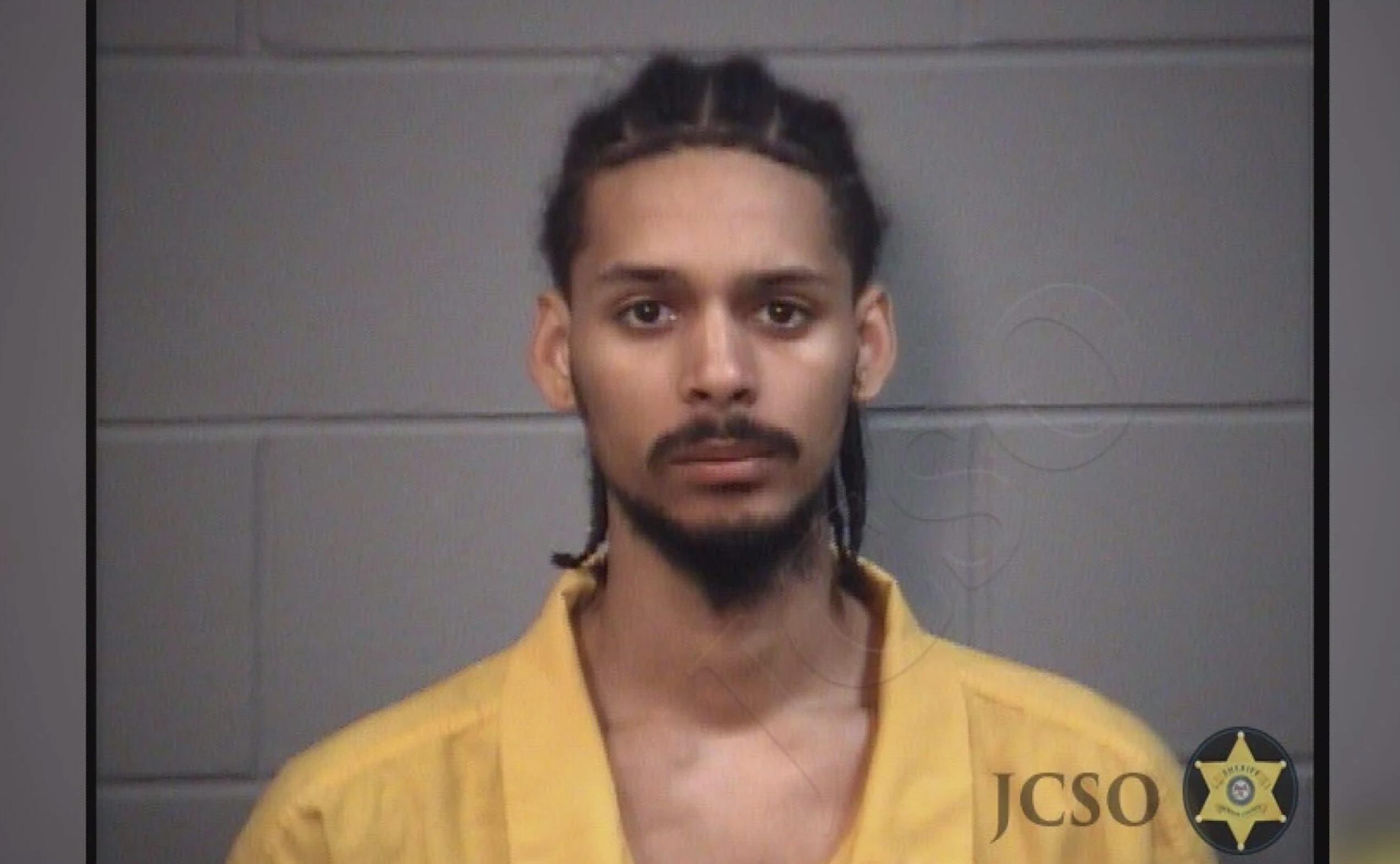
Photo: JCSO
Christian Anthony Claudio was asking questions. That is not in dispute. On September 25, 2026, the 25-year-old from Delhi, New York, called the Jackson County Chancery Court Clerk's Office to inquire about the investigation into the death of 18-year-old Nolan Xavier Wells. What happened during that call is now the subject of a felony prosecution that has pulled Claudio 1,200 miles from his home and placed him behind bars in Mississippi.
According to reporting by the Sun Herald, Jackson County Sheriff's Detective Justin Quinnelly filed a criminal affidavit stating that during the call, Claudio threatened to travel to Mississippi and kill a court clerk. That single sworn statement was enough to secure an arrest warrant from Jackson County Court Judge Mark Watts, trigger an interstate extradition, and land Claudio in the Jackson County Adult Detention Center on November 15—roughly seven weeks after the call was allegedly made.
Claudio was arrested in New York on October 31 and held under New York Criminal Procedure Law § 570.34, a procedural statute for out-of-state fugitives. Because that statute does not require New York courts to publish the underlying out-of-state charges, his docket listed "No Incident Information on File." New York authorities did not hold a mini-trial to test the evidence. Under the U.S. Constitution's Extradition Clause, they only verified that the paperwork from Mississippi was legally valid on its face and that Claudio was the person named in the warrant.
The Legal Threshold: Probable Cause and Nothing More
The U.S. legal system uses a sliding scale of proof, and at the earliest stages, the bar is remarkably low. To issue an arrest warrant, a judge only needs "probable cause"—a reasonable belief that a crime may have occurred based on a sworn statement. Under the Fourth Amendment, a judge is legally permitted to treat a detective's sworn summary of a witness interview as reliable enough to establish probable cause, without hearing audio recordings or cross-examining the accuser.
- Arrest warrant: A single sworn affidavit from an investigator is legally sufficient to establish probable cause.
- Interstate extradition: The holding state verifies only that the paperwork is facially valid and that the person in custody matches the warrant—no evidentiary hearing required.
- Bond and pretrial restrictions: A judge sets bond based on the severity of the alleged offense, not the strength of the evidence.
Because a terroristic threat carries up to 10 years in prison under Mississippi Code § 97-7-75, Judge Watts had broad legal discretion to set a $50,000 bond and impose GPS monitoring and social media bans before any evidence was challenged. At Monday's initial appearance, the Sun Herald reported that Watts initially planned to deny bond entirely. After speaking with defense counsel, he agreed to set bond under strict conditions: GPS ankle monitoring, no firearms, no illicit drugs, and no posting about the case on social media.
The Recording That May Not Exist
The central question hanging over the case is whether an audio recording of the September 25 call exists at all. Neither the Jackson County Sheriff's Office nor Detective Quinnelly's affidavit mentions a recording. While some county administrative lines and 911 centers automatically record calls, routine front-desk lines at a Chancery Clerk's office do not always have continuous recording.
The public assumption that a recording exists comes from standard government phone practices and social media speculation, rather than any official confirmation. Many county offices and courthouses use automated systems that record incoming calls for security and quality assurance. Because Claudio called an official government office, commentators and activists have assumed the line was recorded. Calls to "release the audio"—including from former Mississippi judge and attorney Carlos Moore—have led many followers to assume a recording had already been confirmed.
Adding to the confusion is a real recording of Claudio that has circulated widely on TikTok, Instagram, and Facebook. That clip is not the September phone call with the clerk. It is a video call Claudio recorded from the Otsego County Jail in New York before his extradition, in which he denies making any malicious remarks. His sister, Nicole Kaura, has also publicly maintained his innocence on social media, saying he is being "wrongly charged for something that he did not do."
If the Chancery Clerk's front-desk phone line was not equipped with automatic recording, prosecutors may have no audio at all—meaning the case would rely entirely on the clerk's sworn testimony and phone logs showing the call took place. If a recording does exist, prosecutors will be legally required to hand it over to Claudio's defense attorney during discovery under Rule 16 of the Mississippi Rules of Criminal Procedure. Public records exemptions under the Mississippi Public Records Act (§ 25-61-12) allow agencies to withhold active investigative files while a case is pending.
When the Officer's Word Stops Being Enough
While an officer's affidavit can get someone arrested and extradited, it cannot keep them locked up indefinitely or convict them. At the preliminary hearing scheduled for February 8, 2027, Claudio's defense attorney can cross-examine the detective and challenge whether the state actually has enough evidence to move forward. If a recording exists, prosecutors will likely play it for the judge or have an investigator testify about it. If no recording exists, the clerk or detective will have to testify from memory and phone logs.
To take a felony to trial in Mississippi, prosecutors must present evidence to a grand jury of citizens, who decide whether the case has enough merit to issue a formal indictment. At trial, an officer's written summary of what someone else said is generally barred as inadmissible hearsay. Prosecutors would have to put the court clerk on the stand under oath, play any existing audio, and convince all 12 jurors beyond a reasonable doubt that Claudio made a true threat of violence.
- Preliminary hearing (Feb. 8, 2027): Defense can challenge probable cause and force the state to present evidence.
- Grand jury indictment: Citizens decide whether the case has enough merit to proceed to trial.
- Criminal trial: Prosecutors must prove beyond a reasonable doubt that Claudio made a true threat—not protected speech.
- Franks hearing: If the defense shows the officer intentionally lied or recklessly distorted the clerk's statement, the warrant can be thrown out.
Whether the clerk's fear was "reasonable" is the central legal dispute. Under U.S. Supreme Court precedent such as Counterman v. Colorado, prosecutors cannot rely solely on whether a listener felt subjectively frightened. To avoid violating free speech rights, they must also prove that the speaker consciously disregarded a substantial risk that their words would be viewed as a real threat of violence. Claudio was calling from roughly 1,200 miles away, and defense advocates argue it is questionable whether a clerk could reasonably fear an imminent physical attack from a caller states away without evidence of travel plans or weapons.
Sheriff John Ledbetter has emphasized that Claudio's call was not an isolated incident. Court staff and local officials have reportedly been inundated with hostile calls and threats tied to viral conspiracy theories surrounding the Nolan Wells case, leading to multiple arrests in recent months. Claudio is one of several individuals who have been arrested for allegedly making threats related to the case. From the Sheriff's Office perspective, an explicit threat to travel to Mississippi and kill a public employee cannot be dismissed just because the caller lives far away.
But critics point to the family connection that has fueled scrutiny: Sheriff Ledbetter confirmed that the clerk who received the call is related to a Jackson County sheriff's reserve deputy who works full-time in maintenance at the county jail. The same sheriff's department investigating the Wells case also investigated a complaint made by a relative of one of its own personnel. And in the same court system, Chancery Court Judge Ashlee Cole—the stepmother of Warren Hudson, one of the friends who traveled to Horn Island with Nolan Wells—was served with a legal notice to preserve evidence, including her phone records and text messages.
Claudio faces up to 10 years in prison if convicted. And the public still does not know whether the call that put him there was ever recorded at all. The answer may come during discovery, through defense statements, or at the February 8 preliminary hearing—when prosecutors must finally show their hand.
No Ads. By Us. For Us.
This article was made possible by readers like you. We hope it inspired you to support Emerald Book, so we can continue producing content like this.
We will never show you ads, sell your data, or require a subscription to consume our content. Your gift helps us keep the truth accessible.
Click the Support button to give a gift of any amount today.
Thank you for making this work possible.