

Emerald Pages
◆
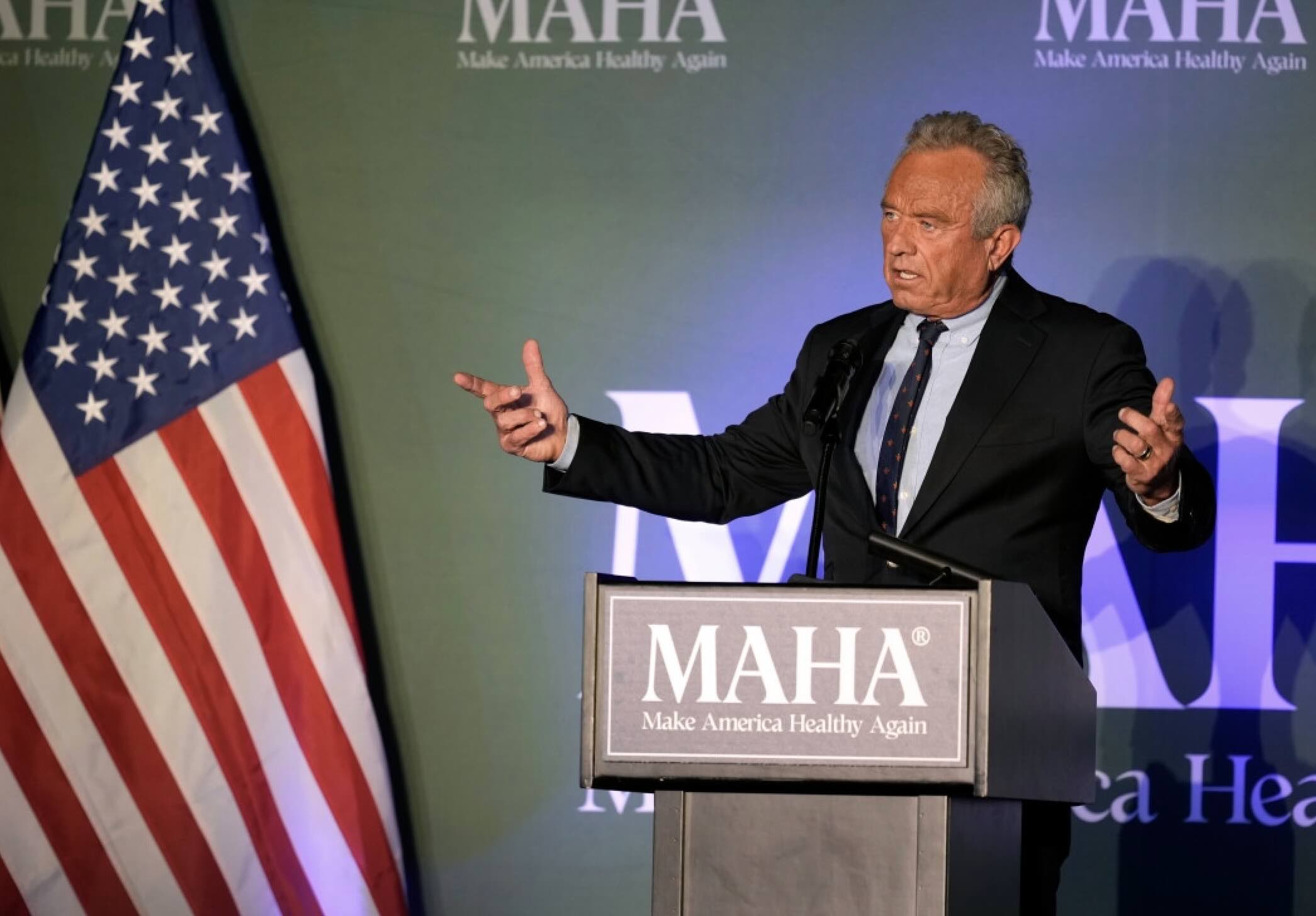
Human Health Services Secretary Robert F. Kennedy Jr. | Photo: AP Photo
In 2000, the United States declared measles eliminated. For a quarter-century, that status held through four presidential administrations. It survived a near-miss in 2019, when 1,274 cases broke out in under-vaccinated New York communities and aggressive local campaigns stamped the virus out just before the 12-month deadline. It survived a global pandemic that disrupted childhood vaccination for millions. But in November 2026, the Pan American Health Organization formally revoked the status after verifying through genetic sequencing that a single strain of measles had circulated continuously inside the U.S. for more than a year. The country that had kept measles at bay for 26 years now has 5,412 confirmed cases, at least 10 deaths, and roughly 600 hospitalizations. The question is not whether the virus returned — it is how a manageable set of clusters became the worst measles year in three decades.
The numbers alone tell part of the story. In 2024, the CDC recorded 285 measles cases across 16 outbreaks, averaging about 12.4 cases per cluster. By 2025, cases had jumped to 2,289. By November 12, 2026, they had reached 5,412 across 47 jurisdictions, with 96 percent of infections tied to 43 outbreaks that now average 89 cases each. That is not a gradual curve. Between 2024 and 2026, confirmed cases rose by roughly 1,800 percent. Outbreaks stopped being contained.
Here is the year-by-year record, drawn from CDC surveillance and school vaccination data:
- 2024: 285 cases, 16 outbreaks, 69% outbreak-associated.
- 2025: 2,289 cases, 48 outbreaks, 90% outbreak-associated.
- 2026 (through Nov. 12): 5,412 cases, 43 new outbreaks, 96% outbreak-associated.
- Average outbreak size: 12.4 cases (2024), 43 cases (2025), 89 cases (2026).
- Deaths: at least 10 in 2026, including multiple fatalities in November across Pennsylvania, New York, and Wisconsin.
- Hospitalizations: roughly 1 in 9 confirmed patients, nearly 600 people nationwide.
Administration defenders point to pre-existing immunity erosion. It is true that kindergarten MMR coverage fell below the 95 percent herd-immunity threshold in the 2020–2021 school year and kept slipping — 93.9 percent, then 93.5, 93.1, 92.7, 92.5, and 92.4 by 2025–2026. It is also true that pandemic-era travel restrictions suppressed measles transmission for years, meaning the virus did not fully re-enter the country until global travel resumed. But those conditions were present in 2023 and 2024, when cases stayed at 58 and 285. If gradual erosion alone explained the 2026 explosion, the explosion would have arrived sooner and more smoothly. The math does not add up.
Between the 2024–2025 and 2025–2026 school years, national MMR coverage dipped by just 0.1 percentage points — from 92.5 to 92.4. A one-tenth-of-a-point shift in a national average cannot explain cases multiplying nearly nineteen-fold, from 285 in 2024 to 5,412 in 2026. What can explain it is the collapse of outbreak containment: in 2024, public health teams stamped out 16 outbreaks at an average of 12.4 cases each; in 2025 and 2026, outbreaks averaged 43 and 89 cases respectively, showing that localized clusters stopped being contained once federal messaging and public health support shifted.
What Changed in January 2025
The difference was not the virus. It was the response. In past outbreaks, the federal playbook was consistent: unified pro-vaccine messaging, rapid deployment of contact tracers and emergency vaccination teams, and public health funding to contain localized clusters before they hit the 12-month mark. The 2019 New York outbreak was stopped precisely that way — in a population with far lower local immunity than the national average. The sparks existed. The firewall held.
Under the second Trump administration, that firewall was deliberately dismantled. Health and Human Services Secretary Robert F. Kennedy Jr., a longtime vaccine skeptic, took the federal government's most visible health post and used it to promote unproven treatments like vitamin A, question the safety of the combined MMR shot, and downplay measles fatalities. Mass layoffs at HHS eliminated thousands of communications and public health roles. State and local health departments faced funding cuts. The CDC restructured its vaccine advisory committee, and the administration moved to reduce the number of routinely recommended childhood vaccines from 17 diseases to 11, to split the MMR shot into three separate injections, and to pressure states into expanding school exemptions. By September 2026, an Annenberg Public Policy Center poll found that 69 percent of U.S. adults were either unsure or mistakenly believed Kennedy did not recommend the MMR vaccine.
The policy record is specific and documented:
- August 10, 2026 executive order: cut universal childhood vaccine targets from 17 diseases to 11, downgrading routine recommendations for COVID-19, influenza, rotavirus, hepatitis A, hepatitis B, and meningococcal disease.
- MMR split: the order calls for breaking the combined measles-mumps-rubella shot into three single-dose injections spaced across multiple visits — a formulation not currently licensed or manufactured in the U.S., and one experts warn lacks scientific backing.
- Advisory panel restructuring: replacement of CDC advisory committee members with vaccine skeptics.
- School mandates: the order directs the Departments of Justice, Education, and HHS to pressure states and districts into expanding religious and personal exemptions.
- Tracking changes: federal officials altered how the CDC tracks fatalities, no longer automatically accepting initial measles death reports from states.
The rhetoric compounded the policy. Kennedy has repeatedly suggested that poor diet drives severe measles cases and that vitamin A, cod liver oil, inhaled steroids, and antibiotics are effective treatments — despite clinical evidence showing no antiviral cure exists. He has claimed that people who died during recent outbreaks were "already sick" with underlying conditions, a claim state health officials and pediatricians surveyed by AP News and PBS News rejected, confirming that multiple fatalities occurred in previously healthy, unvaccinated children and that secondary bacterial infections like pneumonia are a direct, well-documented complication of measles suppressing the immune system. He has asserted the U.S. handled the global resurgence better than almost any other nation, while World Health Organization data reviewed by FactCheck.org shows more than 100 countries recorded fewer measles cases per capita than the U.S. in 2026.
Kennedy's defenders counter that he has never questioned MMR efficacy and that he has encouraged parents to consult doctors about vaccination. CDC Director Erica Schwartz attributed criticism to a "misunderstanding" of his stance. But the polling suggests the messaging did not land as intended: 69 percent of adults were confused about whether the government still recommended the shot, and non-medical kindergarten exemptions climbed to a record 4.2 percent in 2026, up from 2.5 percent before the pandemic.
Unvaccinated Pockets
The national numbers obscure where the virus actually burned. Pennsylvania became the hardest-hit state, with more than 1,500 cases. Aggressive local vaccination drives there began showing early signs of slowing transmission — but the virus had already spilled across state lines. In the past week alone, Ohio added 61 new cases, Indiana added 37, and Minnesota added 21. Major clusters hit Texas, Utah, and South Carolina as well. Epidemiologists warn that cases could climb faster in late winter and early spring, when measles transmission typically peaks due to indoor gatherings.
The concentration in under-immunized communities is real. Reporting from AP News and The New York Times confirms that major clusters in Pennsylvania, Ohio, and New York hit Amish and Mennonite settlements where vaccination rates have historically been low. But epidemiologists at Bloomberg emphasize that the virus was able to spill over and sustain transmission across 47 jurisdictions because general population immunity fell below the 95 percent herd immunity threshold. Localized outbreaks in insular communities are not new; what is new is that they were no longer ring-fenced.
Anti-Vaxxers and Measles Outbreaks
Public health records show a clear, repeatable pattern whenever political or media figures promote anti-vaccine narratives. The United Kingdom is the canonical case: after Andrew Wakefield's now-retracted 1998 paper linking the MMR shot to autism — and widespread media and political debate over the vaccine's safety — UK MMR coverage fell from 92 percent to roughly 80 percent. By 2008, measles had returned as an endemic disease in England and Wales for the first time in 14 years. Samoa in 2019 is the more lethal case: after local anti-vaccine activists and international figures — including Kennedy's organization — amplified fears following a medical error involving two infant deaths, immunization rates plummeted to roughly 31 percent. Months later, a devastating outbreak infected over 5,700 people and killed 83, mostly young children.
The U.S. in 2025–2026 follows the same arc: federal messaging shifted toward vaccine skepticism, non-medical exemptions hit a record 4.2 percent, and localized outbreaks merged into continuous nationwide transmission, costing the country the elimination status it had maintained for 26 years. Measles is often called the "canary in the coal mine" of immunization programs because its reproduction number — 12 to 18 — is far higher than polio, flu, or COVID-19. Even a 3 to 5 percent drop in community vaccination creates enough susceptible hosts for the virus to regain a foothold. It is consistently the first vaccine-preventable disease to return when confidence erodes.
How the Math Works
Epidemiologists describe measles outbreaks in exponential terms. As long as contact tracing and emergency ring-vaccination keep the effective reproduction number below 1.0, total cases stay in the hundreds — as they did in 2024, at 285. The moment weakened containment and vaccine refusal push that number just slightly above 1.0 — even to 1.2 or 1.3 — the math flips from linear containment to exponential doubling every few weeks. Every year that MMR coverage sat around 92.5 to 93.5 percent instead of 95 percent added roughly 250,000 to 285,000 unvaccinated kindergartners to the population. Over six school years, that created a cumulative pool of roughly 1.6 million unprotected children — piling up dry kindling until a spark hit dense, under-vaccinated pockets in Texas, South Carolina, and Pennsylvania.
The pre-existing vulnerability was real. But vulnerability is not the same as catastrophe. The U.S. had weathered post-pandemic immunity gaps before, in 2023 and 2024, with cases in the low hundreds. What changed in 2025 and 2026 was the federal government's decision to stop fighting the virus with the tools it had spent decades building. Multi-year immunity erosion loaded the gun. The acceleration of anti-vaccine rhetoric and the dismantling of federal containment pulled the trigger.
There is a version of this story in which measles never comes back. In that version, the federal government responds to the early 2025 clusters with the same urgency it brought to New York in 2019 — unified messaging, emergency vaccination drives, and rapid containment. The virus is stopped before it crosses the 12-month mark. Elimination status holds. The 5,412 cases and 10 deaths never happen. That version was possible. It did not happen because the people in charge chose a different approach. The measles resurgence was not an act of nature. It was a policy outcome.
No Ads. By Us. For Us.
This article was made possible by readers like you. We hope it inspired you to support Emerald Book, so we can continue producing content like this.
We will never show you ads, sell your data, or require a subscription to consume our content. Your gift helps us keep the truth accessible.
Click the Support button to give a gift of any amount today.
Thank you for making this work possible.