

Emerald Pages
◆
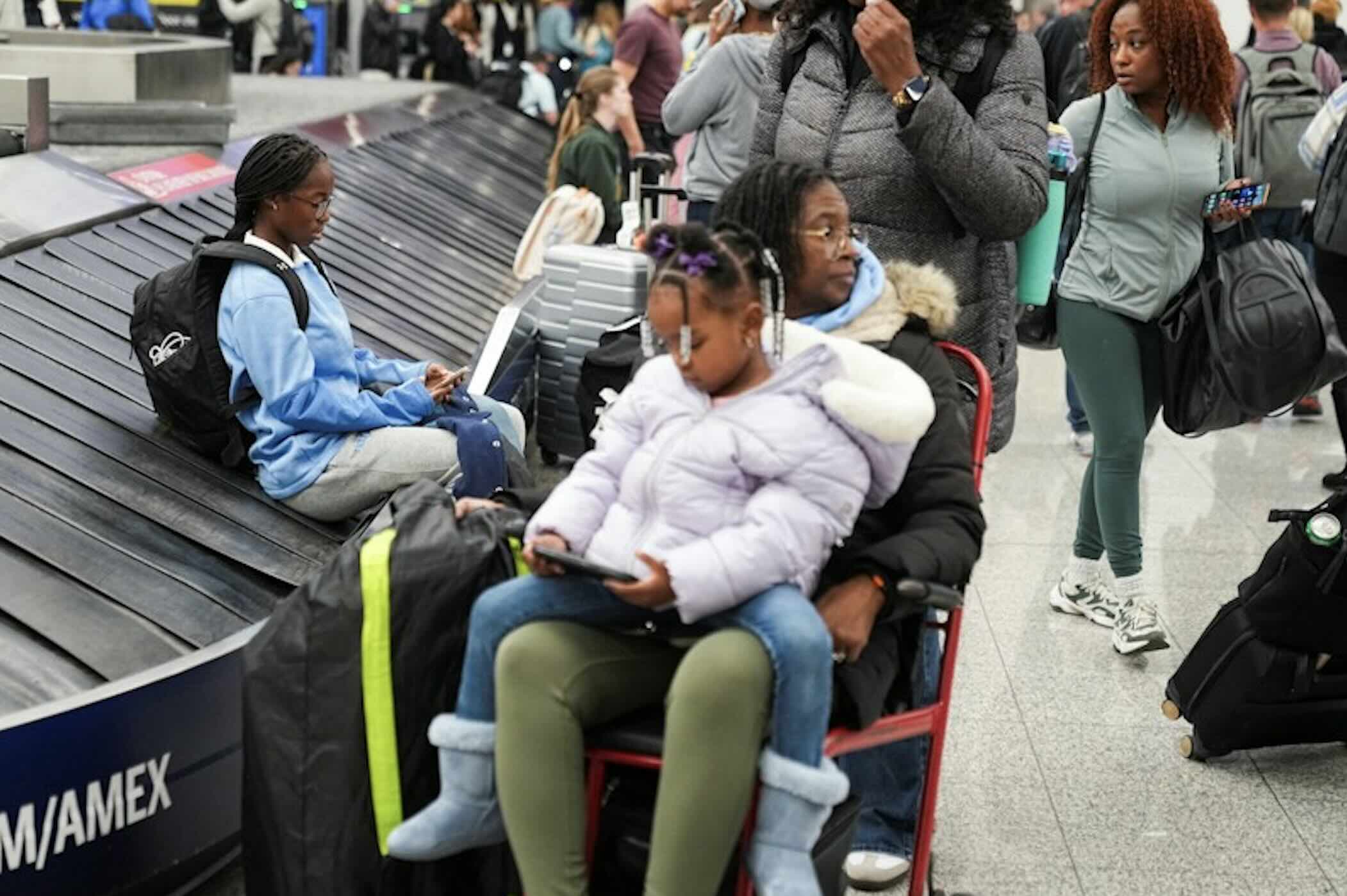
Photo: Reuters
On Friday, November 13, 2026, the Federal Aviation Administration issued a rare nationwide ground stop—halting all departing U.S. flights for more than four hours. By the time the order was lifted at 8:15 p.m. EST, nearly 5,000 flights had been canceled, more than 10,000 delayed, and 3,500 aircraft already airborne had been guided safely to the ground. The cause was not a cyberattack, not a terrorist threat, and not a natural disaster. It was a software update.
The disruption originated in the FAA Telecommunications Infrastructure (FTI)—a dedicated private network operated by defense contractor L3Harris Technologies that links over 4,000 aviation facilities, radar sites, and remote radio antennas across the country. Unlike modern internet networks that break data into flexible packets, large portions of this system still rely on Time-Division Multiplexing (TDM), a 20th-century phone technology running over copper wires installed in the 1980s.
According to briefing sources cited by CBS News and Bloomberg, a routine update pushed to the private network forced parts of the system to reboot. That reboot generated a sudden surge of data traffic—routers repeatedly broadcasting status updates to neighboring hubs—that the aging hardware was never designed to absorb.
The Cascade: From Chicago to Coast to Coast
The malfunction originated at Chicago Midway International Airport. Legacy analog routers and switches, already operating with minimal memory buffers, became overloaded by the data spike and began outputting inconsistent radar and communications data. When the Chicago equipment failed, automated backup routing protocols attempted to shift the heavy traffic onto neighboring regional circuits—but those Air Route Traffic Control Centers were also running on fixed-capacity legacy hardware. The overload spread outward, overwhelming one regional hub after another.
Transportation Secretary Sean Duffy explained at a White House briefing that outdated analog routers and switches "became overloaded with data and began outputting inconsistent information, prompting officials to halt all departures out of caution." Newer digital equipment already installed at some facilities continued working normally, but the legacy TDM hardware failed under the strain.
- 3,500+ aircraft were in the air when the ground stop was issued; all landed safely.
- ~5,000 flights were canceled nationwide during the four-hour shutdown.
- 10,000+ flights were delayed as airlines worked through the backlog.
- 42 European countries suspended U.S.-bound departures at the FAA's request.
- 68% of FAA legacy copper lines have been replaced—but 32% remain.
Why Controllers Had to Stop the Skies
Air traffic controllers keep aircraft separated by strict vertical and horizontal minimums—typically 1,000 feet vertically and 3 to 5 miles horizontally. Those buffers depend on reliable two-way radio communication and synchronized radar feeds. When overloaded routers began dropping packets and producing inconsistent data, controllers could no longer trust that radar positions and radio frequencies were fully synchronized. FAA safety rules required halting new departures until the data feeds stabilized.
Controllers switched to backup radio frequencies and manual fallback procedures to guide the 3,500 airborne planes safely to the ground, but those workarounds move traffic far more slowly than normal operations. Allowing new planes to take off into sectors with degraded communications would have quickly overwhelmed controllers using slower fallback methods.
A Pattern of Aging Infrastructure
This was not the first time legacy technology has grounded American aviation. The previous nationwide ground stop in January 2023 was tied to a corrupted file introduced into the 30-year-old Notice to Air Missions (NOTAM) system, taking down both primary and backup databases. Just last week, the FAA announced it had only begun phasing out 1980s-era floppy disks still used to load weather and flight data in over 400 facilities.
Homeland Security Secretary Markwayne Mullin confirmed there was no indication of a cyberattack or nefarious threat, and officials emphasized the outage was unrelated to a widespread Microsoft cloud outage that occurred the previous day. Both incidents, however, followed a similar pattern: a routine network change triggered a cascade of overloaded systems.
The Fix: Fiber, Funding, and Time
Engineers restored flights by halting the software update, isolating the malfunctioning Chicago routers, clearing overloaded buffers, and verifying that radar and radio feeds matched across control centers before lifting the ground stop. But the permanent fix requires replacing the remaining legacy hardware—a multi-billion-dollar effort known as FAA Enterprise Network Services (FENS).
The program aims to retire the remaining 1980s analog TDM circuits and copper lines, replacing them with high-speed, software-defined fiber-optic and Internet Protocol networks capable of dynamically absorbing traffic spikes and quarantining faulty updates. But older radar dishes and radio consoles were built with physical analog ports, meaning thousands of remote sites still require hardware swaps.
Following Friday's outage, Secretary Duffy called on Congress to approve up to $50 billion—up from a prior $30 billion request and an initial $12.5 billion allocation—to accelerate the replacement of aging hardware, telecom lines, and software across the National Airspace System.
Until that modernization is complete, the same 1980s copper wires and analog routers that failed on Friday will continue carrying the voice and radar data that keeps American skies safe. The question facing lawmakers and aviation officials is not whether another cascade will happen—but when.
No Ads. By Us. For Us.
This article was made possible by readers like you. We hope it inspired you to support Emerald Book, so we can continue producing content like this.
We will never show you ads, sell your data, or require a subscription to consume our content. Your gift helps us keep the truth accessible.
Click the Support button to give a gift of any amount today.
Thank you for making this work possible.