

Emerald Pages
◆
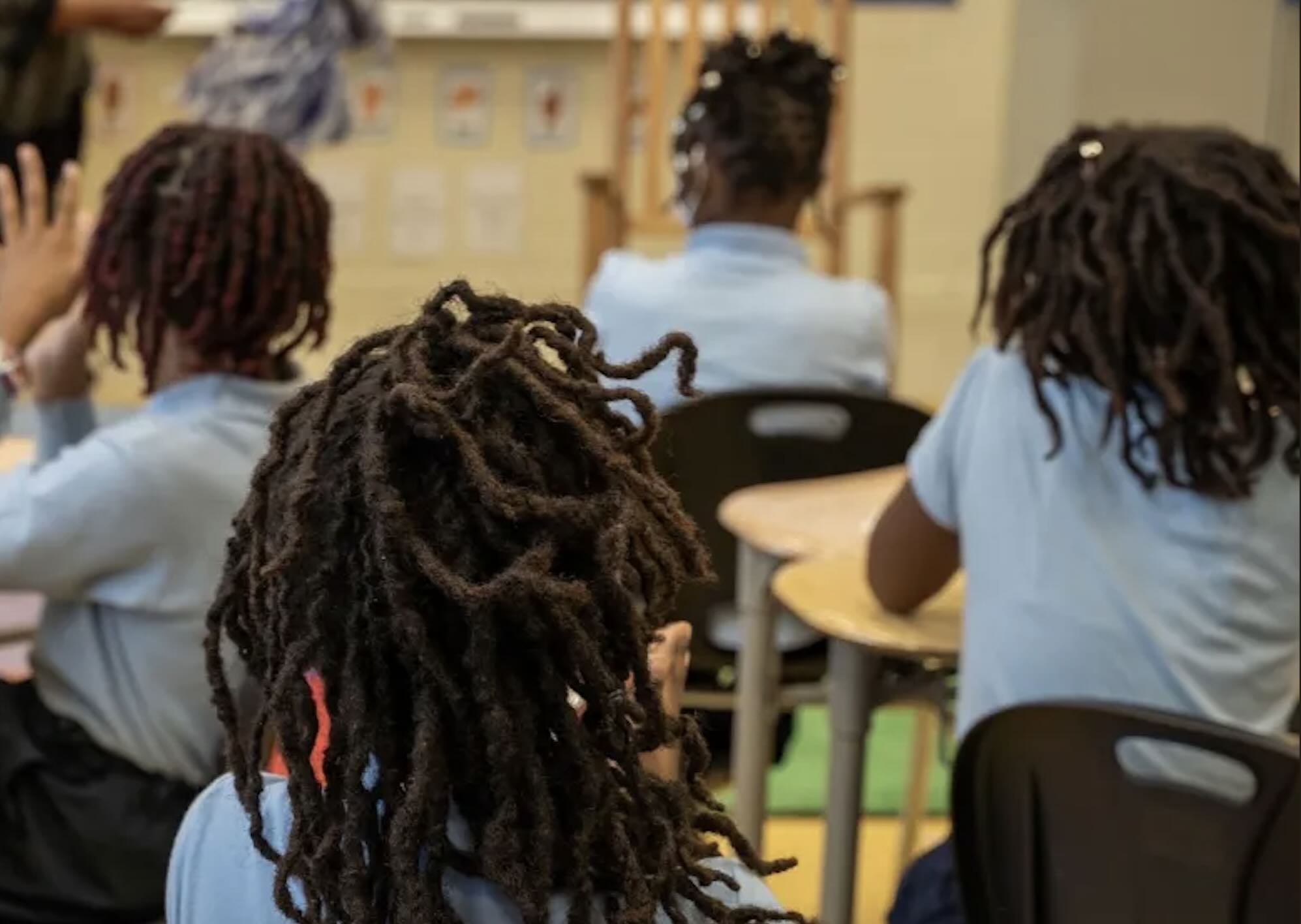
Photo: The Washington Informer
For decades, American education schools have trained teachers to be "guides on the side" rather than "sages on the stage." The dominant philosophy — constructivism, discovery learning, guided inquiry — holds that students learn best when they build their own understanding rather than receiving direct instruction. On paper, it sounds progressive, even liberating.
But a growing body of cognitive science, civil rights advocacy, and landmark case studies reveals a troubling truth: when applied universally — before students have built the foundational knowledge base that inquiry demands — this approach functions as a mechanism of structural racism. It disproportionately harms Black students while leaving privileged white students insulated by resources outside the classroom.
This is not a story about individual teachers harboring racial bias. It is a story about a self-reinforcing institutional loop — university training programs, state licensing rules, district purchasing decisions, and teacher evaluation rubrics — that locks inequity into place without requiring any single actor to hold prejudice.
The Data Is Unequivocal
The empirical case for direct instruction is not new. In Project Follow Through (1968–1977), the largest educational experiment in U.S. history, the federal government evaluated over 200,000 low-income students across 22 teaching models. Formal Direct Instruction outperformed every other approach — including constructivist and self-esteem-focused models — in basic skills, complex problem-solving, and even student self-confidence.
A 50-year meta-analysis (Stockard et al., 2018) reviewing 328 studies confirmed consistently positive effects for Direct Instruction across reading, math, language, and spelling, regardless of student socioeconomic status, age, or ability level.
Meanwhile, a major meta-analysis of 164 studies (Alfieri et al., 2011) found that unassisted discovery learning performs significantly worse than explicit instruction. Without clear explanations, beginners overload their working memory and often internalize wrong rules.
The science is clear: novice learners need explicit, step-by-step guidance to build foundational schemas in long-term memory. As students become more knowledgeable, too much hand-holding actually slows them down — a phenomenon researchers call the "expertise reversal effect."
So why does guided inquiry remain the default in most American classrooms?
The "Hidden Curriculum" Advantage
Black education scholar Lisa Delpit, in her landmark work Other People's Children, argued that middle- and upper-class white families naturally pass down the "culture of power" — academic vocabulary, explicit rules of grammar, early literacy — at home. When schools rely on indirect, discovery-based teaching, white students still succeed because their home environments fill in the missing explicit instruction.
Black students, who rely more heavily on public schools to build that foundational knowledge base, are left behind.
This is not a hypothetical. Consider Wesley Elementary School in Houston, Texas. In the late 1970s through the 1990s, Principal Thaddeus Lott introduced Siegfried Engelmann's Direct Instruction to a predominantly Black school in a low-income neighborhood where nearly 90% of students qualified for free meals. Within a few years, Wesley's students were outperforming peers in wealthier, predominantly white suburban schools on standardized tests.
The response? District administrators repeatedly investigated Wesley for cheating. Multiple audits found zero evidence of wrongdoing. The gains came from structured, explicit teaching.
After Lott retired, new leadership phased out Direct Instruction in favor of more progressive, student-centered methods. The school's test scores dropped sharply.
The Poverty Trap
In the 1990s, education scholar Martin Haberman coined the term "pedagogy of poverty" to describe how low-income and minority students were often subjected to repetitive drills, worksheets, and strict behavioral compliance, while wealthy white students received engaging discussions and critical thinking projects.
The critique was valid — but the solution went wrong.
Many civil rights advocates and progressive educators began viewing teacher-led, scripted instruction as a tool of control that denies Black students agency. To fight this perceived inequity, districts pushed inquiry-based learning as a way to respect minority students' intellect.
The problem? They confused the outcomes of wealthy schools with their methods.
Wealthy suburban schools often appear to thrive using inquiry-based and discovery methods. However, affluent children frequently enter school with extensive background knowledge, rich academic vocabulary, and access to private tutors or parents who explicitly teach them reading and math at home. When school leaders see wealthy schools succeeding with inquiry, they assume adopting the same programs in Black and low-income schools will close the achievement gap.
Instead, because those students rely on the school to build their initial knowledge base, skipping direct instruction often widens the gap.
Why Schools Favor Inquiry
This is not an accident. It is a closed loop of institutional actors, none of whom need to hold explicit racial prejudice. University schools of education train future teachers to view direct instruction as harmful and outdated, presenting discovery and inquiry as the only ethical way to teach — so educators enter the workforce never having learned to deliver systematic, explicit lessons. State boards of education and national accrediting bodies write licensing exams and standards that often mandate "student-centered inquiry" and "conceptual discovery." They also adopt evaluation frameworks, like the widely used Danielson Framework, under which a teacher earns the highest "Distinguished" rating only when students lead their own learning — meaning a teacher using direct instruction can be marked down on an annual review.
District superintendents and central office committees — not individual teachers — decide which multi-million-dollar textbook packages to buy for an entire school system. Superintendents often stay in the job only a few years and face pressure from school boards to show "innovation"; a trendy, inquiry-based curriculum looks progressive on paper, while a traditional, structured program risks political backlash. The major publishing companies follow the money, heavily marketing inquiry-based and "balanced" programs while sidelining explicit instruction materials, because university professors write the textbooks and state officials approve the buying lists.
Professors train teachers and administrators to favor inquiry, those graduates become principals and superintendents who buy inquiry textbooks and write rubrics rewarding inquiry, and publishers produce more inquiry materials to match state standards. Classroom teachers who try to use direct instruction face poor evaluations, lack of materials, and pushback from administrators — forcing them to either comply or leave.
A New Direction
Historically, when public education has shifted to better serve Black students, it has rarely been gifted voluntarily from the top down. Instead, change has occurred when Black parents, educators, and civil rights coalitions organized outside the traditional education establishment — using lawsuits, community-led schools, data exposés, and state legislation — to force accountability onto the system.
For decades, ideology successfully insulated the system from the data. That wall is only beginning to crumble now because outside forces — parents, investigative journalists, and lawmakers — forced the issue:
- Brain imaging and cognitive science. Advances in neuroscience allowed researchers to physically show how the brain learns to read, making it much harder for education schools to dismiss direct phonics instruction as "just one philosophy."
- Parent-led civil rights pressure. Black and working-class parents, armed with data showing massive literacy gaps even in well-funded districts, began demanding measurable results rather than progressive promises.
- Legislative mandates. Because universities and school districts refused to change voluntarily based on the research, over 40 states have passed laws legally banning unguided reading methods and requiring explicit, evidence-based instruction.
In recent years, a growing coalition of Black educators, parents, and civil rights groups — including the NAACP — have explicitly framed the abandonment of direct phonics instruction as a civil rights violation. They argue that withholding direct, systematic instruction denies Black children the basic tools of academic freedom.
The debate is far from settled. But the data has been clear for a long time. Changing the system has required forcing institutions to prioritize measurable student outcomes over adult philosophies — and the fight is only beginning.
No Ads. By Us. For Us.
This article was made possible by readers like you. We hope it inspired you to support Emerald Book, so we can continue producing content like this.
We will never show you ads, sell your data, or require a subscription to consume our content. Your gift helps us keep the truth accessible.
Click the Support button to give a gift of any amount today.
Thank you for making this work possible.