

Emerald Pages
◆
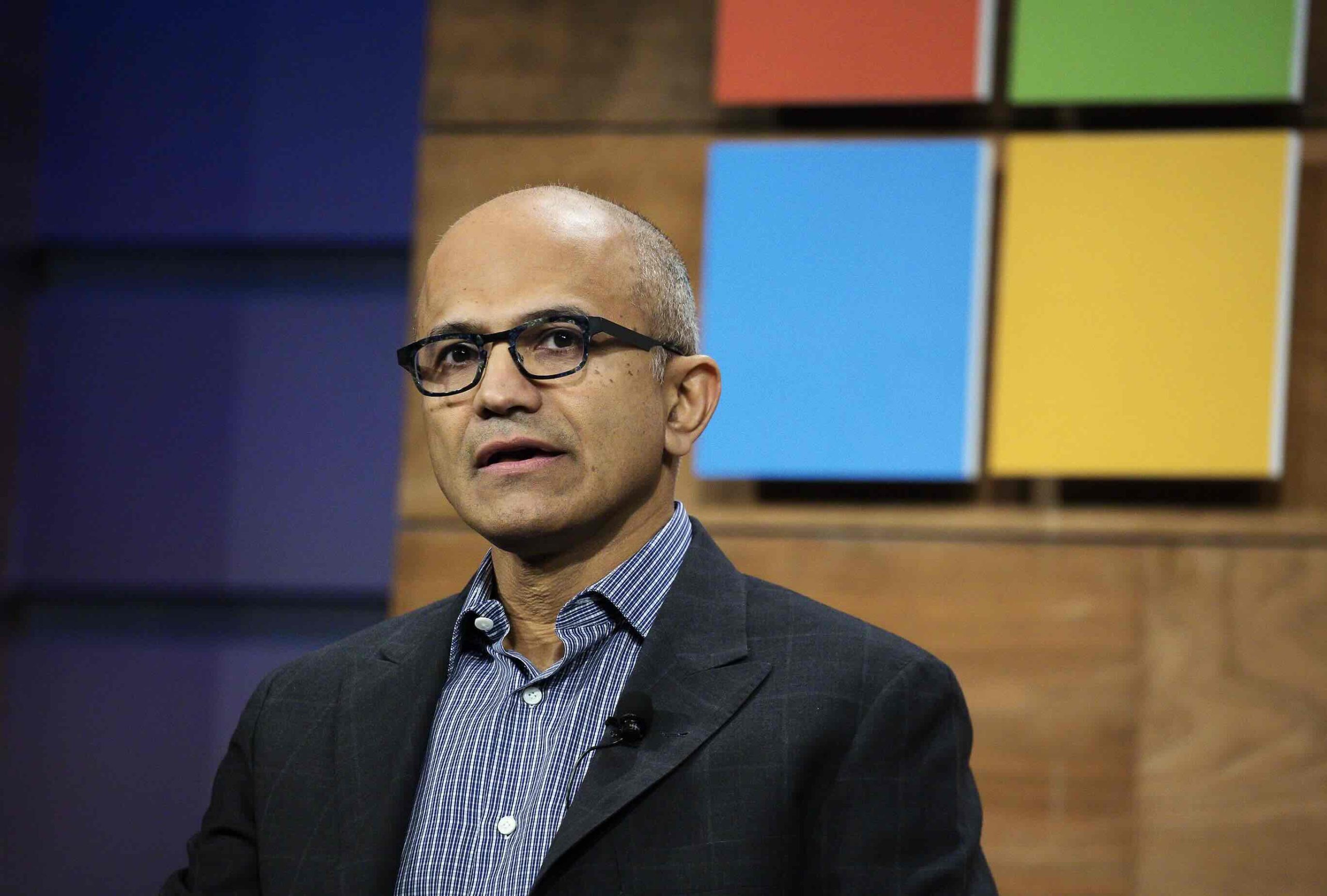
Satya Nadella, CEO of Microsoft Corp. | Photo: Getty Images
When Microsoft announced in late October 2026 that it was offering voluntary buyouts to roughly 60,000 employees—about 27% of its 223,000-person global workforce—the initial headlines framed it as a straightforward cost-cutting measure to fund an astronomical $175 billion AI infrastructure budget. The company, after all, is pouring two-thirds of that capex pool into physical infrastructure: high-demand Nvidia GPUs, sprawling data centers, and the power grids to run them. But that narrative, while accurate on its surface, misses the real financial mechanics at play. The buyout is not primarily about saving enough money to buy more chips—the annual savings amount to less than two weeks of AI data center construction. It is a calculated act of financial engineering designed to manipulate the very metrics Wall Street uses to value the company.
To understand why, it helps to look at what a buyout actually does on paper. The strategy is structurally identical to a stock buyback. In a buyback, a company uses its cash to purchase and destroy its own shares, shrinking the denominator in the earnings-per-share equation to artificially inflate EPS. In a workforce buyout, Microsoft uses its cash to purchase the exit of its own employees, shrinking the operational denominator—headcount—to artificially inflate Revenue Per Employee and protect its operating margin. Both maneuvers strip capital out of the company to make the remaining financial ratios look more attractive to investors, without actually growing the underlying business by a single new customer or product line.
The numbers reveal why a few billion dollars in savings is strategically massive rather than a drop in the bucket. Microsoft trades at a Price-to-Earnings multiple of roughly 30x. If the buyout permanently removes $4 billion in recurring annual salaries and overhead, that $4 billion drops straight to the bottom line as pure profit. At a 30x multiple, adding $4 billion in pure profit theoretically increases Microsoft's total market capitalization by roughly $120 billion. By cutting a few billion in legacy costs—a sum that is dwarfed by the $175 billion capex bill—management creates over a hundred billion dollars in shareholder value out of thin air. That is the multiplier effect, and it is why executives treat headcount as a financial lever rather than merely a human resource.
The 60,000 Number Is a Wide Net, Not a Target
A critical detail that gets lost in the headlines: Microsoft does not expect all 60,000 eligible employees to leave. Historically, acceptance rates for buyouts of this scale hover between 15% and 30%, meaning the company is likely targeting a final departure number closer to 10,000 to 18,000 employees. The 60,000 figure represents the size of the eligible pool—staff at level 70 and below across the United States, Canada, the United Kingdom, and India—not the target headcount reduction.
The wide net serves three strategic purposes. First, it dilutes departures across the organization, preventing a single critical team from collapsing overnight if everyone accepted. Second, it caps the upfront severance cost in any single quarter, since paying out all 60,000 packages simultaneously would cost tens of billions in one reporting period. Third, it acts as an internal corporate thermometer, telling leadership exactly which divisions have the lowest morale and where employees are most eager to cash out—data that can be used to restructure the teams that remain. Notably, the program explicitly excludes core revenue-generating and critical infrastructure areas like data centers, sales, marketing, cybersecurity, and quantum computing, while opening eligibility to divisions like Xbox, Windows, Copilot, AI experiences, finance, and HR. That asymmetry confirms this is an efficiency pivot, not a financial emergency.
- The 30x multiplier: $4 billion in permanent salary savings becomes roughly $120 billion in theoretical market cap at a 30x P/E multiple.
- The wide net: 60,000 eligible, but only 10,000–18,000 expected to leave—a controlled, predictable result with management retaining the right of refusal on any application.
- The optical shield: Trimming headcount satisfies Wall Street's efficiency mandate, giving executives political cover to keep spending $175 billion on unproven AI infrastructure.
- The one-time charge: Severance costs are grouped as a single restructuring charge that analysts ignore, while the permanent lower payroll shows up in every future quarter.
The Accounting Optics of a "One-Time Charge"
The buyout also exploits a quirk of accounting optics that makes the maneuver nearly invisible to the metrics that matter. The massive upfront cash cost of severance packages—billions of dollars in base pay, continued benefits, and accelerated stock vesting—is typically grouped together and reported as a single, "one-time restructuring charge" in one quarter. Wall Street analysts almost completely ignore these one-time charges when calculating a company's ongoing value. They look right past the immediate cost and focus instead on the permanent, lower payroll costs that will show up in every quarter moving forward. It is a clean way to present a permanently leaner company without the market penalizing the transition.
This is why Microsoft chose a voluntary buyout over traditional involuntary layoffs, even though layoffs are far cheaper and allow the company to choose exactly who leaves. A buyout preserves internal morale—avoiding the "survivor effect" that plummets productivity among remaining staff—and protects the employer brand that Microsoft needs to recruit elite AI engineers. More importantly, it bypasses complex labor laws across the UK, Canada, and India, where involuntary firings require months of government approvals and union consultations. The voluntary exit agreement is a legally binding contract signed willingly by the employee, cleanly sidestepping the risk of costly class-action lawsuits and labor tribunal battles.
Why This Is Legal Engineering, Not Illegal Manipulation
It is fair to ask how this differs from stock manipulation. The answer lies in transparency and the reality of the underlying change. Illegal market manipulation requires deception or fraud—spreading false rumors, staging fake trades, or cooking the books to trick investors. Microsoft, by contrast, is completely open about its actions. It publicly reports the exact number of eligible employees, discloses the severance costs as a separate line item, and lets open market forces react to the news.
More fundamentally, the cash leaving Microsoft's bank account is real, the employees leaving the payroll are real, and the resulting increase in profit margins is real. In a "pump and dump" scheme, the underlying value of the company does not change; only the stock price is artificially inflated. Here, the operational costs are genuinely lower moving forward, so the resulting profitability is not an illusion. Corporate law gives executives the explicit authority to decide whether a dollar is better spent on an employee's salary or a piece of technological hardware—just as a factory owner is legally allowed to replace assembly workers with automated machinery. If you change the math of your business in plain sight, it is legal engineering; if you lie about the math, it is illegal manipulation.
Yet the effect is undeniable, and it is precisely the point. Microsoft is operating in a hyper-competitive landscape where maintaining a high stock price is a core business requirement. It uses its massive daily software profits—over $115 billion in annual cash from operations—to fund the actual construction of data centers, but it uses the buyout program to ensure Wall Street remains confident, calm, and willing to bid up the stock price while that construction takes place. When investors grow nervous about a potential AI bubble, Microsoft can point to a simultaneous, highly disciplined workforce optimization program as proof that leadership is being responsible. It is a psychological shield—a sacrificial lamb offered to the market to secure permission for the larger gamble.
The Ultimate Trade-Off
For a hyper-scale tech company in 2026, the strategic trade-off is stark. Legacy corporate overhead—salaries, benefits, management layers—is a depreciating fixed cost that Wall Street punishes as bloat. AI cloud infrastructure is a revenue-generating asset that Wall Street rewards as forward-looking investment. By shifting capital out of the former and into the latter, Microsoft is not just building data centers; it is reshaping its financial statements to tell the story the market wants to hear. The 60,000-worker buyout is not an emergency measure or a cash shortage—it is a precision tool for managing market perception, engineered to convert a modest operational saving into a massive paper valuation while the real AI gamble plays out in the background.
Whether that gamble pays off is a separate question—one that rests on a philosophical bet about an "AI era" for which no data yet proves inevitability. But the stock market does not wait for proof. It rewards the appearance of discipline and efficiency today, and Microsoft has mastered the art of delivering that appearance on demand.
No Ads. By Us. For Us.
This article was made possible by readers like you. We hope it inspired you to support Emerald Book, so we can continue producing content like this.
We will never show you ads, sell your data, or require a subscription to consume our content. Your gift helps us keep the truth accessible.
Click the Support button to give a gift of any amount today.
Thank you for making this work possible.