

Emerald Pages
◆
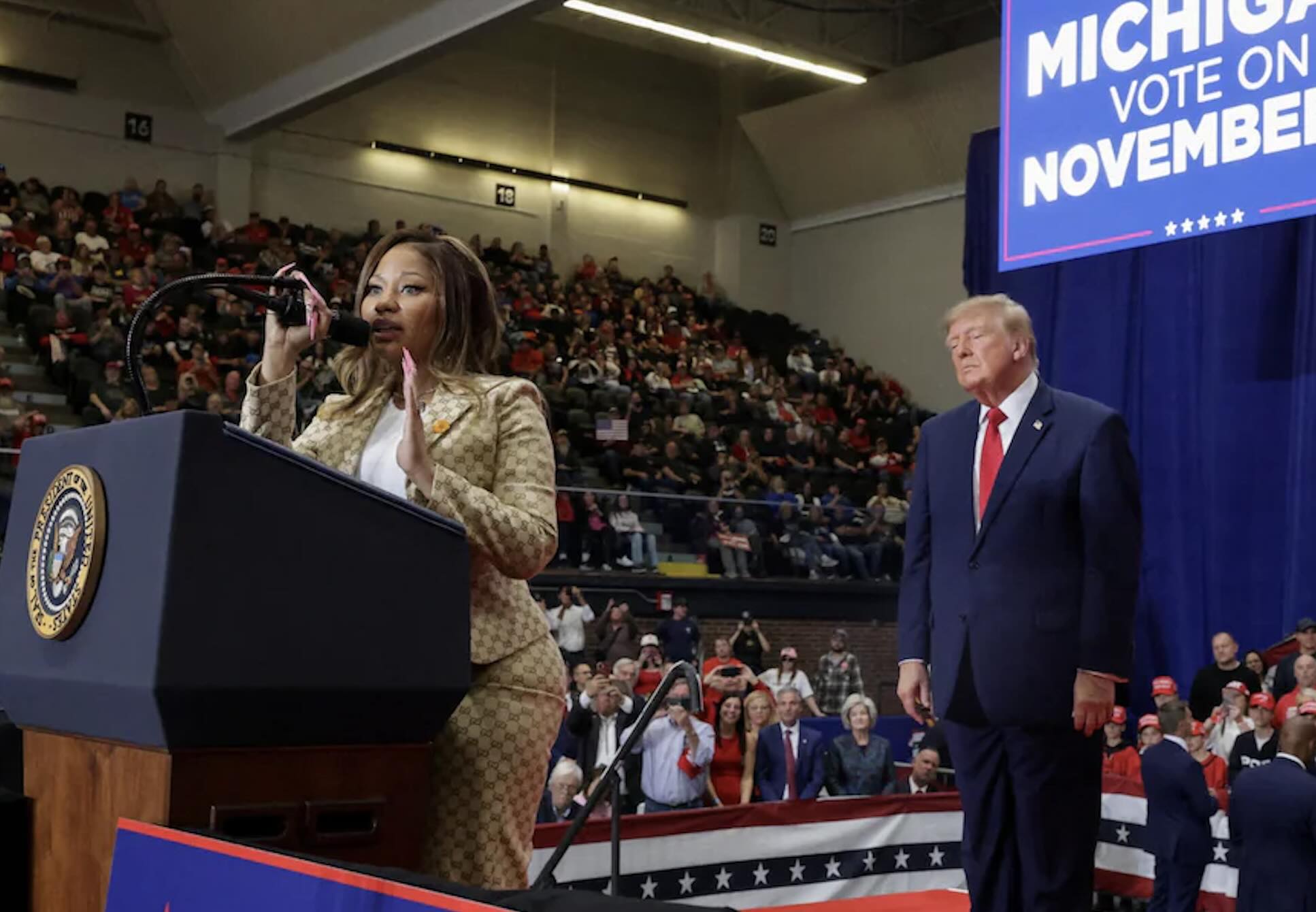
Photo: Reuters
For nearly twenty years, Nicki Minaj was the blueprint for female autonomy in hip-hop. She called herself the Queen of Rap—not as a marketing gimmick, but as a declaration of war against an industry that routinely reduced women to props. She publicly humiliated male executives who disrespected her. She blasted radio hosts who crossed her boundaries. She built a persona so fiercely protective of her own dignity that her name became synonymous with the demand for respect—especially from Black men in power who thought they could control her.
On October 25, 2026, that legacy collapsed on a national stage. Speaking at a campaign rally in Port Huron, Michigan, President Donald Trump—a white man who has spent years mocking women, minorities, and anyone who challenges him—looked out at the crowd and said: “I looked at one hell of a beautiful ass before, Nicki Minaj. That's hard to miss.” Then he told her to stand up.
And she did.
The visual was unmistakable: a woman who once rapped about being the “bad bitch with the icy wrists” stood up on command after the president publicly appraised her backside. Minaj, seated in the audience wearing a gold Gucci suit, rose to her feet, smiled, and waved to the cheering crowd. Body language experts noted she briefly covered her face in what appeared to be embarrassment before leaning into the moment. Later, she took the stage to praise Trump—calling herself his “number one fan” and urging voters to “vote red now.”
The Queen Who Demanded Respect
It's worth remembering who Nicki Minaj was before this moment. She didn't just talk about respect—she enforced it. In a genre dominated by men who often treated female artists as accessories, Minaj carved out a reputation for publicly eviscerating anyone who tried to diminish her. She called out executives. She demanded better treatment for female rappers. She made it clear that her body, her brand, and her career were not up for negotiation or commentary from men who hadn't earned her respect.
Her fans—the Barbz—loved her for it. She was the woman who told the industry that a Black female rapper could be wealthy, powerful, sexually autonomous, and completely in control. She was the Queen who bowed to no one.
But Trump didn't just get her to bow. He got her to essentially do a 360 for the crowd: from fierce independence to smiling compliance on a political stage, all in service of a transactional alliance that many in her own community view as a betrayal. The same woman who once rapped that she'd “never fuck a broke nigga” was now standing up on command for a man who has made degrading comments about women for decades—and who, critics note, she would never have tolerated from a Black executive.
- The Respect Legacy: Minaj spent years publicly demanding respect from male executives, radio hosts, and fellow artists—refusing to be reduced to her body.
- The Rally Moment: Trump called her backside “hard to miss,” then told her to stand. She complied immediately, smiling and waving to the crowd.
- The Double Standard: Critics argue she would have never tolerated this treatment from a Black executive in the music industry.
- The Transactional Trade-Off: Minaj reportedly gains expedited U.S. citizenship and political access—at the cost of the self-respect she spent decades demanding.
What makes the moment even more pointed is the transactional nature of the relationship. Minaj is a native of Trinidad and Tobago who has spent decades as a legal permanent resident without U.S. citizenship. Her alignment with Trump has reportedly fast-tracked her naturalization process—she has publicly shown off a “Trump Gold Card” and credited the administration for moving her case forward. Critics allege she may also be seeking future clemency for family members with legal issues. In exchange, Trump gets a high-profile celebrity surrogate who can reach younger Black and minority voters ahead of the midterm elections.
A Sad Downfall
For many who followed Minaj's career, the rally wasn't just a bad look—it was a definitive turning point. The woman who once declared herself the Queen of Rap, who built a career on refusing to be objectified, who publicly humiliated men who dared to disrespect her, stood up on command for a white man who had just commented on her body in front of a national audience.
The irony is brutal: Minaj spent years demanding respect from Black men in an industry that routinely sexualized her. She called herself the Queen, and her fans believed her. But at a Michigan rally, she allowed herself to be treated as a visual prop—a punchline in Trump's unscripted routine—and she smiled through it. The Queen didn't just bow. She did exactly what she was told.
Her supporters argue that this is simply pragmatic politics: a Black woman using her platform to secure tangible benefits for herself and her family, rejecting the expectation that she must monolithically support the Democratic Party. They point to her $300,000 pledge to fund “Trump Accounts” for her fans' children, and her willingness to break ranks from the entertainment industry's liberal consensus.
But her critics—particularly within the Black community—see something far more painful. They see a woman who traded the respect she spent decades demanding for proximity to power. They see a historic Black female icon being reduced to a prop on a political stage, smiling while a white man evaluates her body and commands her to stand. And they see the end of an era: the Queen who demanded respect, who refused to be objectified, who told the world she bowed to no one—now bowing to a man who treated her as nothing more than a punchline.
Whether this is a calculated transaction or a complete compromise of her values, the optics are devastating. For a massive segment of her audience, the Nicki Minaj who demanded respect—the Queen who refused to be reduced to her body—is over. What remains is a woman who did showed her butt, smiled, and stood up on command. And for many, that's the saddest ending of all.
No Ads. By Us. For Us.
This article was made possible by readers like you. We hope it inspired you to support Emerald Book, so we can continue producing content like this.
We will never show you ads, sell your data, or require a subscription to consume our content. Your gift helps us keep the truth accessible.
Click the Support button to give a gift of any amount today.
Thank you for making this work possible.