

Emerald Pages
◆
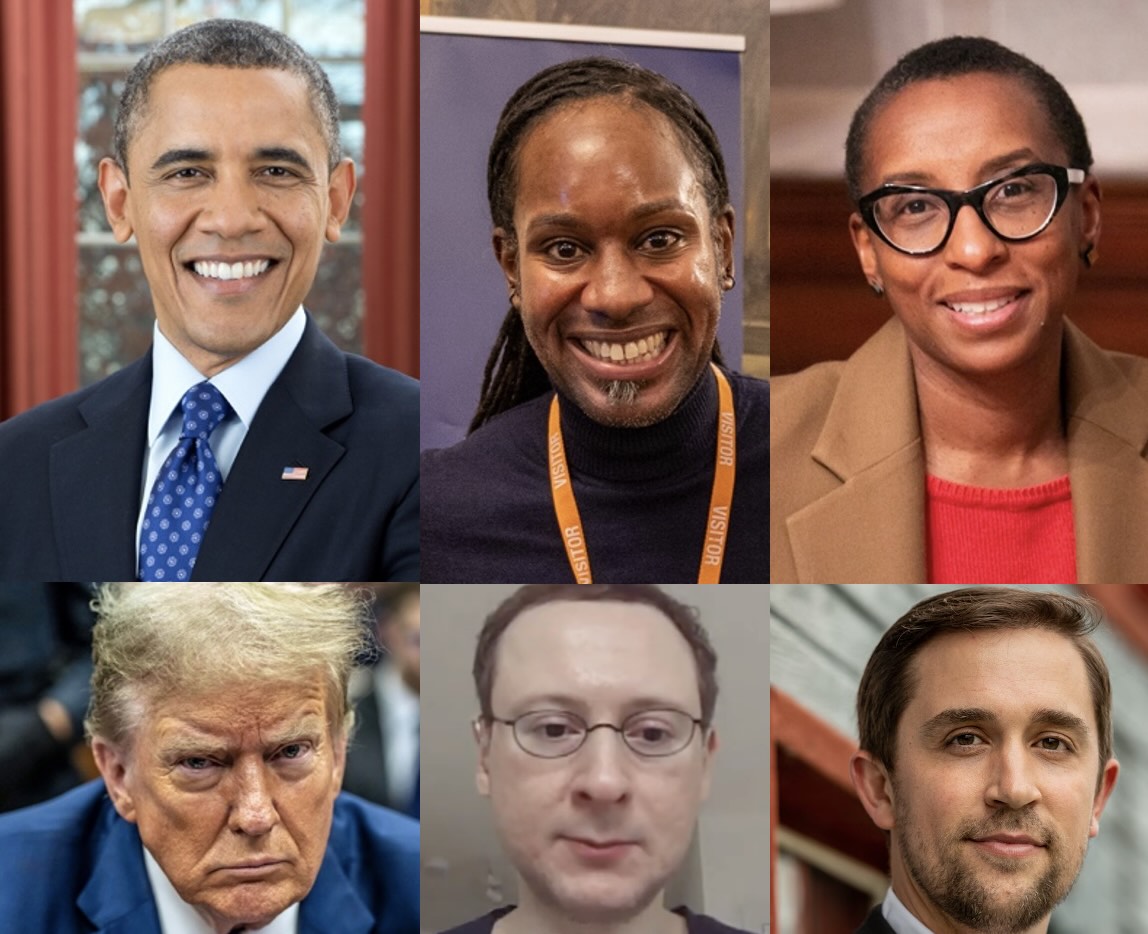
Photo: Emerald Book Image
When Barack Obama released his long-form birth certificate in April 2011, he did so not because the document was in question, but because a reality television host with no constitutional authority had demanded it—and because cable news had spent weeks treating that demand as a legitimate controversy. When Jason Arday resigned from Cambridge in August 2026, British newspapers had published 249 articles about him in twenty-two days, 188 of them after he had already signaled he could bear no more. When Claudine Gay stepped down from Harvard's presidency, the plagiarism narrative that felled her had traveled from a conservative activist's newsletter to the pages of the New York Times in a matter of days.
These are not isolated incidents. They are a pattern—one that reveals how white supremacy operates not through overt violence, but through the systematic elevation of mediocrity as a weapon against Black success, with mainstream media serving as the indispensable transmission belt.
The Qualification Paradox
Each of these Black leaders possessed credentials that would be considered exemplary for any white peer. Obama graduated magna cum laude from Harvard Law School and served as the first Black president of the Harvard Law Review. Arday overcame severe developmental delays—not speaking until age 11, not reading until 18—to earn multiple advanced degrees and publish extensively. Gay was an award-winning quantitative political scientist, a tenured professor at Stanford and Harvard, and a respected dean before becoming president.
Yet in each case, the attackers positioned themselves as supreme auditors of Black achievement.
Donald Trump, a businessman who inherited wealth and filed for bankruptcy multiple times, assumed the authority to question the citizenship of a sitting president. Nathan Cofnas, a former Cambridge researcher whose work relied on thoroughly debunked race-realist theories, assumed the authority to declare a Cambridge chair illegitimate. Christopher Rufo, a political operative with no notable academic credentials, assumed the authority to dictate who should lead America's oldest university.
This is the personification of white supremacy: the belief that whiteness confers the right to judge Blackness, regardless of actual qualification.
- Obama / Trump: A constitutional law scholar and Harvard Law Review president vs. a reality TV host demanding a birth certificate.
- Arday / Cofnas: A Cambridge professor who overcame profound developmental delays vs. a junior fellow peddling debunked race science.
- Gay / Rufo: A rigorously trained quantitative political scientist vs. a political operative who openly described his work as "scalp-hunting."
The Media’s Pivotal Role
The mechanism is consistent across all three cases. First, identify a Black person who has reached the pinnacle of institutional power. Second, locate a technicality—a birth certificate, a citation formatting error, a bureaucratic procedure—and inflate it into a systemic crisis. Third, mobilize mainstream media to treat bad-faith attacks as legitimate debate.
The Birther Campaign. The birther conspiracy did not emerge fully formed on Fox News. It fermented on right-wing websites and talk radio before mainstream outlets gave it sustained airtime. On the May 1, 2011, episode of CNN's Reliable Sources, host Howard Kurtz asked why the media didn't aggressively frame Donald Trump's push as a "baseless conspiracy theory." Panelist Lauren Ashburn delivered the answer: "the way in which cable news in particular kept putting this birther thing on night after night after night, even saying it's not true, but let's do it again, and let's do it again, I think it was shameful, and I think it did fill up all the available oxygen." A study by the Project for Excellence in Journalism, analyzed by the Poynter Institute, tracked coverage from April to May 2011 and confirmed that 100% of CNN's specific Obama coverage during a targeted week was coded as "citizenship and religion rumors"—and that MSNBC devoted significantly more total coverage to the controversy than Fox News. Lou Dobbs, then a primetime anchor at CNN, repeatedly used his show to legitimize the birther narrative, questioning the validity of Obama's birth certificate and demanding further proof long after the official short-form certificate had been made public in 2008. The result was a media environment in which a sitting president was forced to produce documentation to satisfy a reality television host.
The Arday Campaign. The British media's treatment of Jason Arday is perhaps the most documented example of disproportionate racialized scrutiny in recent memory. According to data compiled by the media monitoring platform NewsCord, national press outlets published 249 substantive articles about Arday over the 22-day period leading up to his death on August 14, 2026. After Arday resigned from the University of Cambridge on August 5, 2026—stating he had reached the limits of what a person could reasonably endure—the British national press published another 188 articles over the final nine days of his life. The breakdown per outlet matches NewsCord's monitoring records: The Times and Sunday Times (44 pieces), The Telegraph (43 pieces), and the Daily Mail (38 pieces). The Telegraph frequently branded him "Cambridge's diversity poster boy" across its multi-part investigative series, while other right-wing tabloids and center-right publications heavily utilized aggressive framing like "Professor Plagiarism." Even The Guardian, ostensibly a liberal outlet, published an investigative report two days before his death tracking down former primary school classmates to scrutinize Arday's well-known childhood biography that he was completely non-verbal until the age of 11.
The Gay Campaign. Christopher Rufo's own public statements reveal the media strategy with unusual candor. On December 19, 2023, he tweeted: "We launched the Claudine Gay plagiarism story from the Right. The next step is to smuggle it into the media apparatus of the Left, legitimizing the narrative to center-left actors who have the power to topple her." The plan worked. The story was broken by Rufo and Christopher Brunet in a December 10, 2023 newsletter, quickly amplified by The Washington Free Beacon and The New York Post, and ultimately came to dominate mainstream coverage in The New York Times. MSNBC's Ali Velshi later recapped this explicit funneling mechanism on air. Harvard's independent review panel and the Harvard Corporation initially stated that their review revealed instances of "inadequate citation" and "duplicative language" but concluded there was "no violation of Harvard's standards for research misconduct." Facing intense political pressure, donor withdrawals, and a constant drumbeat of subsequent allegations, Claudine Gay resigned on January 2, 2024.
The Double Standard of Scrutiny
The backlash is unfounded because the exact same scrutiny is never applied to white individuals in equivalent positions. Trump demanded Obama's birth certificate and college transcripts despite never releasing his own academic records or facing similar challenges to his citizenship. The British media's treatment of Arday stands in stark contrast to how white academics with proven misconduct—from plagiarism to sexual harassment—are routinely ignored. Both Rufo and Cofnas weaponized strict, literalist standard checks that, if applied universally across all of academia, would ensnare thousands of white professors and executives whose positions are never questioned.
For a white leader, standard human flaws, political missteps, or administrative errors are tolerated, managed, or excused as "growing pains." For a Black leader who has exceeded every obstacle, a single flaw is treated as a systemic emergency. The system forces Black professionals to be hyper-perfect just to get a seat at the table—then uses that very expectation of hyper-perfection as a trap.
The Peril of the High-Profile Target
These individuals did not face backlash because they failed; they faced backlash because they won. When a Black professional remains in mid-level or subordinate positions, they are often tolerated because they do not disrupt the fundamental power structure. The moment they ascend to the absolute apex—the Presidency of the United States, a historic Chair at Cambridge, or the Presidency of Harvard—they become highly visible symbols of institutional transformation.
To the architects of white backlash, these individuals had to be targeted because leaving them at the top would mean validating a permanent shift in who is allowed to hold ultimate authority. Christopher Rufo essentially said the quiet part out loud when he mapped out his strategy against Claudine Gay—he didn't care about the nuances of academic text; he cared about the political scalp. Trump didn't care about the legal definition of citizenship; he cared about delegitimizing a Black presidency.
If they could start with nothing, face every obstacle, exceed them all, and still rule the institution, then the entire myth of natural white authority collapses. To save the myth, the personification of white supremacy had to tear them down—and the media had to make sure everyone was watching.
The Comforting Lie
When the mainstream media and the masses rally behind a Trump, a Cofnas, or a Rufo, they are validating a deeply comforting lie for themselves: that the lowest, most mediocre white individual still possesses the inherent right to sit in judgment over the most brilliant Black minds.
This is the crowning indictment of how this dynamic plays out. The people orchestrating the destruction of these world-class Black leaders are almost always staggering personifications of mediocrity. They cannot compete on the level of ideas, scholarship, or governance, so they pivot to policing and auditing. They locate an administrative error or a bureaucratic technicality, and use it to claim that the genius of a giant is invalid.
It is the ultimate revenge of the mediocre: using a clipboard to evict a visionary—and a headline to make it respectable.
The demand that Black people "do it the right way"—by working hard, getting credentials, and playing by the rules—was never a genuine invitation to participate in society. It was a gatekeeping mechanism designed to keep Black people chasing an impossible, ever-shifting standard. And when they finally catch it, the rules change again.
This reveals a massive vulnerability in our highest institutions—the fact that they so easily buckle under this pressure. But it also reveals something else: the profound fragility of a system that requires the destruction of excellence to maintain its illusion of authority.
No Ads. By Us. For Us.
This article was made possible by readers like you. We hope it inspired you to support Emerald Book, so we can continue producing content like this.
We will never show you ads, sell your data, or require a subscription to consume our content. Your gift helps us keep the truth accessible.
Click the Support button to give a gift of any amount today.
Thank you for making this work possible.