

Emerald Pages
◆
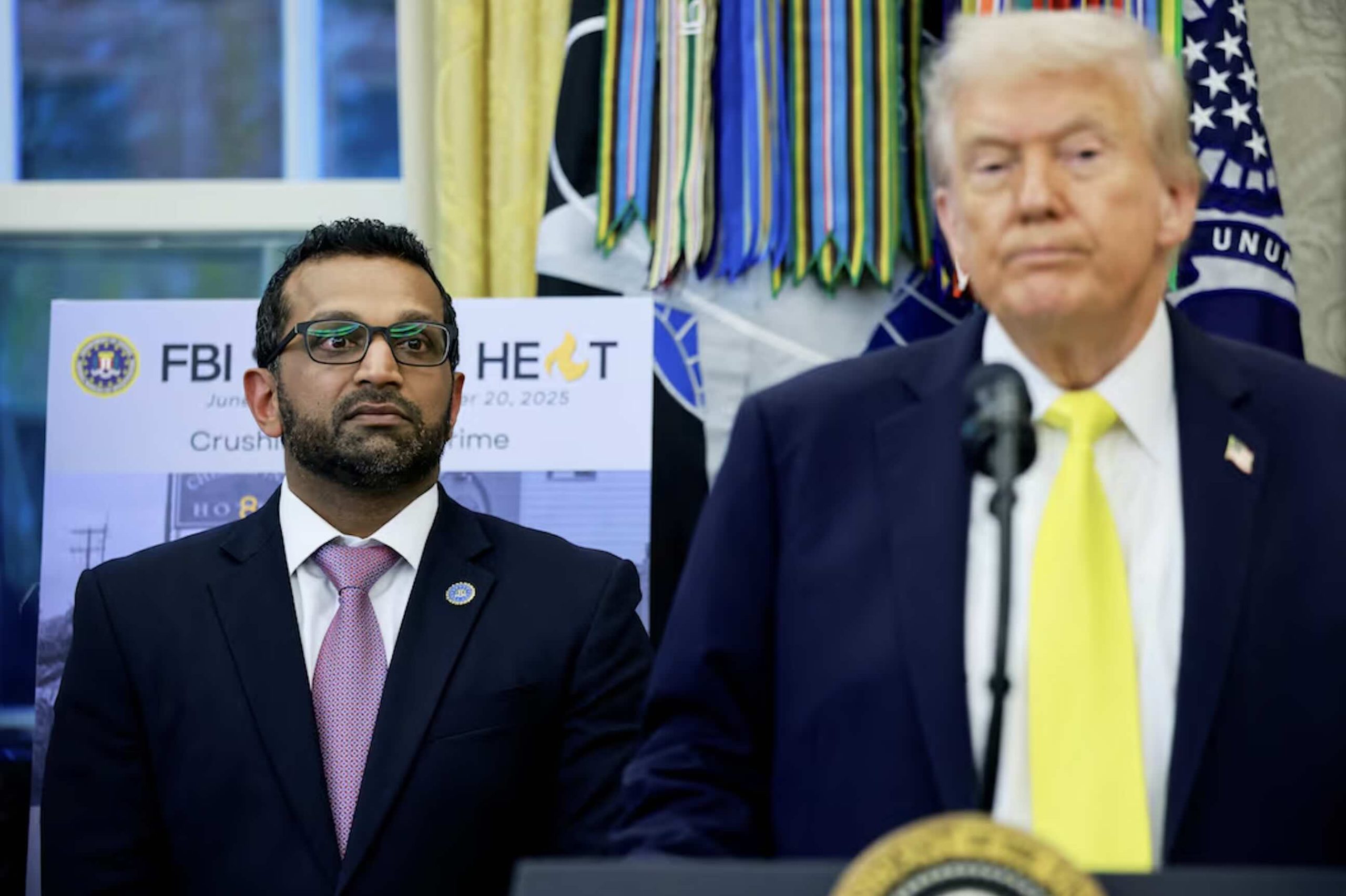
Photo: Reuters
For nearly a century, the FBI's Uniform Crime Reporting program has served as the definitive ledger of American lawbreaking. Policymakers cite it. Journalists quote it. Predictive policing algorithms are trained on it. But a growing coalition of criminologists, data scientists, and civil rights advocates argue that FBI crime statistics don't measure crime at all—they measure where the government has chosen to point its flashlight.
The evidence isn't theoretical. It's sitting in the federal government's own spreadsheets, where a dramatic demographic reversal in fraud prosecutions between 2019 and today reveals a data system that tracks enforcement priorities rather than criminal behavior.
The Numbers That Flipped
In fiscal year 2019, the U.S. Sentencing Commission recorded 510 federal government benefits fraud cases. White defendants comprised 41.5% of those sentenced. Black defendants accounted for 22.6%. The median financial loss was roughly $48,000—the kind of small-scale, localized fraud that might involve an individual misreporting income or a program administrator skimming modest funds.
By fiscal year 2025, the landscape had transformed entirely. Total cases had nearly doubled to 965. But the demographics had inverted: White defendants had plummeted to 20%, while Black defendants had surged to 57%. The median financial loss had tripled to $144,000. And the cases had concentrated heavily in a handful of jurisdictions—most notably the Southern District of Florida and Puerto Rico.
The question criminologists ask is simple: Did Black Americans suddenly begin committing dramatically more benefit fraud after 2019? Or did the federal government suddenly begin looking for it in different places, with different tools, and different funding?
The answer is the latter—and it exposes a fundamental validity problem in how the FBI measures crime.
The "Enforcement Artifact" Problem
Crime statistics, whether from the FBI or the U.S. Sentencing Commission, do not measure the total amount of crime happening in a country. They measure the specific activity of police and federal investigators. Criminologists call this an "enforcement artifact"—a data point that reflects the behavior of the observer rather than the subject.
If a federal task force pours hundreds of millions of dollars, investigators, and advanced data analytics into tracking fraud within a specific program—like childcare subsidies—and concentrates that effort in a specific region, the data will show a massive spike in fraud arrests for those specific communities. Meanwhile, if the budget for auditing high-level corporate tax shelters or complex corporate embezzlement is reduced or stays flat, the statistics for those crimes will drop—not because people stopped committing white-collar fraud, but because fewer investigators are assigned to catch them.
This is the "looking for your car keys under the streetlight" effect. The light doesn't reveal where the keys are. It reveals where you've chosen to search.
The Funding-to-Targeting Pipeline
Crime statistics are a direct function of funding. In criminology, this is known as the "budget-to-arrest pipeline." When a legislative body or an administration changes how it funds law enforcement, the national data reacts predictably.
- Earmarked grants: Federal and state police agencies rely heavily on specialized grants. If a state receives a $20 million federal grant specifically to combat Medicaid eligibility fraud, they must hire specialized fraud investigators and show results to keep the money. Those investigators will successfully uncover hundreds of new fraud cases—and the resulting FBI data will show a "surge in welfare fraud" that was always there, simply unlooked for.
- Asset forfeiture incentives: Under civil asset forfeiture laws, law enforcement agencies are often allowed to keep a portion of the cash, vehicles, and property they seize to fund their own budgets. This creates a direct financial incentive to prioritize crimes involving easily seizable wealth—street-level drug operations, cash-heavy enterprises—while multi-million dollar corporate embezzlement hidden in digital portfolios requires expensive forensic accounting and rarely yields cash that can be routed back into a local police fleet.
- Budget defense inflation: Police departments and federal agencies must prove they are necessary to maintain funding. Agencies are incentivized to maximize enforcement or adjust how they categorize incidents during budget cycles. A minor scuffle that could be written up as a misdemeanor might be categorized as a felony to argue for an expanded budget.
This pipeline sits at the center of the current Task Force to Eliminate Fraud. When the administration injected $25 million into a targeted Whistleblower Program and funded dedicated interagency databases linking DHS, SBA, and HHS, it guaranteed a statistical surge in those specific categories. The year-over-year demographic flip from White defendants to minority defendants isn't a map of American criminality—it's a financial spreadsheet showing exactly where the administration chose to invest its enforcement capital.
The Corporate Fraud Blind Spot
The validity problem becomes even starker when examining how different types of fraud are counted. If a task force arrests 500 individuals in an urban area for a coordinated $15 million childcare subsidy scam, the FBI statistics record 500 distinct fraudsters. If a major corporate bank falsifies mortgage data or evades federal taxes, stealing $5 billion from the public, the case is almost always resolved as a single civil settlement. The corporation pays a fine, no individuals go to jail, and it records as zero or one on an FBI criminal arrest spreadsheet.
By headcount, the data skews toward street-level program fraud. By dollar amount, it is overwhelmingly dominated by corporate and white-collar crime—which historical USSC data shows is committed predominantly by White individuals, who account for roughly 65% to 70% of federal convictions for securities fraud, antitrust violations, insider trading, and corporate embezzlement.
The reason this figure contrasts so sharply with benefit fraud data comes down to a bifurcation of the justice system. Federal benefit fraud is highly monitored by digital tracing and state caseworkers, leading to high prosecution rates among minority networks in urban centers. High-level corporate fraud is notoriously difficult to detect and investigate, requiring years of forensic accounting by agencies like the SEC or FBI. Those cases are often settled through civil fines or handled privately by corporations rather than ending up in a federal criminal sentencing report. The crime isn't happening less—it is simply being systematically undercounted.
What the Data Actually Reveals
This is not to say the individuals arrested in these task force operations didn't commit crimes. They did. The data isn't invalid because the arrests didn't happen. It is invalid if used to claim that minority groups are inherently more prone to fraud. The data merely proves who was scrutinized.
The most dangerous part of this validity problem is its permanence. Long after the current administration's task force concludes, the inflated numbers remain on the books at the FBI and the U.S. Sentencing Commission. Future criminologists, policy advisors, and AI-driven predictive policing algorithms will look back at the data from 2024–2026 and conclude that minority communities suddenly experienced a massive surge in fraudulent behavior. They will treat the inflated statistics as objective truth, completely blind to the fact that the numbers were a direct product of political funding and selective enforcement.
This is the self-fulfilling statistical loop: funding drives targeting, targeting drives arrests, and those arrests permanently inflate the statistics used to justify the initial targeting. Predictive policing software fed historical arrest data sends more police cars to neighborhoods with high arrest rates. Because there are more police cars on those streets, they catch more people committing minor offenses. Those new arrests are fed back into the computer, making the statistics look even worse. Meanwhile, a wealthier neighborhood with far less police presence goes unsearched, creating an artificial data vacuum.
Is the FBI a Crime Agency or a Targeting Agency?
The answer, legal historians and criminologists argue, is both. The FBI investigates real crimes—bank robberies, kidnappings, child exploitation, cyberattacks, terrorism—where the crime itself forces action. But the Bureau also operates as a targeting agency because law enforcement is an exercise in prioritization. The federal criminal code contains thousands of statutes, and the FBI has finite resources. The executive branch uses policy, mandates, and funding to decide exactly who and what the Bureau will target.
Every administration uses the FBI to advance its specific domestic policy goals. Under the current Trump administration, the FBI has been directed via task forces to focus heavily on the intersection of immigration status and benefit fraud, creating the statistical spikes in minority communities. Under other administrations, the flashlight might be pivoted toward domestic extremism, Wall Street insider trading, or civil rights violations.
Historically, the Bureau has deliberately targeted specific political, racial, and social movements. Under J. Edgar Hoover, programs like COINTELPRO systematically targeted civil rights leaders including Martin Luther King Jr., anti-war activists, and political dissidents. These operations were not driven by objective crime data, but by a selective political mandate to surveil and disrupt specific groups.
Because the FBI cannot police everything at once, its targeting efforts inherently create artificial "crime waves" in the data. If the Bureau allocates 500 agents to track down healthcare fraud in Miami, healthcare fraud cases will spike dramatically. If they simultaneously draw agents away from corporate tax evasion units, tax evasion statistics will drop. The resulting numbers map government priorities, not a natural distribution of lawbreaking.
Better Sources of Crime Data
Because of these inherent flaws, criminologists never rely on a single government spreadsheet. They triangulate data by cross-referencing multiple sources, depending on whether they are tracking street crime, corporate fraud, or systemic corruption.
- The National Crime Victimization Survey (NCVS): Conducted annually by the Bureau of Justice Statistics, the NCVS interviews roughly 240,000 Americans each year, asking directly whether they have been victims of crime. It captures the "dark figure of crime"—the vast pool of offenses never reported to police. The BJS also deploys the Supplemental Fraud Survey, which consistently reveals that personal identity theft and consumer scams affect tens of millions of Americans annually across every racial demographic, detached from who the FBI happens to be prosecuting.
- Regulatory agency portals: The SEC Enforcement Database logs all civil and criminal enforcement actions against corporations for insider trading, market manipulation, and accounting fraud. FINRA tracks billions of dollars in penalties against financial institutions. Good Jobs First's Violation Tracker aggregates corporate misconduct from over 40 federal regulatory agencies, measuring corporate crime by total dollar value stolen rather than headcount—proving that the vast majority of financial theft in America occurs in corporate boardrooms.
- Self-reported academic studies: Anonymous self-report surveys ask large, statistically representative samples of the public to confidentially check boxes on illegal activities they have engaged in. These studies consistently find that minor theft, drug use, and financial non-compliance occur at roughly equal rates across racial lines, exposing how heavily police targeting skews official arrest records.
The consensus is that crime statistics are highly reliable for measuring police activity and legal outcomes—who was arrested, what they were charged with, how long they were sentenced, which court districts are most active. They are not an accurate reflection of how much crime actually occurs.
Experts treat FBI and USSC data not as a map of where crime is happening, but as a political and operational map of where the government is currently waging its wars. In the context of the current administration's fraud initiative, the sudden shift in demographics doesn't tell us that minority communities suddenly started committing massive amounts of fraud. It tells us exactly where the administration has chosen to shine its flashlight.
The statistic does not tell you who is committing the crime. It simply tells you who the government has funded its task forces to arrest. Until that distinction is widely understood, the public debate over crime and punishment will continue to be shaped by data that measures priorities rather than reality.
No Ads. By Us. For Us.
This article was made possible by readers like you. We hope it inspired you to support Emerald Book, so we can continue producing content like this.
We will never show you ads, sell your data, or require a subscription to consume our content. Your gift helps us keep the truth accessible.
Click the Support button to give a gift of any amount today.
Thank you for making this work possible.