

Emerald Pages
◆
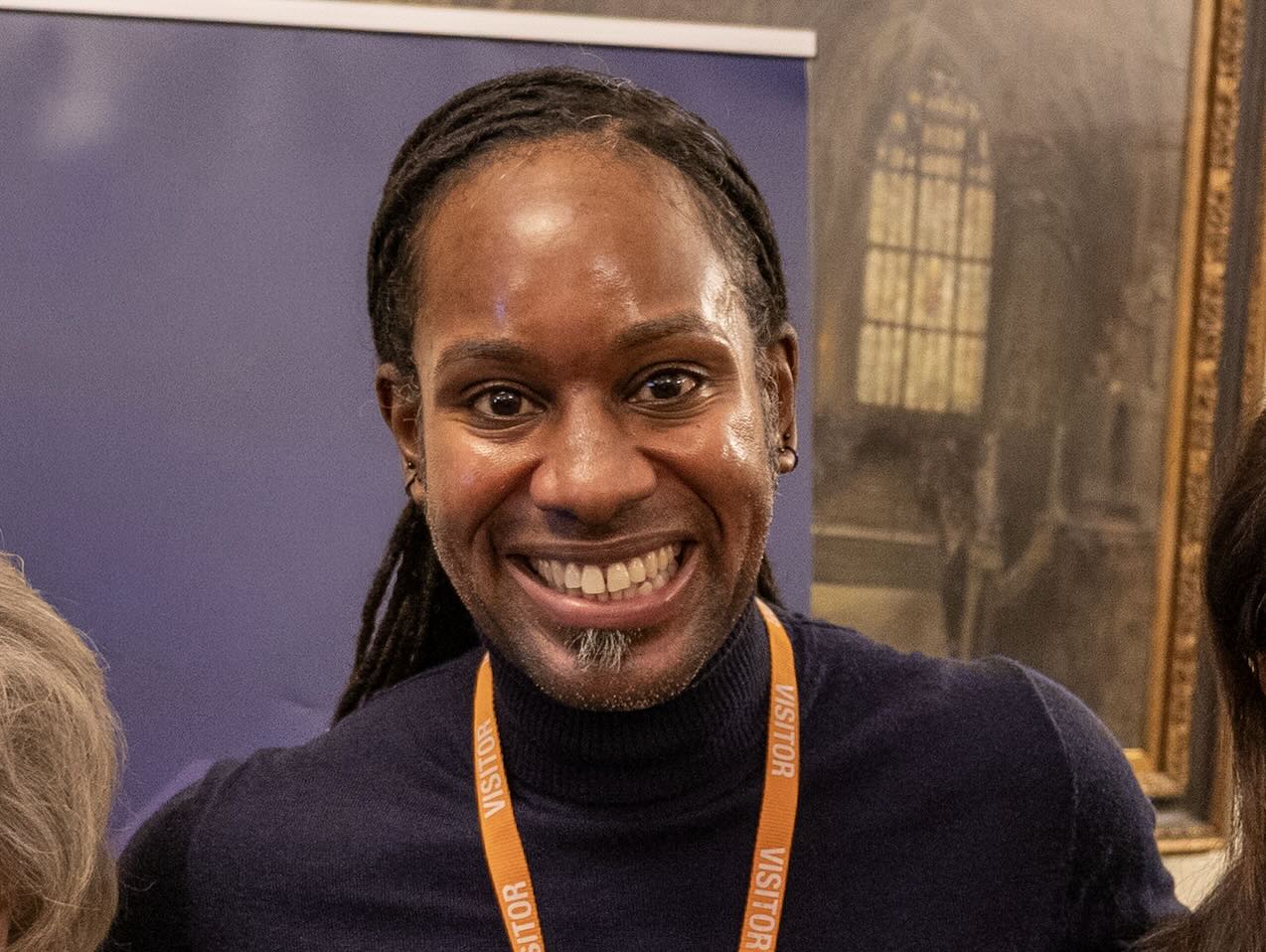
Photo: Wikimedia Commons
Jason Arday, the sociologist who became Cambridge's youngest Black professor, was officially cleared of intentional plagiarism across four formal institutional investigations into his doctoral thesis and published journal articles. The rulings, issued by Liverpool John Moores University (LJMU) and independent academic publishers, concluded that the textual overlaps flagged by critics resulted from "honest and reasonable error" rather than deliberate academic misconduct or data fabrication.
The investigations were not casual dismissals of the allegations. They followed structured, formal reviews that examined the intent behind the textual overlaps, the location of the copied material within Arday's work, and the institutional circumstances surrounding his doctoral studies.
The Intent Question: Copying vs. Cognitive Strategy
Under standard academic misconduct bylaws, a finding of plagiarism typically requires proving an intent to deceive — a deliberate attempt to pass off someone else's thoughts as one's own to fabricate a fraudulent track record.
Arday disclosed that he is neurodiverse and was diagnosed with autism. He did not read or write until age 18, and his early academic writing relied heavily on imitation as a cognitive strategy to grasp complex sociological jargon. The LJMU panel determined that the text duplication reflected this learning process rather than a malicious effort to steal work. They classified the overlaps as an "honest and reasonable error" — a mechanical failure of synthesis rather than a moral failure of academic dishonesty.
Where the Copying Occurred — and Where It Didn't
Investigators systematically dissected the 63-page dossier submitted by critics, which highlighted roughly 188 sentences matching a 2009 thesis by researcher Paula Zwozdiak-Myers. The panel mapped every flagged passage and found that the overlaps were entirely isolated to introductory pages, policy descriptions, and literature reviews.
None of the copied text touched Arday's primary qualitative data, his field interviews, or his theoretical analysis. His original contributions to the literature — including his primary qualitative research with Black academics and students, his "cool capital" framework exploring how Black culture is systemically appropriated by institutions, and his analysis of the hyper-surveillance of Black boys in UK primary schools — remained uncopied and fully intact. Because his unique sociological conclusions were authentic and original, the panel ruled that his degree's academic contribution still stood.
- PhD Thesis Clearance: LJMU concluded in March 2026 that citation discrepancies were "honest and reasonable error," noting the supervisory team had been severely depleted — leaving Arday with only one formal supervision session during his doctoral studies.
- Journal Publications Cleared: A 2018 paper flagged by critics was determined by the publisher to require a standard correction rather than a retraction. A 2020 paper underwent two separate investigations by Taylor & Francis, both concluding with no substantiation of plagiarism charges.
- Correction Over Retraction: Publishers issued formal errata — inserting missing citations and enclosing repetitive background phrases in quotation marks — while leaving his original research models published and valid.
Institutional Responsibility: The Supervision Failure
A PhD is a trained apprenticeship, and universities share responsibility for ensuring a candidate is properly guided through citation mechanics. The investigation uncovered severe, documented deficiencies within LJMU's doctoral supervision program during Arday's enrollment. His academic supervisory team had become heavily depleted, leaving him with an entirely inadequate support system — reportedly resulting in only one formal, structured supervision session during his entire doctoral candidacy.
The university acknowledged that it had failed to provide the mandatory institutional oversight, proofreading checks, and gatekeeping necessary to correct his citation habits before the thesis was finalized. The panel ruled that it would be unjust to retroactively strip a degree for clerical errors when the institution itself had failed to provide the required structural guidance.
Publishers' Verdict: Correction, Not Cancellation
When journals like Taylor & Francis received the plagiarism complaints, they initiated their own peer-blind investigations. Academic publishers only issue a full retraction if a paper's data is proven fake, if the core findings are stolen, or if the author's misconduct renders the science entirely unreliable.
The journals concluded that Arday's peer-reviewed papers did not meet the threshold for retraction. Instead, they issued formal corrigenda — inserting missing citations and enclosing repetitive background phrases in standard quotation marks. His original research models remained published and completely valid. As recently as October 2026, a fresh Taylor & Francis review reaffirmed previous findings, concluding without substantiating any plagiarism allegations against his 2020 paper.
The Ongoing Divide: Institutional Verdict vs. Public Debate
While four separate formal investigations cleared Arday of intentional misconduct, public opinion and media coverage remained deeply divided. Critics, including outlets like The Times and a handful of independent peer academics, continued to argue that extensive verbatim textual overlaps constitute a violation of academic standards regardless of intent. They point to public dossiers highlighting passages that matched other scholars' work word-for-word — including descriptions of sociological theory, historical overviews, and standard academic phrasing in Black studies.
Yet this position grows increasingly difficult to defend against the weight of the institutional record. Every formal body that actually examined the evidence — not through media leaks or Substack posts, but through structured, peer-blind investigation — reached the same conclusion: no plagiarism, no data fabrication, no intent to deceive. The critics' continued insistence on guilt, even after LJMU, Taylor & Francis, and multiple independent publisher reviews cleared Arday, begins to look less like academic rigor and more like a racially charged campaign to tear down a Black scholar who had risen faster and further than his detractors could tolerate. The pattern is familiar: a Black academic achieves a historic appointment, and suddenly a cottage industry of online "investigators" emerges to scrutinize every comma, every citation, every paragraph — while the same scrutiny is never applied to his white peers.
The case continues to raise broader questions about academic gatekeeping, the treatment of neurodivergent and Black scholars, and how institutions weigh original contribution against textual compliance. But the verdict itself is not genuinely in dispute — only whether one accepts the findings of four independent investigations, or prefers the court of public opinion, where the standard of proof is whatever confirms what one already believed about a Black man who had the audacity to succeed. The distinction lies entirely between academic misconduct — deliberate fraud — and textual errors: copying without intent. The institutions examined the evidence and found the latter. Their critics, so far, have offered little more than the insistence that the former must have been true, a conclusion they reached long before they ever read a single page of his work. Jason Arday was not brought down by plagiarism. He was brought down by racism dressed up as rigor — and the institutions that cleared him must now reckon with the fact that their findings were never going to be enough for people who had already decided what he was.
No Ads. By Us. For Us.
This article was made possible by readers like you. We hope it inspired you to support Emerald Book, so we can continue producing content like this.
We will never show you ads, sell your data, or require a subscription to consume our content. Your gift helps us keep the truth accessible.
Click the Support button to give a gift of any amount today.
Thank you for making this work possible.