

Emerald Pages
◆
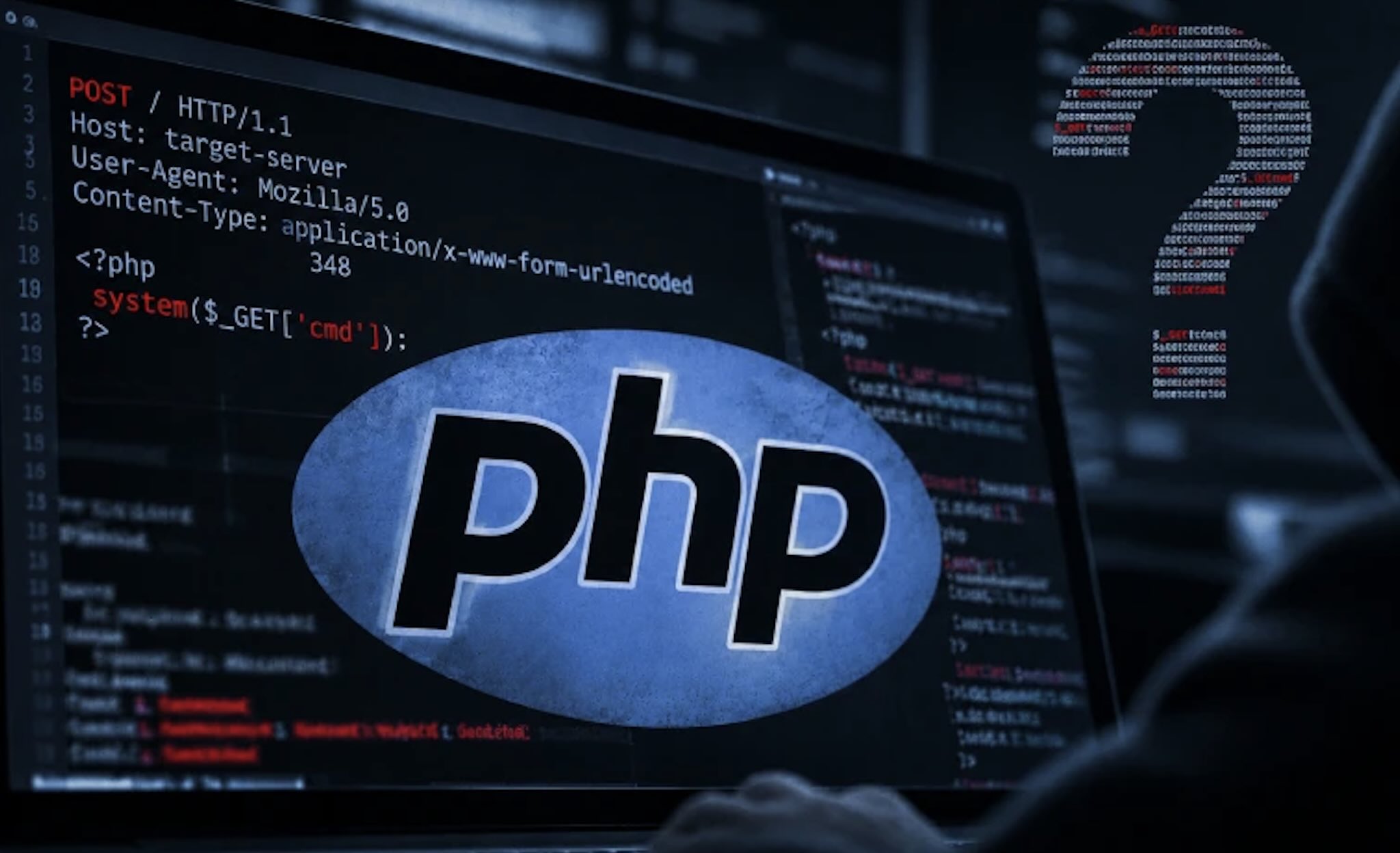
Photo: The Hacker News
When the PHP2Shell vulnerabilities (CVE-2026-109618 and CVE-2026-109619) sent shockwaves through the global cybersecurity community this week, much of the coverage focused on the role of artificial intelligence in the discovery. Headlines from WIRED, Reuters, and BBC emphasized that AI models like GPT-5.6 Sol and Gemini 4 Argon had played a role in finding the critical remote code execution flaws that could have affected an estimated 70 percent of the internet.
But those headlines tell only part of the story. The reality, according to the security teams involved, is that this was fundamentally a human triumph—a meticulously orchestrated operation that required decades of specialized expertise, institutional knowledge, and a deep understanding of how to position AI tools to be useful. Without the human architects behind the discovery, the AI would have been blindly running in circles.
The Discovery Teams: A Small, Elite Group of Experts
The PHP2Shell vulnerabilities were not found by a massive global scanning operation or an autonomous AI system independently browsing the web. They were discovered by a handful of elite human researchers working in tight, highly specialized teams.
The Calif security research team, a boutique California-based infrastructure defense firm, was the first to pinpoint the flaw in mid-August 2026. The Wiz Research Team, an elite cloud security group, independently discovered and mapped out the exact same vulnerability just 18 days later. A small group of OpenAI red-teamers coordinated the initiative through the company's "Patch the Planet" program, which funded the initial code auditing push.
The total manpower involved in the core discovery phase: fewer than ten human experts. These were not average analysts, but seasoned engineers with deep expertise in low-level memory management, C binaries, and the inner workings of the PHP engine—knowledge that had been accumulated over years, even decades, of focused work.
Why AI Alone Could Not Have Found This
The fundamental misunderstanding in much of the media coverage is the assumption that AI models autonomously discovered the vulnerability. In reality, the AI acted as what the researchers describe as a "force multiplier"—but it required a powerful force to multiply.
- Historical Knowledge and Cold Cases: The researchers knew PHP's history inside and out. They were aware that back in 2024, a standard security audit had flagged minor, theoretical "out-of-memory" quirks in how PHP handles large files. At the time, those quirks were dismissed because nobody could prove they were dangerous, and the fixes stalled. The human experts decided to re-examine this exact cold case. An AI would have had no reason to revisit this dormant, 22-year-old flaw.
- Overcoming the Hallucination Barrier: AI models frequently make mistakes, miscalculate memory offsets, or hallucinate exploit paths when dealing with deep legacy code. An average person would easily be led down a dead end by the AI. It took elite engineers to look at the AI's output, immediately spot the logic flaws, and manually pivot or correct the model's math to keep the research on track.
- The "Last Mile" of Exploit Engineering: While the AI was brilliant at mapping out theoretical data structures and calculating variables at superhuman speeds, it could not independently build a functional, reliable exploit payload. That required human researchers to manually engineer the exact packet delivery, handle the precise timing required to win the race condition, and test it across different operating systems.
The Experiment Only Experts Could Run
The discovery process was, at its core, a highly sophisticated controlled laboratory experiment that only world-class security experts possessed the training, infrastructure, and authorization to execute.
The researchers used advanced "white-box" fuzzing—a technique where the AI was given access to PHP's raw source code, turning it into an intelligent, feedback-driven testing engine. But to set this up, the human researchers had to build custom diagnostic instrumentation around the PHP source code to read internal heap states and track precise malloc and free boundaries. This requires deep, specialized knowledge of low-level debugging tools and OS-level memory architectures.
They designed the fuzzing parameters that would push PHP's memory allocation to its absolute limit. The AI would then generate thousands of variations of malicious network packets—corrupt HTTP headers, misaligned multipart form data, precisely calculated data volumes—but only within the boundaries defined by human engineers. The humans analyzed the crash logs to identify the rare anomaly where a crash triggered the internal longjmp() function but failed to clean up request memory. The AI categorized the results, but humans had to teach it what to look for.
The researchers at Wiz noted that the chain of steps required to actually exploit these flaws was at the absolute limit of what human researchers could practically achieve on their own. But that does not mean AI could have done it alone. It means that the combination of elite human expertise and AI as a computational tool was necessary—neither alone would have sufficed.
The Ethical Guardrails and Coordinated Remediation
A true security experiment doesn't just stop at finding the flaw. The moment the boundary limits were proven, these experts had the institutional trust and professional networks required to privately escalate the data to the PHP Foundation, AWS, and Cloudflare. They managed a massive, multi-corporation defense strategy before a single malicious actor could weaponize the blueprint.
Because this research was exploring a live core engine that powers 70 percent of the web, it had to be conducted within highly secure, air-gapped sandboxes. Elite teams like Wiz and Calif have the infrastructure to safely simulate millions of catastrophic crashes without accidentally disrupting real-world networks or exposing live production systems to risk. An AI operating on its own would have no such ethical guardrails or institutional relationships.
The Human Cost of the Leak
The premature leak of the vulnerability details was also entirely a human affair. The PHP Foundation explicitly blamed a software supply chain security company, Chainguard, for prematurely revealing the bugs. This was exacerbated when researchers at Calif accidentally uploaded a live proof-of-concept video showing the exploit chain, and independent analysts at the security firm watchTowr published a report showing they had successfully reproduced the bug before the official patch window opened.
Evidence from Amazon Web Services later revealed that at least one malicious actor had independently discovered and attempted to leverage the vulnerabilities on October 17—four days before any public leaks occurred. This underscores the high stakes of the research and the importance of the coordinated disclosure process that the human teams had carefully managed.
The Real Equation Behind the Discovery
The discovery of PHP2Shell can be summarized by a simple equation that captures the relationship between human expertise and artificial intelligence:
Without the human baseline of elite training, the AI was just a sports car with no one who knew how to drive it. The AI compressed the time it took to do the work, but it did not replace the lifetime of study required to understand the work.
The researchers at Calif and Wiz were the ones who identified the systemic weak points, designed the experiment, and positioned the AI exactly where its computational power could act as a force multiplier. They were the ones who spotted the historical clues, validated the AI's output, and engineered the final exploit. They were the ones who understood the ethical responsibilities and coordinated the global response.
An average person with access to the same AI tools would not have found this vulnerability. The AI would have generated thousands of meaningless crashes, and the human would have had no way to distinguish the needle from the haystack. It took elite engineers to look at the AI's output and recognize the significance of a half-initialized memory state.
The Lesson for the Future
As AI tools become more powerful and more accessible, it is tempting to believe that they will democratize security research and allow anyone to find critical vulnerabilities. The PHP2Shell discovery tells a different story.
AI is a powerful tool, but it is not a replacement for human expertise. The most consequential discoveries will continue to come from teams of highly trained experts who know how to ask the right questions, how to interpret the answers, and how to navigate the complex ethical and institutional landscapes that surround critical infrastructure.
The human researchers who found PHP2Shell did not just use AI—they orchestrated it. They were the architects, the navigators, and the final arbiters of truth. Without them, the AI would have spent eternity running in circles.
And that is the real story behind the flaw that almost took out 70 percent of the internet.
No Ads. By Us. For Us.
This article was made possible by readers like you. We hope it inspired you to support Emerald Book, so we can continue producing content like this.
We will never show you ads, sell your data, or require a subscription to consume our content. Your gift helps us keep the truth accessible.
Click the Support button to give a gift of any amount today.
Thank you for making this work possible.