

Emerald Pages
◆
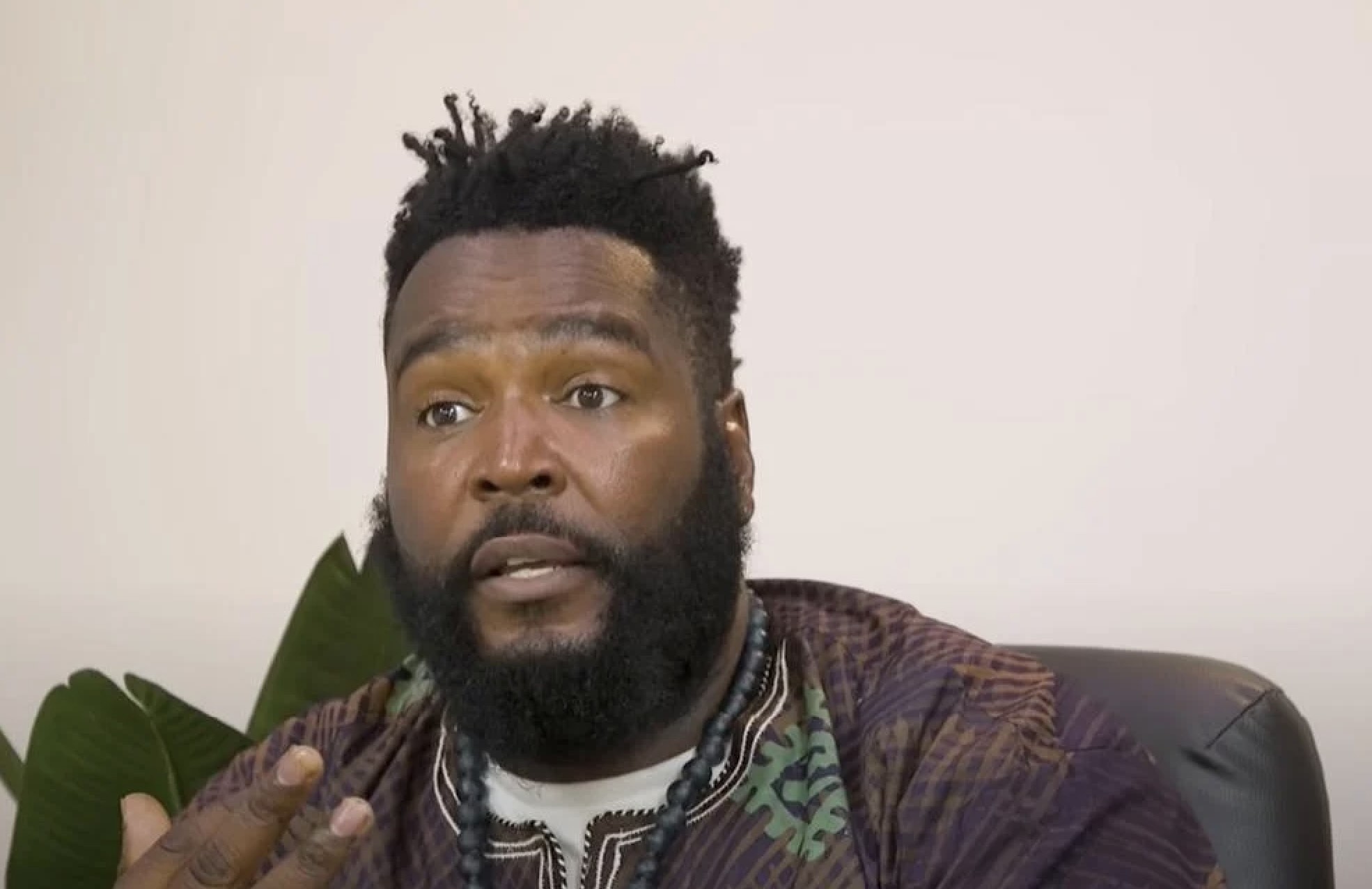
Photo: Hustle Over Everything Podcast
Dr. Umar Johnson has built a following around a seductively simple proposition: Black Americans should withhold their votes until the Democratic Party delivers tangible, binding commitments—reparations, criminal justice reform, economic investment. His "No Reparations, No Vote" slogan has resonated with voters exhausted by decades of symbolic gestures and broken promises. The logic seems sound: if Black votes are essential to Democratic victories, why not weaponize that dependency?
The problem is that this strategy misunderstands the brutal mathematics of American elections. Game theory—the study of strategic decision-making—offers a cold, unsentimental framework for evaluating Dr. Umar's approach. And that framework reveals abstention not as a power play, but as a slow political suicide.
The Game Theory Trap: Why Withholding Doesn't Work
In game theory, a credible threat requires two conditions: the threat must be believable, and the threatened party must have a rational incentive to respond. Dr. Umar's strategy fails both tests.
First, the threat isn't credible. For abstention to force change, it must be collective, disciplined, and sustained across multiple election cycles. But voting is a classic collective action problem: each individual has an incentive to free-ride, letting others bear the cost of protest while still casting a ballot to protect their immediate interests. History shows that mass abstention movements in Black communities have never achieved the unity required to send a consistent, unmistakable message. Without that coordination, politicians see noise, not signal.
Second, politicians don't chase abstainers—they chase likely voters. Campaign strategists rely on voter propensity models, algorithmic scores predicting who will actually show up. These models are ruthlessly efficient. They allocate time, money, and policy promises to demographics with high turnout probability. Abstainers are, by definition, low-propensity. They are filtered out of the persuasion calculus entirely. Politicians don't spend millions chasing ghosts.
The Empirical Record: Abstention Doesn't Deliver
Dr. Umar's strategy isn't just theoretically flawed—it has been tested in the real world, and it has failed.
In 2016, Black voter turnout dropped for the first time in two decades. Hillary Clinton lost key swing states—Michigan, Wisconsin, Pennsylvania—by razor-thin margins. Did the Democratic Party respond by pivoting to a bold, pro-Black agenda? No. It pivoted toward moderate suburban voters, who were more reliable and less demanding. The lesson party strategists drew was not "we need to earn Black votes." It was "we can't rely on Black voters to show up—let's find other coalitions."
The 2024 election repeated this pattern. With roughly 36% of eligible voters abstaining nationwide, Donald Trump won both the popular vote and the Electoral College. In Georgia, where Black voters make up approximately 33% of the electorate, the abstention rate among Black men rose significantly compared to 2020. The result: Trump carried the state by about 115,000 votes. If even a fraction of those abstainers had voted, the outcome could have flipped. Instead, those abstainers handed a decisive victory to the candidate most hostile to their interests.
- 2016: Black turnout fell for the first time in 20 years. Trump won Michigan, Wisconsin, and Pennsylvania by a combined 77,000 votes.
- 2024: 36% of eligible voters abstained. Trump won Georgia by 115,000 votes—a state where Black voters could have made the difference.
- The pattern: Abstention doesn't force concessions. It hands power to the opposing party and erases the abstaining group from future coalition math.
The "Lesser of Two Evils" Isn't a Cop-Out—It's Damage Control
Dr. Umar dismisses "lesser of two evils" voting as a trap that perpetuates a broken system. But this critique misunderstands the nature of the choice. In a two-party, winner-takes-all system, the "lesser evil" isn't a moral endorsement—it's a calculated defensive move.
The empirical differences between the two parties are not trivial. They determine Supreme Court appointments that shape civil rights for generations. They decide whether the Voting Rights Act is enforced or gutted. They allocate billions in federal funding for public schools, healthcare, and infrastructure. A single election can have consequences that last decades.
Dr. Umar's counterargument—that voting unconditionally allows one party to take Black voters for granted—has some merit. But the solution isn't to abandon the ballot entirely. It's to use the ballot more strategically: through primary challenges, local elections, and coalition building.
The Power of the Threat—Not the Silence
Political power doesn't come from isolating yourself. It comes from being a threat that must be managed. The most effective leverage belongs to the mobilized swing voter—someone who proves they will show up, but whose loyalty must be actively won.
This is why primary elections matter so much. In a primary, Black voters can punish complacent incumbents without risking a general election loss to a hostile opposing party. They can elevate candidates who explicitly champion their community's needs. They can build a bench of leaders who owe their seats to Black voters, not to party machinery.
This is also why local elections are so critical. Mayors, city council members, district attorneys, and school board officials have a direct, daily impact on police accountability, public school funding, and mass incarceration. National boycotts often depress turnout for these races—the very races where Black voters can wield the most immediate and tangible power.
Dr. Umar's strategy asks Black voters to sacrifice all of this—the primary leverage, the local power, the defensive shield against hostile legislation—in exchange for a symbolic protest that politicians have repeatedly shown they will simply ignore.
The Real Cost: Those Who Can Least Afford to Sit Out
Dr. Umar's rhetoric often centers on Black empowerment and self-determination. But the communities that suffer most from Republican victories are precisely the ones he claims to champion: poor Black families, Black immigrants, Black LGBTQ youth, Black women seeking reproductive care.
When abortion access is restricted, Black women die. When voting rights are rolled back, Black political power is diluted. When affirmative action is gutted, Black students are shut out of elite institutions. When social safety nets are cut, Black poverty deepens. These are not abstract policy debates—they are life-and-death consequences of electoral outcomes.
Abstention doesn't protect Black communities from these harms. It invites them.
A Better Strategy: Use the Ballot as a Weapon, Not a Protest
Dr. Umar is right about one thing: Black voters shouldn't be taken for granted. But the response to being taken for granted isn't to disappear—it's to become more strategically demanding.
- Primary elections: Challenge incumbents who haven't delivered. Force them to compete for Black votes before the general election.
- Local power: Focus on district attorneys, sheriffs, school boards, and city councils—positions with immediate, tangible impact.
- Coalition building: Partner with labor unions, immigrant rights groups, and other marginalized communities to create a voting bloc too large to ignore.
- Accountability mechanisms: Track campaign promises, publish scorecards, and mobilize against politicians who fail to deliver.
Dr. Umar Johnson's "No Reparations, No Vote" platform is emotionally resonant but strategically bankrupt. Game theory shows that abstention is a weak strategy because politicians don't chase immobilized swing votes—they chase likely voters. Empirical data shows that abstention doesn't force concessions—it hands power to the opposing party. And political reality shows that the communities Dr. Umar claims to defend are the ones who suffer most when Black turnout drops.
The ballot is not a love letter. It is a chess piece. And in a game where the stakes are this high, refusing to move your piece doesn't make you a player—it makes you a spectator.
Black voters cannot afford to be spectators. The cost of sitting out is too high, and the price is paid by those who can least afford it.
Use the vote. Demand more. But never, ever give it away for free.
No Ads. By Us. For Us.
This article was made possible by readers like you. We hope it inspired you to support Emerald Book, so we can continue producing content like this.
We will never show you ads, sell your data, or require a subscription to consume our content. Your gift helps us keep the truth accessible.
Click the Support button to give a gift of any amount today.
Thank you for making this work possible.