

Emerald Pages
◆
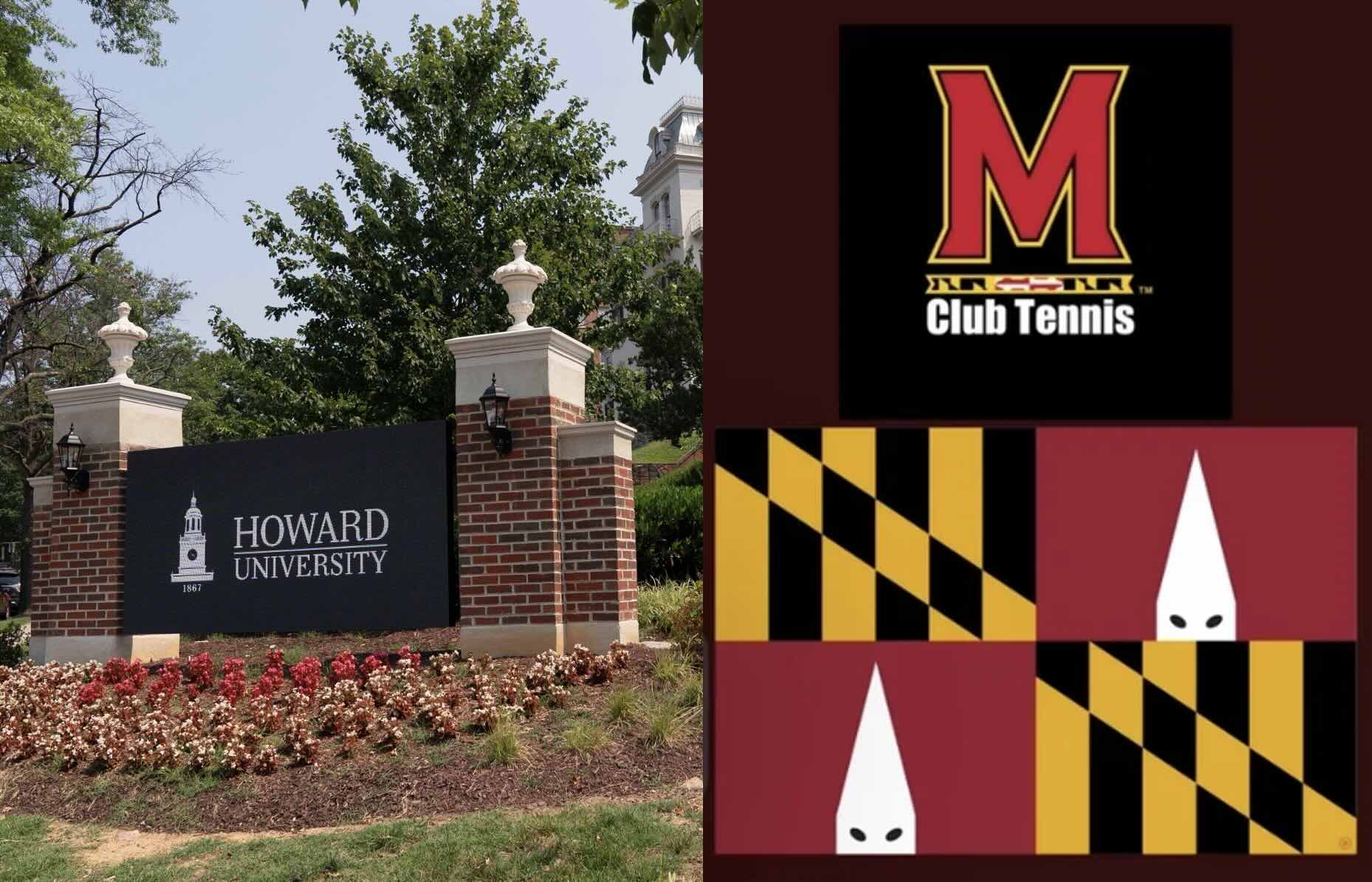
Photo: Emerald Book Image
The University of Maryland, College Park is one of the nation's premier public research institutions. Getting in is brutally competitive. The overall acceptance rate sits between 34% and 44%. The average unweighted GPA for admitted students is roughly 3.8 to 4.0—meaning the vast majority earned straight A's in high school. The middle 50% of students who submit SAT scores land between 1370 and 1510. The ACT range is 31 to 34. These are, by every conventional metric, the best and the brightest.
Yet this month, a group of these high-achieving students emailed a tournament program to several regional universities—including Howard University, a historically Black institution—that contained an image of Ku Klux Klan hoods superimposed onto the Maryland state flag. The graphic was embedded in a shared Google Doc, copied and pasted by student organizers assembling the schedule, maps, and brackets for the UMD Fall Invitational. No one on the team noticed it before hitting send.
That is the official story, at least. And it is a story that strains credulity to its breaking point.
The image was originally created in 2017 by graphic artist Benjamin Jancewicz for a blog post analyzing the history of the Maryland flag, specifically the red-and-white Crossland quadrants that white supremacists have historically co-opted. The article went viral. The image was indexed by search engines. If a student was searching Google Images for "Maryland flag art" or "alternative Maryland flag" to make the tournament booklet look polished, it could have appeared in the results. On a phone screen or a laptop thumbnail, the KKK hoods blend into the geometric pattern.
We are told it looks, at a glance, like the state flag.
But here is what we are also told: this document was being sent to Howard University. An HBCU. A school whose entire existence is a response to the racism that the KKK represents. And not one person—not a single student organizer, not a team captain, not anyone who touched this document before it went out—thought to look closely enough to notice.
The fallout was immediate and sweeping. Upon discovery by Toni Rachal, president of Howard's club tennis team, UMD forfeited its matches. UMD Recreation and Wellness suspended the entire club indefinitely. The incident was referred to the University of Maryland Police Department, the Office of Student Conduct, and the Office of Civil Rights and Sexual Misconduct. UMD President Darryll J. Pines issued a statement saying he was "horrified" and condemned the image "in no uncertain terms." The team issued a public apology on Instagram, mandated sensitivity training for its players, and donated its tournament funds to the National Museum of African American History and Culture.
But the apologies and the administrative punishments have not resolved the deeper question. If anything, they have sharpened it. The incident has forced a reckoning with a truth that many universities would rather avoid: academic intelligence and racial literacy are not the same thing. They are not even correlated. And the gap between them can be catastrophic.
The "We Didn't Know" Defense
The student leadership of the UMD club tennis team maintains that they did not know the image contained KKK hoods and had no intent to spread hate. In their public statement, they said they "did not intend to share an image evoking hate and racism" but took "full responsibility for failing to identify and remove" it. They called the graphic "abhorrent" and acknowledged that a public statement was necessary because the impact reached beyond those who received the initial tournament program.
Their explanation relies on cognitive tunnel vision. When a person is looking for something familiar—the Maryland state flag—their brain often fills in the blanks based on what they expect to see, rather than what is actually there. The KKK hoods were integrated into the existing red-and-white geometric pattern. If a student was rushing to assemble a booklet, googling "Maryland flag vector," saving a small thumbnail, and dragging it into a layout grid without zooming in, they might have only seen the familiar colors of their state. To them, it was just "the background graphic for page 4."
This is the defense. And it is not, on its face, impossible. People miss things. Student organizers are not professional proofreaders. Club sports operate with minimal oversight. The university has since implemented a new policy requiring official staff approval for all club sports' external communications—an acknowledgment that the old system was broken.
But plausible is not the same as believable. And there is a difference between a mistake and a pattern.
Why the "Accident" Explanation Fails
The "we didn't notice" defense collapses under scrutiny for a simple reason: the image was sent to Howard University. The team was inviting an HBCU to a tournament. If there was ever a moment to proofread a document with extra care, that was it. The failure to do so suggests not just carelessness, but a profound lack of awareness about the context in which they were operating.
Many students at UMD and Howard find the explanation hard to accept given how clear the KKK hoods are once zoomed in. The incident sparked immediate outrage. Over 100 students interrupted President Pines's "State of the Campus" address, holding signs and chanting for the university to release the names of those responsible. Their argument is straightforward: an "accidental" share does not completely erase the possibility of deliberate intent by an individual member of the club. And even if it was an accident, the accident itself reveals something troubling about the team's culture.
Consider what the "accident" defense actually requires you to believe. It requires you to believe that multiple college students—students capable of earning 4.0 GPAs, scoring 1500 on the SAT, and organizing a regional tennis tournament—looked at a document they were about to send to a Black university and saw nothing wrong. It requires you to believe that not one of them thought to zoom in on the image. It requires you to believe that a hate symbol blended so seamlessly into a state flag that it became invisible to every single person who handled the file.
That is not an explanation. That is an excuse. And it is an excuse that depends on the rest of us being gullible enough to accept it.
- The Admissions Paradox: UMD admits students with 3.8–4.0 GPAs and 1370–1510 SAT scores, yet multiple students allegedly failed to recognize KKK imagery in a document they distributed to an HBCU.
- The Oversight Gap: Club sports previously had no administrative vetting process for external messages. The flyer went out entirely unreviewed by university staff.
- The Burden on Howard: Despite the flyer being sent to multiple universities, it fell entirely on Howard's team—the Black students—to catch the imagery, flag it, and demand accountability.
The Investigation and What Comes Next
The University of Maryland Police Department and the Office of Student Conduct are currently tracing the edit history of the shared Google Doc to determine exactly who added the image and why. They are trying to answer a question that will determine whether this is punished as an intentional act of racial harassment or a historic case of administrative negligence: Did a single student find this image on purpose because they knew exactly what it was? Or did a student mindlessly copy-paste it from a Google Image search, and the rest of the team completely failed to proofread the document?
The outcome matters for the individuals involved. But it also matters for the university. UMD has implemented mandatory sensitivity training for the tennis club, required staff approval for all club sports communications, and reached out to the Black Student Union to provide institutional support. These are meaningful steps. But they are also reactive. They address this incident, not the culture that produced it.
The deeper problem is that universities like UMD measure success in GPAs, test scores, and acceptance rates. They do not measure racial literacy, cultural competence, or empathy. They assume that smart students will naturally develop these qualities, or that they are not the university's responsibility to teach. The UMD tennis scandal suggests otherwise. It suggests that a university can admit the "best and brightest" and still produce students who are functionally illiterate when it comes to the history and symbols of American racism.
And it suggests something else, too: that when we accept "we didn't notice" as an explanation, we are not actually forgiving a mistake. We are enabling a culture in which noticing is optional—a culture in which the burden of catching racism falls, once again, on the people it harms.
Until that changes—until universities treat racial literacy as a core competency rather than an optional add-on—incidents like this will continue to happen. The only question is who will be harmed next, and who will be forced to carry the burden of speaking up.
No Ads. By Us. For Us.
This article was made possible by readers like you. We hope it inspired you to support Emerald Book, so we can continue producing content like this.
We will never show you ads, sell your data, or require a subscription to consume our content. Your gift helps us keep the truth accessible.
Click the Support button to give a gift of any amount today.
Thank you for making this work possible.