

Emerald Pages
◆
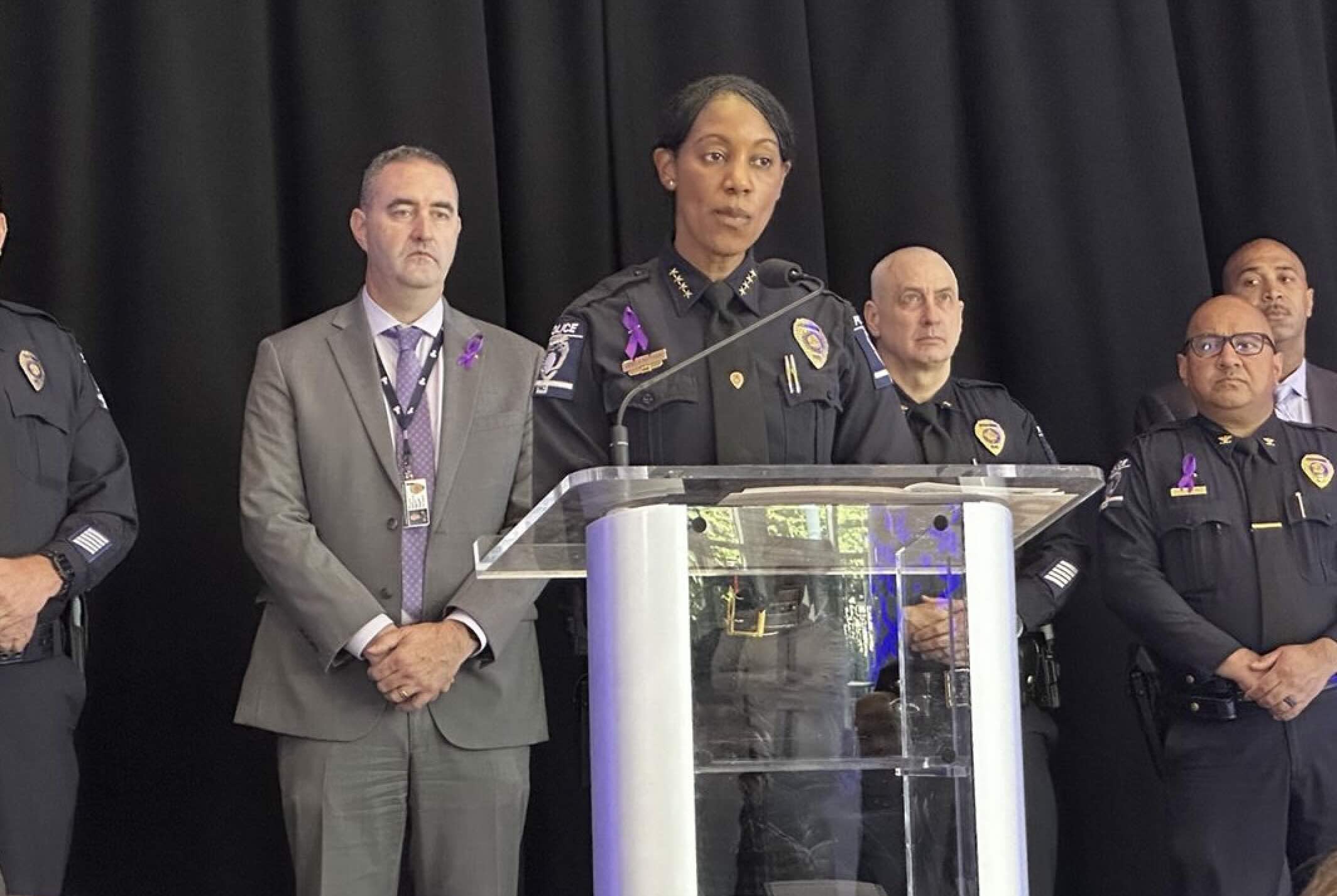
Photo: WCNC Charlotte
When the Charlotte-Mecklenburg Police Department (CMPD) announced that an internal audit found "no evidence" that a years-long, explicitly racist text thread impacted actual police work, the statement was met with immediate disbelief from data scientists, legal experts, and the local community. The thread, which contained a running competition to see who could pull over the most Black drivers, was uncovered during a separate investigation into an officer's misuse of Flock Safety license-plate reader data. Six officers were disciplined—three resigned, three face termination—but the department's conclusion that their on-duty behavior remained untainted is, from a statistical and behavioral standpoint, virtually impossible.
To claim that a multi-year, culturally reinforced contest to target Black drivers resulted in exactly zero real-world behavioral change is not just implausible. It is a mathematical absurdity. In data science, this is known as a spurious null finding—the data shows "zero evidence" not because the behavior didn't happen, but because the audit was structurally designed to miss it.
Here is the exact breakdown of why a "zero evidence" finding in this scenario is statistically impossible.
Law of Large Numbers & Incentives
In any organization, human behavior aligns with the culture and informal incentives of their immediate peer group. Four of the six officers involved belonged to the same 2024 recruit class. They created a gamified contest with a specific metric: pulling over Black drivers. For a group of people to actively engage in a gamified competition over years and achieve a 0.0% translation rate into their actual day-to-day work violates basic behavioral statistics. If an incentive structure exists and is culturally enforced, the probability of it having a true zero percent impact on operational output is statistically near-impossible.
Behavioral economists call this "incentive salience"—when a group establishes a reward structure, even an informal one based on social status within the peer group, participants will unconsciously and consciously adjust their behavior to compete for that reward. The officers weren't just sharing offensive jokes in private. They were keeping score. A scoreboard implies a game, and a game implies active participation. The idea that six officers spent years tracking who could stop the most Black drivers and then somehow never once let that competition influence a single discretionary decision on the street defies every known principle of human motivation and group dynamics.
The "Filter Bias" of the Audit Methodology
When CMPD claims their audit found "no evidence," they are using a classic misdirection of data phrasing. What they mean is: "Our current database filters did not flag them." However, those filters are mathematically blind to discretionary bias. The critical bias zone occurs before the body camera turns on:
- All Traffic in Charlotte: Thousands of potential stops happen daily, but only a fraction are chosen.
- Officer Discretion (Invisible to Audit): The officer decides who to pull over. If they choose the Black driver for a broken taillight while letting five white drivers with the same violation pass, the bias is already enacted.
- Camera Turns On (Visible to Audit): The stop is recorded. The officer had a legally valid reason.
- Audit Marks "No Foul Play": The internal review sees a lawful stop and moves on, completely blind to the discriminatory choice that preceded it.
If the audit only checks the bottom box—"Was there a broken taillight?"—it treats a targeted, racially motivated stop as 100% clean. The statistical variance, choosing to ignore five white drivers with broken taillights to chase down one Black driver, is completely erased from the dataset.
This is not a minor methodological quirk. It is a fundamental flaw that invalidates the entire audit's conclusion. To understand why, consider a simple thought experiment. Imagine two officers patrol the same beat with identical demographics. Officer A pulls over 100 cars, 50 of which are Black drivers. Officer B pulls over 100 cars, 70 of which are Black drivers. On paper, both officers made 100 lawful stops. But Officer B's pattern—a 40% increase in Black stops compared to his peer—should trigger scrutiny. Now imagine that Officer B's stops are all legally justified: every driver had a broken taillight, expired registration, or was speeding. The audit sees 100% compliance. It cannot see the 20 additional Black drivers Officer B pulled over while letting white drivers with identical violations pass. The bias is invisible because the audit only measures what happened, never what didn't happen.
The Baseline Camouflage Effect
Statistically, it is incredibly easy to hide targeted bias in Charlotte because the department's baseline is already heavily skewed. Black residents make up 35% of Charlotte's population but account for 57% of all traffic stops. Because the standard background noise of the data is already heavily elevated, a biased officer can easily increase their personal stops of Black drivers to 65% or 70% without triggering a statistical anomaly alert in standard police software. The bias is effectively camouflaged by the systemic baseline.
This is what statisticians call "signal detection failure." When the baseline rate of an event is already abnormally high, detecting a statistically significant deviation requires a much larger effect size. In a department where the average officer stops Black drivers 57% of the time, an officer who stops Black drivers 65% of the time appears only marginally above average. But that 8-percentage-point difference is not marginal at all—it represents dozens of additional Black drivers stopped per year, each one a discretionary choice that could have been influenced by the contest.
The problem compounds when you consider that the audit compared these officers to the department's overall average, not to a benchmark of unbiased policing. Comparing a biased officer to a department with systemic disparities is like comparing a sick patient to a hospital full of sick patients and concluding they're healthy because their temperature matches everyone else's.
The "Contraband Hit Rate" Paradox
One of the most rigorous statistical tools used to find police bias is the Outcome Test, also known as Hit Rate Analysis. The logic is simple: If officers are pulling people over purely based on traffic safety, their rate of finding illegal items should be roughly equal across all races. If officers are targeting a group based on race, their "hit rate" for that group will plummet because they are stopping people based on skin color rather than actual suspicious behavior.
Previous independent data audits of CMPD have shown that while Black drivers are stopped and searched at much higher rates, the rate of finding contraband is not higher than it is with white drivers. This is the statistical smoking gun that internal audits consistently miss. When an internal audit claims "no foul play," it usually means they found no explicit, cartoonish violations of policy on camera. But from a data science perspective, when individuals explicitly state a targeted intent and the systemic data shows highly skewed results, the probability that their real-world actions perfectly mirrored an unbiased distribution is effectively statistically near zero.
The hit rate paradox is particularly damning because it inverts the standard defense. If these officers were simply policing high-crime areas, their hit rates should be higher, not lower. A lower hit rate for Black drivers means officers are finding less contraband per stop, which suggests they are stopping Black drivers for reasons other than genuine suspicion of criminal activity. The contest provides the motive. The hit rate data provides the statistical fingerprint.
The Veil of Darkness and Federal Statistical Tools
The FBI and Department of Justice Civil Rights Division are stepping in specifically because they use advanced statistical tools that internal audits either cannot or will not deploy. The most powerful of these is the Veil of Darkness test, which analyzes stop rates right before and after sunset. The logic is elegant: as daylight fades, officers are less able to see the race of drivers before deciding to pull them over. If officers are racially profiling, the proportion of Black drivers stopped should decrease after dark. If stops are race-neutral, the proportion should remain constant.
This test has been used in federal civil rights investigations across the country and has consistently exposed patterns of bias that internal audits missed. It works because it isolates a variable—visibility of race—that officers cannot control and cannot fake. A body camera audit can be gamed by making lawful stops. A hit rate analysis can be challenged on the basis of neighborhood demographics. But the Veil of Darkness test measures something fundamental: whether race itself is the determining factor in who gets stopped.
Federal investigators also use regression discontinuity analysis, which examines stops at specific geographic and temporal boundaries to determine whether officers are systematically targeting certain populations. These tools are specifically designed to detect the kind of bias that internal audits are structurally blind to, and they are precisely why the DOJ has opened a civil rights investigation into CMPD.
The Massive Legal Fallout
Because the department's finding of "no foul play on duty" is so mathematically and logically fragile, the rest of the legal system is completely ignoring it. The District Attorney's Office is actively reviewing every past and pending case these officers touched, and prosecutors are expected to throw out numerous criminal charges, recognizing that their police work cannot be trusted. The credibility of a police officer is the foundation of every criminal case they touch. When that credibility is destroyed by explicit evidence of racial bias, prosecutors have no choice but to dismiss charges rather than risk a jury verdict that could undermine the entire case.
The FBI and Department of Justice Civil Rights Division are stepping in specifically because they use advanced statistical tools—like Regression Discontinuity and the Veil of Darkness test—to expose the exact bias internal audits miss. The department's claim of "zero evidence" is an administrative shield, not a reflection of mathematical reality.
The audit is likely "accurate" only in a narrow administrative sense, meaning investigators didn't find a smoking gun on camera. However, as a systemic measurement of whether bias affected their work, the findings are statistically invalid. This structural blindness is precisely why federal oversight teams utilize regression tracking and outcome tests designed to expose the very patterns internal audits routinely miss or ignore.
In short, while the police department claimed no adverse policing occurred to mitigate public fallout, the actions of prosecutors and federal agencies prove they believe the exact opposite is true. The math is clear. The statistics are damning. And the officers' own words, preserved in years of text messages, provide the context that makes the department's conclusion not just wrong, but absurd.
No Ads. By Us. For Us.
This article was made possible by readers like you. We hope it inspired you to support Emerald Book, so we can continue producing content like this.
We will never show you ads, sell your data, or require a subscription to consume our content. Your gift helps us keep the truth accessible.
Click the Support button to give a gift of any amount today.
Thank you for making this work possible.