

Emerald Pages
◆
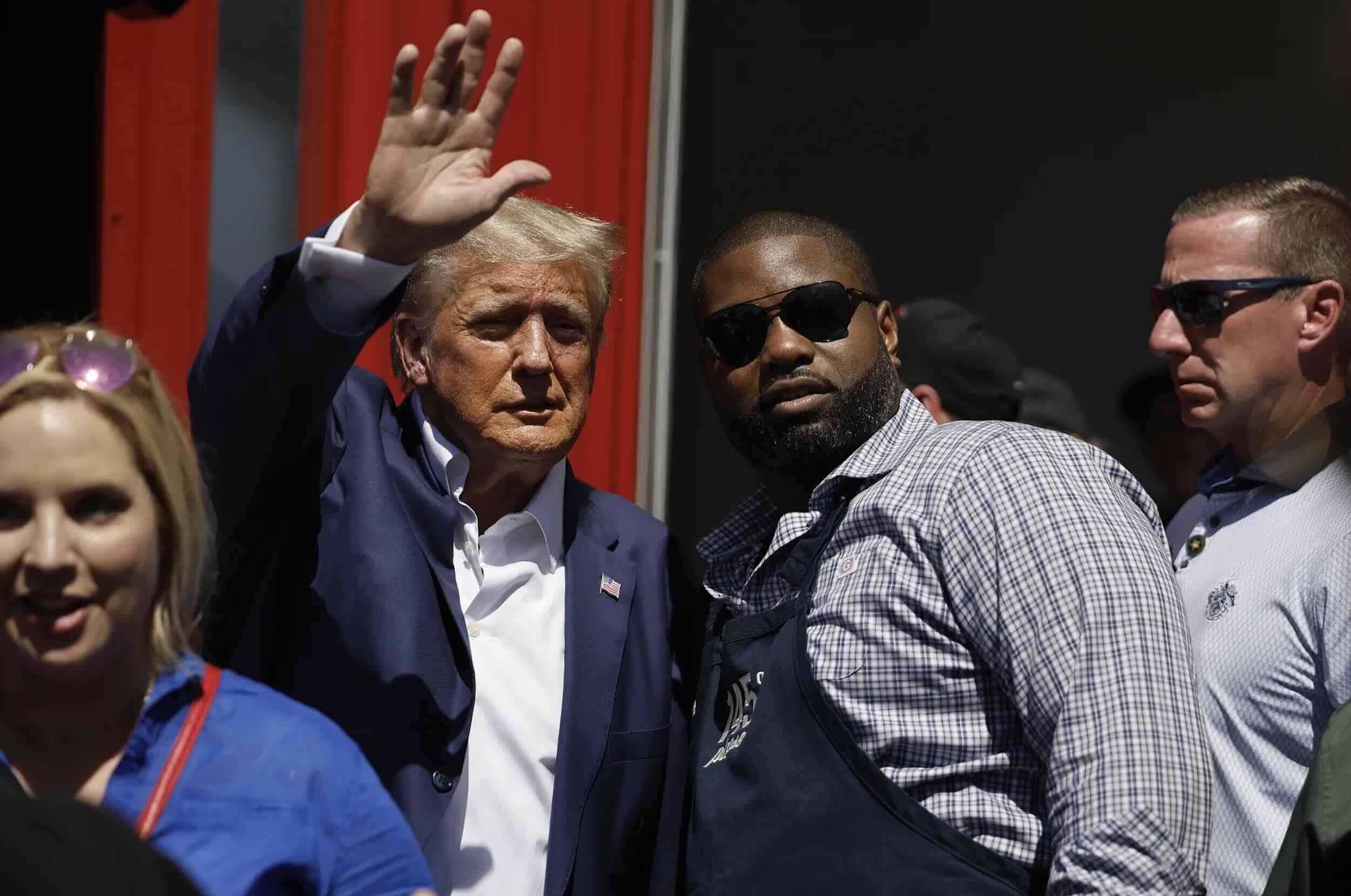
Photo: Bloomberg
If you visit Byron Donalds' campaign website today, you won't find the photo of him and his wife posing with Donald Trump. You won't see the banner declaring him "Trump-endorsed." You won't find the section promising to "Enact the Trump Agenda."
That's by design. In September 2026, the Donalds campaign quietly overhauled its website, scrubbing multiple prominent references to the president who once served as the cornerstone of his political identity. The campaign called it a planned update to focus on state policies like affordability and housing insurance costs. Political analysts called it what it is: a calculated pivot for a general election in a state where Trump's approval ratings have dipped.
But while the website has changed, the record hasn't. And for Black Floridians, the data is unambiguous: the policies Donalds has championed throughout his career — the same ones he built his national profile defending — would cause measurable harm to the communities he now claims to want to help.
The Voting Rights Record
Perhaps nowhere is the gap between Donalds' campaign rhetoric and his legislative record more glaring than on voting rights.
In Congress, Donalds voted against the John Lewis Voting Rights Advancement Act, legislation designed to restore federal oversight of state election laws with a documented history of racial discrimination. He also opposed the For the People Act, which sought to expand voter registration and access. Civil rights organizations argue these votes permit state-level policies that reduce polling access in minority neighborhoods.
He voted against the George Floyd Justice in Policing Act, a bill designed to increase police accountability, mandate federal tracking of misconduct, and restrict chokeholds. He also opposed the CROWN Act, federal legislation prohibiting discrimination based on hair textures and protective hairstyles historically associated with race — braids, locs, and Afros.
- Donalds voted against the John Lewis Voting Rights Advancement Act and the For the People Act
- He voted against the George Floyd Justice in Policing Act and the CROWN Act
- Black unemployment stands at 7.0% in October 2026 — nearly double the white rate
- 76% of Black Floridians back David Jolly; only 10% support Donalds
Byron's War on DEI
Donalds is a staunch opponent of diversity, equity, and inclusion programs, affirmative action, and race-conscious policies in both the public and private sectors. He has aligned himself with the broader conservative push to dismantle DEI offices, training programs, and hiring initiatives across federal agencies, universities, and corporations.
Dismantling these programs ignores the ongoing realities of systemic racism and wealth disparities. By opposing diversity initiatives, Donalds supports a system where Black professionals and students face higher barriers to entry, while underqualified individuals from dominant groups continue to benefit from generational privilege.
The Economic Data
Donalds frames his platform as a merit-based economic empowerment model. He rejects race-conscious policies outright, arguing that an unregulated free market based purely on individual achievement is the most effective way for Black Americans to excel financially.
It's a compelling pitch. But the numbers tell a different story.
Donalds frequently cites the pre-pandemic economy under Trump, when Black unemployment hit what was then a historic low of 5.3% in 2019. He credits deregulation and tax cuts as the direct cause.
But that record has since been surpassed — under Joe Biden. Black unemployment reached 4.8% in April 2023, a full half-point lower than the Trump-era figure Donalds champions. Organizations like the National Urban League point to this as evidence that the conservative formula Donalds credits was not, in fact, the ceiling.
More troubling for his argument is what came next. By October 2026, Black unemployment had climbed back to 7.0% — nearly double the rate of white Americans. This exposes the fragility of an approach built on broad deregulation rather than targeted investment. When the macroeconomic tide goes out, Black workers are the first to feel it — and the last to recover.
The Education Debate
Donalds' cornerstone policy for minority communities is the expansion of charter schools and voucher programs. His campaign points to Florida Department of Education data showing that Black students enrolled in Florida charter schools outperformed their traditional public school peers in 31 out of 38 academic categories.
But public education advocates counter with data showing that widespread voucher systems drain essential funding from public schools, which serve the overwhelming majority of low-income Black students. They argue that unregulated charter networks lack public accountability and leave the most vulnerable students behind in underfunded public systems.
The Jim Crow Controversy
In June 2024, Donalds sparked widespread condemnation after stating during a campaign event that during the Jim Crow era, "the Black family was together" and more Black people voted conservatively.
Census data does validate that Black marriage rates were structurally high during the early to mid-20th century, remaining above 90% until 1970. But historians and sociologists reject Donalds' implication that this was due to conservative cultural alignment. They note that the subsequent drop in marriage rates was driven by complex economic shifts, the decline of manufacturing jobs, and systemic mass incarceration beginning in the 1970s — not federal welfare policies. Furthermore, researchers note that historical voting data for Black Americans in the South during Jim Crow is mathematically unprovable because state-sponsored terror and poll taxes effectively disenfranchised the Black population.
The Polling Reality
A brand-new October 2026 NBC 6 poll reveals how this data and platform are translating to actual Black voters in Florida. David Jolly holds a massive lead among Florida's Black community, polling at 76%. Byron Donalds is currently capturing just 10% of the Black vote.
Political analysts note that despite Donalds making direct appeals to Black entrepreneurs and target audiences, the overwhelming majority of minority voters are continuing the long-standing historical trend of backing the Democratic platform over conservative economic theories.
What Byron Wants You to Forget
Donald Trump's public defense of Byron Donalds highlights the complex balancing act both men are playing in the final stretch of the election. While Trump has used Truth Social to insist that Donalds is still fully aligned with him and holds his "Complete and Total Endorsement," political analysts note that Trump's statements are meant to accomplish very specific goals.
To win the Florida governorship, Donalds cannot afford any dip in turnout from core conservative voters. If MAGA voters believed Donalds was genuinely abandoning Trump, they might sit out the election. By publicly stating they are still completely aligned, Trump is sending a direct signal to his base that Donalds is still "one of them" and that it is safe to vote for him.
Meanwhile, Donalds gets to run a general election website focused heavily on local Florida economic issues, while both he and Trump maintain on stage that their political alliance remains completely unbroken.
But the data on rising unemployment disparities, underfunded public schools, and the historical impacts of mass incarceration serves as empirical proof that a purely deregulated, hands-off economic approach does not structurally protect or elevate marginalized communities. Policies that dismantle diversity initiatives and block federal voting protections are seen as directly harmful because they remove the legal guardrails designed to ensure equal access and opportunity.
No Ads. By Us. For Us.
This article was made possible by readers like you. We hope it inspired you to support Emerald Book, so we can continue producing content like this.
We will never show you ads, sell your data, or require a subscription to consume our content. Your gift helps us keep the truth accessible.
Click the Support button to give a gift of any amount today.
Thank you for making this work possible.