

Emerald Pages
◆
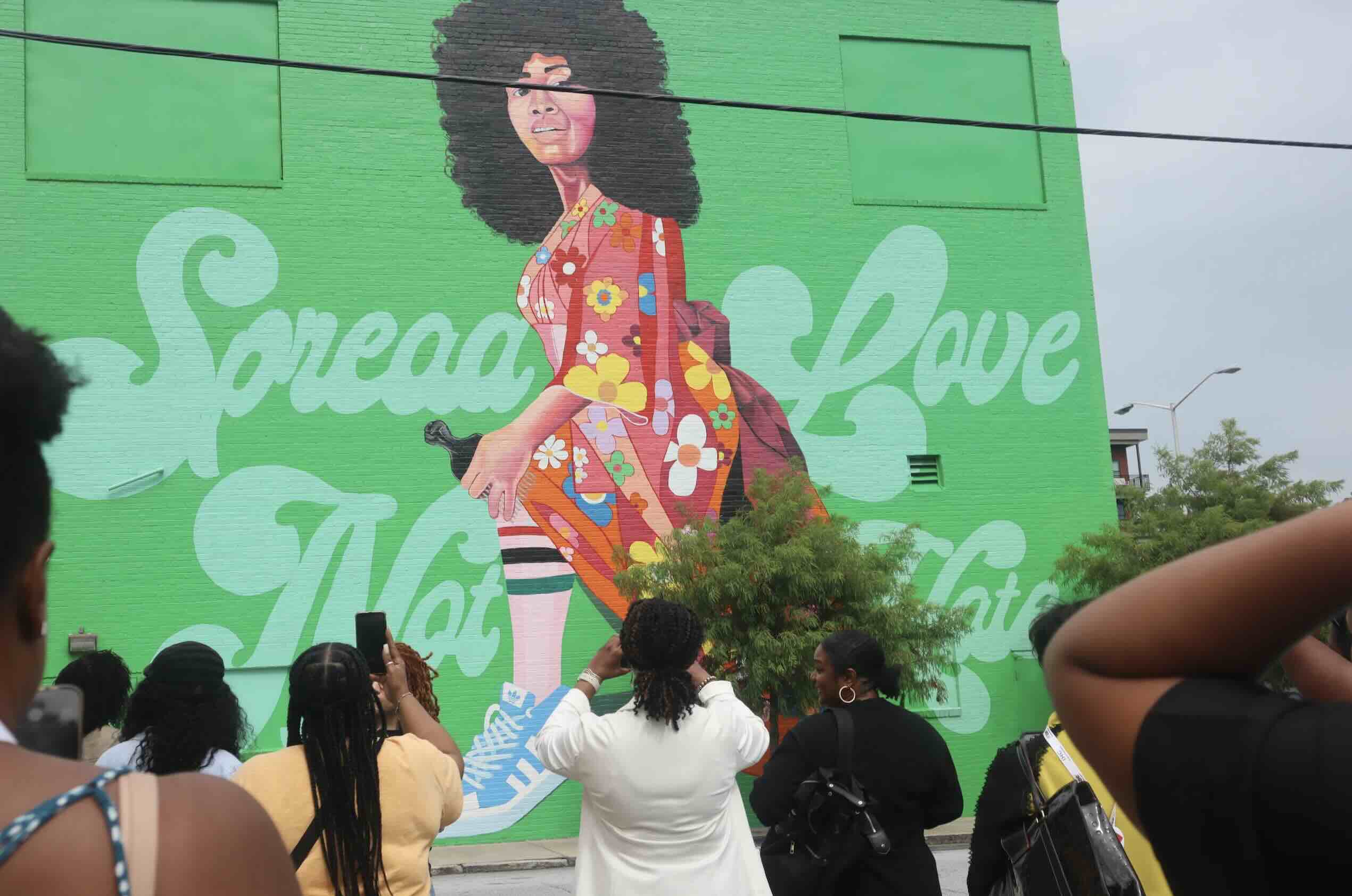
Photo: Black Girl Magic Tours
Atlanta is celebrated as a "Black Mecca"—a city where Black political power, culture, and entrepreneurship have flourished for decades. Black residents make up roughly 45% to 46% of the city's population. Metro Atlanta boasts the highest concentration of Black-owned employer businesses in the nation at 10.7%, with 13,091 firms. And yet, white-owned businesses outnumber Black-owned ones by nearly 7-to-1 across the metro area. In the city proper, white business owners hold 70% to 75% of all businesses, while Black owners hold about 20%. How is this possible when nearly half the city is Black?
The answer lies not in population numbers but in the architecture of American wealth. Business ownership requires capital—personal savings, family wealth, home equity, and access to bank financing. These are the exact areas where centuries of systemic exclusion have left the deepest scars. The result is a paradox that defines modern Atlanta: a city of immense Black cultural and political influence, yet one of the most severe racial wealth gaps in the country.
This wealth gap is the engine of the ownership gap. White entrepreneurs can draw on family savings, inherited wealth, or home equity to seed their businesses. Black entrepreneurs, locked out of those same networks by historical redlining and ongoing lending disparities, often cannot. The median household income for white families in Atlanta is roughly $83,000 to $84,000. For Black families, it sits at about $28,000. When a household earns one-third of its peers, saving the surplus capital required to launch an employer-level business becomes nearly impossible.
The Solopreneur Trap
There's another structural barrier: the vast majority of Black-owned businesses in Atlanta are non-employer firms—solopreneurs, freelancers, and side hustles with no paid staff. Approximately 96% to 97% of the city's Black-owned companies fall into this category. Only about 3% scale up to become employer firms that hire a workforce.
This matters because employer firms drive commercial wealth. They have higher revenues, access larger contracts, and generate the kind of institutional capital that compounds across generations. White-owned businesses, backed by greater access to bank loans and institutional networks, are vastly more likely to have paid employees and to operate at scale. The average valuation of a white-owned business in Atlanta is roughly $658,264. For Black-owned businesses, it's $58,085—more than 11 times smaller.
- Metro Atlanta: 13,091 Black-owned employer businesses (10.7% of all employer firms) vs. roughly 95,000–100,000 white-owned employer firms (78–80%).
- City of Atlanta: Black-owned businesses account for ~20% of all companies; white-owned firms hold 70–75%.
- Wealth gap: Median white household wealth in Atlanta is $238,355; median Black household wealth is $5,180.
- Revenue gap: Average white-owned business valuation is $658,264; average Black-owned business valuation is $58,085.
- Banking gap: 48% of Black households in Atlanta are unbanked or underbanked; 14 majority-Black neighborhoods are banking deserts.
Why Affluent Black Households Hold the Key
Here is the crucial point: the gap is not inevitable. Atlanta has over 10,000 Black millionaires, alongside a growing base of Black corporate executives, doctors, attorneys, and tech professionals. These households have the financial cushion to absorb minor trade-offs—slightly lower savings rates, fewer ATM locations, or less sophisticated wealth management tools—in exchange for a massive community return.
Economists point to two primary levers: the lending multiplier and business-to-business procurement.
First, the lending multiplier. Banks operate on fractional reserve banking—they lend out significantly more than the cash they hold in deposits. If Atlanta's affluent Black households moved just 1% of their investment cash or business operating capital into local Black-owned institutions like Citizens Trust Bank, it would inject hundreds of millions of dollars in new liquidity. That capital could then fund thousands of new mortgages and small business loans for entrepreneurs currently denied by mainstream institutions.
Second, B2B procurement. The real landscape-altering money isn't in buying from a Black-owned restaurant or boutique—though that matters. It's in business-to-business spending. If upper-class Black business owners, doctors, and corporate decision-makers intentionally hired Black-owned accounting firms, IT providers, marketing agencies, and construction contractors, those solopreneur firms could finally scale, hire employees, and close the revenue gap. A closed-loop Black supply chain doesn't fully exist yet—but it can be built, one contract at a time.
The Utility Tradeoff—and Why It's Not an Excuse
Critics argue that affluent consumers choose banks based on maximum financial utility, not ideology. And they're right—to a point. Megabanks like JPMorgan Chase, with over $4 trillion in assets, can offer perks, rates, and global convenience that smaller Black-owned banks simply cannot match. All Black-owned banks combined hold less than $7 billion in total assets. A Black developer seeking a $50 million loan cannot get it from a local Black bank; the institution doesn't have the capacity.
But this is exactly why the "all-or-nothing" framing fails. Affluent households don't have to move their entire portfolio. They can keep their brokerage accounts, retirement funds, and jumbo credit lines at global megabanks to maximize returns—while routing secondary funds, emergency savings, or corporate deposits into Black-owned institutions. Because of the lending multiplier, even small, steady deposits dramatically compound a community bank's ability to issue loans.
Because Black-owned businesses are concentrated in lower-margin sectors like healthcare, social assistance, and personal services, and because the community lacks the commercial real estate, manufacturing, and corporate infrastructure to recirculate capital internally, money leaves almost immediately. Major daily expenditures—housing, utilities, groceries, vehicle purchases—flow to national corporations or non-minority firms. Only about 2 cents of every dollar spent by a Black consumer goes to a Black-owned business.
The Path Forward
Atlanta's business ownership gap is not a mystery. It is the result of generational wealth exclusion, lending discrimination, and structural market barriers. But it is also solvable—and the solution does not require waiting for external rescue.
Middle- and upper-class Black households in Atlanta have the capital, the networks, and the institutional leverage to change the landscape. Moving 1% of deposits into Black-owned banks. Directing corporate contracts to Black-owned vendors. Investing in Black-led venture funds. Serving on boards. Mentoring solopreneurs ready to scale.
This is not charity. It is economic self-determination. And in a city that has led the nation in Black business density for four consecutive years, the next chapter—moving from cultural capital to commercial equity—is already being written.
No Ads. By Us. For Us.
This article was made possible by readers like you. We hope it inspired you to support Emerald Book, so we can continue producing content like this.
We will never show you ads, sell your data, or require a subscription to consume our content. Your gift helps us keep the truth accessible.
Click the Support button to give a gift of any amount today.
Thank you for making this work possible.