

Emerald Pages
◆
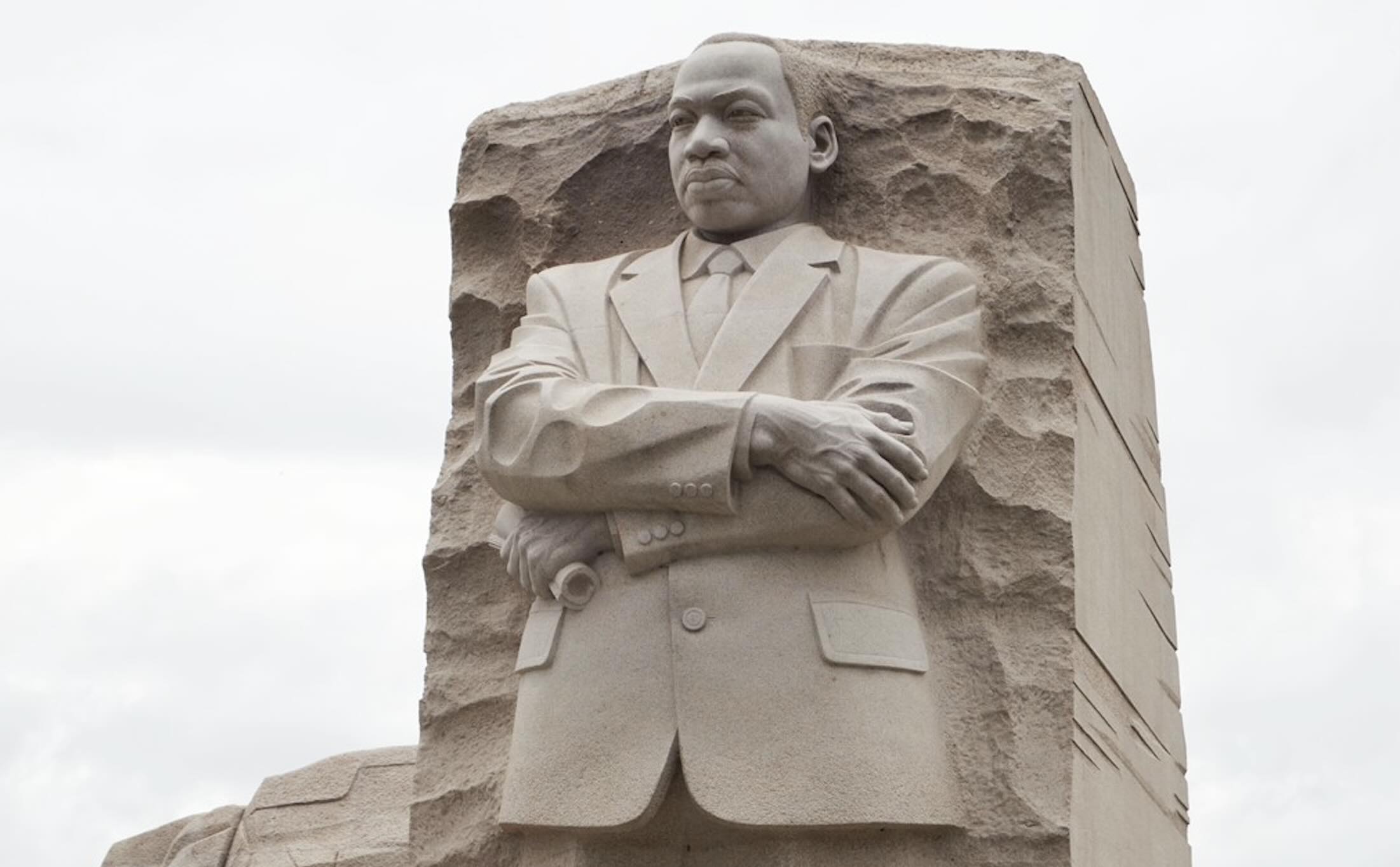
Photo: Megan Yoder
In 1968, the median Black household held roughly 9 cents of wealth for every dollar held by the median white household. More than half a century later—after the Voting Rights Act, after thousands of Black elected officials took office, after two terms of a Black president—that figure has not meaningfully changed. It hovers between 6 and 9 cents.
This is the empirical core of a hard truth: political power without economic muscle is an illusion. The numbers tell a story that rhetoric often obscures. Understanding it requires looking at both what Black political power has achieved and where its structural limits become visible.
The Rise of Representation, the Stagnation of Wealth
Following the passage of the Voting Rights Act in 1965, the number of Black elected officials in the United States skyrocketed from roughly 1,500 in 1970 to over 9,000 today. Black mayors have governed nearly every major American city. The Congressional Black Caucus has become one of the most influential legislative blocs in Washington. And the nation twice elected a Black president.
Yet during this same period of unprecedented political ascension, the racial wealth gap remained virtually frozen. In 1968, the median Black household had roughly 9% of the wealth of the median white household. Decades later, federal data shows Black household wealth remains virtually unchanged relative to white wealth—hovering between 6% and 9%.
Political power changed the faces in city halls. It did not shift the underlying distribution of capital.
The Limits of Public Sector Employment
The primary economic mechanism driven by early Black political power was the integration of municipal government. When Black mayors took office, public sector hiring became more equitable, which empirically reduced the Black-white wage gap by 5.5% within five years. Government workers earned more stable wages and accessed better benefits than many private-sector counterparts.
But empirical limits quickly emerged.
Public sector jobs are funded by tax revenue. When cities experienced deindustrialization and tax-base erosion, those politically secured municipal jobs were the first to face budget cuts and layoffs. Political power has very little legal reach inside private capital markets. While a city council can pass equitable hiring resolutions for city hall, it cannot force private banks to approve commercial loans.
The data on this is unambiguous: Black mortgage and commercial loan applicants are still denied at roughly twice the rate of white applicants with identical credit profiles.
The Procurement Illusion
To turn political power into economic muscle, many Black-led cities implemented minority business procurement goals—requiring a percentage of city contracts to go to minority-owned firms.
The empirical failure of these policies to scale community economies stems directly from the employer versus nonemployer data.
According to the latest U.S. Census Bureau's Annual Business Survey, there are an estimated 201,000 Black-owned employer businesses—firms with at least one employee—in the United States. This marks a significant milestone, surpassing 200,000 for the first time and reflecting a 62% increase since 2017.
These businesses drive substantial economic activity. According to reports analyzed by the Brookings Institution, they generated a cumulative $249 billion in annual revenue, supported more than 1.8 million jobs, and paid out $69.8 billion in annual salaries.
But the disparity in overall representation remains stark. While Black Americans make up roughly 14.4% of the U.S. population, Black-owned firms account for only 3.4% of all employer businesses nationwide.
The vast majority of Black-owned enterprises—approximately 4.4 million—operate as nonemployer firms. These are sole proprietorships with no paid employees. They represent roughly 96% of all Black-owned companies.
- Employer firms: 201,000 businesses generating $249 billion in annual revenue and supporting 1.8 million jobs.
- Nonemployer firms: 4.4 million sole proprietorships generating $128.7 billion in annual receipts.
- Representation gap: Black Americans are 14.4% of the population but own only 3.4% of employer businesses.
Because 96% of Black businesses are solo nonemployer operations, they lack the cash reserves, bonding capacity, and payroll infrastructure to execute multi-million dollar city infrastructure contracts. Studies on municipal contracting show that because local minority firms are often too small to act as prime contractors, large white-owned firms frequently utilize them as passive "fronts" to satisfy diversity metrics, keeping the lion's share of the capital and profit margins out of the community.
The Banking Multiplier Effect
If a community deposits money into a bank, that bank multiplies it by lending it out to local home buyers and business owners. However, Black-owned depository institutions hold a microscopic fraction of the estimated $2.1 trillion in Black consumer spending power. Without massive community deposits, local financial institutions lack the liquidity to fund large-scale commercial projects.
Currently, it is estimated that less than 2% of Black consumer spending is captured by Black-owned businesses. The rest leaves the community almost immediately because the day-to-day essentials—housing, utilities, groceries, and insurance—are overwhelmingly owned by external corporations.
The Weaponization of Protective Law
Civil rights advocacy organizations and legal scholars explicitly argue that civil rights laws and federal policies are being inverted and weaponized against the exact communities they were created to protect.
Under the current administration, this mechanism utilizes the literal text of the Civil Rights Act of 1866 (Section 1981) and Title VII of the Civil Rights Act of 1964 to dismantle equity programs under the legal framework of "reverse discrimination" or "anti-white bias." By legally redefining programs meant to remedy historical discrimination as themselves "discriminatory," the administration has heavily restricted the growth of Black economic infrastructure.
The conservative legal movement successfully used Section 1981 of the Civil Rights Act—originally passed during Reconstruction to protect newly freed Black Americans' right to make contracts—to strike down private initiatives like the Fearless Fund, a venture capital contest exclusively for Black women entrepreneurs.
Building on this legal momentum, the Small Business Administration moved to cut back its 8(a) Small Disadvantaged Business contracting goals, lowering them drastically from a targeted 15% down to just 5%.
In March 2026, Trump signed Executive Order 14398, titled "Addressing DEI Discrimination by Federal Contractors." The order forces federal contractors and subcontractors to certify that they do not engage in "racially discriminatory DEI activities." Congressional representatives pushing back against the order note that it penalizes contractors who engage in targeted mentoring or leadership development programs specifically designed to bring Black-owned nonemployer firms into major supply chains.
Why Economic Sovereignty Is Structural
When a community's progress relies on a political policy, its survival depends on who controls the pen. When the legal tools created to protect a marginalized group can be flipped and used to dismantle their economic programs, it proves that rights without ownership are on loan.
Economic sovereignty does not ask for permission, it does not petition a court, and it does not wait for an election cycle. It dictates terms because it controls the material resources required for survival.
If a community owns its own corporate supply chains, private equity funds, and manufacturing hubs, it does not need a federal diversity mandate to win a contract. Private, closed-loop capital networks are heavily insulated from changes in presidential administrations or executive orders.
A bank, a commercial real estate portfolio, or a scalable employer firm does not have an election cycle. It passes from generation to generation, accumulating interest and market share regardless of who is in the White House.
The Path Forward
The $2.1 trillion in consumer spending and the millions of solo businesses represent the raw material. Transitioning that energy from asking for a share of someone else's economy to building an independent economic foundation is the only way to convert political illusions into permanent, unassailable power.
Converting even a small percentage of those 4.4 million nonemployer businesses into employer firms would fundamentally reshape local economies. If Black-owned employer firms achieved population parity—moving from 3.4% to 14.4% of all employer businesses—it would add billions to the national economy and create millions of new jobs.
The challenge isn't a lack of entrepreneurial drive; it is the disparity in size and revenue between nonemployer and employer firms. Black-owned nonemployer firms average roughly $29,000 in annual receipts. Black-owned employer firms average over $1.2 million in annual revenue.
To cross that threshold and hire their first employee, these solo entrepreneurs typically face specific structural hurdles: access to capital, operational infrastructure, and contracting and procurement opportunities. Securing commercial bank loans or line-of-credit approvals is essential for them to cover upfront payroll costs before revenue scales.
Ultimately, the data shows that political power operates via coercion and regulation, whereas economic power operates via ownership and resource allocation. When regulation attempts to squeeze ownership without a viable, self-funded alternative, capital simply flows elsewhere—proving that without independent financial infrastructure, legislative victories remain highly vulnerable.
Shifting the focus from pursuing political representation to building structural economic sovereignty is the transition from playing defense inside someone else's system to writing the rules of your own.
No Ads. By Us. For Us.
This article was made possible by readers like you. We hope it inspired you to support Emerald Book, so we can continue producing content like this.
We will never show you ads, sell your data, or require a subscription to consume our content. Your gift helps us keep the truth accessible.
Click the Support button to give a gift of any amount today.
Thank you for making this work possible.