

Emerald Pages
◆
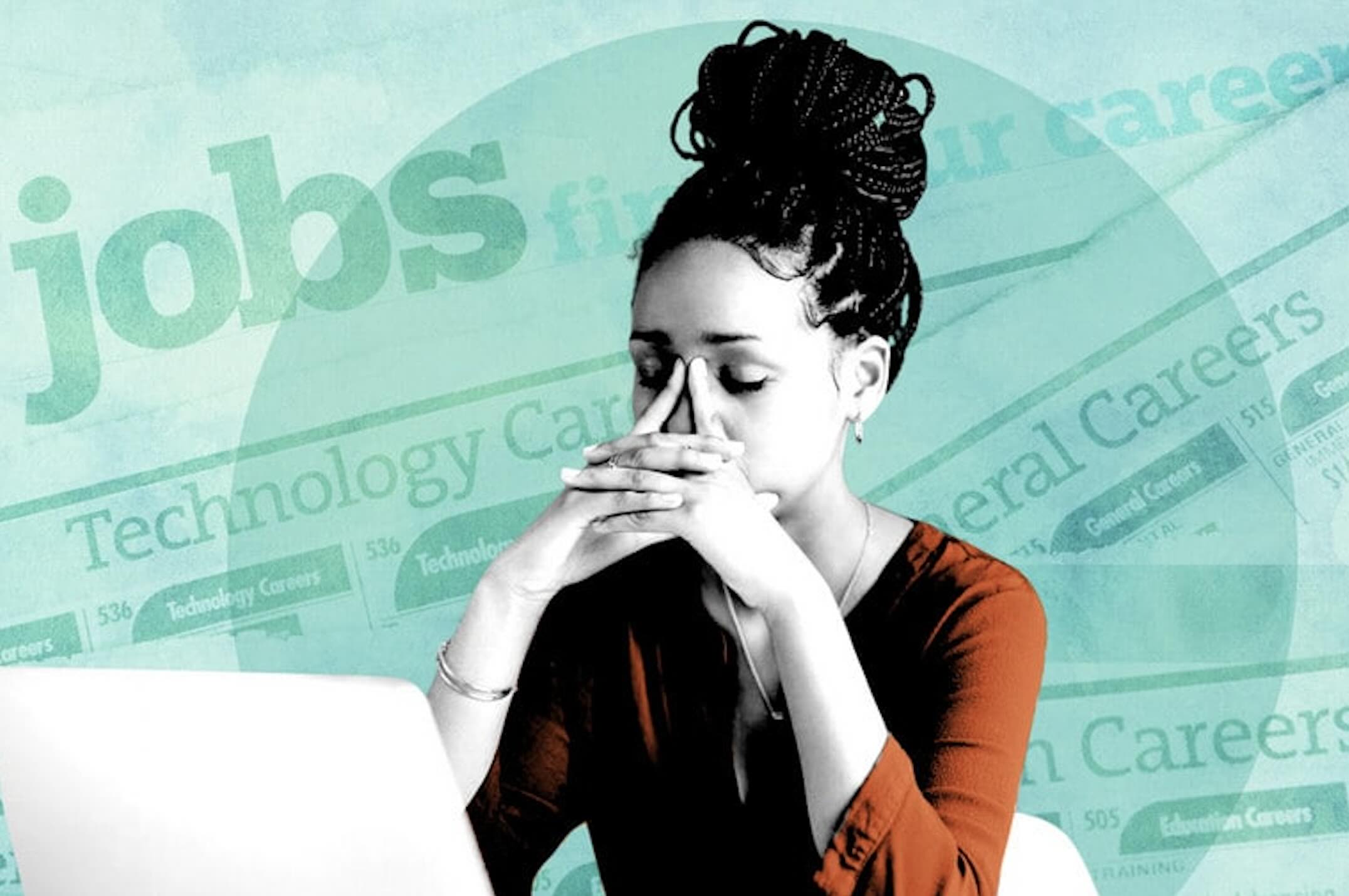
Photo: Politico
The unemployment rate for Black women aged 20 and older jumped to 6.8% in September 2026, up from 5.6% in August—a 1.2 percentage point spike in a single month. Behind that number are hundreds of thousands of Black women who lost stable, middle-class careers. A comprehensive report by the Institute for Women's Policy Research (IWPR) found that over 600,000 Black women have been displaced from the labor market since the beginning of 2025. The exact timeline and nature of these job losses reveal a two-fold economic hit.
The question isn't whether this will happen again. It's how to build a system where it can't.
The Initial Shock: 251,000 Jobs Lost in Eight Months
In the first year of the contraction, the immediate wave of layoffs was concentrated directly in public administration and federal agency buyouts. IWPR tracking confirmed that between January and August of 2025 alone, Black women lost over 251,000 jobs. Despite representing only 14% of the female workforce, they bore a staggering 54.7% of all female job losses during that period.
Over 95,000 Black women were fired or laid off from the federal government alone. The public sector has long served as a critical "wealth and stability anchor" for Black families, offering fairer hiring practices, solid benefits, and a reliable path to the middle class. But that anchor became a vulnerability when the federal government downsized agencies like HUD, HHS, and the Department of Education.
As the public sector cuts finalized, the crisis expanded into the private sector, bringing the total number of displaced workers past the 600,000 mark by late 2026. This second phase was driven by two forces.
- Early 2025 shock: Over 251,000 Black women lost jobs between January and August 2025, bearing 54.7% of all female job losses despite being only 14% of the female workforce.
- Public sector core: Net loss of 155,656 jobs for Black women, driven by 95,371 federal government losses from administration layoffs and buyouts.
- Private sector ripple: Black women lost private-sector jobs at three times the rate of all women in professional and service occupations.
- Prolonged unemployment: Median unemployment duration of 19 weeks for displaced Black women, compared to 9 weeks for white women.
The Root Cause: 27-to-1 Structural Dependency
Black workers are 27 times more likely to work for white employers than the other way around. This isn't a rhetorical statistic—it's the mathematical foundation of asymmetric integration that defines the American labor market.
Roughly 80% of employer firms are white-owned. Only about 3% are Black-owned. When the employer-to-employee ratio is this skewed, the minority group bears almost 100% of the vulnerability to economic shocks, political shifts, and corporate decisions. If even a tiny percentage of those dominant employers harbor conscious or subconscious racial bias, it mathematically guarantees a permanently elevated Black unemployment rate.
If the community relies entirely on mainstream political cycles and legislative reforms, traditional macroeconomic studies estimate it will take over 500 years to bridge the income gap and up to 800 years to bridge the racial wealth gap.
Political gains are easily rolled back. A policy memo, a budget cut, or a change in administration can instantly wipe out decades of fragile progress. This is why waiting for mainstream systems to fix structural imbalances is mathematically a losing game. Political power without economic muscle is an illusion.
How the Black Economy Protects Black Women
Moving away from public sector dependence requires transitioning from mere consumer spending to institutional asset ownership. Black consumer buying power is projected to exceed $2.1 trillion by the end of 2026, yet a massive "spending leakage" exists—with a dollar staying inside the Black economy for less than six hours on average.
The empirical mechanism to eliminate public sector reliance relies on a mathematically sound three-phase structural loop.
Phase 1: Targeted Capital Migration (Years 1 to 3)
The foundation relies on shifting existing cash flow rather than creating new money. The Black banking sector currently controls roughly $6.7 billion in total assets—a fraction of the community's total buying power.
If a baseline of 14.8 million Black households moved just $20 per month out of Wall Street banks and into Black-owned Minority Depository Institutions (MDIs) or Community Development Financial Institutions (CDFIs), it would generate $3.55 billion in new deposits in Year 1 alone. Within 5 years, this automated capital migration would pass $25 billion, effectively quadrupling the sector's lending capacity.
Phase 2: Activating the Fractional Reserve Multiplier (Years 4 to 10)
A dollar deposited in a community bank does not just sit in a vault. Under fractional reserve banking rules, commercial banks are only required to hold a small percentage of liabilities in reserve, allowing them to leverage the rest into the local credit market.
With a 10% reserve requirement, every $1,000,000 in stable deposits allows a Black-owned bank to legally underpin up to $9,000,000 in commercial credit. This localized credit solves the primary barrier to expansion, allowing micro-businesses to scale into employer firms that can offer competitive salaries and healthcare. Currently, Black business owners pay an average of 3.09 percentage points higher interest rates due to systemic inequities in mainstream underwriting.
Phase 3: B2B Supplier Integration
Currently, over 95% of Black consumer spending leaks out to non-Black businesses instantly because of a fractured supply chain. True economic sovereignty requires a high business-to-business (B2B) multiplier.
This means replicating the economic model of historic districts like Tulsa's Greenwood District, where dollars circulated up to 100 times before exiting. A Black-owned enterprise must intentionally procure its accounting, marketing, legal, logistics, and raw materials from other Black-owned suppliers. Recirculating just 5% of the $2 trillion spending base ($100 billion) directly within these integrated corporate supply chains is mathematically capable of generating 500,000 new private-sector jobs and $500 billion in community wealth within a decade.
How This Breaks the 27-to-1 Ratio
When you use targeted capital migration and fractional reserve lending to scale Black-owned micro-businesses into large employer firms, you create an alternative labor market. Moving a business from a solo-operation to a mid-sized firm with 20 to 100 employees directly absorbs Black workers out of the mainstream market.
As these firms grow, they insulate workers from private-sector corporate downsizings—such as the recent corporate rollbacks of DEI initiatives—because the core ownership structure is fundamentally aligned with the community's stability. When Black-owned firms intentionally build B2B supplier networks among themselves, they effectively build an internal supply chain. If a mainstream economic recession hits the broader U.S. economy, a highly integrated Black economy can keep its capital circulating internally.
Because the money stays within the community ecosystem longer, the velocity of the dollar remains high, keeping local businesses liquid and protecting local jobs even when the overall macroeconomy slows down. This is the economic shield.
The Break-Even Horizon
By Year 5, the internal labor market reaches a critical mass capable of absorbing localized systemic shocks—meaning a round of federal agency downsizing or corporate DEI rollbacks would no longer spike the unemployment rate. By Year 10, a fully closed B2B supply network creates a permanent economic shield, establishing true self-sufficiency and neutralizing the structural leverage that outside employers hold over the community's livelihoods.
Relying on individual effort—such as higher education, skills acquisition, or traditional networking—cannot solve a double-digit unemployment gap because individuals are still competing within a 27-to-1 structurally rigged market. True economic sovereignty is not about training Black workers to be more competitive applicants for white-owned firms; it is about building the institutional infrastructure so that the community creates, controls, and sustains its own demand for labor.
The Path Forward
Political power without economic muscle is an illusion. When a community does not own the companies, the land, or the financial institutions that employ its people, its political leverage is severely limited. By bypassing the slow, bureaucratic gridlock of politics and directly executing the capital migration loop, the community shifts from asking for resource allocation to allocating its own resources.
This breaks the 27-to-1 employer dependency and ensures that the economic security of Black women and families is never again used as a political football. The displacement of over 600,000 Black women since 2025 was not inevitable. It was the result of a structural vulnerability that can be eliminated—not through policy reform, but through the disciplined, collective execution of an independent economic strategy.
The mechanism exists. The capital exists. The tools exist. The only question is whether we move from consumption to ownership, from dependence to sovereignty, from waiting to building.
All the tools you need to participate in the Black economy for free are right here.
The work starts now.
No Ads. By Us. For Us.
This article was made possible by readers like you. We hope it inspired you to support Emerald Book, so we can continue producing content like this.
We will never show you ads, sell your data, or require a subscription to consume our content. Your gift helps us keep the truth accessible.
Click the Support button to give a gift of any amount today.
Thank you for making this work possible.