

Emerald Pages
◆
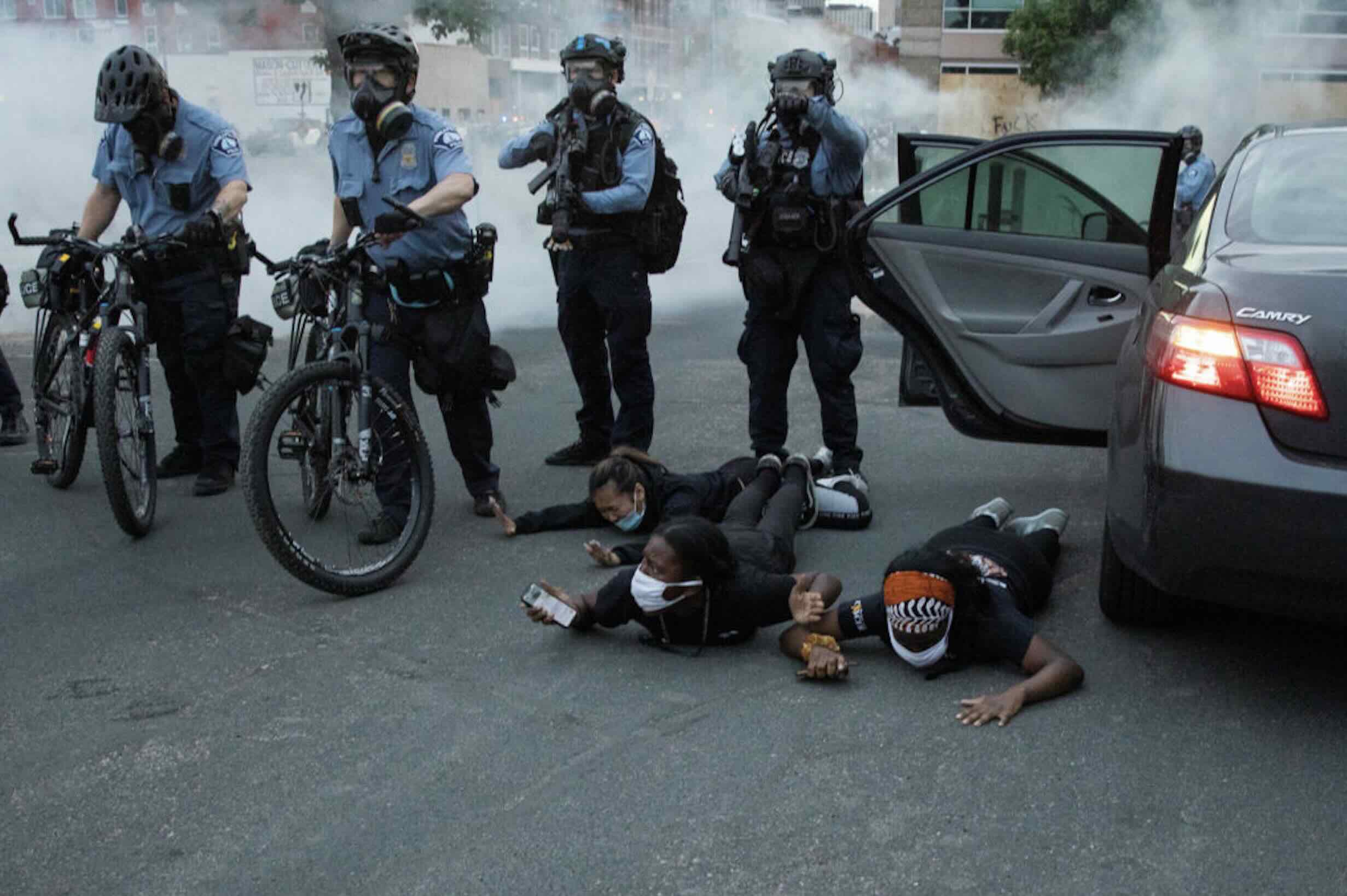
Photo: Reuters
Police brutality is not a random American tragedy. It is a predictable outcome of specific economic conditions—conditions that can be deliberately dismantled. The aggressive, proactive policing that floods Black neighborhoods with heavy police presence is not deployed in a vacuum. It is justified by high unemployment, concentrated poverty, declining commercial tax bases, and municipal budget shortfalls. Remove those justifications, and the political and administrative rationale for over-policing collapses. That is the central insight behind the Black economic participation strategy: by controlling where money flows, the community can systematically cut off the financial and social pathways that lead to fatal police encounters.
The scale of the opportunity is difficult to overstate. According to the Selig Center for Economic Growth at the University of Georgia, Black Americans wield over $2.1 trillion in annual buying power. If Black America were a country, its economy would rank among the ten largest in the world—larger than the entire GDP of Canada, Spain, Saudi Arabia, or South Korea. That $2.1 trillion flows through housing, retail, beauty, digital commerce, food, transportation, entertainment, and financial services. It represents deposits in major banks, insurance premiums, subscription fees, loan payments, and everyday consumer spending. Every dollar is a vote, and collectively those votes can reshape the material conditions that make police violence possible.
This is not a metaphor. It is an empirical strategy with a documented historical track record. During the Montgomery Bus Boycott of 1955–1956, Black residents made up roughly 75 percent of the city's transit riders. Rather than waiting for elected officials to voluntarily desegregate, the community walked, carpooled, and used Black-owned taxi networks. The transit system bled money. Within thirteen months, the Supreme Court upheld a ruling that segregation on buses was unconstitutional. During the Birmingham Campaign of 1963, five weeks of selective spending boycotts cost white business tycoons millions in lost sales. Those business elites, not the politicians, forced the city to integrate because their profits were collapsing. The Civil Rights Movement succeeded primarily through direct economic disruption and boycotts that hit the financial bottom line, not through moral persuasion alone.
The first and most powerful mechanism is banking. The fractional reserve system is the engine of modern finance: when a dollar is deposited into a commercial bank, that bank is legally allowed to lend out roughly ten times that amount to borrowers. This is how money is created in the modern economy. It is also why community banking is such a potent tool. Moving just $2.1 billion—one-tenth of one percent of Black buying power—out of Wall Street commercial banks and into Black-owned banks and Community Development Financial Institutions (CDFIs) instantly unlocks up to $21 billion in lending power controlled entirely by community-vetted institutions. That $21 billion does not disappear. It is deployed as commercial loans to local entrepreneurs, affordable housing developers, community organizations, and social infrastructure projects that the mainstream banking system has historically redlined and starved of capital.
The downstream effects are direct and measurable. A portion of that lending capacity can fund independent mental health crisis response teams, youth mentorship programs, restorative justice initiatives, substance abuse support networks, and private neighborhood safety ambassadors. When communities manage their own social crises, the frequency of calling 911 for non-violent issues drops dramatically. Every 911 call eliminated is a police encounter that never happens. Every police encounter that never happens is a potential escalation into violence that is permanently foreclosed. This is not theory—it is arithmetic. Reducing the total number of police interactions reduces the statistical probability of a fatal encounter.
Starving the Budgets That Fund Brutality
1. Move Your Money into Black-Owned Institutions. Open accounts at Black-owned banks and credit unions, support Black-owned businesses, and invest in community development. Redirecting capital builds economic independence and funds community institutions.
2. Redirect Your Spending and Organize Economic Campaigns. Prioritize Black-owned businesses, organize collective buying campaigns, and boycott corporations or municipalities that profit from discriminatory policing. Concentrated consumer power can create financial pressure for change.
3. Build Community-Controlled Safety Systems. Form Black merchant associations to fund trained safety ambassadors, de-escalation specialists, and independent crisis response teams. Give communities alternatives to armed police for nonviolent disputes and mental health emergencies.
4. Fund Independent Institutions and Political Reform. Support Black-owned media, community organizations, police accountability initiatives, and ballot campaigns. Use financial resources, professional skills, and collective organizing to build lasting alternatives to systems that enable police brutality.
- Banking Redirection: Moving deposits into Black-owned banks unlocks up to 10x lending power through the fractional reserve system, funding independent social infrastructure like mental health crisis networks, youth mentorship, and affordable housing.
- Geographic Divestment: Boycotting predatory municipalities deprives them of the sales tax revenue used to fund aggressive police forces, forcing them to choose between hostile policing and fiscal survival.
- Private Safety Districts: Merchant associations can hire community-vetted de-escalation experts, eliminating the need to call 911 for routine commercial disputes and completely removing armed police from everyday commerce.
- Corporate Accountability: With 70% of Black consumers willing to stop buying from brands they believe devalue the community, corporate lobbying power can be redirected to demand police reform at the local level.
It's All in One Place
Knowledge without action is just entertainment. And action has always been the hard part. Finding Black-owned banks, identifying Black-owned businesses, mapping predatory municipalities, organizing collective campaigns—that used to take weeks of research and coordination. Not anymore.
Every tool described in this article is now in one place, behind one link. The banking directory. The business finder. The divestment map. No accounts to create. No learning curve. One link, every tool, all of it built to turn intention into action.
Direct Legislative Power Without Politicians
Beyond the local level, economic muscle unlocks the ability to use direct democracy to bypass unresponsive politicians and deadlocked legislatures. In 26 states and hundreds of municipalities across the country, citizens have the constitutional right to change laws and amend constitutions directly through citizen-led ballot initiatives. This is a parallel legislative system that operates outside the representative framework. It is also, historically, the system that the powerful have deliberately made expensive to prevent grassroots communities from using it.
The cost barrier is the primary weapon. To get a police accountability law or structural wealth-redistribution measure onto a state ballot, organizers must gather hundreds of thousands of certified voter signatures within tight windows. Professionalized signature-gathering networks, legal compliance, and field logistics can easily cost anywhere from $3 million to over $15 million per initiative. Add the cost of a statewide media campaign to counter corporate and police union advertising, and the price tag climbs higher still. The entire system is designed to price out grassroots movements and reserve direct democracy for wealthy interests.
With massive economic backing, the community can fund the infrastructure required to force direct policy changes on its own terms. A central, community-funded Direct Democracy Trust can finance high-velocity signature collection drives, paying thousands of boots-on-the-ground coordinators to secure hundreds of thousands of certified signatures within strict windows. It can also maintain a permanent legal defense fund of top-tier constitutional attorneys to defeat legislative attempts to invalidate citizen petitions. This guarantees that uncompromised, community-drafted laws—such as ending qualified immunity at the municipal or state level, establishing civilian oversight boards with binding subpoena and firing power, or redirecting tax revenues into non-police crisis networks—are placed directly onto the voter ballot for a raw majority vote.
This is a fundamentally different theory of change than the one most movements pursue. Instead of trying to persuade politicians to act, the community writes the laws itself and funds the campaign to pass them. The community transforms from an interest group begging for attention into a sovereign voting bloc that simply writes the rules of the society it lives in. The politician is removed from the equation entirely. The community drafts the text, gathers the signatures, defends the petition in court, and mobilizes the vote. Direct democracy becomes the vehicle, and economic power becomes the fuel.
There is also a deeper mechanism at work here. Corporate America depends on Black consumer spending for its profit margins. Market intelligence shows that roughly 70 percent of Black consumers will stop buying from brands they believe devalue the community. Because corporate profits operate on thin margins, even a small, targeted redirection of the $2.1 trillion spent annually can instantly threaten a Fortune 500 company's stock price or a major retailer's quarterly earnings. When consumer loyalty is conditioned on political action, corporations can be forced to use their massive lobbying power to demand that city councils implement police accountability, reform union contracts, or back independent oversight boards. The corporation becomes an unlikely but effective ally because its bottom line depends on it.
Political Power Isn't Enough
Economic empowerment addresses root causes that political advocacy alone has never solved. By concentrating the $2.1 trillion economic engine into precise, data-driven plays—banking redirection, geographic divestment, private safety districts, and direct democracy funding—the community shifts its status from an advocacy group asking for reform to an independent financial power that dictates the terms of its own safety. The strategy is not about waiting for permission from a hostile system. It is about building an independent financial shield that forces accountability through the power of the dollar.
Every deposit into a Black-owned bank is a vote for a different future. Every dollar spent at a Black-owned business is a brick in a wall that keeps armed police out of routine community life. Every coordinated boycott of a predatory municipality is a message that brutality has a price, and that price will be paid in lost revenue. Every signature gathered through a community-funded ballot initiative is a law written by the people who have to live under it, not by the politicians who have historically enabled the violence.
The $2.1 trillion is already there. It is already being spent. The only question is where it goes. When that capital flows into Black-owned institutions and away from the municipalities, banks, and corporations that profit from over-policing, it becomes more than money. It becomes a structural shield. It becomes leverage. It becomes the foundation of a community that is safe not because it is policed, but because it is whole.
No Ads. By Us. For Us.
This article was made possible by readers like you. We hope it inspired you to support Emerald Book, so we can continue producing content like this.
We will never show you ads, sell your data, or require a subscription to consume our content. Your gift helps us keep the truth accessible.
Click the Support button to give a gift of any amount today.
Thank you for making this work possible.