

Emerald Pages
◆
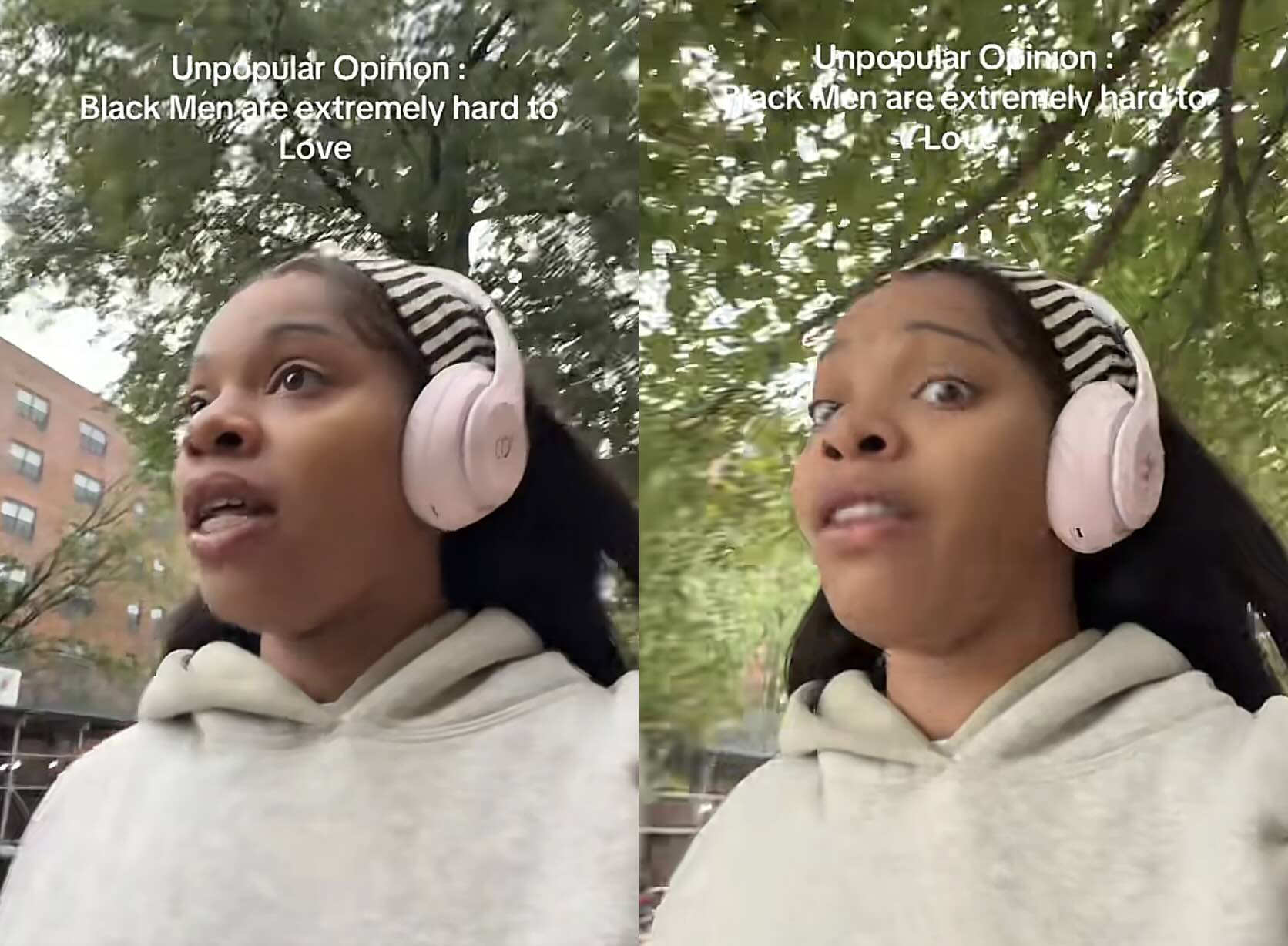
Photo: @theembodimentcoach | TikTok
The viral video is familiar territory. A creator, speaking with raw exhaustion, breaks down the disappointment that comes with dating Black men. The comment sections erupt with validation from women who feel seen and defensiveness from men who feel villainized. The conclusion is always the same: "Black men are so hard to love." It is a powerful and emotional message. And before going any further, one thing must be clear: Black women are valid in their feelings.
This is not controversial. It is a statement of fact backed by data, lived experience, and the testimony of millions of women who have navigated the dating market with grace, patience, and growing exhaustion. The frustration is not imaginary. The pain is not manufactured.
But validation is not the same as victory. And understanding why the game feels rigged is the first step toward winning it.
The Validity of the Feeling
Before discussing strategy, the truth must be addressed. Black women have every right to feel the way they feel. The data supports them. The culture supports them. And their own lived experience supports them.
The Numbers Are Not in Their Favor
There are roughly 91 Black men for every 100 Black women in the United States. This is a census-derived fact. Even if every single Black man partnered with a Black woman, 9% of Black women would be left without a partner. That is not a personal failure. That is arithmetic.
But the imbalance compounds across every dimension of the dating market. Black women graduate from college at roughly double the rate of Black men, which means a Black woman with a bachelor's degree who wants a Black partner with a similar education is competing for a pool half the size of her white counterparts. Despite earning more degrees, Black women do not out-earn Black men. Black men earn a median income of roughly $53,245, compared to $49,243 for Black women, and they significantly outnumber Black women in six-figure earners. Black women who want an economic peer are fishing in an even smaller pond.
The out-marriage rate compounds the problem. Black men marry outside their race at two to three times the rate of Black women. Roughly 1 in 4 recently married Black men marry non-Black women. Because high income makes Black men attractive across all demographics, their options expand while the pool for Black women shrinks.
There are also factors rarely discussed. Black men are incarcerated at nearly five times the rate of white men, removing a significant portion of the Black male population from the dating pool—not just during sentences, but permanently, due to the collateral consequences of a criminal record. And Black men have lower life expectancy than Black women due to healthcare disparities, homicide rates, and occupational hazards, meaning even among available partners, Black women are more likely to outlive them.
Stack these factors on top of each other, and the picture is clear: the dating market for Black women seeking Black men is not just challenging. It is structurally, statistically, and systematically rigged.
The Behavioral Reality
Theembodimentcoach's video resonated because it named something millions of Black women have experienced but struggled to articulate. Her critique was not a generic complaint. It was a targeted analysis of a specific dynamic: a significant portion of men demand absolute femininity from women while offering zero purpose, direction, or protection of their own.
In other words: they want premium rewards for a zero-dollar investment.
Instead of taking responsibility, some men deflected. They pointed the finger back at women, claiming women are simply "too hard to love"—too independent, too demanding, too educated, too masculine. This is a classic defensive move. It is the same move abusers use when they say "look what you made me do." And it is exhausting for many Black women.
The Emotional Tax
There is a tax Black women pay in the dating market that is rarely acknowledged: the tax of emotional labor.
Black women are expected to be the emotional anchors of their relationships. They are expected to be strong, forgiving, patient. They are expected to "build up" a man who has not yet built himself. They are expected to tolerate inconsistency, immaturity, and a lack of accountability because "that's just how men are."
And when they finally say "enough," they are branded as bitter, angry, or "hard to love."
This is a double bind. Stay, and they are complicit in their own mistreatment. Leave, and they are blamed for the breakdown. There is no winning move within the current framework. That is what makes it a trap.
The Structural Rigging
Understanding why the game feels rigged requires looking at the forces that shape the board. There are three players at this table: Black women, Black men, and the systems that shape their interactions.
The Algorithm Is a Third Player
Most people think of dating as a two-player game. But in the modern market, there is a third player: the platform itself.
Social media algorithms do not prioritize truth. They prioritize engagement. And nothing generates engagement like conflict. A video claiming "Black men are hard to love" generates massive traction because it triggers defensiveness from men and validation from hurt women. The algorithm pushes it further. The cycle repeats.
As other creators respond, the cycle of "gender war commentary" continues. It divides the community but keeps people on the app, which is all the platform cares about. Every minute spent arguing in a comment section is a minute the platform monetizes. The emotional reaction is the business model.
A disciplined player recognizes this as noise designed to drain energy before ever stepping out the door. The viral video is not a diagnosis of anyone's dating life. It is a content product engineered to keep people scrolling.
The Cultural Rigging
Beyond the algorithm, cultural forces shape the dating market in ways rarely acknowledged.
Colorism plays a significant role. Research cited by the Multi-City Study of Urban Equality indicates that in certain studies, up to 55% of lighter-skinned Black women were married compared to 23% of darker-skinned Black women. This is a painful internal dynamic the community often refuses to discuss. But it is real, and it shapes outcomes.
Dating apps add another layer. Relationship experts like Paul Brunson point out that systemic biases and negative stereotypes cause Black women to face a "racial penalty," resulting in lower swipe-right volumes. The algorithm itself may be working against them.
And then there is the "Strong Black Woman" narrative. This trope, born from resilience, has been weaponized against Black women. It is used to justify a lack of protection, provision, and emotional support. "You're strong," they say. "You can handle it." And so the burden falls on Black women, again and again.
These are not excuses. They are explanations. And understanding them is the first step toward navigating around them.
The Winning Strategy: Open Filtering
In a rigged game, the only way to win is to stop playing by the system's rules and start playing by one's own. "Open filtering" is not about being bitter or defensive. It is about being ruthlessly efficient with the most valuable resource: time.
The Core Mechanic: Costly Signaling
The core mechanic of open filtering is costly signaling. In a market filled with low-effort players, talk is cheap. Anyone can say they want a relationship. Words cost nothing.
A costly signal is different. It is an action a deceptive or uncommitted player cannot easily fake because it requires too much emotional capital, time, or vulnerability. When a person openly communicates their standards and long-term intentions within the first conversation, they force the other person to reveal their hand immediately.
A player looking for a casual ego-boost will find that transparency "too heavy" and exit on their own. This is a win. The open filter just saved three months of guessing games. The players who stay are the ones genuinely aligned with what is being built.
This is the same logic that makes "Tit-for-Tat" the most successful long-term strategy in repeated games. Start by cooperating—showing genuine interest, warmth, and vulnerability. If the other person defects—games, shows inconsistency, or exercises unfair leverage—immediately defect and walk away. If they cooperate, continue to cooperate. This prevents wasting years on the wrong person while giving high-quality players an open runway to connect.
How to Execute the Open Filtering Strategy
Open filtering is an active, multi-step process. Here is how it works in practice.
Shift the posture. A person is not performing to be chosen by a scarce pool of men. They are the one hosting the review. The men are auditioning for access to their life. This is how the power imbalance the numbers create is corrected.
The biggest reason dating takes years is that one person hides their true intentions. By being entirely upfront about what is being looked for, the burden of proof shifts onto the other person. Watch their actions, not their words. If their actions do not match what was stated as needed, walk away immediately. No second chances on non-negotiables. No benefit of the doubt on character.
Filtering questions should not be an interrogation about the past. They should be open statements about the future. "I am building a life centered around X, Y, and Z. I am looking for a partner whose train is already moving in that exact same direction." This turns the interaction into a teamwork exercise, not a therapy session. No one is trying to fix anyone. The goal is to find someone already headed in the same direction.
If a man tries to use his demographic leverage to treat a woman poorly, play games, or avoid accountability, do not stay to argue or prove worth. Walk away. Ambiguous data must always be treated as a negative signal. A man who is inconsistent in the first month will be inconsistent in the first year. A man who deflects accountability on a first date will deflect it in a marriage.
If the primary complaint in the viral video is unaddressed trauma and a refusal to seek counseling, the open filter should explicitly scan for self-awareness early. A disciplined player openly values emotional intelligence and notes, "I value mental wellness and self-reflection in a partner." A broken or defensive player will immediately opt out of the game.
In game theory, when a player faces a restricted market due to strict boundaries, a classic move is to expand the feasible set—the total pool of Black men. This does not mean lowering standards. It means reconsidering what "standard" means. It could mean looking past rigid socioeconomic requirements, considering trades professionals or entrepreneurs instead of only white-collar professionals. The goal is not to settle. The goal is to give oneself more options, which dilutes the "unnatural leverage" that high-earning Black men hold over a specific dating life.
The viral video describes a market saturated with low-effort, unhealed behavior. But by using open filtering, a person does not waste years trying to love someone who is hard to love. That is unintelligent and nonsensical. They quickly sort through the noise, reject the broken dynamics, and save their energy for a partner who is not hard to love.
The Game Is Rigged, But It Is Winnable
The game is hard. The math is brutal. The odds are stacked. The algorithm is against them. The cultural narratives are against them. And the structural imbalances are real.
But the system cannot stop two disciplined, high-value people who are looking for the exact same thing from eventually finding each other and walking off the board together.
Expressing frustration is a valid release valve. Venting to friends, posting a video, writing in a journal—these are all healthy ways to process the emotional weight of dating in a rigged market. But they change nothing about the board.
To actually win, a person has to transition from a state of emotional reaction to a state of unwavering focus and cold discipline. The winning strategy is not to complain about the rigged game. It is to see the board clearly, execute with precision, and filter with the ruthless efficiency of a grandmaster.
The viral video will fade. A new one will take its place. The gender war will continue because it is profitable for the platforms that host it. But no one has to participate in that war. A person can step off the battlefield entirely and play a different game—one where they make the rules, they control the pace, and they decide who gets to stay.
Once the board is seen clearly, the anxiety fades. It's just a process to be executed with focus, discipline, and a little bit of time.
No Ads. By Us. For Us.
This article was made possible by readers like you. We hope it inspired you to support Emerald Book, so we can continue producing content like this.
We will never show you ads, sell your data, or require a subscription to consume our content. Your gift helps us keep the truth accessible.
Click the Support button to give a gift of any amount today.
Thank you for making this work possible.