

Emerald Pages
◆
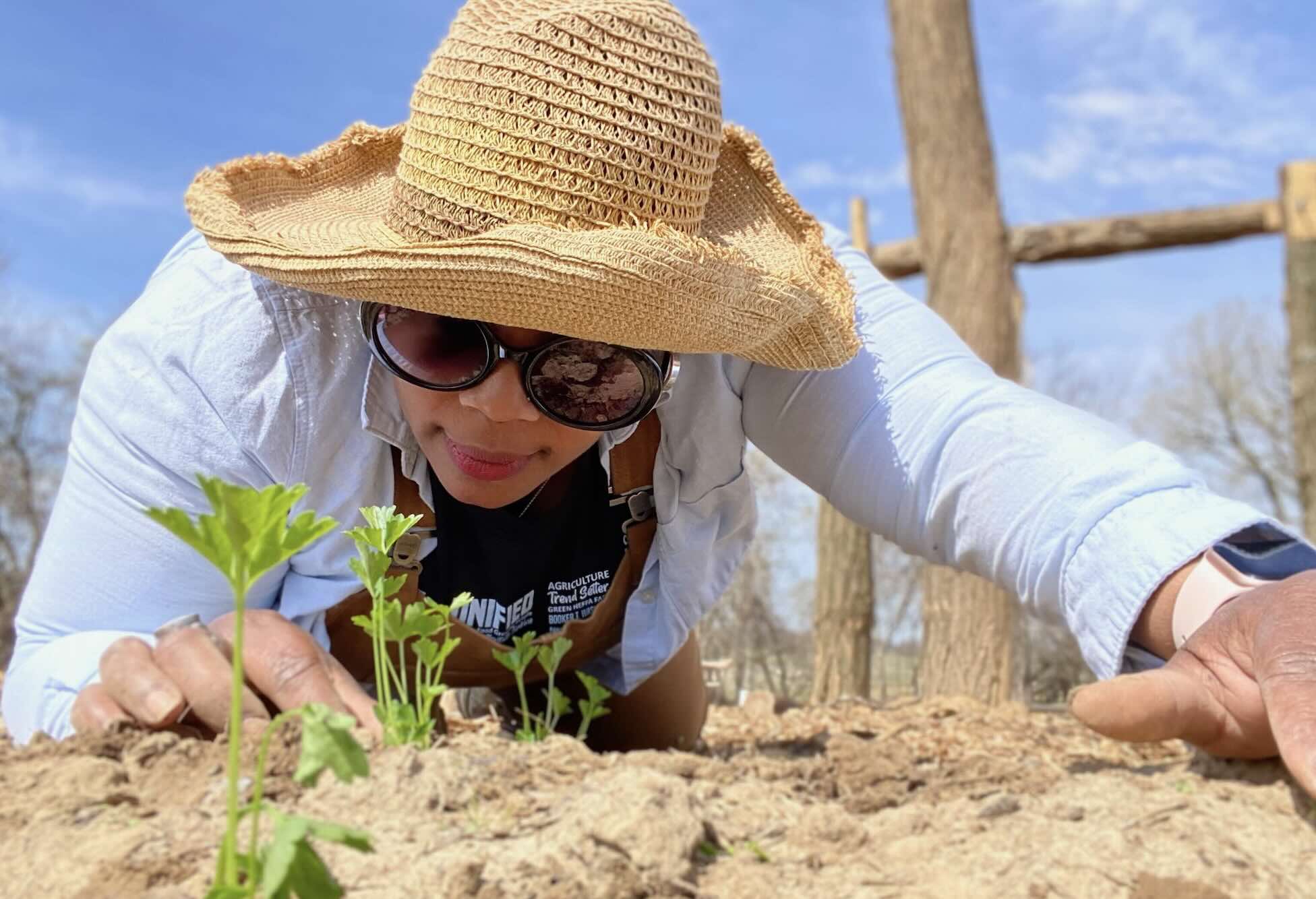
Photo: Michelle Lewis
For most of human history, food was free. Not in the sense that it required no effort—hunting and gathering was brutal, endless work—but in the sense that it carried no price tag. The earth produced, and humans ate. There was no grocery store, no receipt, no monthly budget line for calories.
That world ended roughly 10,000 to 12,000 years ago with the dawn of agriculture. And what replaced it was something far more complex than simple survival: a system that transforms free gifts of nature into commodities that must be earned, purchased, and distributed.
We pay for food today not because the earth charges us, but because we imposes on each other what might be called a "civilization tax"—the cost of human labor, infrastructure, and organization required to bring nature's abundance to our tables.
This is the paradox of the modern world: the most basic things humans need to survive—water, food, shelter, warmth—are all free in nature. Yet we work 40-hour weeks to sometimes barely be able to afford them. Understanding why requires tracing how food stopped being free, how other societies preserved free food systems, and how modern laws actively restrict self-sufficiency.
From Free to Foraged: The Original Economy
Before farming, humans lived as hunter-gatherers. Food was sourced directly from nature—wild berries, roots, game, fish—without financial or transactional cost. There was no concept of ownership over the land or its produce. The earth was common ground.
This began to change with the Neolithic Revolution. Once humans settled, claimed land, and invested labor into cultivating crops and livestock, food became a commodity. Ownership, trade, and eventually currency transformed survival into a transaction. The commons—land anyone could walk onto to hunt, gather, or drink from a stream—was gradually enclosed, privatized, and legally restricted.
By privatizing land, society restricted direct, free access to nature's resources. Walking onto most land to pick fruit or hunt animals became trespassing or poaching. The civilization tax was born.
What You Actually Pay For
The division between nature and human infrastructure is stark. While a river is free, the water coming out of a kitchen tap is not. You aren't paying for the liquid itself; you are paying for the water treatment plant that purified it, the pipes that brought it to your house, and the electricity that pumped it.
The same applies to food. An ear of corn growing in a wild field is free. But to get it to a grocery store shelf, humans have to buy land, pay for tractors, purchase fuel, package the food, truck it across the country, and pay the wages of grocery store workers. When we buy food, we are mostly paying for the human labor and energy it took to harvest, process, and transport it.
- Water: Free in rain, rivers, and springs. You pay for treatment plants, underground pipes, plumbing, and testing for toxic bacteria.
- Food: Free in wild plants, animals, seeds, and soil. You pay for land ownership, farming equipment, long-distance trucking, packaging, and grocery stores.
- Shelter: Free in caves, trees, and raw earth. You pay for property deeds, building permits, processed lumber, concrete, blueprints, and labor.
- Warmth / Energy: Free from the sun and wild fire. You pay for power grids, electrical wiring, gas lines, coal mining, and solar panel manufacturing.
This is the "civilization tax"—the cost of the human energy, technology, and organization required to clean that resource up, package it, and bring it directly to a neighborhood store so we don't have to go find it ourselves.
The Trade-Off: Specialization vs. Resilience
Modern civilization replaced the grueling, round-the-clock labor of primitive survival with a system of specialized work that trades money for guaranteed food, safety, and convenience. This economic system is not an accidental trap, but a historical trade-off built on how humans scale up society.
Instead of every person spending all day building a shelter, making clothes, and hunting food, society splits tasks up so people can master one specific job like engineering, nursing, or writing. Farmers use advanced tools, science, and large fields to grow more food with fewer people, meaning most of the population does not need to farm. Money acts as a universal shortcut, letting you trade 40 hours of your specialized skill for the combined labor of thousands of farmers, truckers, and grocers.
But this efficiency comes at a cost. In the modern world, we often conflate "financial independence" with "survival independence." If someone has a high-paying job, a nice car, and a big house, we view them as entirely independent. But in reality, they are completely vulnerable. If the power grid drops or grocery store trucks stop running for just 72 hours, a millionaire and a minimum-wage worker are suddenly in the exact same position. Neither can eat their specialized skills; both depend entirely on a fragile, invisible logistics chain.
Because this web of dependence is so efficient, society has actively dismantled the alternatives. Land has been privatized, zoning laws ban livestock, and water rights are regulated. The system forces dependence because a self-sufficient person who grows their own food, catches their own water, and builds their own shelter cannot be easily taxed, integrated into the workforce, or tracked by the economic engine.
Where Food Is Still Free
While the global food system is built heavily on commerce, there are places, cultures, and structured programs around the world where food is intentionally provided completely free of charge.
- Haiti's Lakou System: In rural Haiti, families maintain a jaden lakou—a highly sophisticated, multi-layered courtyard garden where they intercrop banana trees, plantains, cassava, yams, mangoes, beans, and squash. The konbit tradition allows neighbors to trade labor for a communal feast rather than wages.
- Sikh Langar: Every Sikh Gurudwara (temple) in the world features a community kitchen that serves free, hot, vegetarian meals to anyone who walks through the doors, regardless of religion, race, gender, or economic status. The Langar at the Golden Temple in Amritsar, India, operates 24/7 and serves free meals to over 100,000 people every single day.
- Allemansrätten (Everyman's Right): In Sweden, Norway, and Finland, the law guarantees public access to all wilderness, even privately owned forests. Anyone is legally allowed to forage for wild berries, mushrooms, nuts, and herbs, and fish in public waters completely free of charge.
- Indigenous Gift Economies: In many remote indigenous communities—such as parts of the Amazon Basin, rural Papua New Guinea, or traditional Inuit communities in the Arctic—food is not bought or sold. When a hunter catches a whale, seal, or large game, the meat is distributed across the entire village according to kinship and need, completely bypassing the concept of money.
The Government's Role in Restricting Self-Sufficiency
In the United States, the federal government is not preventing Americans from growing their own food. In fact, major federal agencies like the USDA actively encourage home and urban gardening through public programs. However, local city governments and private organizations can make it incredibly difficult—and sometimes illegal—to grow food in specific ways on your own property.
If you have seen news about Americans being fined or forced to tear up their vegetable gardens, it is almost always due to local zoning codes, municipal property ordinances, or private Homeowners Associations (HOAs).
- Front Yard Aesthetic Laws: Many cities have decades-old zoning ordinances written to ensure neighborhoods maintain a uniform, manicured aesthetic. Growing tall corn stalks, tomato cages, or sprawling squash vines in a front yard can be categorized as a property maintenance violation. In Miami Shores, Florida, a couple was ordered to destroy a front-yard vegetable garden they had maintained for 17 years because local city codes only permitted "ornamental" front landscaping.
- Private HOA Contracts: Roughly 2 in 3 newly built homes in America belong to a Homeowners Association. Many HOAs expressly forbid vegetable gardens where they are visible from the street, restricting them entirely to the backyard. Because this is a private contract rather than a government law, it is legally binding.
- Livestock Bans: Most suburban and urban municipalities completely outlaw raising dairy goats, pigs, or meat rabbits, and many heavily restrict or ban egg-laying chickens. A city code might allow you to keep four egg-laying hens, but strictly outlaw roosters due to noise.
- Water Rights: In many parts of the United States, especially the West, you don't even own the rain that falls onto your roof. State governments have strict water rights laws that can make it illegal to collect rainwater in barrels to water your crops.
Because of these hyper-local crackdowns, a major "Food Freedom" or Right to Garden movement has emerged across the United States. Advocacy groups like the Institute for Justice have been legally fighting local garden bans and helping draft state-level legislation called the Vegetable Garden Protection Act. States like Florida and Illinois passed state laws that officially preempt local city governments, banning towns from outlawing vegetable gardens on private property.
Why Most People Would Starve Without the System
If the commercial food system collapsed tomorrow and everyone had to grow their own food, the vast majority of the modern population would starve within months. This is not a failure of individual intelligence, but a consequence of how modern human society is designed.
Over 80% of Americans live in urban or suburban areas. To feed just one adult a balanced diet for an entire year, you need roughly 4,000 square feet (about one-tenth of an acre) of highly productive, well-managed land. Most people live in apartments with no land at all, or in suburbs with small yards that are heavily shaded or paved over.
Beyond space, there is the loss of generational knowledge. Farming is not as simple as putting a seed in the ground and waiting. Most people today do not know how to test, condition, or naturally fertilize soil; when to plant specific crops based on frost dates and microclimates; how to identify and fight plant diseases without commercial chemicals; or how to properly preserve a harvest so they have food to eat through the winter.
And even the people who do have backyard gardens today are rarely self-sufficient. They still rely heavily on the commercial system to keep their gardens alive. They buy plastic seed trays and bagged, sterilized soil from big-box stores. They use city water pumped through a garden hose. They purchase store-bought, hybridized seeds because they don't know how to harvest and save seeds from their own crops for the next year.
The Systemic Trap
Ultimately, modern civilization functions like a massive machine where we are all specialized cogs. A software engineer, a retail worker, or a truck driver doesn't need to know how to farm because they trade their labor for money, and trade that money for a farmer's labor. It is incredibly efficient, but it leaves us entirely vulnerable if we are ever cut off from the grocery store.
The civilization tax is not just a financial cost—it is a fundamental restructuring of human existence. We pay for food and water because modern society is optimized for convenience and density. To get completely free food and water from nature, a person has to live where those resources naturally occur, know how to find them, and spend hours every day foraging, hunting, or filtering wilderness water. Most people trade their money for food and water because it is faster and more reliable than trying to survive off the land.
The earth provides everything we need to survive for free, but human civilization has built a layer of commerce over it that makes survival require currency.
No Ads. By Us. For Us.
This article was made possible by readers like you. We hope it inspired you to support Emerald Book, so we can continue producing content like this.
We will never show you ads, sell your data, or require a subscription to consume our content. Your gift helps us keep the truth accessible.
Click the Support button to give a gift of any amount today.
Thank you for making this work possible.