

Emerald Pages
◆
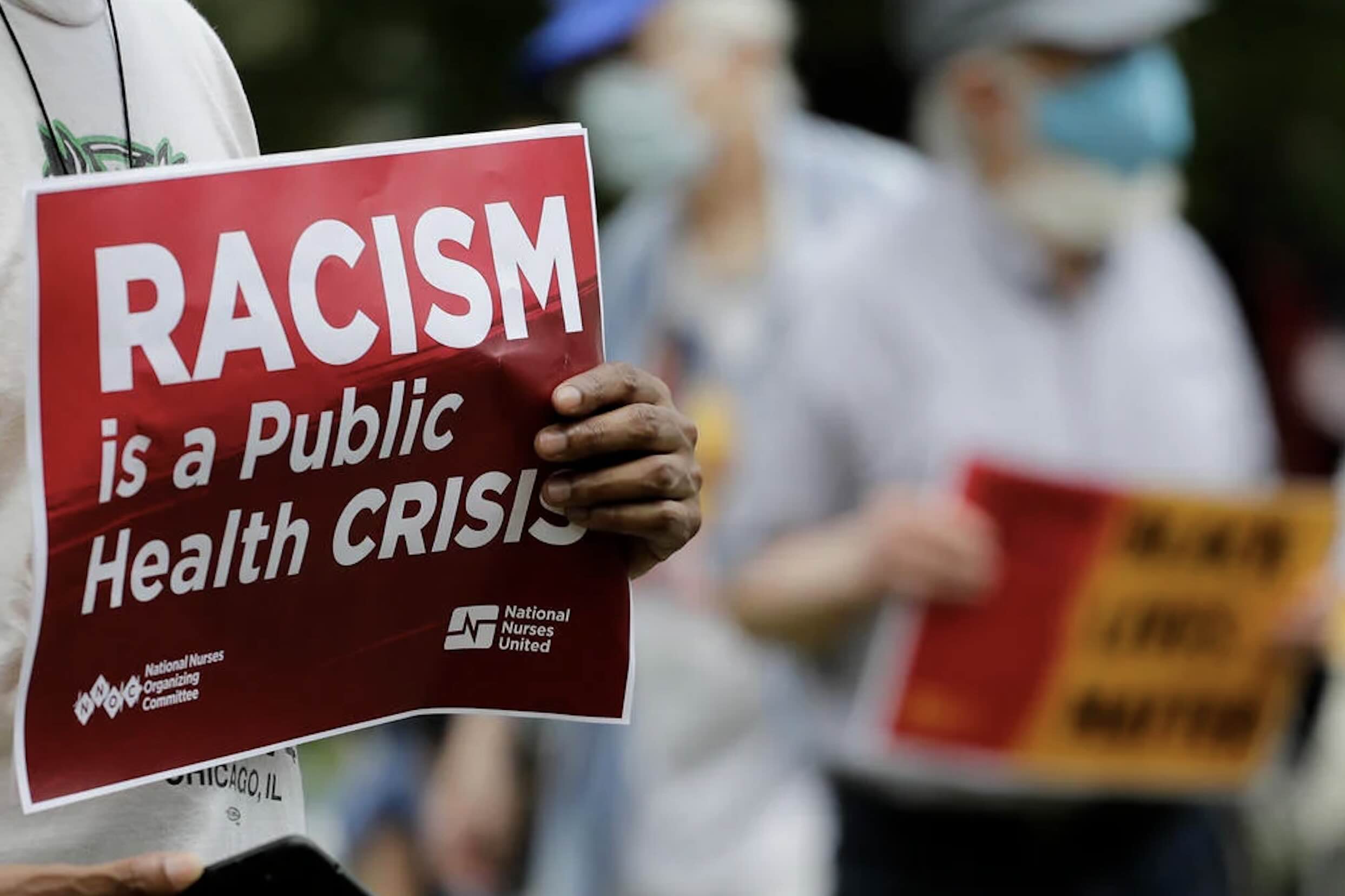
Photo: AP
For decades, the United States has stood as the lone outlier among wealthy nations, refusing to guarantee healthcare as a right. The reasons are complex, but one thread runs through the entire story with a consistency that is impossible to ignore: racism. It has been the most effective tool in preventing the solidarity required to demand a universal system. The pitch has always been subtle, but clear—your tax dollars shouldn't go to those people. It's a lie that has cost millions their health, their savings, and their lives.
The fear is not of a policy failure but of a racial one. The specter of "socialized medicine" is painted as a program that will benefit Black and Brown Americans at the expense of white Americans. This is a deliberate political strategy, refined for generations. It plays on a deeply seeded anxiety about a changing America, a fear that a shared system means a loss of status and control.
This narrative sells a future where a government-run system leads to long wait times, inferior care, and higher taxes. But for millions of Americans, that future is already their present. They are already waiting. They are already receiving inferior care, or no care at all. The fear is of a future that is never going to happen, because the nightmare they fear is already here for so many.
The Myth of the "Undeserving" Other
The foundation of this fear is the myth of the "undeserving" person—a narrative that some people are simply not worthy of care. This myth is deeply racialized. From the earliest days of the American colonies, the concept of who was included in the social contract was defined by race. The first poor laws distinguished between the "deserving poor" and the "undeserving poor," a category increasingly reserved for Black Americans and immigrants. This distinction was never just about economics. It was about who belonged to the community and who could be excluded from its protections.
When President Truman proposed national health insurance in 1945, the American Medical Association launched a fierce campaign against it. The AMA's opposition was not just about doctors' fees. It was about who would be included. One pamphlet warned of "the regimentation of the medical profession" and "the socialization of medicine"—phrases that carried implicit racial connotations. The plan was defeated, and the foundation was laid for a system that would remain segregated for decades.
The creation of Medicare and Medicaid in 1965 did not end this dynamic. It transformed it. Medicare was desegregated only after intense pressure from civil rights activists. But the underlying belief that some people were more deserving of care than others never disappeared. When Medicaid was created to serve the poor, it was designed as a state-run program with limited federal oversight. This structure allowed states—particularly in the South—to restrict access to care for Black Americans. The program became a tool of racial control, not just a safety net.
- The Political Strategy: Politicians have repeatedly used racial resentment to defeat healthcare reform, from the AMA's fight against Truman's plan to the "Death Panel" rumors during the Affordable Care Act debates.
- The Economic Reality: Racial minorities are more likely to be uninsured, more likely to face medical debt, and more likely to die from preventable diseases. Black Americans have the highest mortality rates from conditions like diabetes and hypertension—all treatable with access to care.
- The Human Cost: The fear of a "shared" system means everyone suffers. White Americans also die from lack of care and go bankrupt from medical bills. The only people who truly benefit are the insurance executives whose profits depend on the misery of others.
The result is a paradox: the people who most need universal healthcare are often the ones most afraid of it. Working-class white Americans, who suffer from some of the worst health outcomes in the developed world, are consistently told that a system that would help them is a threat. The opioid crisis, which ravaged white communities, was treated as a public health emergency only when it began to affect white Americans—after decades of being ignored when it was seen as a "Black" problem.
This is the genius of the fearmongering. It convinces people to actively fight against their own survival. It replaces the fear of dying from a treatable illness with the fear of a fictional future where someone else gets something they don't deserve.
The Fear of a Future That Is Already Here
The central lie of the anti-universal-healthcare movement is that it is protecting Americans from a future that will never happen. The dystopian scenarios—rationed care, long waits, bureaucrats deciding who lives and who dies—are presented as the inevitable result of a single-payer system. But these scenarios are already the reality for millions of Americans. The only difference is who experiences them.
In the current American system, care is already rationed—by ability to pay. Emergency rooms are already overwhelmed. Bureaucrats are already deciding who lives and who dies—they're called insurance company executives, and they deny claims every day. The difference is that their decisions are based on profit, not on need. They are accountable to shareholders, not to the public. And they are not elected.
The wait times held up as a warning about universal healthcare are already a reality for Americans who can't afford to see a specialist, who can't take time off work, who live in rural areas with no nearby doctors. The "inferior care" supposedly resulting from government-run systems is already the norm in many American hospitals, where infection rates are high and patients are discharged too soon to save money. The "higher taxes" supposed to be the cost of universal healthcare are already being paid—in the form of higher premiums, higher deductibles, and higher out-of-pocket costs. Americans pay more for healthcare than any other country, and they get less for it.
The future that Americans are told to fear is not a future at all. It is a present that has been hidden from view. It is the present that Black Americans have lived with for centuries. It is the present that poor white Americans are increasingly experiencing as the economy shifts and the social safety net shrinks.
The Only Path Forward
The history of healthcare in America is not just a story of racism. It is also a story of resistance. Civil rights activists fought to desegregate hospitals. Labor unions demanded health benefits for their workers. Ordinary people organized, marched, and voted for a better system. Multiracial coalitions recognized—however imperfectly—that their fates were intertwined.
But those coalitions have always been outnumbered. The most successful movements for healthcare reform were defeated or watered down by a white voting majority that refused to accept a system that would include Black and Brown Americans on equal terms. Medicare succeeded only after excluding millions of Black workers. The Affordable Care Act was gutted by white voters in the 2010 midterms and blocked in state legislatures across the South.
The path forward is not white Americans suddenly understanding racism. It is not white Americans "waking up" to their own material interests. White Americans have been told, for generations, that their interests lie in keeping Black and Brown Americans out of the system. And they have believed it. They have voted on it. They are blocking it right now.
Ten states still refuse to expand Medicaid. The majority of people in those states are white. The politicians they elect ran on refusing federal healthcare dollars. The voters knew what they were voting for. This is not a misunderstanding. This is a choice—made by white voters, in white-majority states, to deny healthcare to millions of people, including themselves, because the alternative would mean sharing it with the wrong people.
A universal healthcare system is not a radical idea. It is what every other wealthy nation has done. It is what the majority of Americans want. The only thing standing in the way is a fear that has been carefully cultivated for generations. The future we are told to fear—one of shared burden and collective care—is not a dystopia. It is a promise.
The fear of a future that is never going to happen has kept Americans from the future they deserve. It is time to let go of that fear. It is time to build something better.
No Ads. By Us. For Us.
This article was made possible by readers like you. We hope it inspired you to support Emerald Book, so we can continue producing content like this.
We will never show you ads, sell your data, or require a subscription to consume our content. Your gift helps us keep the truth accessible.
Click the Support button to give a gift of any amount today.
Thank you for making this work possible.