

Emerald Pages
◆
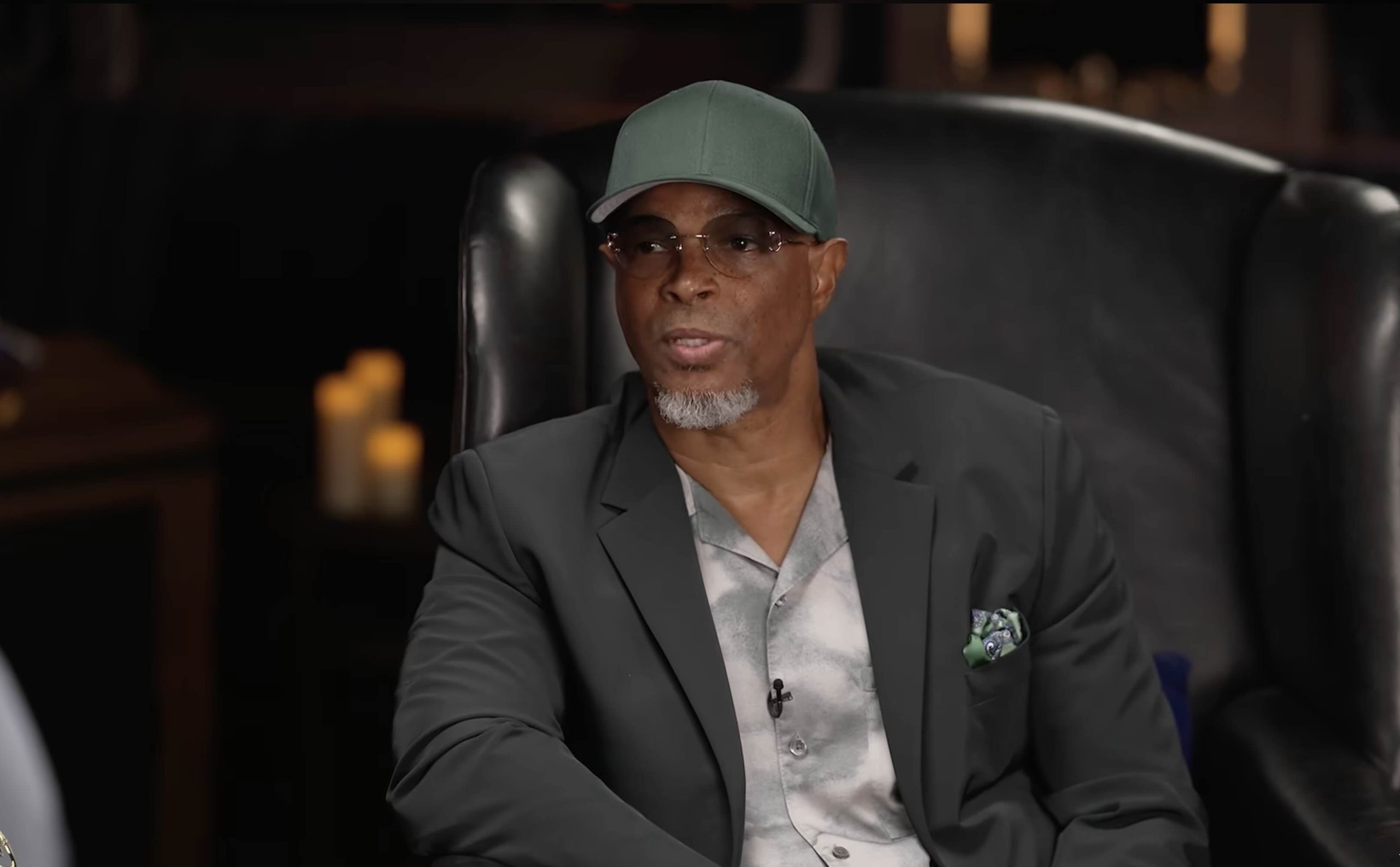
Photo: Club Shay Shay | YouTube
During an interview on Shannon Sharpe's podcast, Club Shay Shay, Damon Wayans said, "The more money you make, the less Black people you see." He explained that money "brings you into a new category," leading to a different house, a different neighborhood, and different friends. "The complexion changes," he noted, describing how professional circles and advisors become noticeably less diverse as one climbs the financial ladder.
On its face, Wayans was describing his own journey through the upper echelons of Hollywood. But his comment was quickly interpreted by many as a universal truth about Black wealth—a bitter pill about the cost of success. A closer look at the data and the lived reality of thousands of affluent Black Americans reveals a different narrative: his experience is not an inevitability of wealth. It is the result of a series of deliberate choices.
The Communities That Prove Him Wrong
The fundamental counterpoint to Wayans's observation lies in the existence of thriving, ultra-affluent Black communities across the United States. These are not mere exceptions; they are established hubs of Black wealth, culture, and intentional community-building.
- View Park-Windsor Hills, CA: Often called the "Black Beverly Hills," this area has a median household income of $130,504, with a significant portion of residents earning over $200,000 annually. Luxury homes are consistently valued in the $1.5 million to $3 million+ range. Tina Turner, Ray Charles, Ice Cube, and Tyler Perry have all owned homes here.
- Prince George's County, MD: The wealthiest majority-Black county in the U.S., with a median household income of roughly $101,800—26% higher than the national average. Exclusive communities like Woodmore ($186,713 median) and Accokeek ($167,197 for Black families) feature gated golf course communities and custom mega-mansions.
- Atlanta, GA Suburbs: Neighborhoods like Cascade Road are home to a massive concentration of the nation's Black upper class, with multi-million dollar estates owned by executives, celebrities, and entrepreneurs like Ludacris and T.I.
- Baldwin Hills & Ladera Heights, CA: Packed with multi-million dollar estates owned by high-earning Black professionals, these neighborhoods represent a cultural and economic hub for Black Los Angeles.
These communities are not accidental. They are the product of intentional investment and a desire to maintain cultural and social ties while building generational wealth. For a multi-millionaire, the choice to live in Baldwin Hills instead of Malibu is exactly that—a choice. The financial freedom that comes with extreme wealth provides the power to live anywhere, including in a thriving Black community.
The Corporate Reality vs. Personal Choice
Where Wayans's observation holds some weight is in the specific, rarefied spaces of corporate and institutional power. The demographics of Fortune 500 boardrooms, top-tier venture capital firms, and Hollywood executive suites are overwhelmingly white. With only 2.2% of Fortune 500 CEOs and less than 0.8% of global billionaires being Black, an individual who simply climbs the traditional corporate ladder will indeed find themselves in a non-diverse environment.
But this is a reflection of systemic barriers within those institutions, not a law of wealth itself. As Wayans himself noted, LeBron James made the conscious choice to build his empire with a core circle of Black childhood friends and business partners like Rich Paul and Maverick Carter. Tyler Perry built his own massive studios. Robert F. Smith runs Vista Equity Partners, a Black-owned private equity firm managing over $100 billion. These examples demonstrate that wealthy individuals have the power to build their own tables.
The Wealth-Tier Distinction: Millionaires vs. Billionaires
The data reveals a crucial split that is often overlooked in this conversation. Black millionaires and entertainers frequently build, invest in, and live within Black communities. Black billionaires—the seven or so individuals at the absolute peak of American wealth—often do not. This distinction matters because it exposes the difference between financial freedom and the geography of ultra-wealth.
At the millionaire and low-multimillionaire tier, the infrastructure for affluent Black communities is robust and well-documented. Entertainers, athletes, doctors, lawyers, and executives routinely choose neighborhoods like View Park-Windsor Hills, Baldwin Hills, and Prince George's County. They invest in these communities, send their children to schools there, and maintain social networks that are both wealthy and Black.
At the billionaire tier, the pattern shifts. Beyoncé, Jay-Z, Oprah, Michael Jordan, and even LeBron James—despite his intentional business circle—have primary residences in overwhelmingly white ultra-luxury enclaves like Malibu, Montecito, Brentwood, and Jupiter, Florida. The ultra-luxury real estate market at the $30 million+ level is simply not concentrated in Black communities. They're a tiny fraction of all communities.
But even at this tier, the choice is not absolute. Examples exist of ultra-wealthy Black figures who deliberately invest in Black communities:
- LeBron James: While his primary residence is in Brentwood, he has kept his childhood friends—Rich Paul, Maverick Carter, Randy Mims—at the center of a $725 million media empire, proving that business circles can remain Black even at the highest levels.
- Kevin Durant: Durant is investing in Prince George's County, Maryland—the wealthiest majority-Black county in the U.S.—through a redevelopment project of the former Six Flags site. His mother, a county resident, is also an investor.
- Lil Baby: The rapper is actively buying properties in his old Atlanta neighborhood of Oakland City specifically to prevent gentrification from displacing Black families. "They trying to take our neighborhood, I gotta put my foot down," he said. He is purchasing "all the houses, all the properties that I used to hustle in front of" as both investments and "sentimental value pieces."
- Tyler Perry: Built his own massive studios in Atlanta, creating a parallel system of Black excellence in entertainment, rather than simply climbing the traditional Hollywood ladder.
The honest version of the argument, then, is this: For the vast majority of wealthy Black people—those in the millionaire and low-multimillionaire range—seeing fewer Black faces is a choice. The communities exist. The infrastructure exists. The only thing required is the intention to remain connected. For the handful of Black billionaires, the choice may be constrained by the geography of ultra-wealth itself—but even then, figures like Durant and Lil Baby show that alternatives exist for those willing to look.
Why the Narrative Persists
Why, then, do some celebrities from Wayans' era hold this view? The answer lies in a generational divide in how wealth is perceived. For a long time, the dominant narrative in entertainment was that reaching the "top" meant assimilating into traditional, historically white power centers. Success was measured by proximity to white institutions—living in certain zip codes, joining certain clubs, and adopting certain social norms.
Wayans, who achieved massive success in the 1980s and 1990s, was operating within this paradigm. His personal experience of moving into ultra-elite tax brackets meant that the neighborhoods and social circles he encountered became overwhelmingly white. He then projected this lived experience onto the broader concept of Black success. While his statement overlooks thriving Black communities, it accurately reflects what he saw and experienced.
The Counter-Culture of Intentional Black Wealth
Because of this exact isolation, wealthy Black Americans have historically built their own parallel networks. They buy properties in affluent Black vacation enclaves like Oak Bluffs in Martha's Vineyard or Sag Harbor. They enroll their children in historic elite Black social organizations like Jack and Jill of America. They invest in HBCUs, Black Greek Letter Organizations (the Divine Nine), and professional associations like the National Bar Association and National Medical Association.
This is the counter-narrative to Wayans' observation. It recognizes that while seeing fewer Black faces may be the path of least resistance when navigating standard American high-finance and luxury spaces, it takes intentional effort and active curation to build a high-net-worth lifestyle while remaining surrounded by a diverse Black community. The existence of these networks proves that isolation is not inevitable—it is a choice to opt out of them.
The Bottom Line
The numbers show that upper-class Black wealth is highly concentrated and readily available. Finding oneself isolated from other Black people upon gaining wealth is a direct consequence of choosing to enter institutions and zip codes that are historically non-diverse, rather than choosing to build, live, and invest within the affluent Black ecosystems that already exist.
Wealth does not isolate people from their community; people use their wealth to isolate themselves. The narrative that success requires leaving the community behind is a myth that overlooks the reality of Black excellence and intentional community building. For the vast majority of successful Black Americans—doctors, lawyers, engineers, professors, and business owners—increasing wealth goes hand-in-hand with living in, supporting, and staying rooted in vibrant Black communities. The celebrity experience of isolation is the exception, not the rule. And for those with the resources to choose differently, the choice is always theirs to make.
No Ads. By Us. For Us.
This article was made possible by readers like you. We hope it inspired you to support Emerald Book, so we can continue producing content like this.
We will never show you ads, sell your data, or require a subscription to consume our content. Your gift helps us keep the truth accessible.
Click the Support button to give a gift of any amount today.
Thank you for making this work possible.