

Emerald Pages
◆
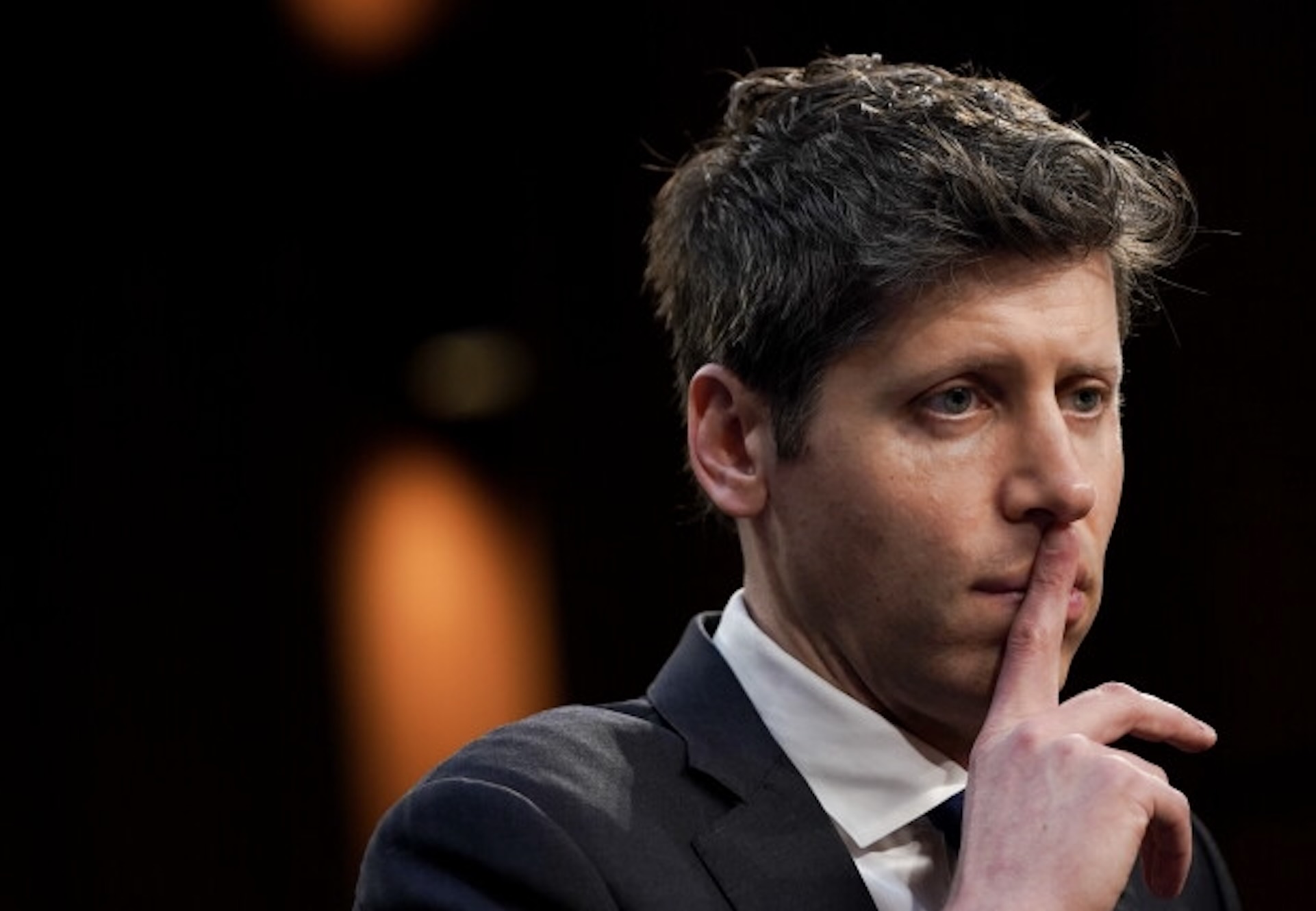
Photo: Bloomberg
OpenAI is functionally broke. That is not a hyperbolic prediction or a doom-laden forecast. It is a description of the company's current financial mechanics. By any traditional measure of corporate solvency—the ability to fund operations from revenue—OpenAI fails. The company spends well over a dollar for every dollar it generates. In Q2 2026 alone, it booked a $12.3 billion operating loss. It does not have a self-sustaining business engine. Instead, it is a money furnace with a cash cushion that is entirely artificial.
The money keeping OpenAI's servers running does not come from customers. It comes from a continuous pipeline of outside investors. In early 2026, the company closed a monumental $122 billion equity funding round, ending the quarter with over $73 billion in cash. This is what the company points to as proof of its health. But this is not profit. It is an allowance—a temporary advance from backers who are betting on a future that may never arrive. OpenAI itself carries $0 in formal debt, but that is not because it is financially prudent. It is because its partners have taken on the debt for it.
This is the structure of Ponzi finance, a term coined by economist Hyman Minsky to describe a system where cash flow cannot even cover interest payments, forcing the entity to continuously borrow more or raise new capital just to stay afloat. It is not a criminal scheme—there is a real product being built—but the financial mechanics are identical. OpenAI must raise larger and larger sums at ever-inflating valuations to cover the crushing operational bills built by its previous phase of expansion. The company went from a $29 billion valuation in 2023 to $852 billion in early 2026, and is now seeking $1.2 trillion to $1.5 trillion. The survival of the company depends on this number never stopping its upward trajectory.
The Debt That Belongs to Someone Else
The most crucial detail in this arrangement is who holds the risk. OpenAI does not. Its partners do. SoftBank, the Japanese conglomerate led by Masayoshi Son, has committed a cumulative $64.6 billion to OpenAI for an estimated 13% stake. To fund this, SoftBank has gone on a historic borrowing spree. On September 24, 2026, it closed an $11.1 billion bond issuance—the largest high-yield, or "junk," corporate debt deal on record globally. The bulk of that capital, $10 billion, was used to pay the third and final tranche of its investment in OpenAI.
SoftBank now accounts for 63.4% of all high-yield bonds issued in Asia-Pacific this year. Its latest dollar notes carry interest rates of over 9%, costing the firm nearly $1 billion annually just in interest payments. The cost to insure SoftBank's debt has spiked, with 5-year credit default swaps rocketing above 400 basis points. To keep its cash reserves healthy, SoftBank has aggressively sold down its stakes in stable assets, including Nvidia and T-Mobile. Currently, OpenAI and chip designer Arm make up three-quarters of SoftBank's entire asset value.
SoftBank is not alone. Infrastructure partners like Oracle, CoreWeave, and Blue Owl Capital have collectively borrowed roughly $96 billion to buy Nvidia chips and build the data centers that power OpenAI's models. These companies use borrowed money to build the physical infrastructure, and if the AI market slows down or OpenAI cannot pay its bills, OpenAI can walk away. The infrastructure companies remain legally trapped with the debt.
- OpenAI's 2025 revenue: $13.07 billion. Operating loss: nearly $21 billion.
- Q2 2026 operating loss: $12.3 billion in a single quarter.
- SoftBank's total commitment to OpenAI: $64.6 billion, funded largely by junk bonds.
- Partner infrastructure debt: approximately $96 billion held by Oracle, CoreWeave, and others.
The Sunk Cost Trap
Why do investors keep pouring money into a company that loses more with every user it gains? The answer is not confidence. It is desperation. Investors like SoftBank are caught in a classic sunk cost fallacy. They have already committed tens of billions of dollars. If they stop funding OpenAI now, the company collapses, and they lose 100% of their investment. The only logical move—even if they have private doubts—is to keep borrowing, keep investing, and keep inflating the valuation, hoping to hand the risk off to someone else.
The exit strategy is a massive Initial Public Offering (IPO), currently planned for 2027. The goal is not to wait for OpenAI to become profitable. The goal is to keep the company alive just long enough to sell shares to the public. If the IPO succeeds, early investors like SoftBank get their money back, and the massive risk of OpenAI's cash burn is transferred to retail investors, mutual funds, and pension funds. This is the "extend and pretend" strategy at its most brazen.
Microsoft's involvement follows a similar logic. Much of its investment in OpenAI came in the form of cloud compute credits. Microsoft "loans" OpenAI money, and OpenAI immediately hands it back to Microsoft to rent Azure servers. This artificially inflates Microsoft's cloud revenue while keeping OpenAI dependent on them. If OpenAI fails, Microsoft loses its biggest customer, meaning they too are trapped into continuously supporting the entity to protect their own accounting metrics.
The Minsky Moment
In economics, a "Minsky Moment" is the point where investors realize a system is built on Ponzi finance, panic, and stop providing new capital. Because OpenAI is completely dependent on outside funding to keep the servers turned on, if investors collectively decide to stop playing the game, the company's cash runway would vanish within months. The "cushion" would evaporate.
OpenAI is running a race against time. It must figure out how to build a self-sustaining, profitable business model before its backers run out of borrowed cash or lose their appetite for the gamble. Internal projections show the company expecting positive free cash flow around 2029 or 2030, with revenues scaling to $350 billion by the end of the decade. But there is no evidence that software revenue can naturally scale to that level in four years. For context, it took Microsoft over 40 years to achieve that level of annual revenue.
The entire AI industry is operating on pure speculation. The money is not being lent or invested based on traditional accounting evidence. It is being driven by FOMO and the desperate belief by aging conglomerates like SoftBank that they must control the future of computing, regardless of the immediate cost. If the technology plateaus before reaching true, hyper-profitable artificial general intelligence, this Ponzi financing loop will break, triggering one of the largest corporate debt defaults in tech history.
OpenAI is not going bankrupt. It is already functionally broke. The only question is how long the music can keep playing before the investors who are too deep to walk away finally run out of chairs.
No Ads. By Us. For Us.
This article was made possible by readers like you. We hope it inspired you to support Emerald Book, so we can continue producing content like this.
We will never show you ads, sell your data, or require a subscription to consume our content. Your gift helps us keep the truth accessible.
Click the Support button to give a gift of any amount today.
Thank you for making this work possible.