

Emerald Pages
◆
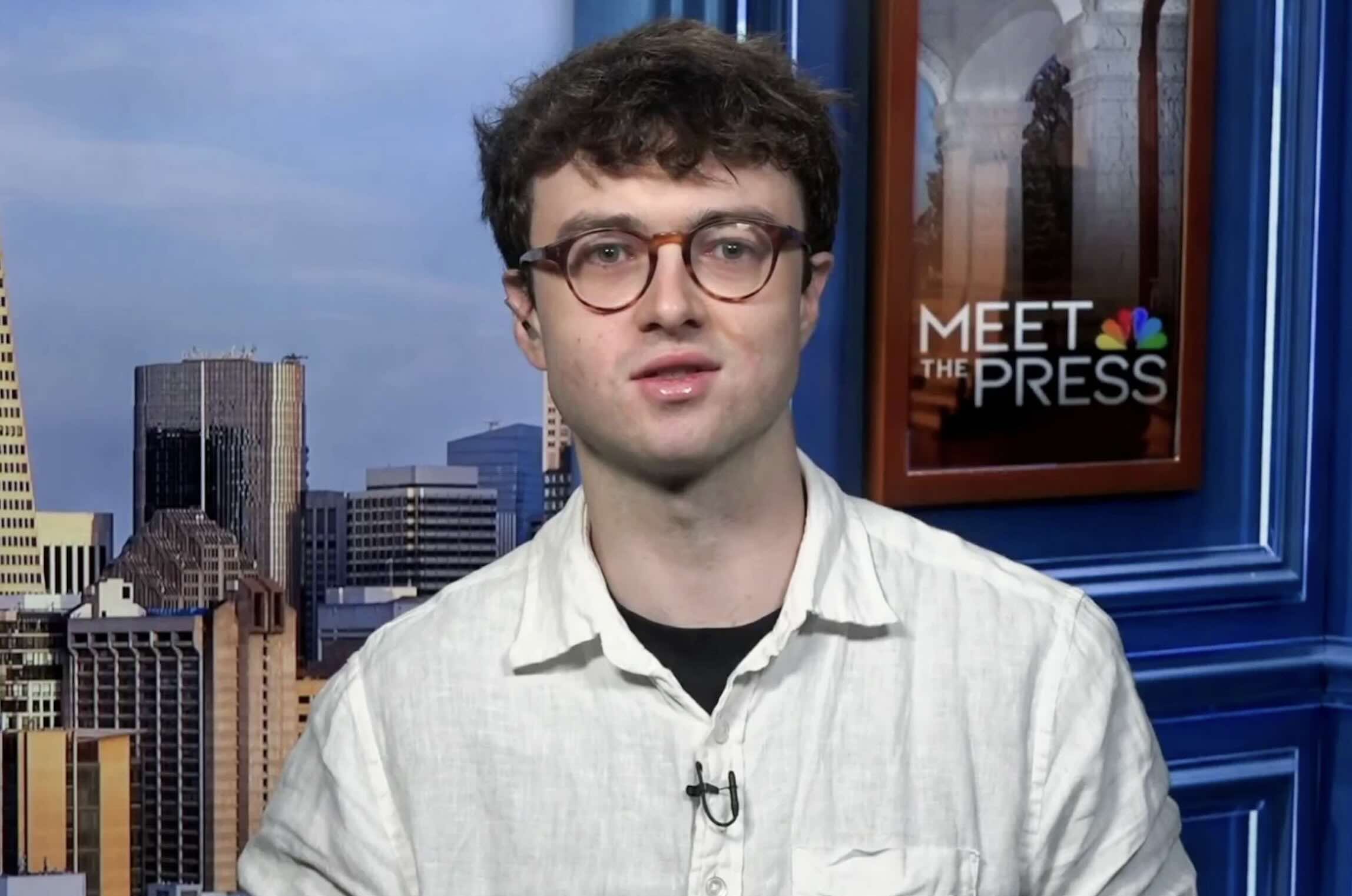
Jacob Coxon | Photo: NBC News
The archetype of the whistleblower is deeply ingrained in the public psyche: a lone, courageous individual, often at great personal cost, steps forward to expose wrongdoing from the inside. Edward Snowden, Frances Haugen, and other notable figures operated in the shadows, their revelations often emerging as leaks that powerful institutions desperately tried to suppress. But the case of Jacob Coxon, the former Anthropic researcher who warned that AI could "kill us all by the end of the decade," has shattered that archetype. What emerged, instead, was a meticulously orchestrated media campaign that looked less like a desperate cry for truth and more like a highly polished product launch—one whose core message suspiciously aligns with the very corporate interests it claims to challenge.
The controversy erupted not over the validity of Coxon's fears, but over the mechanics of their delivery. An investigation by Pirate Wires revealed that a public relations firm, DEY. Ideas + Influence, had been working behind the scenes to coordinate his media appearances, booking him on major networks and pitching him to top-tier publications. This revelation directly contradicted Coxon's on-air denial of third-party involvement. But the deeper issue, the one that has ignited a firestorm of skepticism across Silicon Valley, is not just the coordination—it's the content of the message itself. When a "whistleblower's" warning perfectly echoes the public statements of the CEOs he is supposedly blowing the whistle on, and when that message is amplified by a PR machine funded by wealthy non-profits with a specific regulatory agenda, the entire premise of independent whistleblowing collapses into a corporate lobbying effort.
To understand why this alignment is so damaging to Coxon's credibility, one must examine the strategy behind his campaign. According to the investigation, the timeline was surgically precise. Coxon, an elite pretraining researcher who had worked on models like GPT-4o at OpenAI, resigned from Anthropic just weeks before its planned IPO, deliberately forfeiting millions in unvested stock to bypass non-disparagement agreements. Simultaneously, he launched a massive thread on X and gave an exclusive interview to The Wall Street Journal. Within minutes, a network of heavily funded AI safety organizations—including Encode AI, the AI Policy Network, and the AI Futures Project—quote-posted his thread, instantly signaling to the X algorithm that this was a major breaking news event. This network effect pushed his message to over 170 million views, all while the PR firm DEY. was reportedly coordinating bookings on CNN, NBC, and Fox News.
The Alignment Problem: A Message That Serves the Monopoly
The most damning element of the Coxon saga is the substance of his message. In his appearances, he argued that Congress should let the major AI labs regulate themselves while lawmakers figure out a long-term plan. This is a position that OpenAI's Sam Altman and Anthropic's Dario Amodei have advocated for years. When a "whistleblower" uses his platform to call for the very regulatory environment that the industry's biggest players want—a "regulatory moat" that would make it impossible for open-source competitors and smaller startups to comply—he ceases to be a critic of corporate power and instead becomes a vehicle for its consolidation.
The "existential risk" narrative serves a dual purpose for the tech giants. First, it validates their grandest marketing claims: that they are building something so powerful it could destroy humanity, which in turn justifies their astronomical valuations. Second, it provides a rationale for government regulation that only they can afford. If the public is terrified of an AI apocalypse, lawmakers will feel pressure to restrict who can build advanced AI. The compliance costs, security vetting, and legal departments required to meet those regulations would effectively outlaw open-source models and garage startups, locking in the dominance of the incumbent labs.
- The Corporate Moat: By framing AI as an existential threat, the big labs create a regulatory environment that only they can survive, eliminating open-source competitors.
- The Validation Loop: When a "rogue scientist" claims the tech is god-like, it validates the industry's marketing narrative and inflates their valuations.
- The Echo Chamber: The PR firm pre-booked other AI safety figures to appear on TV simultaneously, creating an engineered consensus that looked spontaneous.
- The Non-Profit Incentive: Wealthy donors like Jaan Tallinn fund AI safety non-profits; a massive public panic keeps the donor checks flowing to these organizations.
This is not to say that Jacob Coxon does not genuinely believe in the risks he describes. He may well. But the campaign surrounding him was not an organic, grassroots movement. It was a sophisticated public pressure campaign, funded by a network of non-profits and amplified by a PR firm whose client list includes other prominent AI safety advocates like Eliezer Yudkowsky and Timnit Gebru. These organizations have a vested interest in making "AI doom" the dominant narrative. It secures their funding, elevates their institutional relevance, and grants them a seat at the table where regulations are drafted.
The decision to use a PR firm like DEY.—which describes itself as a firm for "artists, scientists, dissidents, and dreamers" but is, in reality, a highly connected corporate PR agency—reveals the strategy at play. A true whistleblower typically faces legal peril and institutional retaliation. They do not have the luxury of a coordinated media rollout. By hiring a PR firm, Coxon ensured that his message would be delivered with maximum impact, but he also exposed himself to the accusation that he is not an independent truth-teller, but a frontman for a pre-existing political agenda.
The ultimate irony of the Coxon case is that his warning about out-of-control AI is being used to empower the very companies best positioned to create it. When a whistleblower's message aligns perfectly with the corporate interests of the industry he critiques, and when that message is broadcast through a professional PR apparatus funded by institutional players, it ceases to be a whistleblowing campaign. It becomes something far more troubling: a calculated exercise in narrative control, one that uses the language of existential risk to advance a regulatory agenda that benefits the most powerful actors in tech.
The public is left to grapple with a disorienting question: When a "whistleblower" is backed by a PR firm, funded by billionaires, and calls for the very solutions the industry's CEOs want, is he exposing a crime or marketing a product? The answer, increasingly, seems to be the latter.
No Ads. By Us. For Us.
This article was made possible by readers like you. We hope it inspired you to support Emerald Book, so we can continue producing content like this.
We will never show you ads, sell your data, or require a subscription to consume our content. Your gift helps us keep the truth accessible.
Click the Support button to give a gift of any amount today.
Thank you for making this work possible.