

Emerald Pages
◆
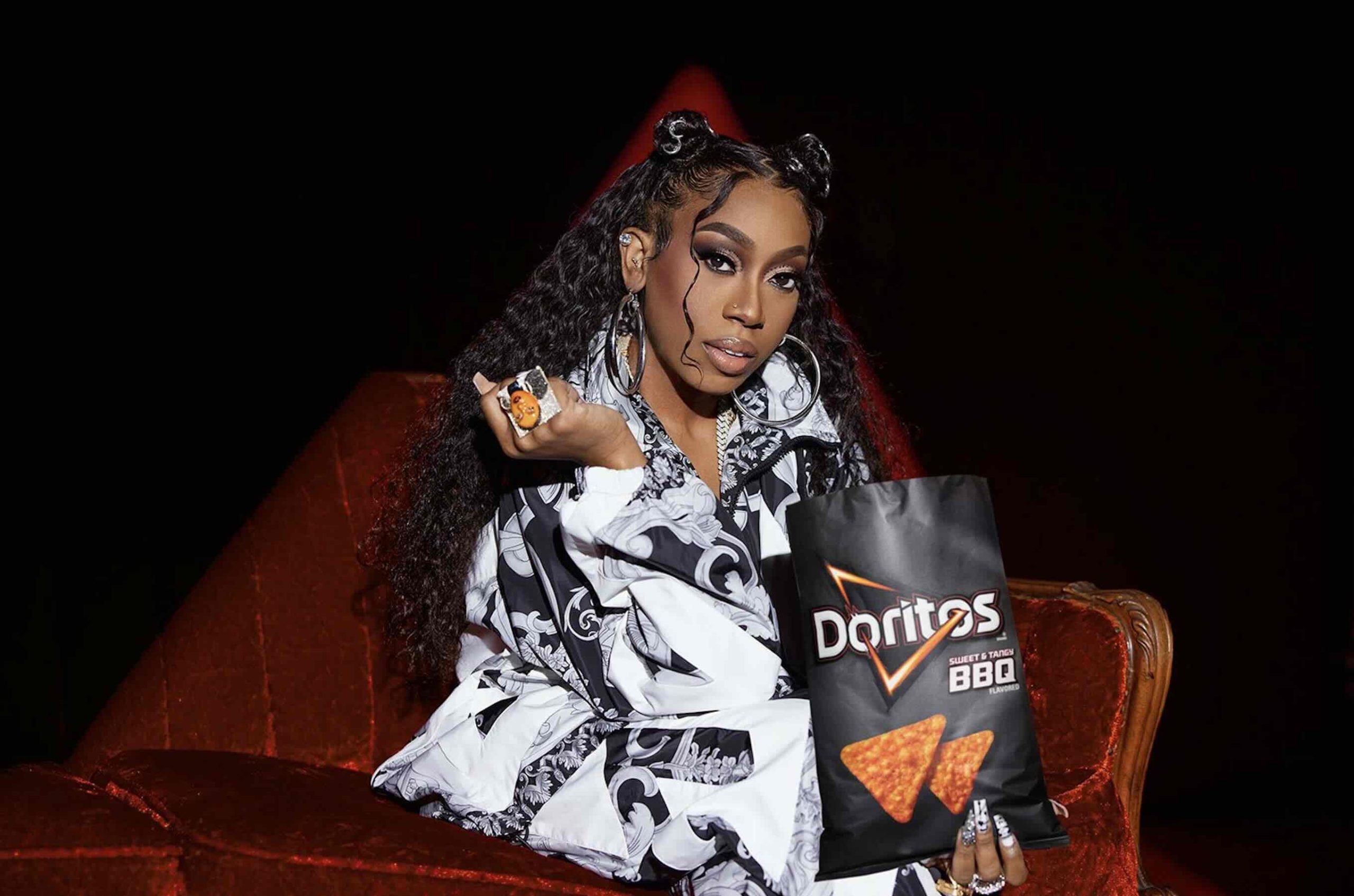
Missy Elliott in a Super Bowl Doritos Ad | Photo: Billboard
When the world’s richest companies look at a rapper like Rick Ross, they are looking at a highly profitable financial shortcut. In the modern attention economy, Hip-Hop and Rap have been systematically re-engineered by tech giants and Fortune 500 companies into the ultimate tool for maximizing engagement and driving multi-billion dollar revenue engines.
This is not a cultural coincidence. It is a cold, calculated, data-driven strategy that exploits the neurological power of rhythm and the cultural capital of Black artistry to move product off shelves and keep users glued to screens. Companies like Apple, Google, Meta, and Amazon rely on neuro-marketing studies proving that a heavy bassline and a syncopated cadence can do more for a bottom line than any traditional advertising jingle.
For platforms like Meta and Google, user attention is currency. By securing massive blanket licensing agreements with major labels like Universal, Sony, and Warner, they ensure a Rick Ross track is available for every Reel or Short. This keeps creators locked into the ecosystem, allowing the platform to serve more ads and directly pad their bottom line. The music drives engagement, the engagement drives ad revenue, and the ad revenue funds more licensing deals.
The Neuro-Marketing of the "Trap Beat"
The effectiveness of this strategy is rooted in biology. According to neuro-marketing data published via The Verge and Epidemic Sound, background music in digital video content directly triggers emotional arousal in the frontal lobe of the brain. When a viewer hears a heavy 808 bassline or a rapid-fire hi-hat pattern, their brain releases dopamine and other neurotransmitters associated with reward and anticipation. Viewers watching ads with a highly engaging soundtrack are 20% more likely to purchase the advertised product.
This is why 94% of social media content creators explicitly credit music as crucial to their success. When a tech company utilizes a heavy, recognizable beat from an artist like Travis Scott or Dr. Dre, they are triggering a structural audio response that commands immediate attention—even if the advertisement features non-Black actors or inanimate objects. The music provides the "cool" factor, transferring feelings of power and elite status to the product.
- The Purchase Multiplier: Music triggers emotional arousal, making viewers 20% more likely to buy a product compared to generic stock music.
- The Streaming Share: Roughly one in every four streams in the U.S. belongs to the R&B/Hip-Hop classification, totaling nearly 350 billion streams annually.
- The 37% Lift: "Brand-fit" music generates a 37% increase in sales over mismatched audio.
- The Global Footprint: Over 1.85 billion people—roughly 26% of all global music listeners—regularly consume hip-hop.
- The Creator Reliance: 94% of social media content creators credit music as crucial to their viral reach.
The $25 Billion Blueprint
The demographics of Hip-Hop consumption align with the highest-value consumers on the planet. Consumer data indicates that the hip-hop demographic has a disproportionately higher inclination to purchase big-ticket tech items, including new handheld devices, laptops, and smart TVs. This is the "early adopter" demographic that tech companies covet—the people who buy the new iPhone on launch day and influence the purchasing decisions of their peers.
Hip-Hop is a $25 billion global economy that dictates trends across the $185+ billion fashion and streetwear market. The "Boss" lifestyle curated by artists like Rick Ross acts as a premium marketing shortcut to reaching these trend-setting consumers. The music acts as an audio cue that instantly elevates a product's perceived worth, allowing the company to command a higher price point.
Borrowing Cultural Capital
When a corporation uses an artist's music, they are engaging in a phenomenon known in marketing as The Halo Effect. Rappers like Rick Ross, Jay-Z, and Beyoncé have spent decades building brands centered on extreme wealth, luxury, and "boss" status. By licensing that specific sound, a tech giant seamlessly transfers those attributes to their product. The ad doesn't need to show a Black person living a luxury lifestyle; the sound of the music tells the viewer's subconscious that buying this tech product makes them powerful and culturally relevant.
A study by SoundOut, a leading audio branding agency, found that hip-hop and Black music score the highest across all demographics for attributes like "innovative," "confident," "youthful," and "cool." If a company like Apple showcases a minimalist, clean white room with a non-Black actor, dropping a heavy Rick Ross beat creates a striking juxtaposition. The music instantly injects edge, power, and premium energy into an otherwise sterile visual.
Case Studies: The Companies That Mastered the Playbook
Apple is the most prominent practitioner of using premium Black music to define product identity. Apple's launch videos for new products favor highly energetic hip-hop, grime, and trap tracks. By overlaying sleek aluminum hardware with heavy rap cadences, Apple strips away any sterile "tech" feel and replaces it with an elite, cutting-edge subculture aesthetic. Apple furthered this positioning by acquiring Beats by Dre for $3 billion, using it to build Apple Music into a recurring revenue powerhouse.
Google & Android lean heavily into classic and modern hip-hop to cultivate a sense of community and innovation. In the "Be Together, Not The Same" campaign, Google soundtracked ads with hip-hop anthems like Pete Rock & C.L. Smooth's "The Creator." More recently, Google released an "attack ad" for the Pixel 10, looping Dr. Dre's "The Next Episode" over high-tech hardware visuals to project absolute confidence and frame the Pixel as a bold, superior choice.
Samsung uses fast-paced, high-attitude hip-hop to frame its brand as bolder than its rivals. Campaigns for Galaxy smartphones have used tracks from Future, Missy Elliott, and UK grime artist Lady Leshurr. The aggressive, rapid-fire flow of the rap vocals is explicitly chosen to communicate speed, processing power, and technological dominance.
Amazon leverages the high energy of Black music to make its massive logistical ecosystem feel warm and celebratory. Amazon frequently utilizes tracks like Missy Elliott's "Pep Rally" to anchor its holiday and Prime Day campaigns. The inclusion of a booming hip-hop track transforms a routine corporate shipping pipeline into an exciting, festive event.
McDonald's created the "Famous Orders" campaign with Travis Scott, Saweetie, and Cardi B. The Travis Scott collaboration famously caused widespread ingredient shortages across U.S. locations due to overwhelming demand, proving that hip-hop cultural capital turns directly into standard retail transaction volume.
The Automotive Sector, including Kia and Nissan, relies on hip-hop to reinvent the perception of budget-friendly vehicles. Kia's "Soul Hamster" campaign featured CGI hamsters rapping along to Black Sheep's "The Choice Is Yours." By using heavy-bass rap tracks over footage of cars driving through urban landscapes, these brands make practical consumer cars feel youthful and stylish.
Blanket Licensing and Ecosystem Lock-In
Meta and Google do not pay artists per video creation the way Spotify pays per stream. Instead, Meta enters into massive, multi-million dollar blanket licensing agreements with major labels. These agreements absorb the cost of music rights behind the scenes, allowing regular users to freely add a Rick Ross track to their Reels. This keeps millions of creators locked into Meta's ecosystem instead of migrating to independent platforms.
In turn, high-profile artists use these platform algorithms to market their own music, creating a mutually beneficial financial loop. The platform gets more engagement, the artist gets more streams, and the brands that advertise get access to a highly engaged audience. It is a three-way financial relationship that reinforces itself with every scroll and every purchase.
Overwhelming Cultural Capital: The 80% Revenue Metric
A landmark market study, Black Music Means Business, revealed that music of Black origin accounts for a staggering 80% of total music industry revenue metrics over a multi-decade timeline. This is not a niche market—it is the dominant force in global music consumption. The historical precedent dates back to 1984, when Pepsi paired with Michael Jackson for a $5 million partnership that drove Pepsi to a $7.7 billion revenue year.
In conclusion, the marriage of Hip-Hop and corporate marketing is not a trend. It is a permanent structural feature of the global attention economy. The world's richest companies have analyzed the data, measured the neurological responses, and calculated the return on investment. They know that a heavy bassline and a confident rap cadence can do what no traditional advertising jingle can: command attention, transfer cultural capital, and convert views into revenue. The music is the message, and the message is money.
No Ads. By Us. For Us.
This article was made possible by readers like you. We hope it inspired you to support Emerald Book, so we can continue producing content like this.
We will never show you ads, sell your data, or require a subscription to consume our content. Your gift helps us keep the truth accessible.
Click the Support button to give a gift of any amount today.
Thank you for making this work possible.