

Emerald Pages
◆
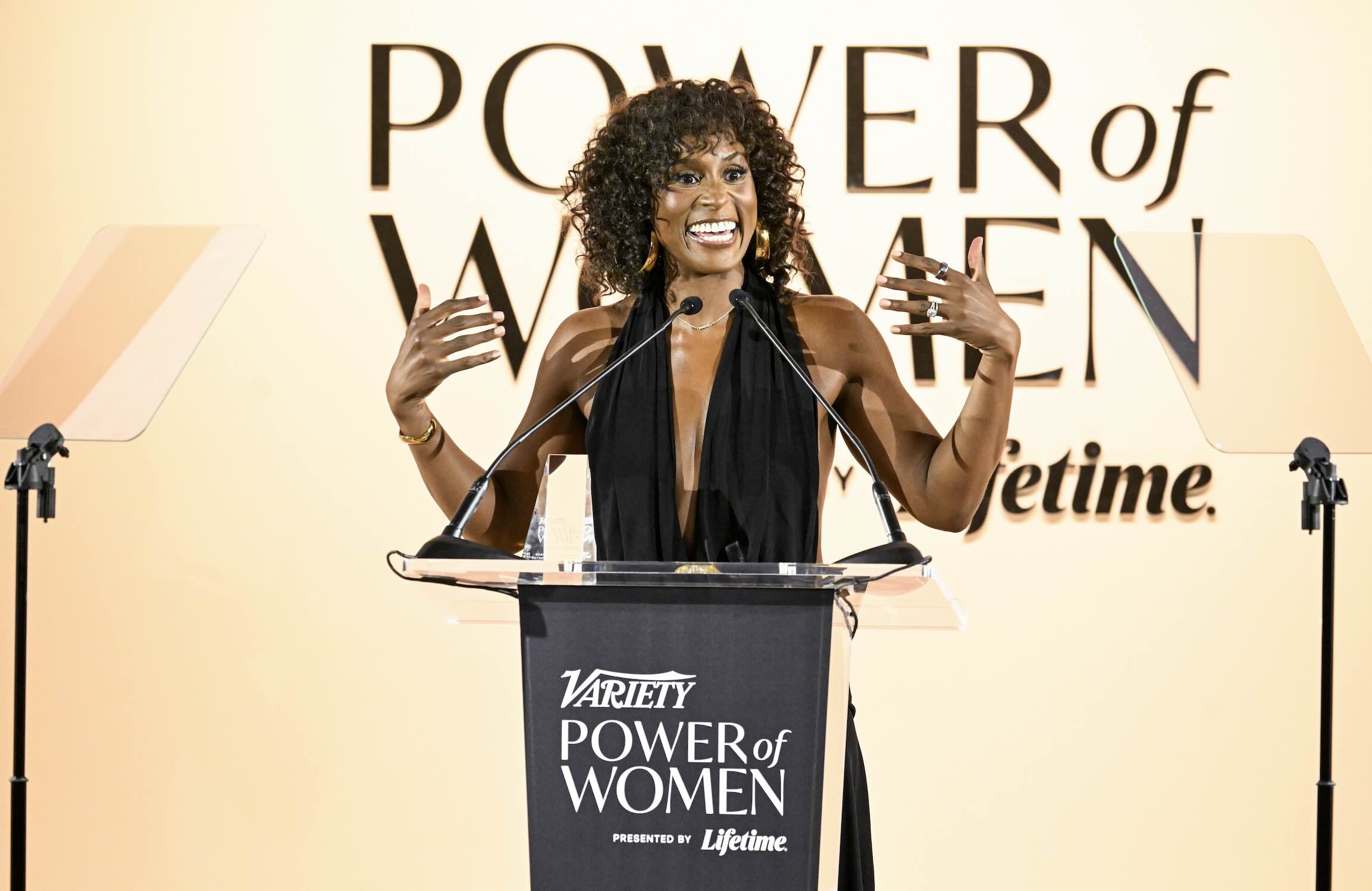
Photo: Variety
When Issa Rae stood at the podium at Variety's Power of Women event and declared, "This is all men's fault. Like, it's rich white men to be specific," the room erupted in laughter. The line landed because it felt true—a moment of cathartic honesty about who holds the levers of power in Hollywood. But beneath the applause lies a question that Rae's framing deliberately avoids: What about white women?
The exclusion isn't accidental. It's a calculated rhetorical choice that reveals the limitations of corporate diversity discourse—and erases centuries of active participation by white women in maintaining systemic oppression.
Rae's frustration is real and deeply personal. After a decade at HBO under Warner Bros. Discovery CEO David Zaslav, watching shows like Rap Sh!t get cancelled amid corporate cost-cutting, she'd just signed a new three-year deal with Paramount. She was, in essence, biting the hand that had fed her—and she knew it. The executives who greenlit her projects, controlled her budgets, and ultimately decided whether her shows lived or died were overwhelmingly wealthy white men. Casey Bloys at HBO. David Zaslav at Warner Bros. Discovery. David Ellison at Paramount. These were the men who signed the checks and held the ultimate veto power.
By naming "rich white men" specifically, Rae targeted the literal gatekeepers she'd had to navigate. It was personal, direct, and grounded in her lived experience of Hollywood boardrooms. But in narrowing her critique to the men at the very apex of corporate power, Rae reinforced a framework that treats "women" as a unified class with shared interests—a framework that white women have historically exploited to advance their own position while maintaining racial hierarchy.
White Women Were Never Passive Bystanders
The historical record is unambiguous: white women have been active architects and enforcers of systemic oppression throughout American history, not passive observers of male power.
During slavery, white women owned enslaved people, managed plantations, and used enslaved bodies as financial collateral to secure their own economic independence. Historian Stephanie E. Jones-Rogers documented this extensively in They Were Her Property, demonstrating that white women were not shielded from the brutality of slavery but were often its most intimate enforcers—managing household operations, disciplining enslaved people, and ensuring the institution's day-to-day functioning.
During Reconstruction, white women were instrumental in establishing the ideology of the "Lost Cause." Through organizations like the United Daughters of the Confederacy, they funded monuments, rewrote school textbooks to romanticize slavery, and actively supported the disenfranchisement of Black Americans. They were not merely following their husbands' lead—they were organizers, fundraisers, and ideological warriors.
During Jim Crow, the entire legal and social structure of segregation was frequently justified under the guise of "protecting white womanhood." White women actively participated in enforcing these racial boundaries. False or exaggerated accusations by white women against Black men and boys were a primary driver of racial terror and lynchings, with historical examples ranging from the Scottsboro Boys to the murder of 14-year-old Emmett Till. The power of a white woman's accusation was often a death sentence.
- Slavery: White women owned, inherited, bought, and sold enslaved people as economic assets.
- Reconstruction: White women led the United Daughters of the Confederacy, funding monuments and rewriting textbooks to romanticize slavery.
- Jim Crow: White women's accusations against Black men were a primary driver of lynchings and racial terror.
- War on Drugs: White women were critical voting blocs and organizational leaders in the conservative shifts that ushered in "tough on crime" legislation.
- Modern Era: White women continue to weaponize police against Black people in public spaces, leveraging state power to police Black movement.
During the War on Drugs and the modern era, white women were critical voting blocs and organizational leaders in the conservative shifts of the late 20th century that ushered in "tough on crime" legislation. According to Pew Research Center data, 47% to 53% of white women voted for Donald Trump in 2016 and 2020—demonstrating a political alignment with the very systems Rae was criticizing. And in the modern era, social critics frequently point to the weaponization of police by white women against Black people in public spaces, often colloquially referred to as the "Karen" phenomenon.
The Class Question: Rich, Middle, and Poor
Rae's critique focuses on rich white men—but economic class does not erase racial privilege. Systemic harm is sustained by a collective network, not just a few billionaires at the top. When analyzing how different classes contribute to systemic harm, the reality is far more complex than just boardroom decisions.
The upper class controls capital, owns corporations, and funds political campaigns, shaping the laws and economic structures that disproportionately impact Black communities. The middle class has historically enforced racial boundaries through housing discrimination like redlining and white flight, local school board politics, and voting blocks that prioritize protecting generational wealth and property values. The working and poor classes, while economically disadvantaged, have historically been mobilized—from the Jim Crow era to modern populist political movements—to defend racial hierarchies, often viewing the advancement of Black Americans as a direct threat to their own social standing.
By focusing entirely on "rich white men," Rae reduces a deeply rooted, cross-class, multi-generational system of racial oppression into a localized grievance about who has the power to greenlight a television show. It ignores how white women, white working-class voters, and white middle-class institutions all play active roles in maintaining the broader societal status quo.
The Corporate Diversity Blind Spot
Rae was speaking at Variety's Power of Women event—an annual gathering explicitly designed to celebrate and empower women across the entertainment sector. Her remarks were framed around the collective frustration of women trying to maintain creative control in rooms dominated by male executives. To criticize the women in the room or women as a demographic at an event dedicated to gender solidarity would run counter to the purpose of the gathering.
This is the paradox of corporate diversity rhetoric. It simplifies systemic issues into a binary battle of "women vs. the male establishment," treating "women" as a singular, oppressed class. This framework completely erases the historical reality that white women have consistently held racial and institutional power—and have often used it to uphold the very systems that marginalize Black people.
By narrowing the problem down to just "rich white men," corporate diversity discourse shrinks a massive, systemic societal issue into a much smaller, industry-specific complaint. It allows individuals to vent about the bosses they are trying to break away from, but it leaves out the broader network of power—which includes white women—that has historically maintained racial inequality in America.
For historians, sociologists, and critics who look at the active role white women have played in shaping American systems, omitting them leaves out a critical part of the equation. It protects a major pillar of systemic oppression from accountability.
Rae's comments were deeply personal—a reflection of her immediate professional reality and her frustration with the specific men who controlled her career. But when that personal frustration gets elevated to a political critique without historical context, it becomes something else entirely: a framework that lets too many people off the hook.
The problem was never just rich white men. It was never just men at all. It was—and remains—a whole society, across race, class, and gender, that has been trained to maintain a hierarchy. Until we name all of its enforcers, the critique remains incomplete.
No Ads. By Us. For Us.
This article was made possible by readers like you. We hope it inspired you to support Emerald Book, so we can continue producing content like this.
We will never show you ads, sell your data, or require a subscription to consume our content. Your gift helps us keep the truth accessible.
Click the Support button to give a gift of any amount today.
Thank you for making this work possible.