

Emerald Pages
◆
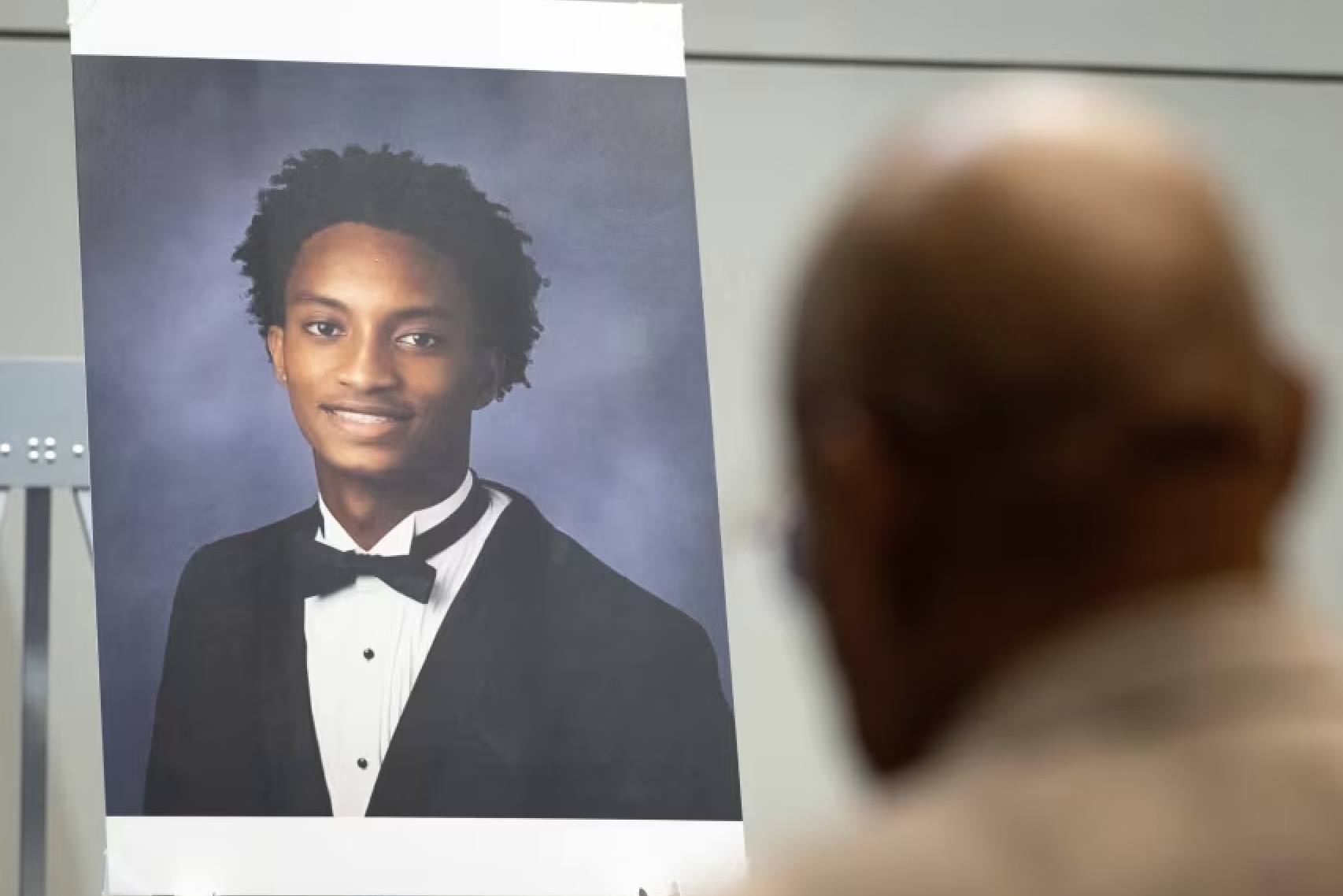
Photo: Getty Images
When a Jackson County grand jury unanimously declined to indict anyone in the death of 18-year-old Nolan Wells, District Attorney Angel Myers McIlrath framed the decision as a matter of evidence. There was no credible proof of criminal conduct, she said. The medical examiner ruled the cause of death "undetermined." The friends on the boat had cooperated fully. The digital forensics showed no deleted messages, no threats, no smoking gun. The bar for probable cause, she implied, simply had not been met.
But in the same courthouse, in the same county, on any given week, prosecutors secure indictments with far less. A single police officer's testimony. A one-page incident report. The smell of marijuana. The legal threshold for an indictment—probable cause—is deliberately low. It is not a trial. It is not proof beyond a reasonable doubt. It is a screening mechanism, designed to catch cases that might have merit and send them to a jury. So why, in the case of a dead teenager with unexplained blunt force trauma to the back of his head, did the system suddenly demand near-certainty?
The answer, critics argue, lies not in the evidence but in the architecture of the system itself. Grand juries are not independent investigative bodies. They are tools of the prosecutor. The District Attorney controls what evidence they see, what witnesses they hear, and what legal instructions they receive. If a prosecutor wants an indictment, they present a compelling narrative of probable cause. If they do not, they can emphasize doubt, uncertainty, and the absence of a definitive cause of death. The grand jury, by design, follows the prosecutor's lead.
This is not a theoretical abstraction. It is a matter of documented legal practice. In Mississippi, as in much of the country, the "plain smell exception" allows police to search a vehicle and arrest its occupants based solely on an officer's claim that they smelled marijuana. No physical evidence required. No corroborating witnesses. No GPS logs. No 261-page forensic report. Just an officer's word. That is sufficient for probable cause. That is sufficient for an arrest, a charge, and an indictment.
In the Nolan Wells case, investigators had far more. They had a false headcount call to Sea Tow at 4:31 p.m. claiming everyone was safe, despite Wells allegedly being left behind on Horn Island an hour and a half earlier. They had the victim's phone, wallet, and truck keys traveling back to the mainland without him—items his parents had to track using the Life360 app the next morning, leading them to a friend's house, not the island. They had unexplained bruising on the back of his head that an independent pathologist, Dr. Roger A. Mitchell, described as recent blunt force trauma. And they had the discovery of his body in the exact coordinates where the boat had experienced a mechanical crisis. None of this was treated as probable cause. Instead, it was treated as inconclusive.
Two Tiers, One Legal Standard
The disparity is not accidental. It reflects a system that applies its lowest thresholds to the most marginalized and its highest thresholds to the most protected. When the suspects are poor, Black, or both, probable cause is flexible, expansive, and easy to establish. When the suspects are affluent, well-represented, and connected to the local power structure, probable cause becomes rigid, narrow, and nearly impossible to meet. The law itself does not change. The application of the law does.
Consider the arithmetic of the Nolan Wells investigation. The grand jury issued 132 subpoenas. They heard testimony from 43 witnesses over four days. They reviewed a 261-page Snapchat forensic report, GPS logs from three separate boats, and two independent autopsies. The state's chief medical examiner and the family's own forensic pathologist both concluded there was no fatal trauma and no organic disease. The bruising on Wells' head was determined to be non-fatal. A witness testified that Wells had slipped off the side of a boat around 3:30 p.m. but seemed fine afterward. The digital footprint showed nothing had been deleted or tampered with. The friends had surrendered their phones, surveillance footage, and GPS devices.
And yet, with all of that evidence, the grand jury concluded there was "no credible evidence" of criminal conduct. The bar was not just high. It was unreachable.
- Drug case: One officer's testimony about a smell. Indictment in minutes.
- Nolan Wells case: 132 subpoenas, 43 witnesses, four days of testimony. No indictment.
- Drug case: No medical examiner required. No forensic pathologist. No digital forensics.
- Nolan Wells case: Two autopsies, 261 pages of Snapchat data, GPS tracking, and still "insufficient evidence."
- Drug case: Probable cause established by a single officer's subjective observation.
- Nolan Wells case: Probable cause deemed absent despite physical injuries, timeline discrepancies, and a false headcount call.
The Prosecutor's Power to Shape the Outcome
Legal scholars often note that a prosecutor can secure an indictment against anyone—the proverbial "ham sandwich"—if they choose to present the case aggressively. The corollary is equally true: a prosecutor can ensure a "no true bill" by presenting the case passively, emphasizing the gaps, the uncertainties, and the limitations of the evidence. In the Nolan Wells case, the grand jury heard from 43 witnesses and reviewed extensive forensic data. But what they did not hear, critics argue, was a prosecutor fighting for an indictment. They heard a prosecutor explaining why one was not possible.
District Attorney McIlrath noted that the case can be reopened if new evidence emerges. Mississippi has no statute of limitations on homicide. But that is cold comfort to a family that watched the system demand a level of proof that is never required in ordinary criminal cases. The bar for probable cause is not supposed to be "beyond a reasonable doubt." It is supposed to be low. It is supposed to be accessible. It is supposed to be the same for everyone.
The family's civil rights attorney, Ben Crump, noted that a "No True Bill" does not truly resolve how Nolan Wells died. He is correct. The grand jury's decision does not mean Nolan Wells died of natural causes. It does not mean there was no foul play. It means the system chose not to look hard enough to find out. And in a county where a police officer's nose can send someone to prison, the decision to demand absolute certainty before indicting anyone in the death of a Black teenager is not a legal standard. It is a choice.
The grand jury report explicitly rejected allegations of racial motivation, stating that rumors regarding the demographics on the island that day led to widespread misidentification and speculation. But the question of racial motivation is separate from the question of racial disparity. The grand jury's composition—12 white jurors, 5 Black jurors, 2 Hispanic jurors, 2 Native American jurors, 1 Asian juror, and 1 juror identified as "other"—was more diverse than many grand juries. Yet diversity of composition does not guarantee equity of outcome when the prosecutor controls the narrative.
What Comes Next
The Wells family is now calling for a federal investigation, arguing that local authorities have shown they will not hold anyone accountable. The Department of Justice has the power to review the case independently, to examine the evidence with fresh eyes, and to apply the same standard of probable cause that applies in every other criminal matter. Whether they will is another question. But the family, and the community, are not waiting for the local system to correct itself. They have seen how it works. They know the bar is not set by the law. It is set by who is standing in front of it.
Meanwhile, the family's independent investigators are continuing to review circumstantial details they believe contradict the official timeline, including the Sea Tow distress call regarding a water-logged boat the day Wells went missing. The 4:31 p.m. dispatch call—in which the boat operator allegedly claimed everyone was on board, safe, and in good health—remains a focal point. If Wells had already been left behind on the island an hour and a half prior, why did the operator state everyone was present? The question has never been adequately answered.
District Attorney McIlrath has said the narrative that three white men were involved in a racially motivated attack is not supported by the evidence. That may or may not be true. But the absence of a racial motive does not explain the presence of a double standard. It does not explain why a drug case can proceed on the strength of a smell while a death investigation requires two autopsies and still ends in a "no true bill." It does not explain why the bar for probable cause rises so steeply when the victim is Black and the suspects are not.
The legal system is not supposed to guarantee outcomes. It is supposed to guarantee process. But when the process itself is applied unequally—when the same standard of probable cause is interpreted so differently depending on who is involved—the system fails in its most basic function. It fails to protect. It fails to investigate. It fails to deliver justice. And it leaves families like the Wells family with nothing but unanswered questions and a growing conviction that the system was never designed to answer them.
The case can be reopened. The statute of limitations on homicide never expires. But reopening requires new evidence, and new evidence requires someone to look for it. The local system has made clear it is done looking. The question now is whether anyone else will.
No Ads. By Us. For Us.
This article was made possible by readers like you. We hope it inspired you to support Emerald Book, so we can continue producing content like this.
We will never show you ads, sell your data, or require a subscription to consume our content. Your gift helps us keep the truth accessible.
Click the Support button to give a gift of any amount today.
Thank you for making this work possible.