

Emerald Pages
◆
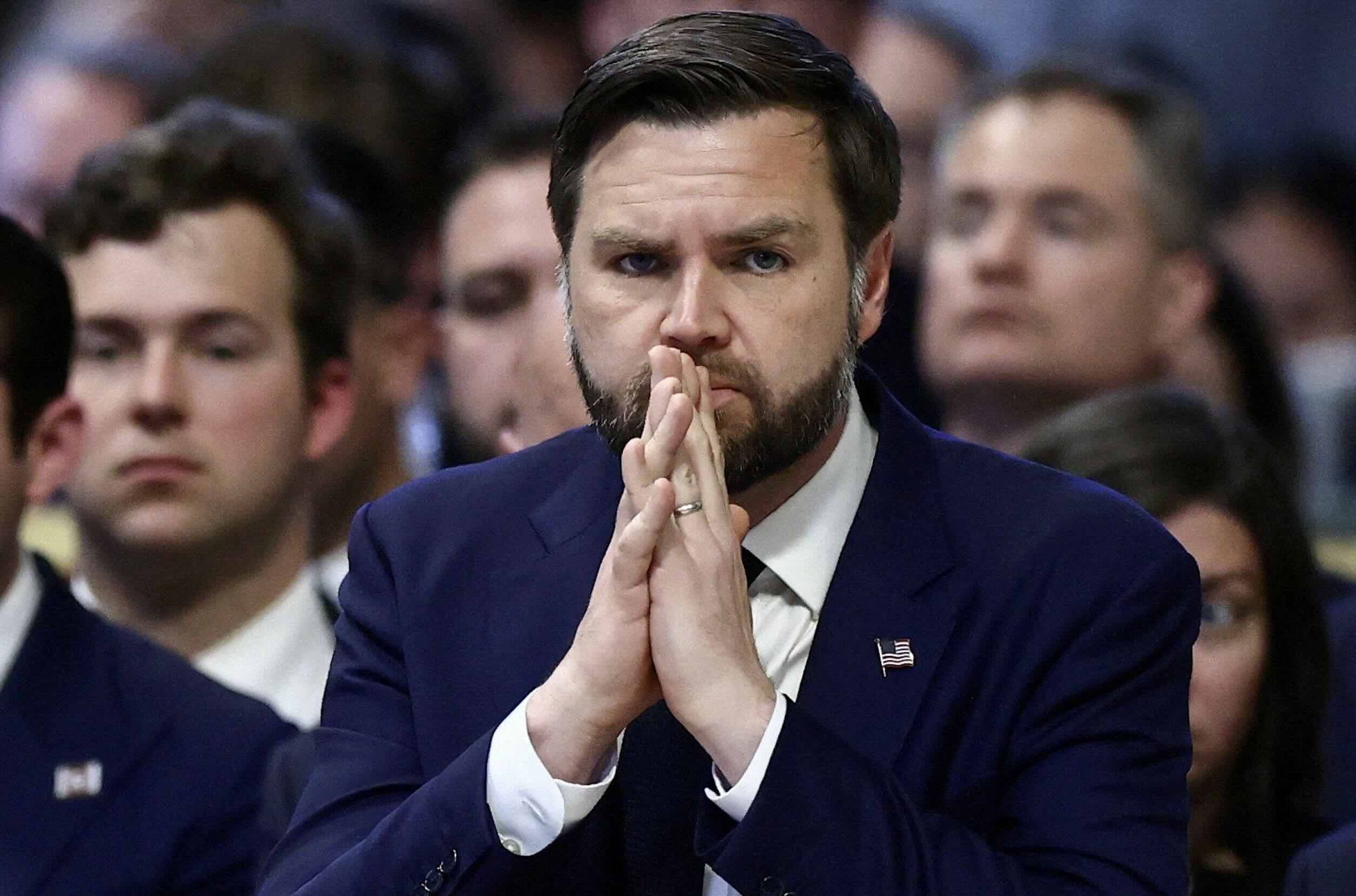
Photo: Reuters
Vice President JD Vance made a direct appeal to voters during a recent interview on the All-In Podcast, asking them to "give us another chance." But the phrasing immediately raised a glaring question: another chance at what? The Trump-Vance administration is only two years into its four-year term, meaning the first chance isn't even over yet — and to many voters, the plea sounded less like a promise and more like a confession.
While answering a question about the Republican message ahead of the November 2026 midterm elections, Vance stated: "Give us another chance—or, give us another couple of years to continue to work on the amazing things that we've been doing for the past two years."
Political analysts and media outlets like CNN Politics quickly pointed out that Vance seemed to catch himself mid-sentence, immediately pivoting to "give us another couple of years." The slip suggested the Vice President recognized the awkwardness of asking for a do-over while his administration was still actively in power.
Critics and Democratic politicians, including Senator Brian Schatz, heavily ridiculed the phrase. They argued that asking for a "second chance" serves as an accidental admission that the Trump administration's second term has not been going well. House Minority Leader Hakeem Jeffries posted that Vance was essentially telling America, "Republicans have failed but give us another chance," to which he responded, "Get lost."
The Underlying Concessions
Strip away the political spin, and Vance's words carry a quiet but unmistakable concession: the administration knows voters are unhappy, and it knows why. Asking for "another chance" is not the language of a confident incumbent — it is the language of a campaign that has seen the numbers and is bracing for a rebuke.
That admission is baked into the polling. Trump's approval rating sits deeply negative, hovering around 35% to 39% approval, with disapproval hitting 58% to 63%. This severe slump — fueled by voter frustration over high inflation, new tariffs, and the ongoing war with Iran — is exactly why Vance was put on the defensive during his recent interview.
National polling averages and high-quality surveys outline the administration's political challenges:
- The New York Times: 39% Approve | 58% Disapprove
- Silver Bulletin (Nate Silver): 38.4% Approve | 58.5% Disapprove
- RealClearPolitics: 40% Approve | 57.8% Disapprove
- FiftyPlusOne: 36.3% Approve | 60.5% Disapprove
A Marquette Law School poll from September 2–9, 2026, registered a new second-term low for the president, finding only 37% approval against 63% disapproval. Notably, "strong approval" dropped to 15%, while "strong disapproval" surged to 47%. A Reuters/Ipsos poll from September 11–14 showed Trump ticking up slightly to 35% approval from a record low of 33% in August. However, the same poll showed Democrats leading Republicans 44% to 37% on the generic congressional ballot.
The Drivers of Voter Frustration
According to data from the Marquette Law School Survey and recent Reuters/Ipsos Polling, Trump's approval has slipped across virtually every core issue. Only 19% of Americans approve of Trump's handling of inflation, and only 20% approve of his handling of gas prices, which hit a national average of $4.36 a gallon this week.
Public support has also fractured heavily over the war with Iran. A recent CNN/SSRS poll found that 74% of Americans—including 43% of Republicans—believe the war has not been worth the financial burden or casualties.
This collective exhaustion is exactly why Vance's plea for "another chance" fell so flat. When people are feeling pushed to their limit by inflation and war, asking them for patience or a do-over usually backfires. Instead of reassurance, it sounds to voters like an admission that help isn't coming anytime soon.
While Trump's current standing is not the lowest in U.S. history—Harry Truman hit 22% in 1952, Richard Nixon fell to 23–24% in 1974, and George W. Bush reached 19–25% in 2008—his numbers are exceptionally bad for a modern president. A 35% approval rating means he is deeply unpopular with independent voters and has even begun losing parts of his own base.
Unlike Truman or Bush, who both enjoyed massive, near-90% popularity peaks before crashing, Trump's approval rating has stayed compressed in a very narrow, highly polarized band. His highest numbers never went much above 49%, meaning his current drop to 33%–35% represents a collapse of his moderate and independent base.
Here Come the Investigations
Because his numbers are tracking below the historical baselines that triggered massive "wave" elections in 2006 and 2014, political forecasters and market data now indicate that a flip is highly likely for the House, while the Senate remains a tight, historic battleground. In the national generic congressional ballot, The New York Times/Siena College poll puts Democrats ahead by 8 to 9 points (50.5% to 43.2%). On prediction platforms like Polymarket, the implied probability of Democrats winning the House majority has surged to 85%.
If Democrats win the House as projected, they will immediately halt the current Republican-led inquiries and pivot the entire investigative apparatus of Congress toward the White House. The party that controls the House holds the gavel — it runs the committees, controls the budget, and wields subpoena power. Based on statements from leading House Democrats, a flipped House is expected to launch high-profile investigations into three major areas:
- The War with Iran & Foreign Policy: Committees will investigate the intelligence and decision-making loop that led to the war, looking for evidence of executive overreach, while auditing billions in war spending and military contracts.
- Domestic Policy & The Economy: Hearings will target the administration's sweeping tariff policies, aiming to tie them directly to high inflation and soaring grocery prices, and probe whether corporate donors improperly benefited from deregulation and tax policies.
- Executive Ethics & Administration Conduct: A Democratic-led Judiciary Committee will scrutinize the legality and enforcement of controversial executive actions, with former and current officials facing subpoenas over potential conflicts of interest and the handling of classified materials.
For the Trump administration, this means the second half of their term will look entirely different from the first. Instead of pushing a legislative agenda, they will be forced onto the defensive, spending massive amounts of political capital and legal resources responding to a relentless stream of public hearings and document demands. Republicans are banking on a massive cash advantage to survive the wave — Super PACs have poured over $140 million into advertising since Labor Day — but ads cannot change the price of gas or end a war.
The contradiction remains: asking for a "second chance" while people are still actively dealing with the fallout of the "first chance" feels completely out of touch. To the average voter, Vance's request sounds like an administration asking for a promotion while failing at its current job. You are in charge right now, so fix it right now — that is the overwhelming sentiment, and telling voters to wait until after the midterms sounds like kick-the-can politics to a public that is completely maxed out.
No Ads. By Us. For Us.
This article was made possible by readers like you. We hope it inspired you to support Emerald Book, so we can continue producing content like this.
We will never show you ads, sell your data, or require a subscription to consume our content. Your gift helps us keep the truth accessible.
Click the Support button to give a gift of any amount today.
Thank you for making this work possible.