

Emerald Pages
◆
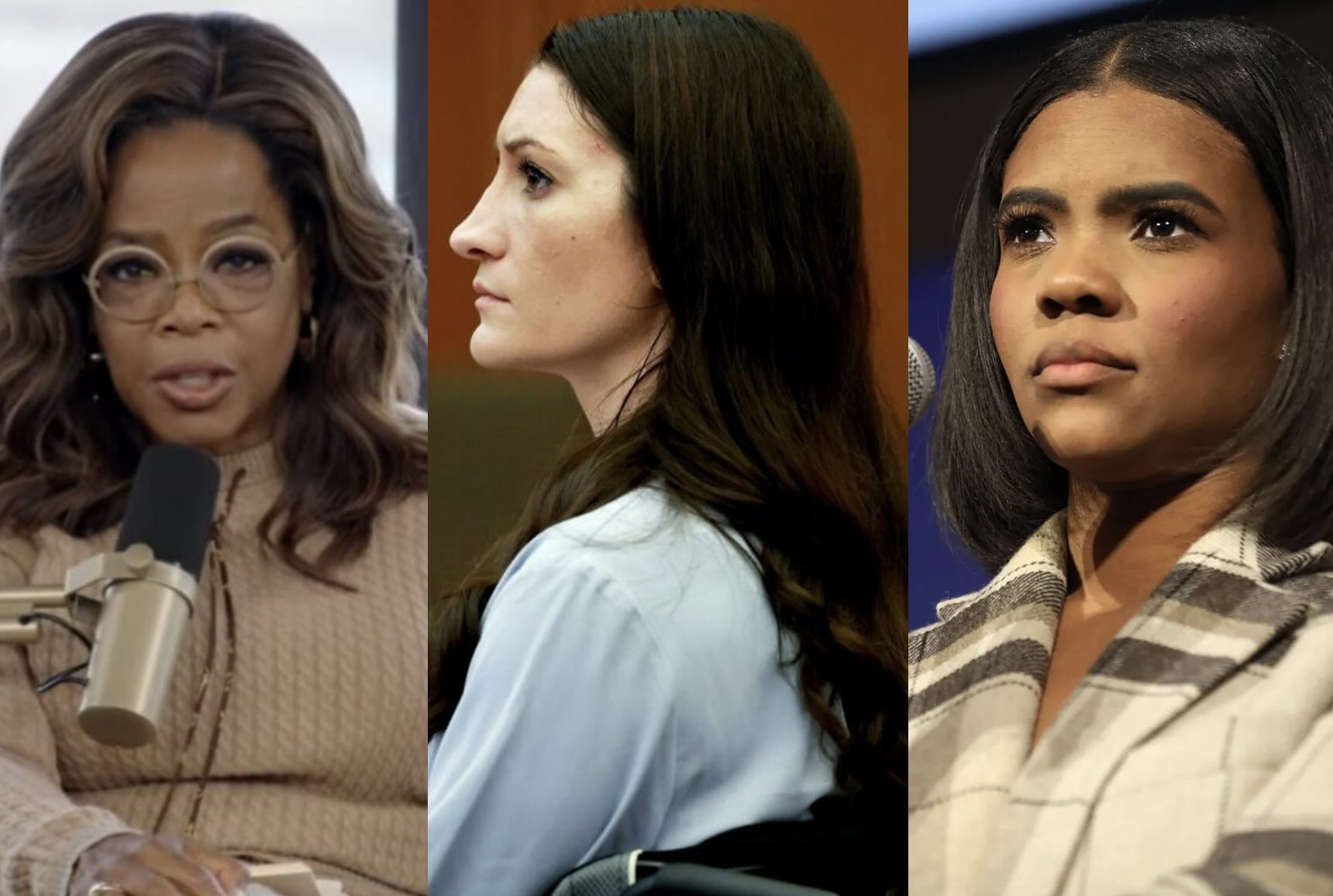
Oprah (left), Lindsay Clancy (center), Candace Owens (right) | Photo: Emerald Book Image
When a Massachusetts jury deadlocked 11-1 on September 4, 2026, failing to convict Lindsay Clancy—a mother who admitted to killing her three children but mounted a postpartum psychosis defense—the case stopped being a legal proceeding. It became a political commodity.
Within days, both conservatives and liberals were using the tragedy as a recruitment tool aimed at Black voters. The competing pitches are emotionally charged, strategically crafted, and fundamentally disconnected from what actually happened in that Duxbury home—and from the three children who were killed there.
The Conservative Pitch: "White Liberals Will Abandon You"
After the mistrial, a viral CBS Mornings interview revealed the lone holdout juror—the man who forced the deadlock by refusing an insanity verdict—was the only Black person on the jury. Conservative commentators seized on it.
Their argument runs on one emotion: betrayal. The holdout juror was the one person on that jury insisting on accountability for three dead children. Before his race was public, white progressive true-crime communities attacked him online for ignoring medical evidence. Once his identity emerged, those attacks looked like racism. Black conservatives ask: Where was "Black Lives Matter" when a Black man exercised independent judgment?
They also reframe the juror's demand for strict accountability as traditional Black cultural values—faith-based, family-first, protective of children. The message: your instincts on justice are conservative, not liberal.
The Owens Dissent: Blaming Pharma, Not Feminism
The right's messaging was never unified. While Matt Walsh and The Daily Wire framed the case as proof of liberal cultural decay, Candace Owens broke ranks entirely—and her argument stayed conservative, just aimed at a different target.
Owens argued Clancy was "obviously not guilty," placing blame squarely on the doctors and pharmaceutical companies that prescribed her a "cocktail of 10 pharmaceuticals." She claimed Clancy was put into an "intentional psychosis" by medical overreach, and that she "probably just needed to give her kids away for a weekend to get better."
Her stance drew fierce backlash from her own side. Nick Fuentes called her defense of Clancy "wicked" and "evil," asking when conservatives would "simply just get back to basics and say murder is wrong." The fight exposed yet another fracture on the right—not over whether to politicize the tragedy, but over which villain to blame. On that question, the basic answer—that three children were killed and someone must answer for it—got lost.
The Liberal Pitch: "The System Protects White Trauma"
Liberals counter with a structural argument anchored in a comparison that's hard to dismiss: Latarsha Sanders, a Black mother in the same Massachusetts jurisdiction, tried under the same judge, killed her children during a severe psychotic episode. She was convicted and sentenced to life without parole. Clancy got a mistrial, public sympathy, and a pink-shirted rally outside the courthouse.
The mechanism is case-study juxtaposition—two cases, one frame, an unmistakable proof-point of bias. Black liberals also deconstruct the "Pink Mob" as evidence of "white protective shields," a benefit of the doubt Black mothers are denied. To seal it, they amplify Republican Rep. Nancy Mace's own admission that if Clancy were Black, nobody would be supporting her—cross-partisan validation.
But there is a tension buried in this argument that its proponents rarely acknowledge. If Sanders' life sentence was the correct outcome—and the medical evidence in her case suggests she was grossly psychotic at the time—then the problem is not that Sanders was treated too harshly. The problem is that Clancy was treated too leniently. The solution to racial disparity in the justice system is not to extend Clancy's outcome to Black mothers. It is to ensure that the same accountability that sent Sanders to prison is applied to everyone.
A Dangerous Precedent Disguised as Equity
The racial weaponization peaked after a taping of Oprah Winfrey's podcast. An OB-GYN guest, Dr. Kameelah Phillips, told the audience: "There are women of color sitting around this country in prisons for this same thing that we've never heard of... I hope we have that same energy for women who don't look like Lindsay, who don't have her same access and education, her melanin, her privilege."
The audience applauded. But the phrasing carried a legal trap. The concern—that Black mothers with postpartum psychosis are funneled to prison while white mothers receive nuance—is legitimate and documented. The implied solution, however, was to extend the Clancy treatment—sympathy, medical deference, a path away from liability—to everyone.
That gets the problem backwards. If the Clancy outcome was wrong—if a mother who killed her three children should be held criminally responsible, as the holdout juror believed—then extending that outcome to Black mothers is not equity. It is the spread of impunity. The correct demand is not "more Clancy treatment for everyone." It is accountability for Clancy, and equal accountability for all.
Critics across the spectrum pushed back. Expanding the insanity defense creates a slippery slope of voluntary action: if "severe mental duress" excuses child murder, child safety laws are compromised. Legal scholars noted the segment conflated two separate problems—racial bias in prosecution and sentencing (real, documented) and the legal standard for criminal responsibility (applies equally to all defendants). Solving the first by weakening the second doesn't produce equity; it produces impunity.
There's a further irony: arguing women are too volatile under postpartum strain to be held accountable is a stereotype historically used to bar women from power. Framing women as slaves to hormones—even for a progressive goal—reinforces the paternalism the movement claims to oppose.
The Statistical Reality: A Movement Built on Exhaustion
Both pitches share the same flaw: they treat the Clancy case as representative. It isn't.
Postpartum psychosis affects roughly 1 to 2 in 1,000 mothers—3,000 to 9,000 women annually in the U.S. Only about 4% commit infanticide. Combine the illness, the act, and a deadlocked trial, and you get an event that occurs fewer than a dozen times per decade nationwide.
The vast majority of mothers—99.9%—will never experience postpartum psychosis, and an even greater percentage will never harm their children. That rarity is exactly why the public support and political weaponization have detached from the crime itself.
So what's actually driving the "Pink Mob"? The numbers tell a different story—structural crisis, not legal absolution. The mothers rallying outside the courthouse are not arguing that Clancy should walk free. They are arguing that the system that failed her should not fail them. That distinction matters, and it has been buried under a political war that treats the verdict as a proxy for something else entirely.
- Maternal mental health has collapsed. Mothers reporting "excellent" mental health fell from 38.4% in 2016 to 25.8% in 2023. "Fair or poor" mental health spiked 63.6%.
- Burnout is the baseline. 93% of mothers report active burnout; 58% feel burned out "often or almost always." 70% get fewer than five hours of unbroken sleep.
- The labor divide persists. 71% of mothers still perform the vast majority of childcare and domestic labor; 74% carry the "mental load."
- Time poverty is universal. 67% of full-time working mothers report zero time to relax; over 70% have no time for friendships or hobbies.
- Childcare costs rose 214% since 1990—far outpacing the 143% increase in average family income.
Millions of mothers live in documented chronic exhaustion and isolation. When they look at Lindsay Clancy, they don't see a courtroom. They see themselves. The case became an amplifier for a desperate message: If a well-off, educated nurse with support can break this completely, nobody is safe.
That message is real, and it deserves a policy response. But it is not a legal defense, and it cannot become one. The support for Clancy is a cry for help from mothers who feel abandoned by the system. It is not a verdict on whether she should be held accountable for three deaths. Those are separate questions, and conflating them serves neither the mothers nor the victims.
The Logical Boundary: Exhaustion Is Not Exoneration
Here is where the movement collapses.
There is an unbridgeable chasm between "Modern mothers need more help" and "A mother should not face consequences for taking her children's lives." Using the most horrific outcome imaginable to talk about everyday burnout is a profound moral error.
It cheapens the victims. Cora, Dawson, and Callan did not die from a lack of paid leave. They were killed. Treating their deaths as a symptom of societal stress strips them of the justice and mourning they are owed.
It also insults exhausted mothers. The vast majority experience sleeplessness, financial stress, and frustration—and never harm their children. Suggesting exhaustion explains violence implies ordinary mothers are one bad day from atrocity. It normalizes something incredibly rare and extreme.
The legal system attempts to recognize this boundary. The insanity defense requires that a severe condition like postpartum psychosis completely break a person's grasp on reality—command hallucinations, total delusion—such that they cannot understand the wrongfulness of their actions. An NGRI verdict is not a free pass; it typically means indefinite commitment to a high-security psychiatric hospital. The question is whether a medical emergency can legally excuse the termination of three innocent lives. That is for jurors, not political operatives.
But the standard is stricter than the public assumes. Postpartum psychosis, while severe, does not automatically meet the legal threshold for insanity. The defense requires a total break from reality at the moment of the act—not merely impaired judgment, not overwhelming despair, not the kind of intrusive thoughts that afflict many new mothers. If the evidence shows Clancy understood what she was doing and that it was wrong, the insanity defense should fail. And if it fails, the appropriate outcome is a prison sentence, not a psychiatric hospital indefinitely.
The Real Victims
In the middle of a loud political chess match, three children have been reduced to a footnote. Their brief lives and the basic fact that they were lost are treated as secondary to the trial's ideological implications.
Justice is conflicted because society cannot agree on what it looks like when severe mental illness meets horrific crime. The holdout juror focused on accountability for the children's final moments. The other eleven believed justice meant psychiatric treatment, not prison.
Both sides practice political coercion. The left relies on moral conformity and shame—frame the case around systemic issues, and independent evaluation becomes betrayal. The right relies on fear and alienation—frame the case as proof of moral collapse, and neutrality becomes complicity. The shared result: a localized human catastrophe turned into a loyalty test.
No verdict can undo the loss of three young lives. But the verdict still matters. The loudest voices online aren't seeking justice for Cora, Dawson, and Callan. They're using the children's names to score political points.
The data proves a real maternal health crisis. That crisis demands childcare reform, medical intervention, and domestic equity—not a loosening of child safety laws. The moment a movement blurs that line, it sacrifices the most vulnerable among us to make a political point.
Lindsay Clancy killed her three children. That fact does not disappear because the system failed her, because her supporters wore pink, because Oprah's audience applauded, or because political operatives found her case useful. The only just outcome is one that holds her accountable for those deaths—and that refuses to let any political movement, on any side, use those children's names to argue otherwise.
No Ads. By Us. For Us.
This article was made possible by readers like you. We hope it inspired you to support Emerald Book, so we can continue producing content like this.
We will never show you ads, sell your data, or require a subscription to consume our content. Your gift helps us keep the truth accessible.
Click the Support button to give a gift of any amount today.
Thank you for making this work possible.