

Emerald Pages
◆
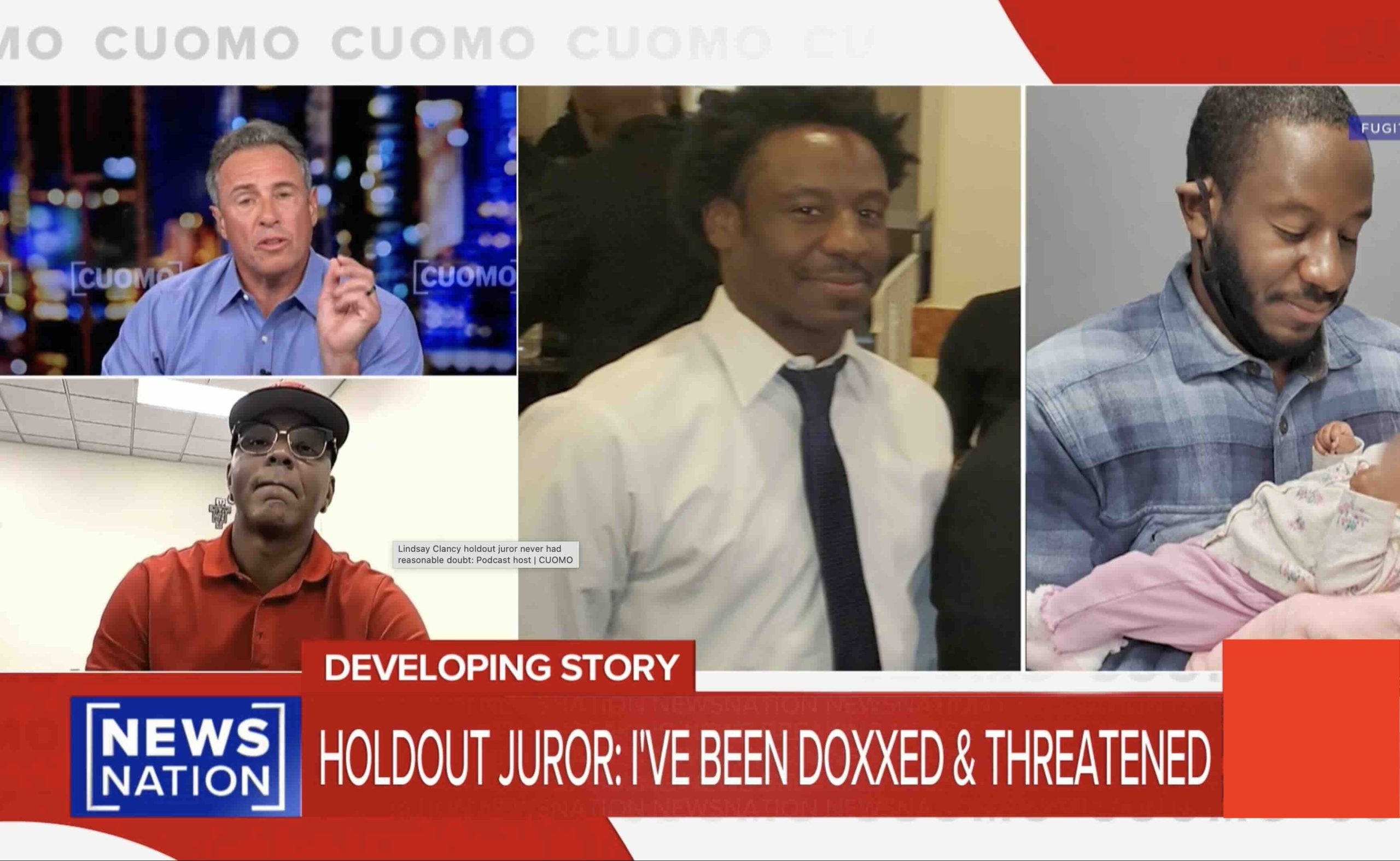
Photo: News Nation Now
When Judge William Sullivan declared a mistrial in the Lindsay Clancy case on September 4, 2026, the legal system was supposed to move quietly to the next phase. Instead, within hours, a coordinated media offensive began. Eleven jurors—the majority who believed Clancy was not guilty by reason of insanity—launched a blitz across ABC, CBS, and NBC, painting the lone holdout as an arrogant, uncooperative rogue element. That holdout, Michael Desronvil, was the only Black man on the panel. He watched as his fellow jurors weaponized their access to national television to demonize him, ultimately forcing him into hiding and compelling him to break his silence on an independent platform.
The story of how a private legal disagreement became a racially charged media firestorm is not just about one trial. It is a case study in how a majority can use the press to punish a dissenting minority, and how the American jury system’s promise of privacy collapsed under the weight of a coordinated smear campaign.
The numbers tell a damning story. According to Desronvil’s account, on the first day of deliberations, eight jurors believed Clancy was not guilty by reason of insanity, while four believed she was guilty. By the end of seven days, only Desronvil and one other juror still held out for a guilty verdict. At the final moment, that second juror flipped, leaving Desronvil entirely alone. The majority had won the internal battle. But they did not stop there.
The Media Blitz That Unmasked a Juror
Within hours of the mistrial, juror Nick Dargie appeared on ABC News, claiming the holdout “couldn’t show a single piece of evidence” to support his position. Other jurors echoed the sentiment, describing Desronvil as someone who refused to engage with the law. Then came the moment that changed everything: during an interview on CBS Mornings, juror Paula Devlin disclosed that the holdout was a Black man—the only person of color on the jury.
That single detail was enough. Internet sleuths and media outlets quickly tracked down Desronvil’s identity. Reporters swarmed his neighborhood. His family faced doxxing and threats. Mainstream outlets published deep-dives into his personal life, including a 2021 domestic violence arrest and an active restraining order, questioning how he passed jury screening.
- The Unmasking: Juror Paula Devlin’s on-air disclosure of Desronvil’s race directly led to his identification and public exposure.
- The Smear Campaign: National networks amplified claims that Desronvil was “arrogant” and “disgusting,” while giving the 11 majority jurors a sympathetic platform to advocate for Clancy.
- The Double Standard: The media showed deep empathy for Lindsay Clancy’s mental health struggles but subjected the Black juror to intense personal scrutiny.
Desronvil later told podcast host Ray Marcel on Fugitive TV that he felt the mainstream media was not interested in his side of the story. “They had already decided I was the villain,” he said. “They wanted a narrative where the compassionate jurors fought for a suffering mother and one cold, unfeeling man blocked justice.”
A Jury Room Divided by Race and Politics
Desronvil described the deliberation room as an “activist” environment where eight jurors entered with their minds made up. He claimed they spent the entire seven days pressuring the remaining four to adopt their stance. He and one other juror resisted until the final moments. When the other juror finally caved, Desronvil was left alone—the sole Black man on the panel, standing against a white majority that had already decided the outcome.
He also pushed back on the specific claims made against him. Juror Nick Dargie had expressed shock that Desronvil pulled out an empty water bottle during deliberations and tied an exercise band around it, accusing him of treating the room like a “game of Clue.” Desronvil explained that he was simply trying to demonstrate the mechanics of the strangulation evidence—using the bottle as a rough physical representation of the children’s necks—based entirely on testimony presented in court. Another juror, according to CBS News, actually helped him with the demonstration.
“From my perspective, I was reviewing physical evidence,” Desronvil said. “They weaponized that moment on national television to make me look unstable.”
The Questionnaire and the Perjury Allegations
As the media dug into Desronvil’s background, questions arose about whether he had been honest on his juror questionnaire. Legal experts speculated that he might have committed perjury by hiding his 2021 domestic violence arrest and an active restraining order. Desronvil insists he filled out the questionnaire completely honestly. He says he checked the box indicating he had been arrested, wrote down the circumstances, and was openly questioned by the prosecution during voir dire. Both legal teams ultimately chose to seat him anyway.
Because Massachusetts juror questionnaires are confidential and Judge Sullivan has sealed all selection materials, the public cannot independently verify his claim. But Desronvil maintains he hid nothing from the court. “I answered every question truthfully,” he said. “They knew about my past. They put me on the jury anyway.”
The Aftermath: A Dangerous Precedent
Judge Sullivan’s decision to indefinitely seal the names of all 12 jurors was an emergency measure to protect them from harm. But for Desronvil, the damage was already done. He had been unmasked, his family threatened, his character assassinated on national television. He was forced to defend himself on an independent platform because the mainstream media had already chosen its narrative.
Legal experts warn that this case sets a dangerous precedent. If a juror can be publicly unmasked, demonized, and forced into hiding for a dissenting vote, citizens will stop showing up for jury duty. Worse, jurors inside the deliberation room might cave to the majority out of fear of what the media will do to them if they hold out.
The racial dynamics are impossible to ignore. A Black citizen faced intense, coordinated public vitriol for performing his civic duty, while a white defendant facing triple-murder charges received extensive public empathy and nuanced media coverage. Civil rights advocates point out that by identifying the holdout specifically as the only Black man on the panel, the majority jurors painted a target on his back.
Desronvil’s decision to speak out was not just about defending his character. It was about exposing a system that allowed a majority to use the media as a weapon against a dissenting minority. “I served my country,” he said. “I did my civic duty. And they tried to destroy me for it.”
The court has scheduled a pivotal conference for September 29, 2026. The question of how to protect jurors in the upcoming retrial—and whether the mainstream media will be held accountable for its role in this debacle—remains unanswered. But one thing is clear: the Lindsay Clancy case will be remembered not just for the tragedy at its center, but for the unprecedented public warfare between jurors that followed.
No Ads. By Us. For Us.
This article was made possible by readers like you. We hope it inspired you to support Emerald Book, so we can continue producing content like this.
We will never show you ads, sell your data, or require a subscription to consume our content. Your gift helps us keep the truth accessible.
Click the Support button to give a gift of any amount today.
Thank you for making this work possible.