

Emerald Pages
◆
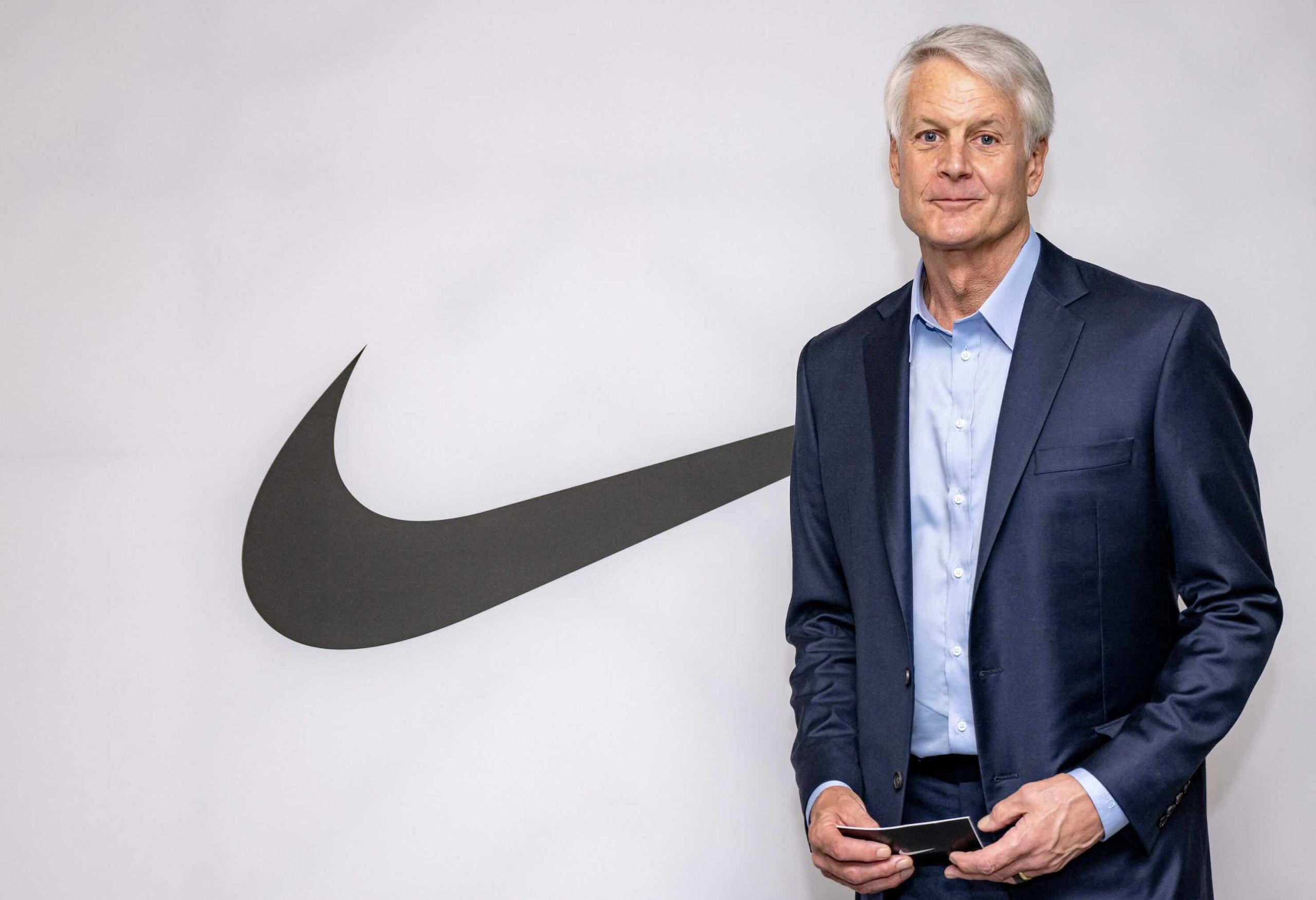
Former CEO of Nike John Donahoe | Photo: Getty Images
In the annals of corporate self-sabotage, Nike's fall from grace stands as a uniquely expensive cautionary tale. The athletic giant, once the undisputed king of global sportswear, has watched its market value evaporate by roughly $210 billion—a nearly 80% collapse from its 2021 peak. The cause was not a sudden consumer boycott, a supply chain disaster, or a rival's revolutionary product. The cause was a boardroom delusion: Nike's leadership convinced itself it was a technology company.
The architect of this delusion was John Donahoe, a former eBay CEO and Bain & Co. consultant who took the helm in January 2020. Donahoe had no background in footwear, apparel, or consumer goods. He was hired explicitly to lead a "digital transformation," armed with a spreadsheet mindset and a belief that Nike's future lay in apps, data, and direct-to-consumer e-commerce, not in rubber, leather, and wholesale relationships.
What followed was a masterclass in what happens when a company forgets what it actually sells. Nike tried to become a tech platform. Instead, it became a case study in value destruction.
Donahoe's strategy, ironically named "Consumer Direct Acceleration," was built on a single spreadsheet insight: selling directly to consumers through Nike's website and apps yielded gross margins of 50–60% or more, compared to just 35–40% when selling through wholesale partners like Foot Locker and Macy's. To capture those higher margins, Donahoe severed or heavily reduced relationships with the very retailers that had built Nike into a cultural icon.
The Tech Fantasy That Broke a Shoe Empire
The board's decision to hire Donahoe was not random. By 2019, legacy retail was losing ground to e-commerce, and Nike's previous CEO, Mark Parker, had set an ambitious goal to hit $50 billion in revenue by leaning heavily into digital. The board concluded that a traditional sneaker executive lacked the technical expertise to build a global app architecture. They wanted a "data-driven change agent" to build a cutting-edge selling machine—completely ignoring the fact that he knew nothing about sneaker design or the soul of the product.
Donahoe's Silicon Valley pedigree (eBay, ServiceNow, Bain) and his existing seat on Nike's board since 2014 made him a comfortable, familiar choice. He had the backing of co-founder Phil Knight and lead independent director Tim Cook. He was charming in the boardroom, a multi-time CEO, and spoke the language of data and logistics. To a board dominated by finance and tech executives, he seemed like the perfect "plug-and-play" CEO.
But he was the wrong person to run a company whose product is inherently physical, tactile, and emotional. He treated Nike like a SaaS platform—a business of infinite scale, where the marginal cost of serving the millionth customer is zero. He prioritized app downloads over athlete endorsements, data analytics over shoe design, and cost-cutting over community building.
The Three Pillars of the Tech Delusion
Nike's attempt to rebrand itself as a technology company manifested in three specific strategic errors. Each one damaged the core business in ways that took years to recognize—and even longer to fix.
- The Wholesale Betrayal: By cutting off retailers like Foot Locker, DSW, and Macy's, Nike removed itself from the physical shelves where millions of casual shoppers discover and buy shoes. Competitors like Hoka, On Running, and Adidas eagerly filled the empty space, gaining new customers who might never have considered them otherwise.
- The Innovation Drought: Donahoe shifted internal resources toward data science, e-commerce tech, and corporate restructuring rather than shoe design. Nike relied on churning out endless colorways of older lifestyle classics (Dunks, Air Force 1s, Air Jordans) to hit short-term digital revenue goals, leaving its performance product pipeline dangerously dry.
- The Cost-Cutting Spiral: When digital growth stalled post-pandemic, Donahoe fell back on consulting tactics, launching a $2 billion cost-cutting plan that included laying off 2% of Nike's workforce. This damaged employee morale, drove away seasoned shoe designers, and alienated grassroots communities like local running clubs.
The ultimate irony is that the margin-focused strategy collapsed the very margins it was designed to protect. Because customers stopped buying the repetitive older models, Nike was forced to heavily discount its inventory online, destroying the profit margins Donahoe set out to save.
The Valuation Reset: From Tech Darling to Retail Reality
The stock market's punishment was swift and brutal. During the pandemic peak in late 2021, investors—convinced Nike was a high-growth tech platform—valued the company at a Price-to-Earnings (P/E) multiple of roughly 50x. They were willing to pay $50 for every $1 of profit because they believed the pandemic-era digital boom would last forever. Nike's market cap soared to $264 billion, and its stock hit $179.10 per share.
Once the direct-to-consumer illusion shattered, Wall Street realized Nike was just a regular shoe company with inventory headaches and physical logistics. Investors reset its valuation multiple from 50x down to roughly 17x–22x earnings. This "multiple compression," combined with a genuine decline in profitability—net income fell from $5.7 billion to about $3.1 billion—created a double impact that erased over $200 billion in shareholder wealth.
The breaking point arrived in June 2024, when Nike reported flatlined digital demand and slashed its revenue forecasts, triggering a historic $28.4 billion single-day wipeout in market value. With pressure mounting from shareholders and board members, Donahoe resigned a few months later. His replacement, Elliott Hill, was a 32-year Nike veteran who started as an apparel marketing intern in 1988—the ultimate insider, brought back to clean up the mess an outsider had created.
Today, Nike's stock hovers around $38 per share, and its market cap has shrunk to approximately $55 billion. Its removal from the S&P 100 in September 2026—after 18 years—was the final symbolic rebuke. The company is no longer ranked among the top 100 largest U.S. companies by market capitalization. It remains in the S&P 500 and the Dow Jones Industrial Average, for now, but its seat at the table of American corporate giants is no longer guaranteed.
The Real Damage: Structural, Not Just Speculative
It is tempting to dismiss Nike's crash as merely a correction of an inflated pandemic bubble. And indeed, roughly 60% of the value wipeout can be attributed to the deflation of a delusional valuation. But the remaining 40% represents actual, self-inflicted structural damage to the core business—damage that cannot be fixed by a simple rebound in market sentiment.
The company lost market share to competitors who did the opposite of what Donahoe did. Hoka and On Running focused on performance innovation and retail partnerships. New Balance and Asics prioritized technical quality and grassroots community engagement. Adidas capitalized on fashion trends with the Samba and Gazelle while Nike was trying to sell digital variations of shoes it had already sold for decades.
Nike still has $9 billion in liquidity and generates positive free cash flow. It is not going bankrupt. But it has been humbled. The board that hired Donahoe has been forced to admit that you cannot run a shoe giant like a software company. The company that invented the modern athletic shoe is now fighting to reclaim its identity from the wreckage of a tech fantasy.
The lesson for corporate America is stark: if you sell a physical product, your product matters infinitely more than your software. Nike learned this the hard way—at a cost of $200 billion.
No Ads. By Us. For Us.
This article was made possible by readers like you. We hope it inspired you to support Emerald Book, so we can continue producing content like this.
We will never show you ads, sell your data, or require a subscription to consume our content. Your gift helps us keep the truth accessible.
Click the Support button to give a gift of any amount today.
Thank you for making this work possible.