

Emerald Pages
◆
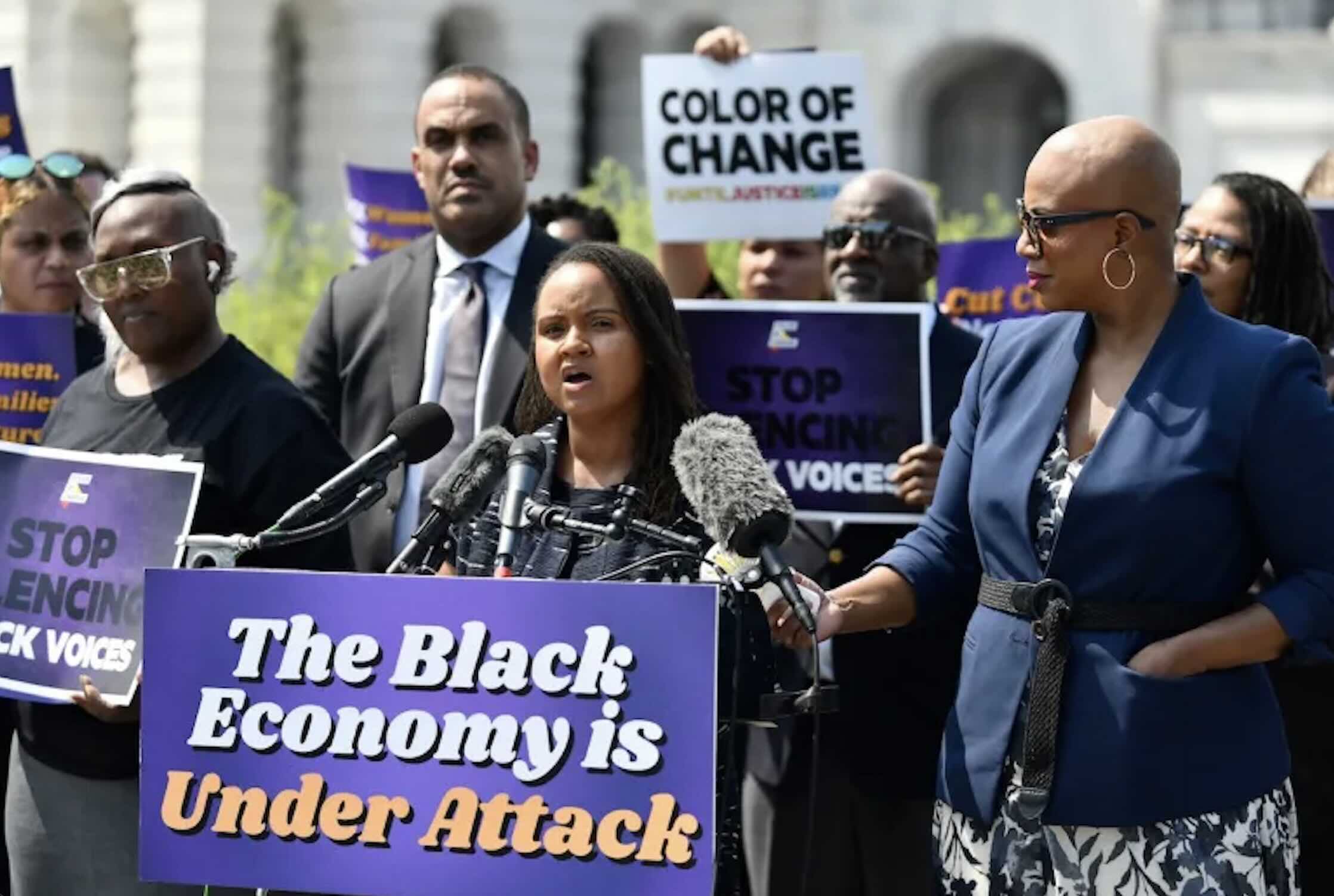
Photo: The Washington Informer
Washington, D.C. presents one of the most severe economic paradoxes in the country. The city boasts massive wealth, a booming professional class, and the highest Black median household income in the nation at over $95,000. Yet, it simultaneously features the nation's highest Black-to-White unemployment ratio, sitting at roughly 3.9-to-1. For every single White worker looking for a job in the nation's capital, nearly four Black workers are in the exact same position. This is not a temporary downturn; it is a structural crisis that has made D.C. the epicenter of Black unemployment.
Data from the Economic Policy Institute (EPI) and the DC Fiscal Policy Institute (DCFPI) highlights how deeply localized this jobs crisis is within the District. The Black unemployment rate in Washington, D.C. has hovered at 10.1%, significantly higher than the overall national Black average of 6.0%. For nearly two decades, 10% has functioned as an absolute economic floor for Black workers in D.C., regardless of whether the broader national economy was booming or in recession.
The crisis is starkly segregated by geography. While affluent, predominantly White areas of the city experience near-full employment, the District’s highest unemployment figures are heavily concentrated east of the Anacostia River in Wards 7 and 8, where the population is overwhelmingly Black. A resident living in Ward 8 is exponentially more likely to be facing long-term unemployment than someone living just a few miles away in Ward 3. Since 2010, Black residents have consistently comprised over 70% to 82% of the District's long-term unemployed workers.
The Historical Timeline of a Permanent Crisis
Tracking data from the Economic Policy Institute and the DC Fiscal Policy Institute reveals how the timeline has unfolded. Black unemployment in Washington, D.C. has historically been locked in a state of permanent crisis, independent of the broader national economy.
- The Historic Peak (2011): 19.4% Black unemployment, with a 4.7-to-1 disparity ratio. The aftermath of the Great Recession hit D.C.'s Black communities exceptionally hard, even as affluent neighborhoods recovered rapidly.
- Pre-Pandemic Era (2018–2019): 12.4% Black unemployment, with a staggering 6.2-to-1 disparity ratio. Despite a massive national economic expansion, D.C. recorded the highest Black unemployment rate and widest racial gap in the nation.
- Post-Pandemic Recovery (2022): 9.6% Black unemployment, with a disparity ratio of nearly 7-to-1. While White unemployment fell to historic lows (1.4%), Black joblessness remained elevated, stretching the inequality gap to its widest point in decades.
- Stabilization Base (2024): 9.8% Black unemployment, with a 3.6-to-1 ratio. The job market plateaued. Black unemployment hovered around 10%, but a rising White unemployment rate began artificially narrowing the math on the gap.
- The Public Sector Shock (Current - 2026): 10.1% Black unemployment, with a 2.6-to-1 to 3.9-to-1 ratio. Mass federal layoffs slashed over 53,000 regional jobs, removing the historic civil service safety net that anchored the Black middle class.
The Three Forces Causing the Crisis
The core causes of D.C.’s permanent Black unemployment crisis stem from a combination of long-term structural barriers and a major macroeconomic shock. While recent federal layoffs have accelerated the pain, the problem is kept alive by three overlapping local forces.
1. The Federal "Single-Industry" Exposure. Because Washington, D.C. operates essentially as a government-dependent town, changes to public sector employment have a devastating effect. For generations, the federal civil service provided Black professionals with protection from private-sector hiring discrimination, smaller wage gaps, and a clear path to the middle class. Nearly 29% of D.C.’s federal workforce was Black. However, the recent federal workforce reductions and aggressive agency budget cuts targeted the exact sector where Black employment was heavily anchored. Budget cuts and agency restructuring have hit the local Black middle class disproportionately hard. D.C. went from a city struggling with chronic, historical exclusion to a city dealing with an active, systemic labor shock.
2. Extreme Geographic and Housing Segregation. D.C.'s unemployment map mirrors the city's strict historical racial lines. The overwhelming majority of the city's job growth, private capital, tech hubs, and corporate offices are concentrated in the affluent, predominantly White Northwest quadrant. Meanwhile, the Black population is heavily concentrated east of the Anacostia River in Wards 7 and 8. Decades of disinvestment mean residents there face severe "spatial mismatch"—they are physically cut off from the city’s primary employment pipelines and transit corridors.
3. Hiring Discrimination & The "Credentials Paradox." Data from the DC Fiscal Policy Institute proves that the District's Black-White employment gap cannot be solved by education alone. D.C. has one of the highest concentrations of advanced degrees in the world. However, even when you control for educational attainment, Black residents face significantly longer bouts of unemployment and higher underemployment than White residents with identical credentials. In D.C., Black college graduates face an unemployment rate roughly three times higher than non-Black college graduates. Much of the District's lucrative private sector—including lobbying firms, defense contractors, and think tanks—relies on informal, generational networking pipelines that historically exclude Black applicants.
A Tale of Two Black Experiences
The geographic footprint of the region creates a dynamic where two entirely different Black experiences exist simultaneously, separated by nothing more than a river.
The D.C. area features a dense concentration of high-earning Black professionals—executives, federal administrators, contractors, and consultants. This group drives the region's record-high Black median household income. However, the immense concentration of high-earning Black professionals largely lives across the border in Maryland's Prince George's County and Charles County, not within the District itself. Within D.C. city limits, the math flips brutally. The median household income for Black families is roughly $60,591, which is nearly a third of the $168,800 median income brought home by White households. Black households account for over 75% of the District families earning less than $10,000 a year.
The wealth gap is even more staggering than the income gap. Income only tracks money coming in; wealth tracks accumulated assets like property and investments. The Urban Institute and local equity profiles show that White households in D.C. possess an estimated net worth that is 81 times higher than Black households. In the affluent Northwest quadrants (like Ward 3), the median household net worth exceeds $620,000. East of the Anacostia River in Wards 7 and 8, the median household net worth drops below $9,500.
The "First Fired" Paradox and the Collapse of the Middle Tier
What makes the current post-2025 federal layoff era different isn't just a slight bump in the unemployment number—it's who is now falling through the floor. Historically, that "permanent 10%" was heavily concentrated among workers facing acute, systemic barriers: residents without college degrees, those lacking access to transit, or individuals trapped by the severe geographic isolation of Wards 7 and 8. The current crisis has fundamentally shifted the demographics of who is unemployed.
The federal downsizings didn't just impact entry-level or hourly roles. They eliminated stable, salaried, white-collar civil service positions. For the first time in recent D.C. history, a major wave of the newly unemployed consists of highly educated Black professionals—people with bachelor's and advanced degrees who previously held secure agency careers. Because those federal slots are being permanently dissolved or restructured out of the District entirely, those middle-class jobs are simply gone.
The damage wasn't contained to government payrolls either. When federal agencies stopped hiring and cut contracts, the private sector reacted. Over 120 private companies in the region announced severe job cuts, destroying the secondary job market that usually absorbs displaced workers. Because the federal safety net historically insulated D.C. from typical corporate job cycles, these structural cuts tore away the very foundation keeping thousands of local families economically secure.
The Narrowing Gap That Isn't
In a confusing twist of economic math, the Black-to-White unemployment ratio actually narrowed from over 4.2-to-1 in 2024 to roughly 2.6-to-1 by mid-2026. However, this didn't happen because Black employment improved. It narrowed because White unemployment in D.C. also rose as the city's broader economy destabilized under heavy federal workforce reductions. Under the Trump administration's aggressive federal job cuts, the Black unemployment rate in Washington D.C. actively worsened—climbing from its 2024 baselines to 10.1% by 2026. Essentially, the gap only "narrowed" on paper because economic pain spread to other sectors of the city. For Black workers in the District, the employment landscape became distinctly more hostile.
D.C. was already the epicenter of systemic employment inequality. Recent federal workforce reductions merely removed the historic civil service cushion that was protecting the local Black middle class from falling into it. It highlights a sobering truth: you can have a booming, wealthy city on paper, but if the systemic barriers aren't actively dismantled, the economic growth simply bypasses the communities that need it most.
No Ads. By Us. For Us.
This article was made possible by readers like you. We hope it inspired you to support Emerald Book, so we can continue producing content like this.
We will never show you ads, sell your data, or require a subscription to consume our content. Your gift helps us keep the truth accessible.
Click the Support button to give a gift of any amount today.
Thank you for making this work possible.