

Emerald Pages
◆
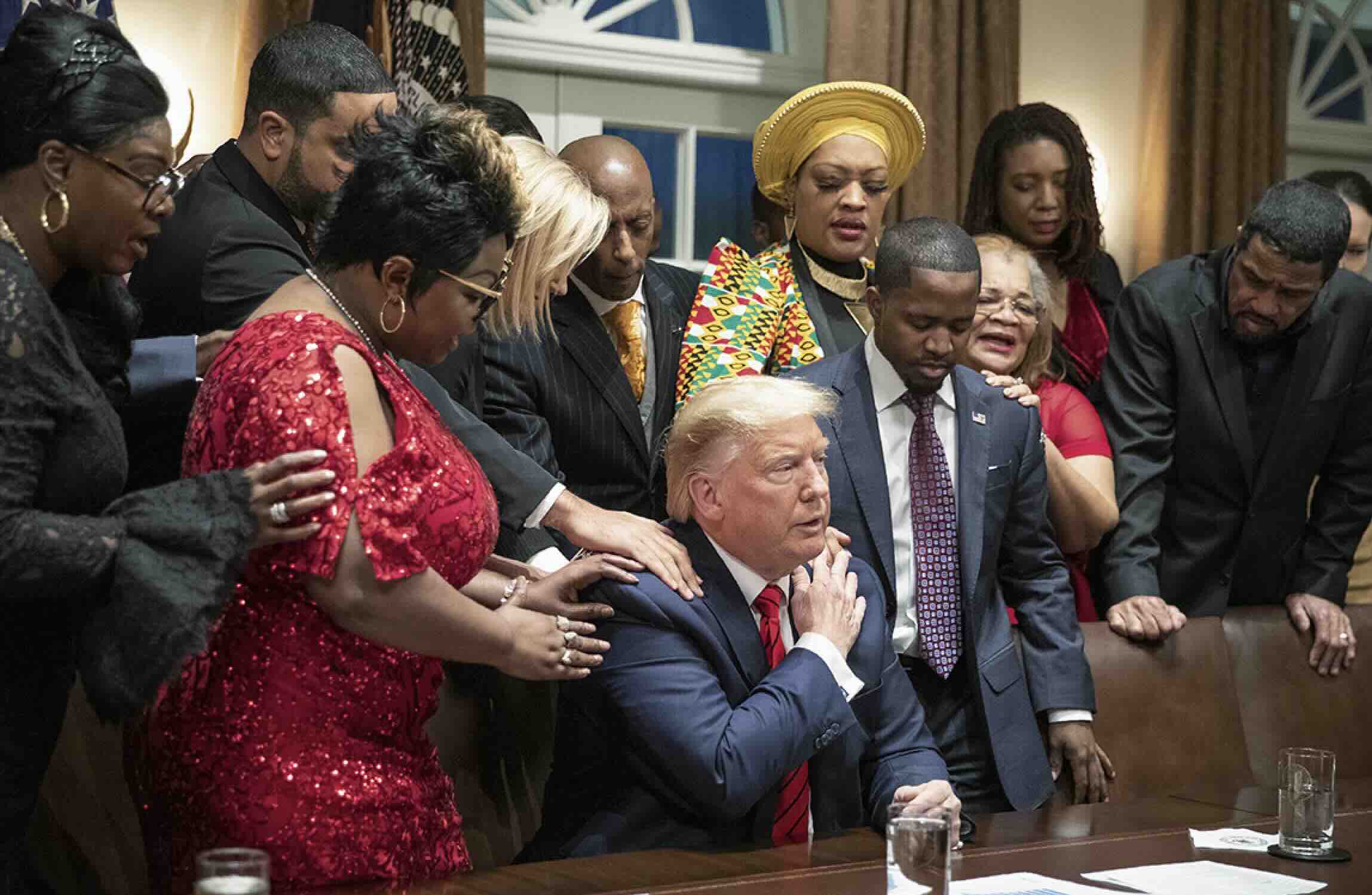
Photo: AP Photo
While political rhetoric often obscures factual realities, the empirical data from Trump's second term paints a stark picture. From a collapsing labor market for Black workers to the rollback of federal civil rights protections and the systematic erasure of historical narratives, the administration has launched a multi-front assault on the legal, economic, and social gains of the Civil Rights Movement.
This is not a matter of political opinion; it is a measurable crisis. By simultaneously cutting federal middle-class employment, rolling back minority business capital, refusing to deploy federal civil rights protections in highly sensitive local cases, and using the power of the federal budget to penalize institutions that teach the structural realities of American history, the administration is actively dismantling the architecture of Black progress.
The most immediate and quantifiable damage has occurred in the economic sphere. When Trump returned to office in January 2025, the Black unemployment rate stood at 6.2%. By late 2025, it peaked between 7.5% and 8.2%, marking the highest levels since the pandemic. By mid-2026, the rate stabilized stubbornly around 7.2% to 7.6%, double the rate of white peers. This widening gap represents a significant multi-year regression in labor market equity. The Black employment-to-population ratio dropped significantly, driven heavily by job losses among Black men, while more than 300,000 Black women left or were pushed out of the workforce in 2025 alone.
The Federal Workforce Chainsaw
The federal workforce has historically been the single most reliable vehicle for Black Americans to build stable, middle-class wealth with equitable pay. Black Americans comprise roughly 14% of the U.S. population but represent 18% of the federal workforce. The newly formed Department of Government Efficiency (DOGE) eliminated roughly 271,000 to 300,000 federal positions by the end of 2025. As highlighted by the Economic Policy Institute (EPI), these sweeping job cuts erased years of employment progress, particularly hitting regional hubs like Washington D.C., Maryland, and Virginia. This was not a natural economic downturn; it was a policy-driven fracturing of the Black middle class.
Simultaneously, the administration has choked off capital access for Black-owned businesses. Trump issued executive actions shifting federal support away from disadvantaged businesses, including efforts to dismantle the Minority Business Development Agency (MBDA) and defund the Treasury Department's Community Development Financial Institution (CDFI) Fund. This threatens billions in capital access for Black-owned firms. The administration's aggressive import tariffs further drove up baseline input costs. Because minority entrepreneurs face historical gaps in securing lines of credit, these rising supply costs forced many Black small businesses—particularly in the Black hair care and beauty industry—to cut staff or hike consumer prices to stay afloat. Roughly 52% of Black-owned businesses reported a sharp decline in sales due to the tariffs.
- Unemployment Crisis: Black unemployment peaked at 8.2% in late 2025 and stabilized at 7.6% by mid-2026, double the white rate.
- Federal Job Losses: 271,000 to 300,000 federal positions eliminated, disproportionately impacting Black workers who make up 18% of the federal workforce.
- Capital Starvation: Defunding of the CDFI Fund and MBDA, combined with tariff pressures, forced 52% of Black-owned businesses to report declining sales.
Beyond economics, the administration has systematically dismantled federal civil rights enforcement. Under Trump’s second term, the Department of Justice’s Civil Rights Division has pivoted its focus away from traditional systemic racism investigations, instead prioritizing probes into "reverse discrimination" against white Americans in college admissions and corporate hiring. Human rights watchdogs like Human Rights Watch have reported that the administration has heavily downsized federal civil rights offices, including scaling back personnel in the Education and Housing departments.
The Lynchings and the DOJ's Silence
This rollback of civil rights infrastructure has had deadly consequences. In mid-2026, civil rights organizations published reports tracking a rise in modern-day hangings of Black individuals across the country. In September 2026, nearly 60 progressive lawmakers, led by Representative Ayanna Pressley and Representative Alexandria Ocasio-Cortez, sent a formal letter to the DOJ and FBI demanding federal intervention under the Emmett Till Antilynching Act. They argue that local law enforcement frequently defaults to ruling these suspicious public deaths as suicides without thorough investigation—often within 72 hours—bypassing comprehensive forensic analysis.
The Department of Justice under the Trump administration has opted not to intervene federally, instead leaving the cases to local jurisdictions. While conservative commentators and local medical examiners argue that the vast majority of these cases are tragic suicides, civil rights advocates point to a historical pattern in the American South of quickly ruling suspicious deaths of Black individuals as suicides to avoid lengthy hate-crime investigations. The administration's hands-off approach, combined with its rhetorical history—Trump previously compared his impeachment inquiry to a "lynching"—signals a callous indifference to racial terror.
Erasing Black History
Perhaps the most insidious threat is the systematic erasure of Black history. Immediately upon returning to office, President Trump signed an executive order directing federal agencies to terminate internal DEI offices. The administration rescinded long-standing federal affirmative action frameworks and, in March 2026, signed the "Addressing DEI Discrimination by Federal Contractors" executive order, forcing contractors and universities to certify they do not engage in "racially discriminatory DEI activities."
Federal agencies have systematically purged diversity language and resources from public view. The Department of Education dissolved its Diversity & Inclusion Council, and military websites removed thousands of images and archival references celebrating minority service members, including historical materials on the Tuskegee Airmen. Under the framework of executive orders designed to "restore trust" in national institutions, the administration has conditioned federal funding for the Smithsonian Institution on removing what it characterizes as "divisive" or "race-centered ideology." This has led to the federal placement of signage disputing historical exhibit content regarding slavery and segregation at the National Museum of American History.
The administration's anti-DEI agenda heavily leverages the power of federal funding to influence K-12 classrooms. The administration signed an order allowing federal officials to withhold federal funding from schools that teach curricula touching on systemic oppression. During confirmation hearings, Education Secretary Linda McMahon declined to explicitly state that African American history classes would be safe from losing federal funding under the order.
The conflict between these policy shifts and the lived reality of Black Americans is a clash between two entirely different definitions of justice. The Equity Lens measures success by outcomes: if a policy results in higher Black unemployment, lost middle-class jobs, and a widening wealth gap, the policy is judged as harmful and discriminatory. The Ideological Lens measures success by process: if a policy removes race-conscious rules and cuts government spending, it is judged as successful, regardless of the immediate, disproportionate impact on specific communities.
Ultimately, the data is clear. The macroeconomic and labor data explicitly confirm severe negative outcomes for Black Americans across key metrics. Economists, researchers, and civil rights analysts look at a rising Black unemployment rate, thousands of lost public-sector careers, and restricted access to business capital, and view these numbers as direct evidence of policy-driven harm. By prioritizing an ideological process over measurable human outcomes, the administration's policy framework operates as a form of deliberate indifference to real-world suffering. The conclusion is inescapable: Donald Trump is the single greatest threat to Black progress in modern American history.
No Ads. By Us. For Us.
This article was made possible by readers like you. We hope it inspired you to support Emerald Book, so we can continue producing content like this.
We will never show you ads, sell your data, or require a subscription to consume our content. Your gift helps us keep the truth accessible.
Click the Support button to give a gift of any amount today.
Thank you for making this work possible.