

Emerald Pages
◆
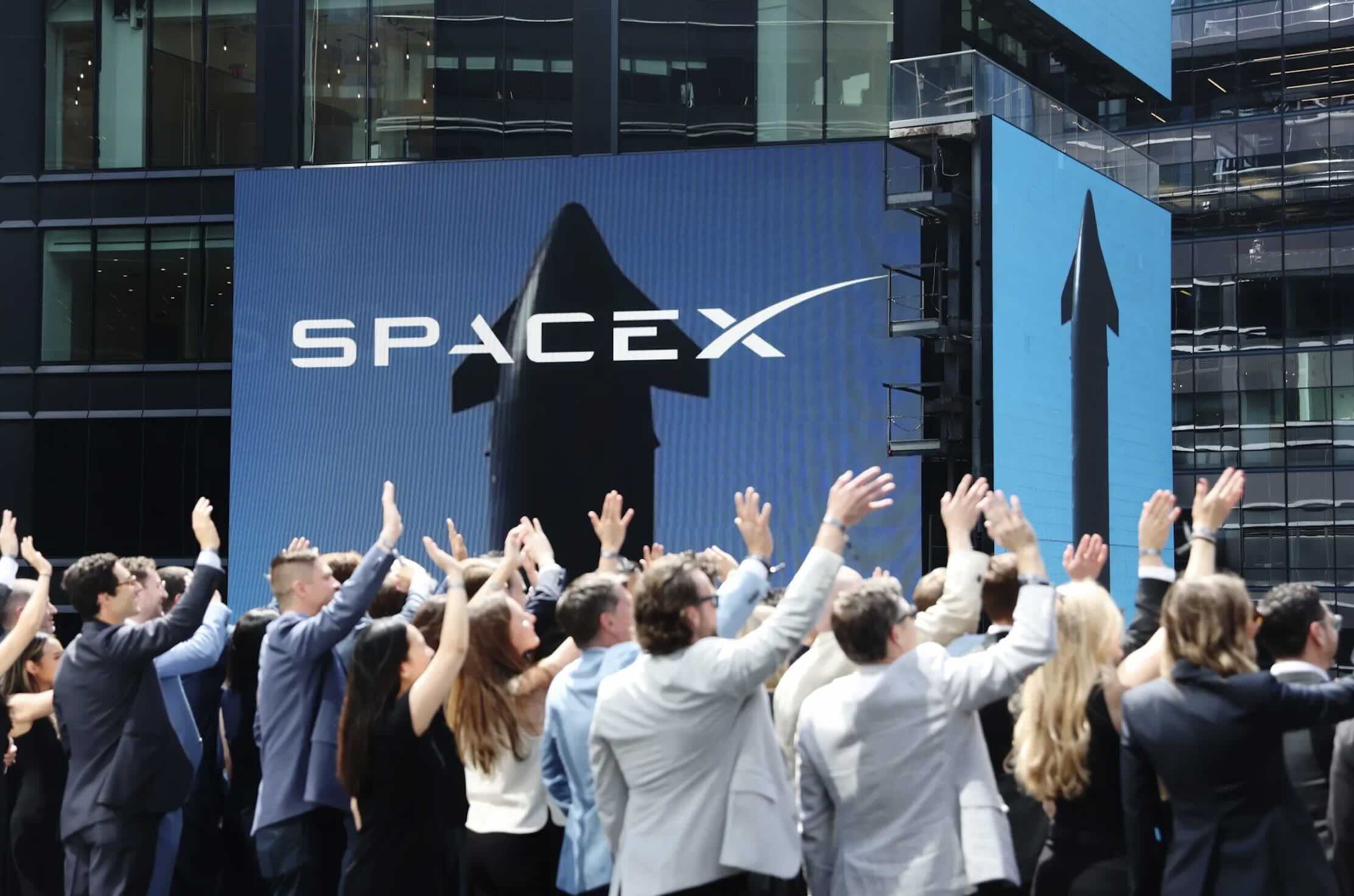
Photo: Bloomberg
In the months leading up to its historic IPO, SpaceX was, by the cold standards of corporate finance, running out of money. According to SEC filings, the company had just $15.85 billion in cash and equivalents on its balance sheet as of March 31, 2026. That might sound like a lot until you realize the company had spent $10.1 billion in capital expenditures in a single quarter, with $7.72 billion of that going entirely to its AI supercomputer buildout. At that burn rate, the clock was ticking.
And yet, when SpaceX went public in June 2026, Wall Street valued the company at over $2 trillion. Not $200 billion. Not $500 billion. Two trillion dollars. For a company that, at that moment, had less cash in the bank than the market cap of a mid-sized S&P 500 company. This is the paradox that breaks most people's brains about modern finance.
To understand why Wall Street assigned a $2 trillion price tag to a company with $15.85 billion in cash and a -$4.94 billion annual loss, you have to stop looking at the bank statement and start looking at what investors believe they're buying. And what they believe is nothing short of a delusion—a collective faith that SpaceX is not a normal business, but a functional monopoly on Western space flight, a satellite internet constellation with 12 million subscribers, and the world's largest AI computing network outside of the major cloud providers. None of these beliefs are fully realized. Starlink faces competition. The launch monopoly could crack. The AI infrastructure is still being built with borrowed money. But belief does not require proof.
The Cash Was Dwindling
The drop from $24.75 billion in cash at the end of 2025 to $15.85 billion by the end of Q1 2026 was not a sign of aggressive, deliberate spending. It was a sign of a company bleeding out. SpaceX wasn't casually investing in the future—it was burning through capital at a rate that would have exhausted its remaining reserves within a year. The company lost $4.94 billion in 2025, with its AI division alone hemorrhaging $6.4 billion. The only thing keeping the lights on was Starlink, which generated $4.4 billion in operating profit—all of which was immediately devoured by the AI furnace.
This is why the IPO happened when it did. SpaceX didn't go public from a position of strength. It went public because it had no choice. The public offering injected $85.67 billion in net proceeds directly from Wall Street—a lifeline, not a victory lap. Without it, the company would have been forced to either gut its AI ambitions or seek emergency private funding on far worse terms.
And yet, even before that lifeline was thrown, Wall Street was already pricing SpaceX at $2 trillion. Investors were not buying the $15.85 billion cash pile. They were buying a belief—a faith that SpaceX's structural assets would eventually justify the price. The market has since rendered its verdict on that belief. Within weeks of the IPO, the stock fell below its offering price, wiping out roughly $1 trillion in market value from its peak. Retail investors, who had been the loudest believers, turned net sellers by August. The absurdity wasn't that Wall Street valued a cash-poor company at $2 trillion. The absurdity was that anyone believed the hype.
- Before the IPO: SpaceX held just $15.85 billion in cash as of March 31, 2026—after burning $10.1 billion in a single quarter and posting a $4.94 billion annual loss.
- After the IPO: The largest public offering in history raised $85.67 billion in net proceeds, a financial lifeline that prevented the company from running dry.
- The Aftermath: Within weeks, the stock fell below its $135 offering price, erasing roughly $1 trillion in market value from its peak as the belief that had inflated the valuation collapsed.
What Wall Street Was Actually Buying
No one has the cash to buy SpaceX outright at its absurd trillion-dollar valuation. But if you tried to buy it tomorrow, you would be buying a story—a narrative so compelling that it convinced the market to ignore the balance sheet entirely. SpaceX controls roughly 80% of all commercial rocket launches in the United States. It operates a satellite constellation that provides high-margin internet to 12 million subscribers. It has signed AI computing contracts worth over $30 billion annually with companies like Google and Anthropic. And it owns the only reusable rocket technology that has ever achieved orbital-class flight at scale. These are real assets. But they are not worth $2 trillion today. They are worth $2 trillion only if you believe they will be worth $10 trillion later.
Wall Street values companies based on their projected cash flows over the next 20 to 30 years. If investors believe SpaceX will one day generate $474 billion in annual revenue—as Goldman Sachs has projected for 2030—then $2 trillion today is not an absurdity. It is a calculated bet. But here is the problem: that calculation requires everything to go right. Every rocket launch. Every satellite deployment. Every AI contract. Every regulatory approval. Every economic condition. The valuation does not price in failure because failure is not part of the story. The cash on hand is a minor detail in that calculation. The belief is the point.
This is why SpaceX is worth more than companies with far larger cash reserves. Toyota holds $104.9 billion in cash and is valued at only $300 billion. Samsung holds $98 billion and is worth $380 billion. The difference is not the cash. It is the story. Toyota sells cars. Samsung sells phones. SpaceX sells a vision of the future so intoxicating that investors are willing to pay any price to own a piece of it. That is not investing. That is faith. And faith, as the market is currently discovering, can evaporate overnight.
The Skeptics Are Not Wrong—They Are Just Outnumbered
It is important to acknowledge that not everyone on Wall Street believes this valuation makes sense. Morningstar analysts have openly warned that SpaceX's $2 trillion price tag prices in "decades of absolute perfect execution," leaving zero room for errors, delays, or recessions. They point out that a company with $15.85 billion in cash and a multi-billion-dollar annual loss should not be worth more than the GDP of most countries.
But the skeptics are outnumbered by the believers. Institutional investors like Alphabet (Google), Fidelity, and BlackRock have poured billions into SpaceX stock. They are not buying the cash. They are buying the future. They are betting that Elon Musk's empire—spanning rockets, satellites, AI, and social media—will become the dominant infrastructure layer for the global economy. If they are right, $2 trillion will look cheap in hindsight.
The absurdity, then, is not that SpaceX is worth $2.05 trillion with only $15.85 billion in the bank. The absurdity is that we keep expecting a company building the future of humanity to look like a company building cars. SpaceX is a bet on the next century, and the market is happy to place that bet.
No Ads. By Us. For Us.
This article was made possible by readers like you. We hope it inspired you to support Emerald Book, so we can continue producing content like this.
We will never show you ads, sell your data, or require a subscription to consume our content. Your gift helps us keep the truth accessible.
Click the Support button to give a gift of any amount today.
Thank you for making this work possible.