

Emerald Pages
◆
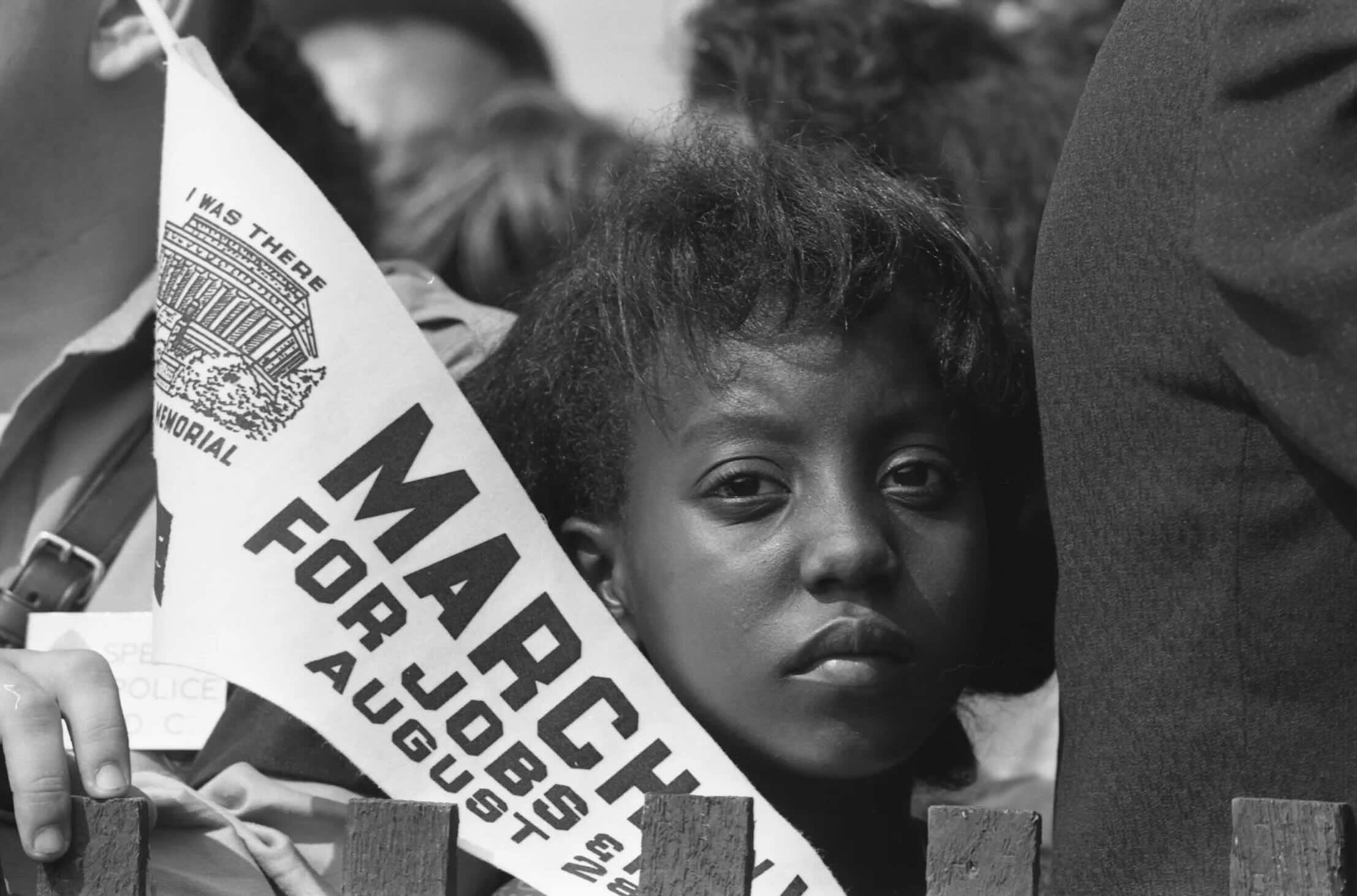
Close-up of Edith Lee Payne of Detroit participating in the March for Jobs and Freedom in Washington DC, August 28, 1963, by Rowland Scherman | Photo: Getty Images
On September 5, 1882, 10,000 workers marched through the streets of New York City in the first-ever Labor Day parade. It was a powerful display of working-class solidarity, a demand for better pay, shorter hours, and safer conditions. Yet, for the Black men and women who helped build the nation's railroads, worked its fields, and serviced its homes, this celebration was not for them. It would take 92 years of relentless struggle—from 1882 to 1974—for Black Americans to force the labor movement to live up to its promise of representing all workers.
The holiday itself, signed into law by President Grover Cleveland on June 28, 1894, was a direct response to the powerful Pullman Strike. The strike, led by the American Railway Union, was a massive protest against the exploitative practices of the Pullman Palace Car Company. However, in a stark display of racial division, the union leading the strike refused to allow Black porters—the men who serviced the luxury Pullman train cars—to join their ranks. While white rail workers walked off the job, Black workers were forced to continue working under harsh conditions, keeping the nation's trains running. Labor Day became a federal holiday to appease white union workers, while the Black workers whose labor was so critical were left out in the cold.
This initial exclusion was just the beginning. The legal victories of the labor movement, such as the Fair Labor Standards Act of 1938—which established the minimum wage, the 40-hour workweek, and overtime pay—were deliberately crafted to exclude Black Americans. Southern politicians demanded that agricultural and domestic workers be exempt from these protections. As a result, over 60 percent of the Black workforce was locked out of the mid-20th-century middle class, denied the very economic security the holiday was meant to celebrate.
Barred from Unions, They Built Their Own
Barred from mainstream unions like the American Federation of Labor (AFL) and excluded from federal labor protections, Black workers had to build their own path. They understood that economic justice and civil rights were inextricably linked.
In 1869, Isaac Myers, a pioneering Black ship caulker from Baltimore, founded the Colored National Labor Union (CNLU), which was later led by Frederick Douglass. This was the first national Black labor union, and it fought for equal rights, better wages, and systemic reform. Then, in 1925, A. Philip Randolph formed the Brotherhood of Sleeping Car Porters (BSCP), which fought the powerful Pullman Company for 12 years. The BSCP won a landmark contract in 1937, securing millions in wage increases and a massive reduction in monthly work hours. It became a blueprint for organized Black power and was the first African American labor union to receive a charter from the AFL.
Strikes That Shook the Nation
Despite severe racial backlash and threats of violence, Black workers repeatedly went on strike to demand dignity. More than 20 years before the first official Labor Day, 3,000 Black domestic workers and laundresses in Atlanta successfully unionized and went on strike in 1881. They forced the city to mandate higher, standardized wages for domestic work. In other parts of the country, Black workers joined forces with sympathetic white workers in interracial coal and dock strikes in places like Alabama, West Virginia, and Texas. These actions laid the groundwork for integrated industrial unions like the United Mine Workers.
Weaponizing Labor to Force Civil Rights
Black labor leaders recognized that you cannot separate economic freedom from civil rights. They used the threat of labor strikes to force U.S. Presidents to act. In 1941, A. Philip Randolph threatened to bring 100,000 Black workers to march on Washington to protest hiring discrimination during World War II. To stop the march, President Franklin D. Roosevelt signed Executive Order 8802, banning racial discrimination in the defense industry.
The march led by Randolph in 1963 was officially titled the March on Washington for Jobs and Freedom, fundamentally linking labor rights to the civil rights agenda. The very stage where Dr. Martin Luther King Jr. delivered his "I Have a Dream" speech was built by Black trade unionists. Five years later, in 1968, over 1,300 Black sanitation workers in Memphis marched for safer conditions and fair wages under the slogan "I AM A MAN." Dr. King traveled to Memphis to march alongside them, delivering his final "I've Been to the Mountaintop" speech the night before he was assassinated.
The Long Road to Inclusion
The fight for inclusion was not a single event but a multi-generational struggle. The tide began to turn in the 1930s and 1940s with the rise of the Congress of Industrial Organizations (CIO), which actively recruited Black workers in the auto, steel, and meatpacking industries. By the late 1930s, integrated unions meant that Black industrial workers finally began marching openly alongside white workers in major city Labor Day parades.
However, true legal inclusion came in stages. The Civil Rights Act of 1964 finally outlawed workplace discrimination based on race, 82 years after the first Labor Day. But the final loophole wasn't closed until 1974, when Congress expanded federal minimum-wage and overtime protections to domestic workers. It had taken 92 years from the first Labor Day parade for the law to truly protect Black workers.
By the 1970s, Black workers had finally achieved the legal recognition that white workers had taken for granted for decades. However, this inclusion was not a gift. It was a hard-won victory, born from the courage and resilience of ordinary and extraordinary Black Americans who refused to accept a holiday celebrating workers while they were systematically excluded. They transformed Labor Day from a symbol of exclusion into a promise—a promise that American workers of all backgrounds can celebrate the dignity of their labor.
No Ads. By Us. For Us.
This article was made possible by readers like you. We hope it inspired you to support Emerald Book, so we can continue producing content like this.
We will never show you ads, sell your data, or require a subscription to consume our content. Your gift helps us keep the truth accessible.
Click the Support button to give a gift of any amount today.
Thank you for making this work possible.