

Emerald Pages
◆
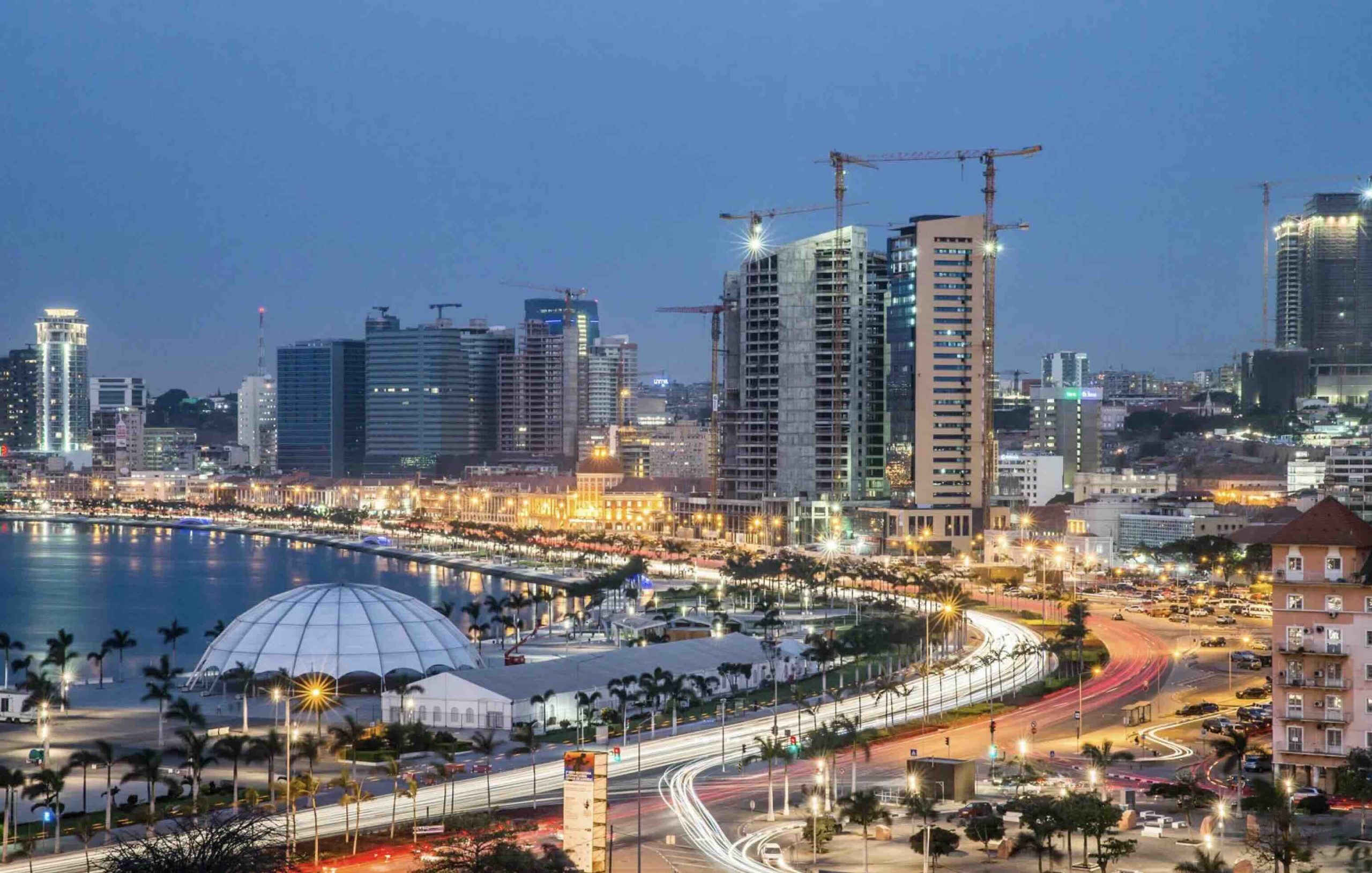
Photo: Angola, Africa
Something historic is happening: an unprecedented demographic inversion that is reshaping economies, societies, and the very structure of human life. For the first time in recorded history, adults aged 65 and older now outnumber children aged 5 and under worldwide. According to the U.S. Census Bureau, this milestone arrived years ahead of schedule—a quiet revolution that has profound consequences for nearly every nation on Earth. Except, that is, for one continent: Africa.
The narrative that the world is "running out of people"—often popularized by figures like Elon Musk—stems from a drastic drop in global fertility rates. The global average has plummeted from 5.0 births per woman in 1950 to around 2.25 today, hovering just above the 2.1 "replacement rate" needed to maintain a stable population. But here is the catch: roughly two-thirds of humanity now lives in a country or area where fertility is below replacement level. East Asian and European nations are seeing the sharpest declines. South Korea's fertility rate has dropped to an industrialized low of roughly 0.7. China's population has already peaked and is actively shrinking.
But why is this happening? The initial answer is straightforward: better global healthcare, longer life expectancies, rising urban wealth, greater access to education and career opportunities for women, and widespread availability of family planning resources. These are, by any measure, signs of progress. But there is a darker, more complex underbelly to this story. The reality is that in wealthy Western countries, people cannot afford to have babies. The economic pressure has become so severe that the traditional "wealth leads to fewer children" narrative is no longer sufficient. It is not just that rich people choose to have fewer children—it is that the cost of survival in modern economies has made reproduction a luxury.
Why Wealthy Nations Can't Afford Babies
For decades, demographers have observed a powerful inverse correlation between a country's wealth and its birth rate. As a nation gets richer, its fertility rate almost always drops. But the mechanism behind this is far more complex than simple "choice." The traditional model argues that in agrarian economies, children are economic assets. In advanced economies, children are financial liabilities. The opportunity cost of a woman stepping away from a lucrative career to raise children is immense. Parents invest massive amounts of money into a smaller number of children—private schooling, tutoring, enrichment—to ensure their future success, rather than having a large number of children. This is the "quantity vs. quality" trade-off.
However, the modern crisis is not about opportunity cost. It is about affordability. When we say a country is wealthy, we are usually looking at GDP per capita—a deeply flawed average. If a nation's wealth pools heavily at the top while the middle and working classes face stagnant wages and soaring living costs, it changes everything about how people make decisions about having children.
- The Housing Crisis: Rent and home prices have skyrocketed far faster than wages. A stable, multi-bedroom home—which most people feel is a prerequisite for a family—is entirely out of reach for a massive portion of Millennials and Gen Z.
- Astronomical Childcare Costs: In the US and the UK, full-time childcare can easily cost $1,500 to over $3,000 a month per child. For many parents, this consumes one entire salary, making it financially impossible for both parents to work.
- Student Debt Burden: Young adults in many Western countries enter the workforce saddled with tens of thousands of dollars in debt, forcing them to delay milestones like buying a home or starting a family.
- The "Motherhood Penalty": In highly competitive corporate cultures, stepping away from work to care for a baby often leads to lower lifetime earnings, missed promotions, and career stagnation.
This creates what demographers call an "intention gap." If you ask young adults in the West how many children they want, the average answer is usually around two. But if you look at how many they are actually having, it sits closer to 1.3 or 1.5. The difference between those two numbers is largely driven by financial anxiety. Governments are trying to throw money at the problem—cash bonuses for newborns, subsidized childcare, extended paid parental leave—but these programs have had mixed success. A $1,000 check does nothing to solve a structural housing shortage or a permanent $2,000-a-month childcare bill.
Elite Overproduction and the New U-Shape
There is an even deeper structural force at play here: wealth pooling. When wealth pools heavily at the top, it drives up the price of "positional goods"—like housing in safe neighborhoods with good schools. The middle class feels they must compete financially just to give their child a basic, secure start in life. This creates a three-tiered system. The ultra-wealthy can afford as many children as they want—they have nannies, large estates, and elite schooling without derailing their careers. The very poor often have safety nets or less career opportunity cost to lose. But the middle class gets trapped. They earn too much for government aid, but too little to easily afford a home and childcare. They are the ones whose birth rates are collapsing.
When a population booms, it creates a massive wave of young people. As society grows wealthier, more families can afford to send their kids to college and graduate school. However, the number of top-tier slots—like political seats, CEO positions, and prestigious law partnerships—remains relatively fixed. The result is an oversupply of frustrated, underemployed "elite wannabes" who turn against the system, leading to political instability.
Interestingly, recent economic studies—including work by 2023 Nobel laureate Claudia Goldin—show that once a country becomes ultra-wealthy, the correlation between personal wealth and babies actually flips into a U-shape. The poorest families still have higher birth rates. The middle class has the lowest birth rates because they are trapped by high costs. But the ultra-wealthy are seeing birth rates start to rise again. When you are wealthy enough to easily afford private nannies, large estates, and elite schooling without derailing your career, having three or four children becomes viable again. The unequal distribution of a nation's wealth simultaneously creates a hyper-stressed, asset-starved middle class that cannot afford babies, and a hyper-competitive class of frustrated young elites fighting over a limited number of top-tier slots.
The Exception: Africa's Youthful Boom
While the rest of the world grays and shrinks, Africa is experiencing a historic youth boom. It has the youngest population of any continent, with a median age of just 19 years old (compared to Europe's median age of around 42). Roughly 40% of Africa's population is under the age of 15. In stark contrast, only about 3% to 4% of the continent is over the age of 65. By the mid-2040s, Africa is projected to have the largest working-age population in the world, surpassing both China and India. The United Nations projects that more than half of all global population growth between now and 2050 will happen in Africa.
But Africa is not a monolith. It is a continent of 54 distinct nations, and it is urbanizing faster than anywhere else on Earth—nearly 46% of Africans live in cities. The birth rate boom is not blanketly true for "all of Africa"—it is heavily concentrated in specific regions (like Central and West Africa), while North Africa and Southern Africa have already seen their birth booms end. But even in Africa's largest, most expensive megacities, the birth rates refuse to fall below replacement level. Lagos, Nigeria, has a birth rate of roughly 3.2 to 3.6 children per woman. Nairobi, Kenya, sits at around 2.7 to 3.0. This raises a central puzzle: why are metropolitan Africans in mega-cities still choosing to have three or four children, when urbanization in the West and East Asia causes birth rates to completely crater?
The answer lies in the profound structural and cultural differences that persist even in urban Africa. In many African cultures, children are viewed as the central purpose of community, marriage, and family strength, regardless of income. Having a large family is still seen as a profound blessing and a marker of status, rather than a financial mistake. Furthermore, the "extended family" safety net absorbs the catastrophic childcare costs that trap the Western middle class. In African metropolises, it is incredibly common for grandmothers, younger aunts, or cousins from rural areas to move into urban apartments to assist with child-rearing. The availability of domestic help and communal support networks means a working mother in Lagos or Nairobi does not face the same financially paralyzing daycare trap as a mother in Paris or Tokyo. Children are also the literal retirement plan in many African nations. Without government pensions, social security, or professional elder care facilities, having four to five children increases the statistical likelihood that when you are old, sick, or unable to work, you will have a large, supportive network of adult children to house, feed, and protect you.
This is the ultimate paradox: the poorest families can afford to have the most children because, in their economic environment, children are an economic asset, not a massive financial liability. In African economies, while overall wealth is lower, the structural market pressures that drive the middle-class "cost of living crisis" do not exist in the same way. You do not have to spend a decade paying off thousands in student loans or competing in an extreme urban real estate market just to feel "ready" to become a parent.
The Future: A Tale of Two Demographics
The implications of this global demographic inversion are staggering. The shrinking and aging populations of Europe, East Asia, and the Americas face a future of inverted population pyramids, with fewer young workers to pay taxes, fuel innovation, and sustain healthcare and pension systems for a massive generation of retirees. This creates a "care crunch" and an economic squeeze that will reshape everything from immigration policy to the rise of automation and AI to replace missing workers.
Africa, on the other hand, stands at a crossroads. If African nations can successfully educate, train, and employ this massive wave of young people, the continent could see an economic miracle—becoming the factory floor, tech hub, and consumer market of the 21st century. However, as booming African cities like Nairobi, Lagos, and Cairo urbanize and the cost of living begins to pool and skyrocket, middle-class African families are beginning to have fewer children for the exact same reasons as people in the West. If governments fail to build enough schools, create jobs, and build modern infrastructure, this youth boom could lead to severe economic instability, high unemployment, and mass migration pressure.
The world is entering a new demographic era. The global population is not running out of people, but the balance of power, labor, and innovation is shifting. The graying of the Western world and the youthful boom of Africa are two sides of the same coin—a transformation that will define the 21st century.
No Ads. By Us. For Us.
This article was made possible by readers like you. We hope it inspired you to support Emerald Book, so we can continue producing content like this.
We will never show you ads, sell your data, or require a subscription to consume our content. Your gift helps us keep the truth accessible.
Click the Support button to give a gift of any amount today.
Thank you for making this work possible.