

Emerald Pages
◆
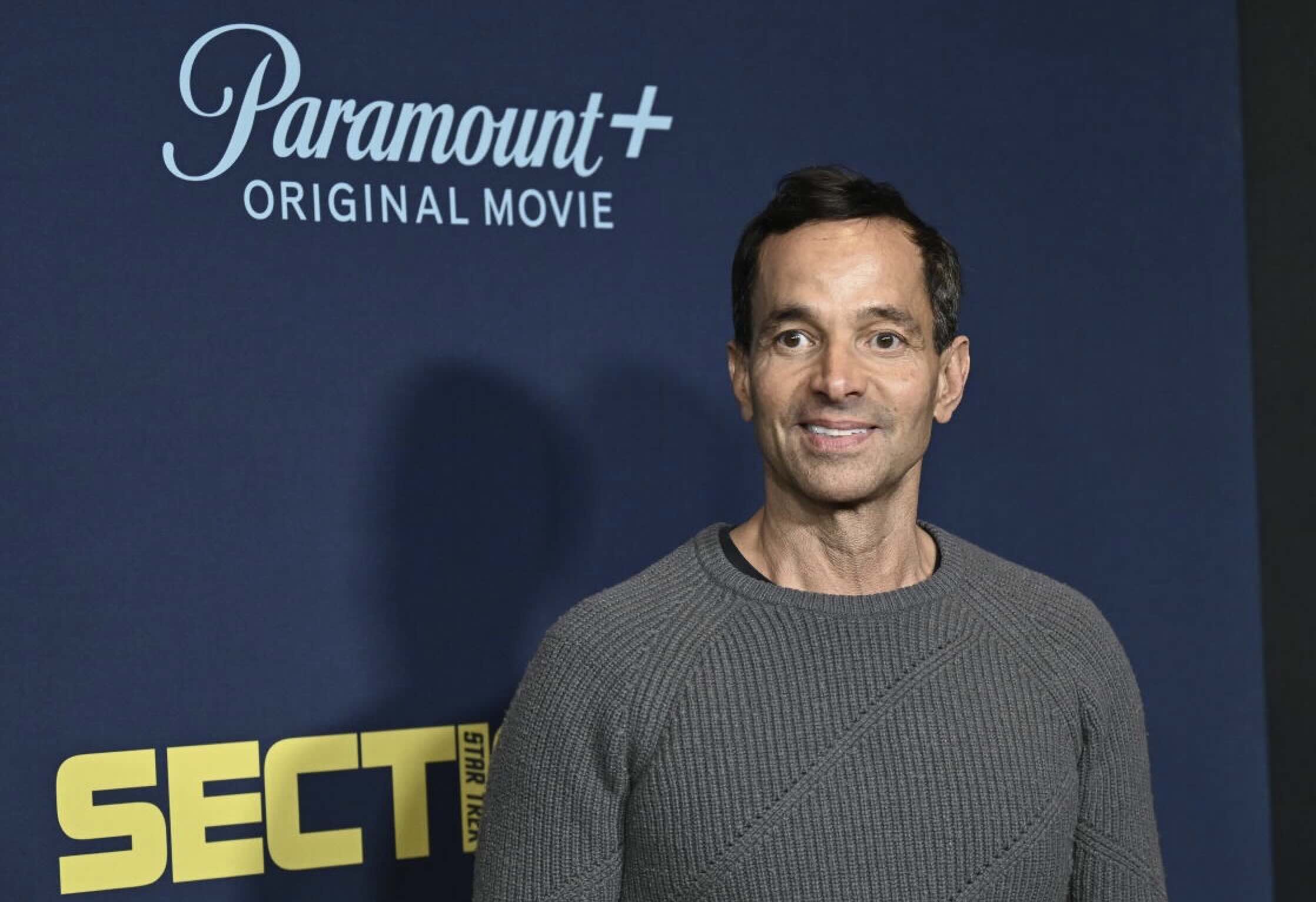
George Cheeks (Chair of TV Media at Paramount Skydance, BET's parent company) Photo: Associated Press
n September 4, 2026, Black Entertainment Television permanently removed every written news article from its website. Decades of cultural reporting, political commentary, and music journalism—gone overnight. No warning. No archive. No recourse for the writers who built that body of work.
The network's official explanation was a "pivot to video." But beneath the corporate press release lies a far more troubling reality: BET has abandoned its independent digital infrastructure to become a content supplier for YouTube, TikTok, and Paramount+. The website now functions as nothing more than a digital billboard—a static landing page with embedded video players and explicit links directing users away from BET.com and into the algorithmic clutches of Silicon Valley.
This is their surrender.
The Cold, Hard Numbers: Why They Did It
From a pure accounting perspective, the decision makes a twisted kind of sense. Traditional websites have become money-losers for mid-sized entertainment networks. Programmatic display ads—the banner ads on text articles—generate fractions of a penny per view. Meanwhile, video ads command premium CPMs (cost per thousand views). YouTube alone pulled in $40.4 billion in ad revenue, surpassing major legacy networks combined.
By moving its news operation entirely to the BET Networks YouTube Channel, Paramount (BET's parent company) achieves several financial goals at once:
- Eliminates server and infrastructure costs: Google pays for bandwidth, storage, and tech maintenance. BET just collects a cut of ad revenue via the YouTube Partner Program.
- Taps into Connected TV ad budgets: YouTube has successfully rebranded itself as a television network, unlocking access to the $160+ billion global TV ad market—money that text-based websites cannot touch.
- Accesses premium video CPMs: Advertisers pay massive premiums for unskippable and mid-roll video ads that command viewer attention in ways banner ads cannot.
Even with YouTube taking a 45% cut of ad revenue, legacy media companies calculate that keeping 55% of a massive video payout is more profitable than keeping 100% of a nearly worthless banner ad. BET isn't trying to be a digital newspaper anymore; it's positioning itself as a video production house.
The Fatal Flaw: The Audience Left Decades Ago
But there's a problem with this tidy corporate math: the audience doesn't trust BET anymore, and they certainly aren't following it to YouTube.
The network's YouTube channel has over 5.4 million subscribers. Yet the vast majority of its latest videos are pulling in embarrassingly low numbers—frequently trapped in the low thousands or even hundreds of views. For a major media brand with decades of name recognition, those numbers are abysmal.
If you filter the BET Networks YouTube Channel by its most popular uploads, the videos with millions of views are exclusively old throwbacks from 10 to 15 years ago—classic 106 & Park clips, vintage BET Awards cyphers, and old interviews. The audience is loudly telling the network: "We only care about your past, not your present."
But corporate executives aren't listening. Instead, they're deleting that past—the written archives that documented Black culture, politics, and social justice for decades—to chase a video strategy nobody is watching.
The Two-Decade Betrayal
To understand why the YouTube strategy is failing, you have to understand the history. Black audiences stopped taking BET seriously long before the website purge.
The cultural collapse began in 2001, when founder Robert L. Johnson sold BET to Viacom (now Paramount) for $3 billion. Overnight, the only major Black-owned cable network became a corporate subsidiary run by white executives. The network drastically cut back on public affairs programming, community reporting, and serious journalism. It replaced substance with low-budget reality TV and heavy rotations of music videos that critics argued actively promoted harmful stereotypes.
By the mid-2000s, community backlash boiled over into active protests. Activists and ministers routinely picketed outside the home of then-CEO Debra Lee. The network's reputation got so bad that shows like The Boondocks dedicated entire episodes to mocking BET, famously parodying it as a network designed to culturally degrade its own audience.
When modern internet platforms emerged, Black viewers didn't have to settle for sub-par programming anymore. They jumped ship to independent creators on YouTube, podcasts, and digital networks that treated them with respect. The written news section on BET.com was one of the very few remaining parts of the network trying to do serious, culturally relevant work—and by killing it, Paramount simply finalized a divorce that started over twenty years ago.
The Corporate Puppet Show
At the helm of this disaster is Louis Carr, who was installed as BET's President in December 2025. But Carr is not the mastermind behind these decisions—he is executing orders from corporate headquarters.
Carr reports directly to George Cheeks, the Chair of TV Media at Paramount Skydance, the conglomerate controlled by billionaire tech heir David Ellison. The strategy to wipe the archives, kill the standalone apps, and aggressively cross-promote Paramount+ comes from the highest corporate levels—not from anyone with a genuine stake in Black cultural preservation.
There is a deep irony in Carr's appointment. He spent nearly 40 years as BET's head of Media Sales, generating over $10 billion in ad revenue by packaging the Black consumer market to white-owned corporate brands. Paramount didn't install an investigative journalist or a digital innovator to run the network; they installed their most senior advertising salesman. His entire skillset is optimized to figure out how to package what's left of the BET brand to corporate advertisers—not to build a sustainable media institution for Black audiences.
Adding insult to injury, Carr uses the title "Dr. Louis Carr"—an honorary doctorate from Chicago State University, not an earned academic or medical degree. It's a symbolic branding choice that reflects the network's larger problem: style over substance, image over reality.
The YouTube Trap: Slave to the Algorithm
By abandoning its website and moving entirely to YouTube, BET has surrendered its digital sovereignty. The network now faces three existential risks:
- Algorithmic Extortion: BET no longer controls how its product is delivered. If Google tweaks its algorithm tomorrow, viewership can drop by 50% overnight with zero explanation or recourse.
- The Revenue Squeeze: YouTube takes a massive 45% cut of ad revenue. If they decide to change their revenue split or demonetize sensitive topics—like social justice or political commentary—BET's business model collapses.
- Loss of Search Equity: A decade of written articles brought in massive organic Google search traffic. Videos are significantly harder to optimize for historical search queries, meaning BET is losing its permanent, searchable footprint on the web.
When a major cultural pillar moves its entire news infrastructure to YouTube, Black journalism becomes entirely dependent on a third-party algorithm it does not control and cannot audit. If YouTube decides a video about a sensitive social justice issue violates its community guidelines, that news package can be instantly demonetized or suppressed. The ad dollars generated by Black cultural commentary are split with a tech conglomerate, instead of fully funding Black writers, editors, and independent media platforms.
The "Culture Mining" Business Model
Underpinning this entire disaster is a corporate strategy known as "culture mining." By slapping massive, highly respected Black celebrities onto projects, corporate executives create a shield of cultural legitimacy. They use the hard-earned trust and love that the community has for those specific stars to mask the fact that the underlying corporate structure doesn't actually care about or invest in the community.
The BET Awards and BET Hip Hop Awards are the most obvious examples. For one or two nights a year, the network rolls out the absolute highest-profile Black talent on earth. These star-studded spectacles generate massive social media buzz and advertising contracts for the entire upcoming year. But once the red carpet is rolled up, that ad money rarely gets reinvested into high-quality scripted programming or robust, permanent newsrooms.
With the shift to YouTube and the BET Creator Studio, the network is attempting to scale this model downward. Instead of paying premium salaries for an internal team of staff journalists, they are relying on individual local creators and influencers to act as the "faces" of the brand. The independent creators take on all the risk of producing on-the-ground video content. BET packages those creators' faces to sell video ad slots to corporations, keeping a massive cut of the revenue while maintaining a hollowed-out corporate staff.
Why the Model Is Destined to Fail
For all this corporate math, BET's YouTube pivot is a fundamentally flawed business model. Moving to YouTube doesn't magically make a corporate brand cool or culturally relevant again—authenticity cannot be manufactured, and the trust gap that BET spent two decades creating cannot be fixed by an algorithm. On cable television, BET survived because it had a near-monopoly on Black-targeted channel space; there were only so many places Black viewers could go for content that reflected their culture. On YouTube, that monopoly is completely gone. BET's videos sit directly alongside millions of other options, from independent creators to podcasters to grassroots commentators, all vying for the same audience's attention. And unlike those independent creators, BET treats its YouTube channel like a dumping ground for cable TV promos and polished corporate clips, offering zero community engagement, no active comment interaction, and no sense of genuine connection. Successful YouTube channels require ongoing community management—responding to comments, hosting live interactions, and building a distinct, authentic identity. BET does none of this.
Furthermore, high-profile celebrity faces don't transfer automatically to YouTube success. Simply putting A$AP Rocky or Tiffany Haddish on a corporate interview clip doesn't guarantee views, because modern audiences have already built deep, loyal relationships with independent platforms where those same celebrities appear in raw, unfiltered settings. If a viewer wants to see a high-profile interview, they will watch it on an independent platform—places where the conversation feels unscripted, the hosts have built genuine trust, and the corporate polish is absent. A polished, heavily edited corporate clip on a corporate channel feels hollow by comparison, and viewers can sense the difference in seconds.
Ultimately, BET is trading a website that at least gave it a permanent, searchable footprint on the open web for a YouTube presence that is actively failing to gain traction. The network's executives are gambling that pure volume of video views will offset the loss of brand equity, audience trust, and digital sovereignty. But the numbers don't lie: the audience has already voted with their attention, and they've chosen independent Black creators over corporate hollowed-out content. The channel's 5.4 million subscribers are mostly passive holdovers from an earlier era, and its latest videos pull in numbers so low that they would be embarrassing for a channel with a fraction of that following. The algorithm punishes low engagement, and the algorithm does not care about brand legacy. BET is learning the hard way that you cannot build a sustainable future on rented land, and you certainly cannot funnel an audience that has already left you.
No Ads. By Us. For Us.
This article was made possible by readers like you. We hope it inspired you to support Emerald Book, so we can continue producing content like this.
We will never show you ads, sell your data, or require a subscription to consume our content. Your gift helps us keep the truth accessible.
Click the Support button to give a gift of any amount today.
Thank you for making this work possible.