

Emerald Pages
◆
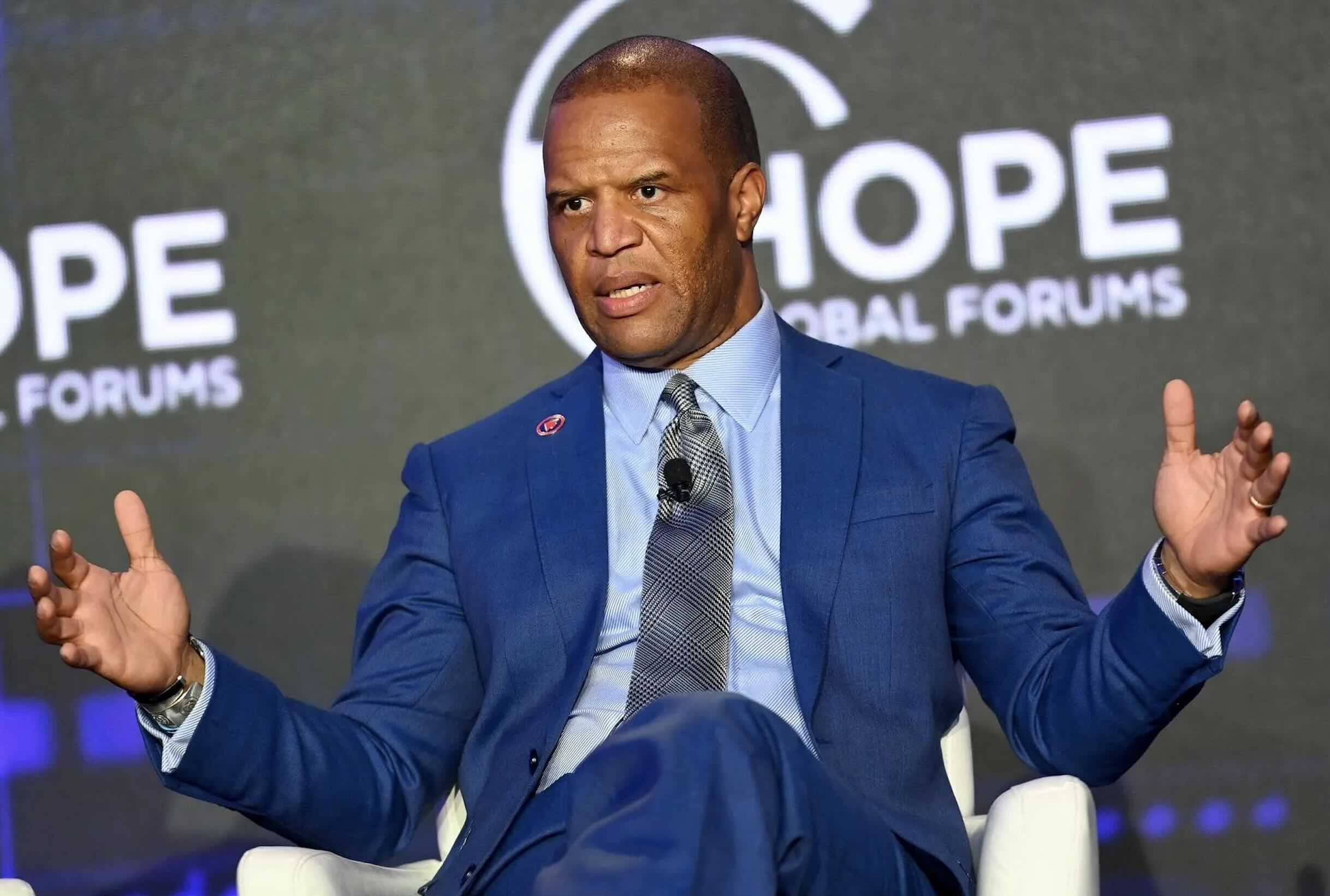
Photo: Getty Images
In the years since the social justice uprisings of 2020, a curious archetype has ascended to prominence in American economic discourse: the Black business leader who serves as the bridge between corporate America and the underserved community. Among the most visible figures in this space is John Hope Bryant, the founder of Operation HOPE and the architect of the 1 Million Black Businesses (1MBB) initiative. His public philosophy is seductive in its simplicity: "Green is the only color that matters in business."
But a rigorous examination of his model reveals a fundamentally different reality. Bryant's advice—that Black entrepreneurs should shed their cultural identity, stop labeling their businesses as "Black-owned," and focus on scaling within the mainstream economy—is not designed to build independent wealth. It is the cornerstone of a sophisticated customer-acquisition pipeline that processes Black ambition into guaranteed, risk-free revenue for white-owned financial institutions and tech conglomerates.
The Philosophy: Assimilation as a Strategy
Bryant's argument hinges on the concept of market expansion. He warns that explicitly labeling a business by race can alienate potential customers outside of that culture, thereby limiting revenue. Instead, he advises entrepreneurs to structure their businesses to take "everybody's dollar" and then, theoretically, reinvest those profits back into the Black community.
On its surface, this seems pragmatic. It advises minority entrepreneurs not to limit their customer base to 13% of the U.S. population. However, the execution of this philosophy functions more like a sanitization process. To enter the corporate pipeline, businesses must strip away the "high-risk" cultural elements—whether that is activist marketing, informal supply chains, or cash transactions—and conform to the rigid underwriting rules of mainstream white institutions.
The White Tech Pipeline: Shopify
Bryant's partnership with Shopify, which committed $130 million to the 1MBB initiative, is a masterclass in infrastructure extraction. While entrepreneurs received free tools and training to launch their businesses, they are now permanently integrated into the Shopify ecosystem. Whether a specific store thrives or fails, Shopify generates guaranteed revenue.
The extraction happens through multiple mechanisms. Every transaction processed on the platform incurs a fee of approximately 2.9% plus $0.30—collected regardless of whether the business is profitable. After initial free trials expire, entrepreneurs must pay monthly subscription fees, even if their store makes zero sales. The platform profits from every failed venture, while the entrepreneur bears 100% of the financial risk. General e-commerce data shows that roughly 90% of new stores fail within the first 120 days, yet Shopify's revenue from these businesses is guaranteed from day one.
The White Banking Pipeline: Wells Fargo, Truist, and Beyond
The financial side of the operation is similarly structured to favor the house. Operation HOPE embeds financial coaches inside bank branches through its HOPE Inside network, "cleaning up" the credit scores of unbanked or low-credit individuals. According to Operation HOPE's historical impact reports, the organization converts an average of 41% of its counseling clients into outbound referrals directly for its mainstream banking partners.
Once polished, these clients are referred back to the sponsor banks as prime candidates for mortgages, credit cards, and small business loans. The bank gets immediate capital deposits that provide baseline liquidity for institutional trading. Sponsoring HOPE satisfies federal mandates like the Community Reinvestment Act (CRA), allowing banks to bypass billions in fines and unlock expansion opportunities. The bank makes massive interest and fee revenue off the loans for decades, while Bryant's non-profit receives corporate donations to keep the funnel running.
The cash deposits from nearly half a million businesses sit directly in the vaults of white-owned institutions like Wells Fargo, Truist, KeyBank, and Flagstar—giving them massive economic leverage. By keeping community deposits in these mainstream banks, the model short-circuits the single most powerful tool for building independent Black wealth: the banking multiplier effect.
Under the fractional reserve system, for every $10,000 an entrepreneur deposits, the bank can lend out up to $100,000 to corporations, real estate developers, and institutional buyers. Operation HOPE has handed these white-owned institutions billions in collective liquidity. But because their underwriting is "sanitized" and algorithmic, they rarely lend it back to grassroots Black projects. Instead, they use the community's own deposits to finance luxury high-rises, corporate mergers, and venture capital funds that gentrify minority neighborhoods.
Starving Black Banks (MDIs)
- Mainstream Banks: Wall Street controls the funds. Loans go to corporations and commercial developers. Capital is extracted from the neighborhood.
- Black-Owned Banks (MDIs): Minority executives with community ties control the funds. Loans go to local homeowners and minority startups. Capital stays in the neighborhood, multiplying local wealth.
By convincing entrepreneurs to deposit their money into mainstream corporate banks, Bryant's pipeline actively denies Black-owned banks the deposits they need to issue transformative loans to their own people. The community is left funding the very institutions that historically locked them out.
The Sanitization Process
To be approved for this pipeline, a business must be "sanitized." This is the hidden cost of the model—the system does not validate you as you are; it forces you to change so it can absorb you.
Brand Identity: Dropping the "Black-owned" label creates a neutral corporate identity that makes white executives and mainstream consumers comfortable. If a brand's marketing is aggressive about systemic racism or radical community independence, mainstream partners view it as a public relations liability.
Financial Underwriting: Businesses must abandon informal economic systems like cash transactions, community lending circles, or non-traditional credit histories. They must adopt standard corporate bookkeeping, carry specific types of commercial insurance, and route their money through traditional commercial checking accounts, ensuring every dollar is tracked and taxed within the mainstream ecosystem.
Supply Chain: Local, community-centric vendors must be swapped for high-efficiency, mainstream chains that integrate smoothly with the corporate tech stack. The local suppliers get left behind because they don't integrate smoothly into the corporate infrastructure.
The "Trojan Horse" Exposed
Bryant often frames this as a Trojan horse strategy: use the master's tools to accumulate capital, then reinvest it into the community. However, a look at his for-profit portfolio—Bryant Group Ventures—reveals that he does not practice what he preaches. His real estate investments rely on debt from Barings, Truist, KeyBank, and First Republic Bank—the very same white-dominated institutions he claims to be subverting.
When The Promise Homes Company secured its massive lines of capital, it came from mainstream institutions like Barings and First Republic Bank. His recent $1 billion affordable housing initiative under CIM-BGV Impact Ventures is backed by white mainstream institutional banks including Truist, Flagstar, and KeyBank. Critics argue that Wall Street investment firms use Bryant as a trusted partner to deploy capital into Black neighborhoods, getting massive federal tax credits and lower risk through his branding, while the majority of the long-term interest and financial upside flows back to Wall Street.
The Grand Illusion
Our analysis exposes the grand illusion of corporate diversity initiatives: individual assimilation is often marketed as collective liberation. John Hope Bryant's model turns the economic struggle of the Black community into a highly predictable, highly profitable customer acquisition pipeline for white-owned corporate giants. The individual entrepreneur carries 100% of the risk, the labor, and the failure rate, while the corporate infrastructure carries 0% of the risk and extracts a guaranteed percentage of every dollar that moves.
When Operation HOPE announces it has "created" nearly 500,000 businesses, it is measuring onboarding and data collection, not long-term profitability. For the mainstream corporate ecosystem, the individual success of these businesses is almost irrelevant. Whether a specific Shopify store thrives or fails, the corporate platforms still win. They capture the initial data, the processing fees from whatever sales are made, and the market expansion metrics. The system extracts its value on the way in, leaving the entrepreneur to carry the risk of failure on the way out.
Mastering the rules of a rigged game can make a few individuals very wealthy and help some families stabilize their immediate finances. However, it will never build a self-sustaining economy because the game itself is designed to funnel the ultimate rewards right back to the house. True economic power doesn't come from mastering the rules of a system designed to extract your wealth; it comes from owning the infrastructure. Dropping your identity doesn't protect your business—it protects the pipeline.
No Ads. By Us. For Us.
This article was made possible by readers like you. We hope it inspired you to support Emerald Book, so we can continue producing content like this.
We will never show you ads, sell your data, or require a subscription to consume our content. Your gift helps us keep the truth accessible.
Click the Support button to give a gift of any amount today.
Thank you for making this work possible.