

Emerald Pages
◆
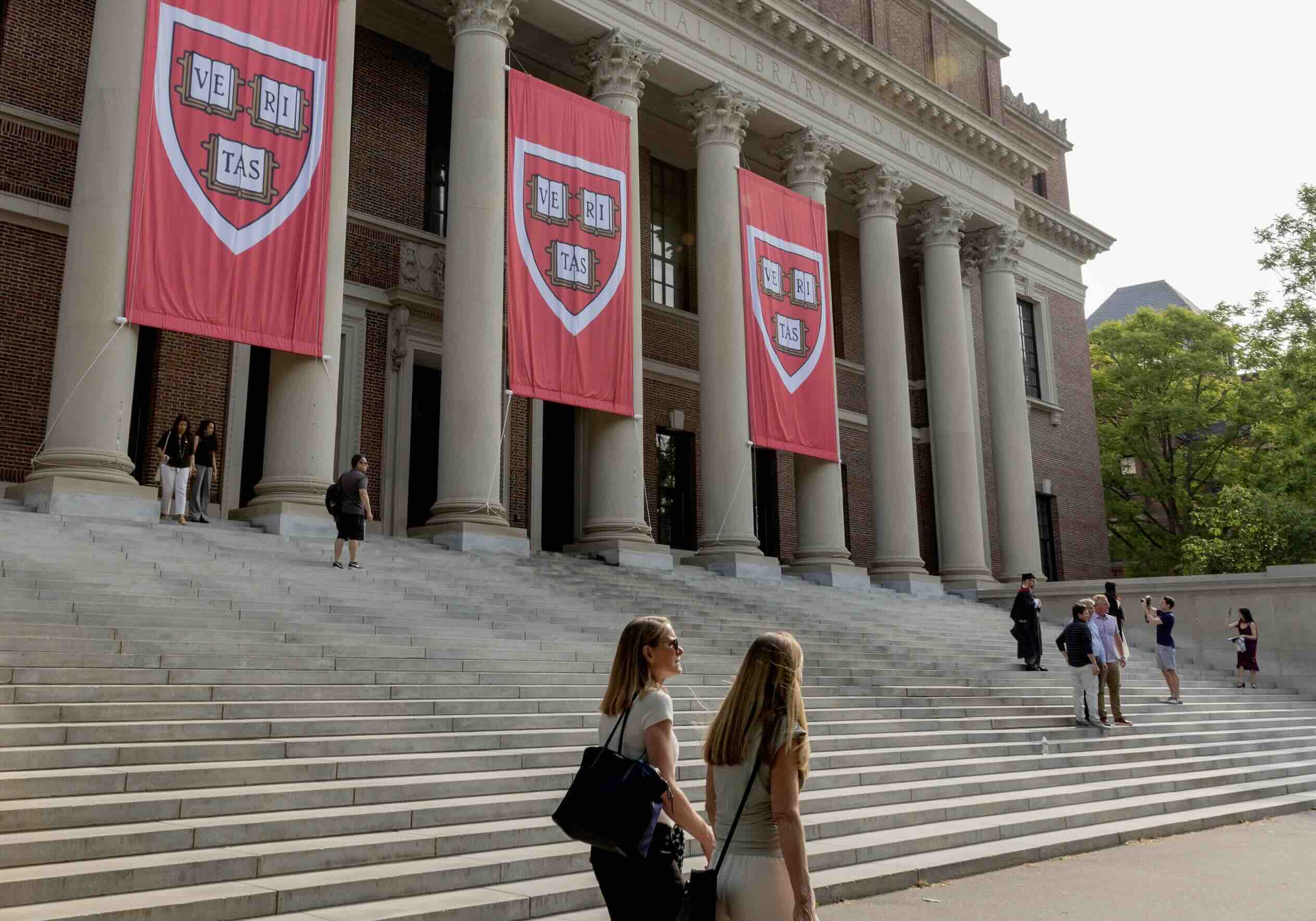
Photo: Getty Images
In April 2022, Harvard University made a landmark announcement. After a comprehensive report detailed how the institution was "inseparable" from slavery—from the forced labor that maintained its campus to the slave-trade fortunes that funded its rise—the university pledged $100 million to address its historical ties to human bondage. Central to that pledge was a promise: identify and contact the direct descendants of the enslaved people who built Harvard.
Today, that promise remains broken. While Harvard's Slavery Remembrance Program (HSRP) has publicly identified at least 1,613 enslaved individuals connected to the university—a number that includes both African and Indigenous people—and traced roughly 600 living direct descendants, the institution has not formally notified a single family. Instead, the university has outsourced the work, fired the researchers who pushed too hard, and adopted a strategy of delay that critics call a calculated effort to avoid financial liability.
The contrast between Harvard's public messaging and its private actions is stark. The university has spent millions on marketing its "Legacy of Slavery Initiative," produced slick videos, and created a public database of enslaved individuals. Yet the living descendants—the very people whose ancestors' stolen labor built the university's $53 billion endowment—remain in the dark. Many have discovered their lineage not through Harvard, but through investigative journalists.
The Official Excuse: A "Work-in-Progress"
Harvard's official explanation for its silence is bureaucratic. The university states that the HSRP database is a "work-in-progress" and that they want to expand the data before formally launching outreach to ensure "accuracy." Vice Provost Sara Bleich has argued that the university wants descendants to "hear from us first" in a highly managed, structured environment.
By delaying contact, the administration ensures that the university—not the families—controls the timing, the tone, and the terms of the relationship. Critics call this "narrative control." They argue that Harvard wants to write the story of its own reckoning without ever giving the descendants a voice in how that story is told.
- At least 1,613 enslaved individuals have been documented by Harvard researchers.
- Roughly 600 living direct descendants have been traced and identified.
- The true number of descendants could exceed 30,000 when Caribbean records are fully audited.
- Harvard's endowment stands at over $53 billion — much of it seeded by slave-generated wealth.
- The $100 million pledge represents less than 0.2% of Harvard's total endowment.
What Harvard Is Really Afraid Of
It is impossible to separate Harvard's silence from its massive endowment. Officially naming living descendants creates an undeniable, localized roadmap for direct financial claims, which sets off alarm bells for any major institution's legal and financial teams.
For decades, universities could issue broad public apologies because the history felt abstract. Saying "our institution benefited from slavery 250 years ago" is safe—it costs nothing and carries no legal liability because there is no specific victim to pay. However, everything changes when a university's own database attaches a living person's name and address to a specific enslaved person. By formally notifying a descendant, the university hands that person a legal and moral receipt verifying that Harvard's current wealth was built directly on their ancestor's stolen labor.
The Georgetown Precedent
Harvard is terrified of what happened at Georgetown University. When Georgetown's ties to the slave trade were exposed, a massive, grassroots descendant community organized. They forced the university to create a dedicated $400,000 annual fund for descendant community projects, offer preferred admissions status to any direct descendant applying, and confront a massive public campaign for direct cash payments.
Georgetown's endowment is roughly $3 billion. Harvard's endowment is more than 15 times larger. If Harvard formally recognizes 600—or 30,000—living descendants, the financial expectations and the pressure for true, direct reparations would skyrocket to a scale no university has ever faced. The math is simple: once you acknowledge specific victims, you acknowledge specific debts.
Firing the People Who Found Too Much
The internal conflict over notifying families became so intense that it led to high-profile firings and resignations. Richard J. Cellini—who previously helped Georgetown University successfully identify thousands of its own slave descendants—was abruptly fired by Harvard after his team uncovered nearly 1,000 enslaved individuals and 500 living descendants in a short window. Cellini publicly accused the university of using a "policy of control and delay."
Other researchers, like Christopher Newman, reported being escorted off campus and barred after expanding the research scope into places like Antigua—where the royal family's brutal sugar plantations had directly funded Harvard Law School. Critics argue Harvard intentionally outsourced the project to a private genealogy nonprofit, American Ancestors, specifically to slow down the process and keep it under wraps.
Descendants Won't Get a Penny
When Harvard made headlines by committing $100 million to its Legacy of Slavery Initiative, the figure sounded significant. But when you compare it to what the university actually reaped, the numbers don't align. The $100 million pledge represents less than 0.2% of Harvard's total endowment.
None of that $100 million is earmarked for direct financial reparations or cash payments to the families. Instead, it is being used for internal university projects: funding exchange programs with HBCUs, building campus memorials, and hiring outside genealogy firms. This creates a "closed financial loop"—the money stays within the university ecosystem, funding Harvard-approved initiatives rather than going to the families who actually earned it.
The Human Cost of Delay
Because of Harvard's silence, many descendants are finding out about their lineage through investigative journalists rather than the university itself. Families have publicly expressed deep frustration, noting that while Harvard holds their ancestral history behind closed doors, elderly family members are passing away before ever receiving an official acknowledgment or an apology from the school.
The university's strategy of institutional stalling has a human cost. Every year Harvard delays is another year that wealth compounds in their accounts rather than being distributed to the families who actually built the foundation of the school. They want the credit for studying the problem, but they refuse to take responsibility for fixing it.
The Billions They Truly Owe
When economists and historians calculate the true debt of historical slavery, they arrive at numbers that would easily bankrupt most global institutions. If you apply standard financial formulas to Harvard's historical involvement with slavery, it becomes incredibly clear how billions of dollars are owed to the descendant communities.
Economist Larry Neal calculated that uncompensated American slave labor between 1620 and 1840 translates to over $8.4 trillion in modern money strictly in lost wages. Harvard extracted this uncompensated labor for 229 years. When you take the centuries of stolen labor from over 1,600 enslaved individuals, combine it with millions in early donations from slave trade magnates, and factor in the astronomical compounding interest of the financial markets, the university's true historical debt effortlessly crosses into the multi-billion-dollar territory.
Spending less than 0.2% of your wealth on institutional programs while entirely blocking direct cash payments to victims is not an act of justice—it is an exercise in asset protection.
Read How Enslaved Black People Actually Built Harvard's Wealth.
No Ads. By Us. For Us.
This article was made possible by readers like you. We hope it inspired you to support Emerald Book, so we can continue producing content like this.
We will never show you ads, sell your data, or require a subscription to consume our content. Your gift helps us keep the truth accessible.
Click the Support button to give a gift of any amount today.
Thank you for making this work possible.