

Emerald Pages
◆
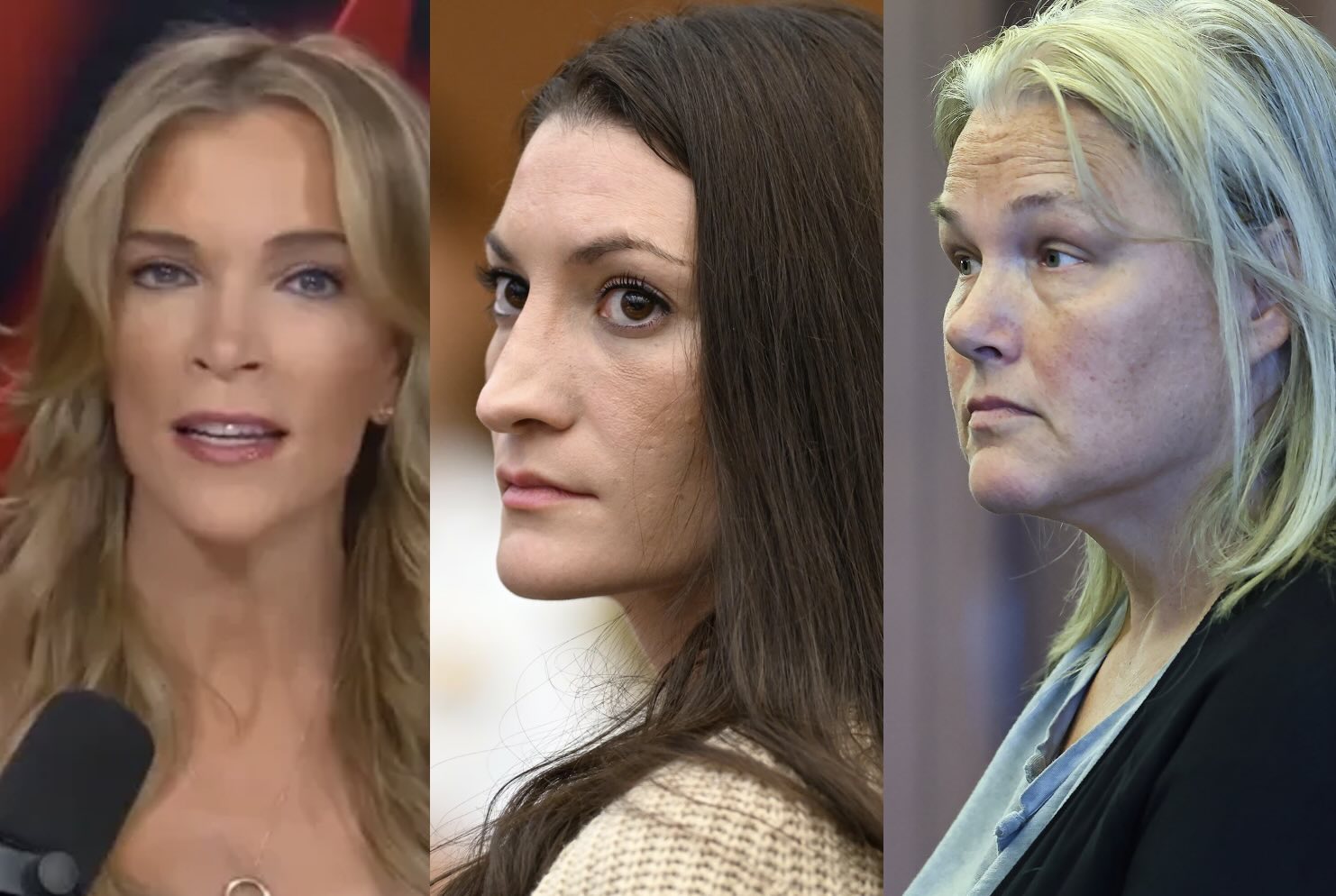
Megyn Kelly (left), Lindsay Clancy (center), and Dawn Light (right) | Photo: Emerald Book Image
The Lindsay Clancy trial has become a cultural Rorschach test, exposing a painful truth that Black communities have long understood: white liberal women and white conservative women are two sides of the same coin. White liberal women have rallied behind Clancy—a white, suburban nurse who killed her three children—under the banner of maternal mental health and systemic healthcare failure. Yet they have never extended that same grace to Black women in identical circumstances. Meanwhile, white conservative women have fiercely condemned Clancy, pointing to cases like Latarsha Sanders to expose liberal hypocrisy—but they consistently direct their harshest attacks at Black women. The Clancy case proves that white liberals are right about conservative racism—and that white conservatives are right about liberal hypocrisy.
The ideological divide is foundational. Conservatives view racism through the lenses of individualism, color-blindness, and institutional fairness. They argue that white liberals exhibit a "soft bigotry of low expectations"—a condescending belief that minority groups cannot succeed without white intervention. A Yale University study found that white liberals unconsciously "downshift" their vocabulary when speaking to minorities, a behavior not observed among conservatives. This, conservatives argue, is evidence of a deeply ingrained racial bias among liberals. They also accuse white liberals of "reverse racism" through diversity initiatives and DEI programs, and of engaging in "virtue signaling"—using racial justice issues for personal social validation rather than genuine change.
Conversely, white liberals view racism through a structural lens. They argue that conservative "color-blind" rhetoric and policies perpetuate systemic inequality. Liberals accuse conservatives of using "dog whistles"—coded language that appeals to racial anxieties—and of defending institutions that keep power concentrated among white Americans. They point to conservative efforts to restrict voting rights, dismantle DEI programs, and defend a criminal justice system with stark racial disparities as evidence that conservatism is built on racist foundations. From this perspective, anyone who defends the status quo is upholding a racist system, regardless of individual intent.
The Clancy Case: A Cultural Mirror
The Lindsay Clancy case perfectly mirrors this broader debate. For white liberals, the public empathy surrounding Clancy is a glaring example of white privilege and systemic bias. Look at the case of Latarsha Sanders, a Black mother from the same region who was sentenced to two life sentences without her severe mental health struggles being admitted into evidence. Commentators like Don Lemon and Representative Nancy Mace have directly compared the two cases, arguing that a system that views a white mother as a "victim of a broken medical system" while viewing a Black mother as a "monster" is inherently racist. They view the "Pink Mob" of supporters outside the courtroom as an expression of racial solidarity that would not exist for a Black woman.
Many conservative voices, like Megyn Kelly, have fiercely criticized the progressive defense of Clancy. Kelly stated on her show that she believes Clancy should likely be convicted, pointing out that even serial killer Jeffrey Dahmer was rejected for the insanity defense. "Lindsay Clancy is far closer to sane than Jeffrey Dahmer was, but she's trying the same defense," Kelly argued. She expressed doubt about the command hallucinations defense, noting that prosecutors argued Clancy's failed suicide attempts proved she could resist her internal thoughts—showing deliberate control rather than total psychotic command. Kelly's blunt conclusion: "Her earthly time here is effectively over," adding that she does not care whether Clancy spends the rest of her life in a mental institution or behind bars, so long as there is accountability.
The public reaction has been further polarized by the arrest of Dawn Light, a 56-year-old woman from Sutton, Massachusetts, who was charged with juror intimidation for allegedly recording jurors outside the courthouse. Light openly identified herself as a Clancy supporter, describing herself as a "crime junkie" who frequently follows high-profile cases. She claimed she was simply trying to film Clancy leaving in a transport van—not the jurors. Yet investigators found deleted videos of jurors leaving the building on her phone, and a judge released her without cash bail but ordered her to stay away from the courthouse and everyone involved in the trial. Liberals pointed to Light's arrest as evidence of a "Pink Mob" of white solidarity, while conservatives framed it as an individual act of overzealous fandom. Both interpretations missed the deeper point: the conversation remained centered on white women, white feelings, and white institutions.
Proving Each Other Right
The Clancy case proves both sides' accusations correct. The white liberal reaction proves the conservative accusation of performative, conditional "anti-racism" right. The massive outpouring of systemic grace for Clancy completely vanished when contrasted with identical tragedies involving Black mothers like Latarsha Sanders. It exposed that for white liberals, systemic empathy is a selective privilege reserved for those who look like them—validating the conservative argument that liberal advocacy is deeply hypocritical and self-serving.
Simultaneously, the white conservative reaction proves the liberal accusation of racial hostility right. While conservatives demanded accountability for Clancy, the language remained focused on her individual actions, law, and morality. Yet when Black women are involved in high-profile public controversies, the conservative response rarely stays contained to individual law. Instead, it routinely escalates into aggressive cultural attacks, targeting Black motherhood, Black communities, and Black intelligence as inherently broken. Megyn Kelly's pointed comparison of Clancy to Dahmer—while refusing to acknowledge the systemic disparities in how Black mothers are treated—exemplifies this disconnect. It exposed that under the guise of "equal application of the law," a unique volume of vitriol and systemic demonization is consistently directed at Black women, validating the liberal argument that conservative rhetoric relies on deeply racist foundations.
- The Liberal Hypocrisy: White liberal women rallied around Clancy's mental health but have never extended that grace to Black mothers like Latarsha Sanders—historically or now. They used Black women during every wave of feminism but never reciprocated.
- The Conservative Hostility: White conservative women like Megyn Kelly demand personal accountability for Clancy and point to Sanders to expose liberal hypocrisy, yet they disproportionately direct cultural grievances, systemic blame, and harsh rhetoric toward Black women.
- The Historical Pattern: This dynamic echoes Malcolm X's comparison of the "liberal fox" and the "conservative wolf"—both maintain white institutional control at Black women's expense.
A History of Abandonment
This pattern is not new. Black feminist scholars have long documented that white women used Black women during every wave of feminism but never extended the favor. During the suffrage movement, white leaders like Susan B. Anthony and Elizabeth Cady Stanton traded away solidarity with Black women to win over white segregationists. At the 1913 Woman Suffrage Procession, white organizers ordered Ida B. Wells and other Black suffragists to march at the very back so as not to offend Southern white women. When the 19th Amendment was ratified in 1920, it effectively secured voting rights only for white women—Jim Crow laws barred Black women from voting for another 45 years.
During the second wave, white feminists fought for the right to leave the home and enter the workforce—while Black women had already been working outside the home for generations, often as underpaid domestic workers for those same white feminists. The white-led movement focused intensely on access to birth control and abortion while ignoring the systemic forced sterilization programs targeting Black, Indigenous, and poor women. Even now, this pattern persists. Recent Bureau of Labor Statistics data shows that Black women have lost a disproportionate number of jobs this past year, while white women have actually gained jobs. White conservative women led the way in Black women's firing by voting for politicians who defund the public sector, while white liberal women remained silent as corporate layoffs targeted minority employees. Neither group mobilized to protect Black women's economic stability.
Two Sides of the Same Coin
This brings us to the perspective held by many Black communities: white liberals and white conservatives are simply different sides of the same coin. Both groups, despite their political differences, ultimately function to maintain white supremacy and protect white institutional power. White conservatives are the overt enforcers, using "law and order" to criminalize Black mothers and reduce Black women in leadership to "diversity hires." White liberals are the performative saviors, offering conditional empathy and symbolic gestures instead of real material change.
The core argument is that neither group truly sees Black women as full human beings entitled to equal justice. Instead, both weaponize Black women to serve their own political agendas. Whether a white woman is being condemned by conservatives to assert moral authority, or protected by liberals under the banner of medical nuance, the conversation remains centered on white perspectives, white feelings, and white institutions. The Lindsay Clancy case demonstrates that white liberals are right that conservatives weaponize the law to disproportionately punish Black women—and white conservatives are right that liberals only care about structural racism until it makes them uncomfortable, prioritizing white trauma over actual equity. The trial proves that while they fight each other in public, both groups operate on systems that keep the protection of white feelings, white trauma, and white institutional power at the center of American life, while Black women remain marginalized by both.
No Ads. By Us. For Us.
This article was made possible by readers like you. We hope it inspired you to support Emerald Book, so we can continue producing content like this.
We will never show you ads, sell your data, or require a subscription to consume our content. Your gift helps us keep the truth accessible.
Click the Support button to give a gift of any amount today.
Thank you for making this work possible.