

Emerald Pages
◆
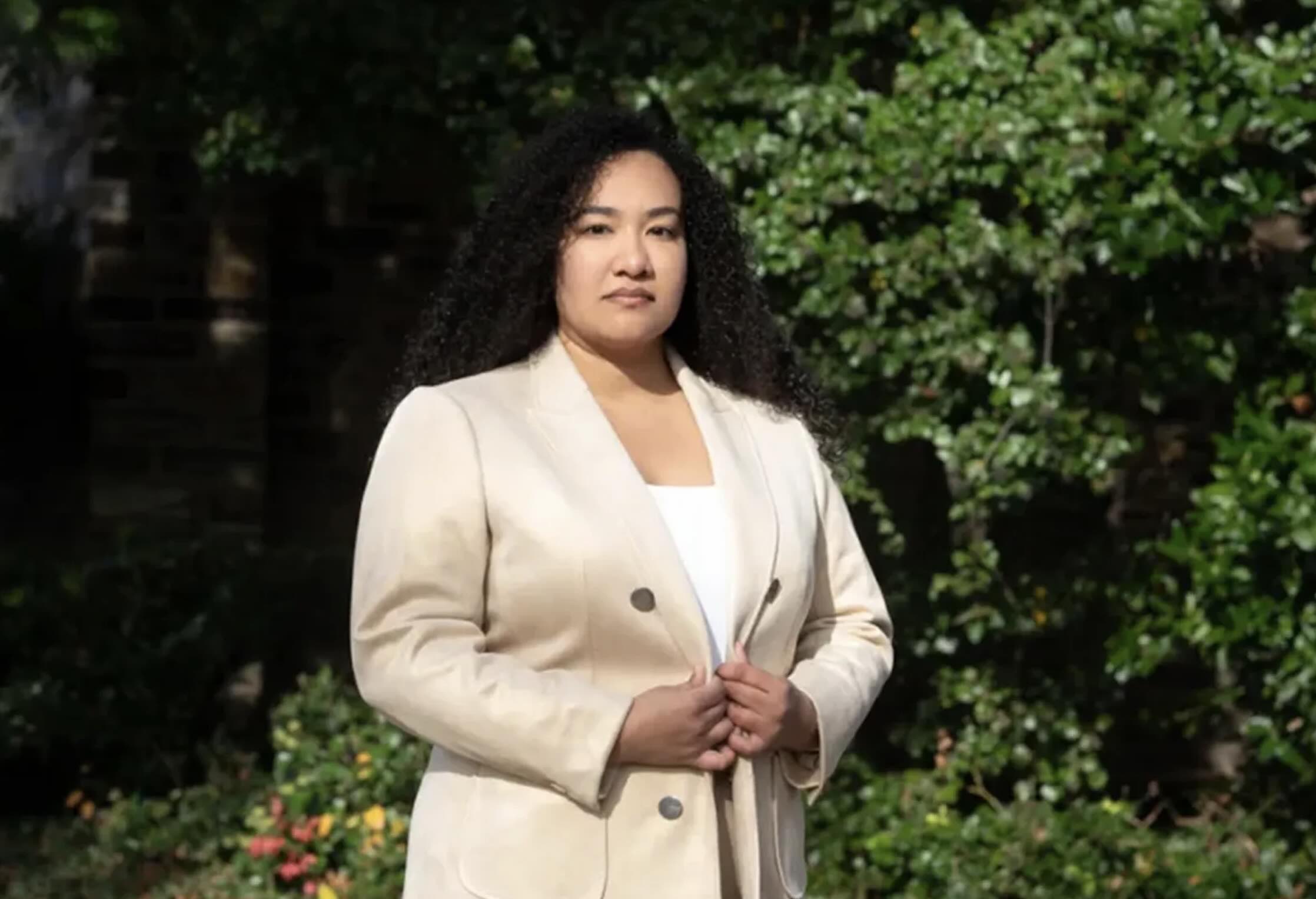
Photo: Elsie Dominguez, whose rape was legally reclassified as a workplace injury | Newsweek
A U.S. federal judge has dismissed a civil lawsuit filed by a civilian Navy engineer who alleged she was raped by a captain aboard the USNS Carson City, ruling that the case must be handled as a workers' compensation claim rather than a civil lawsuit. The decision has sparked outrage among advocates who say the ruling effectively treated a violent assault as a workplace injury.
The case centers on Elsie Dominguez, a civilian engineer who was working aboard the Military Sealift Command vessel when she alleges Captain Yamil Sanchez Padilla drugged and raped her in December 2021. When Dominguez attempted to sue both the captain and the U.S. government, the Department of Justice invoked the Westfall Act, arguing that Sanchez Padilla was "acting within the scope of his employment" at the time of the alleged assault.
The legal maneuver allowed the government to substitute itself as the defendant, replacing the captain with the United States. Once the government became the sole defendant, the Federal Employees' Compensation Act (FECA) triggered its "exclusive remedy" rule, which bars federal employees from suing the government for damages if the injury is covered by workers' compensation. The alleged assault was officially reclassified as an employment-related injury.
The 'Scope of Employment' Argument
At the heart of the dismissal is the Westfall Act, a federal law that protects government employees from personal liability for actions taken within the scope of their employment. The DOJ argued that because Sanchez Padilla was commanding a deployed Navy ship, his actions—including the alleged assault—fell within his job duties.
The government's position is that a captain using his master key to enter a subordinate's locked quarters and raping her while she was unconscious was simply doing his job. This is an absurd and dangerous interpretation of the law.
Critics argue that the Westfall Act was never intended to shield government employees from criminal conduct. However, courts have historically applied the law broadly, allowing the government to substitute itself as the defendant in cases involving intentional torts if the employee was acting within the general scope of their duties.
Why Criminal Charges Were Not Filed
While the civil case was dismissed, questions remain about why Sanchez Padilla was never arrested or charged criminally. Federal prosecutors declined to bring charges, citing the high burden of proof required for a criminal conviction. The incident occurred in Brindisi, Italy, and Dominguez reported feeling unusually intoxicated after consuming only one beer and a shot, leading her to believe she may have been drugged.
Because Sanchez Padilla was a civilian employee rather than an active-duty service member, he was not subject to a military court-martial under the Uniform Code of Military Justice. The case fell to civilian federal prosecutors, who often decline sexual assault cases due to evidentiary challenges. While he was fired from the Navy and surrendered his merchant mariner credentials in early 2026, he avoided criminal prosecution and personal civil liability.
A Systemic Problem for Survivors
This case is part of a broader pattern in which the government uses legal doctrines to shield itself from accountability in sexual assault cases. For decades, active-duty service members have been barred from suing the government over sexual assaults by the Feres Doctrine, a 1950 Supreme Court precedent that prevents military personnel from suing for injuries that occur "incident to military service."
- The Feres Doctrine: Bars active-duty service members from suing the government for sexual assault.
- The FECA Loophole: Treats criminal assaults against civilian employees as "workplace injuries," routing them to workers' comp.
- The Westfall Act: Shields individual perpetrators from civil liability by substituting the government as the defendant.
The framework has created what advocates describe as a "two-tier" system of justice. In a rare victory, retired Army Colonel Kathryn Spletstoser received nearly $1 million in a settlement after the courts refused to apply the Feres Doctrine to her case. A federal judge declared they "cannot fathom" how a sexual assault could serve any military purpose. That case proved the government can be held accountable when courts reject the "scope of employment" fiction.
Calls for Legislative Reform
The Dominguez case has renewed calls for Congress to close the loopholes that allow the government to shield itself from accountability. The bipartisan Military Sexual Trauma Accountability Act, currently before Congress, would explicitly allow survivors to bypass the Feres Doctrine and FECA restrictions and sue the government for institutional negligence or failure to provide a safe environment. The message sent by this ruling is that if you are a civilian employee of the federal government, your rapist will not be held accountable in civil court. This is not justice. Congress must act.
No Ads. By Us. For Us.
This article was made possible by readers like you. We hope it inspired you to support Emerald Book, so we can continue producing content like this.
We will never show you ads, sell your data, or require a subscription to consume our content. Your gift helps us keep the truth accessible.
Click the Support button to give a gift of any amount today.
Thank you for making this work possible.