

Emerald Pages
◆
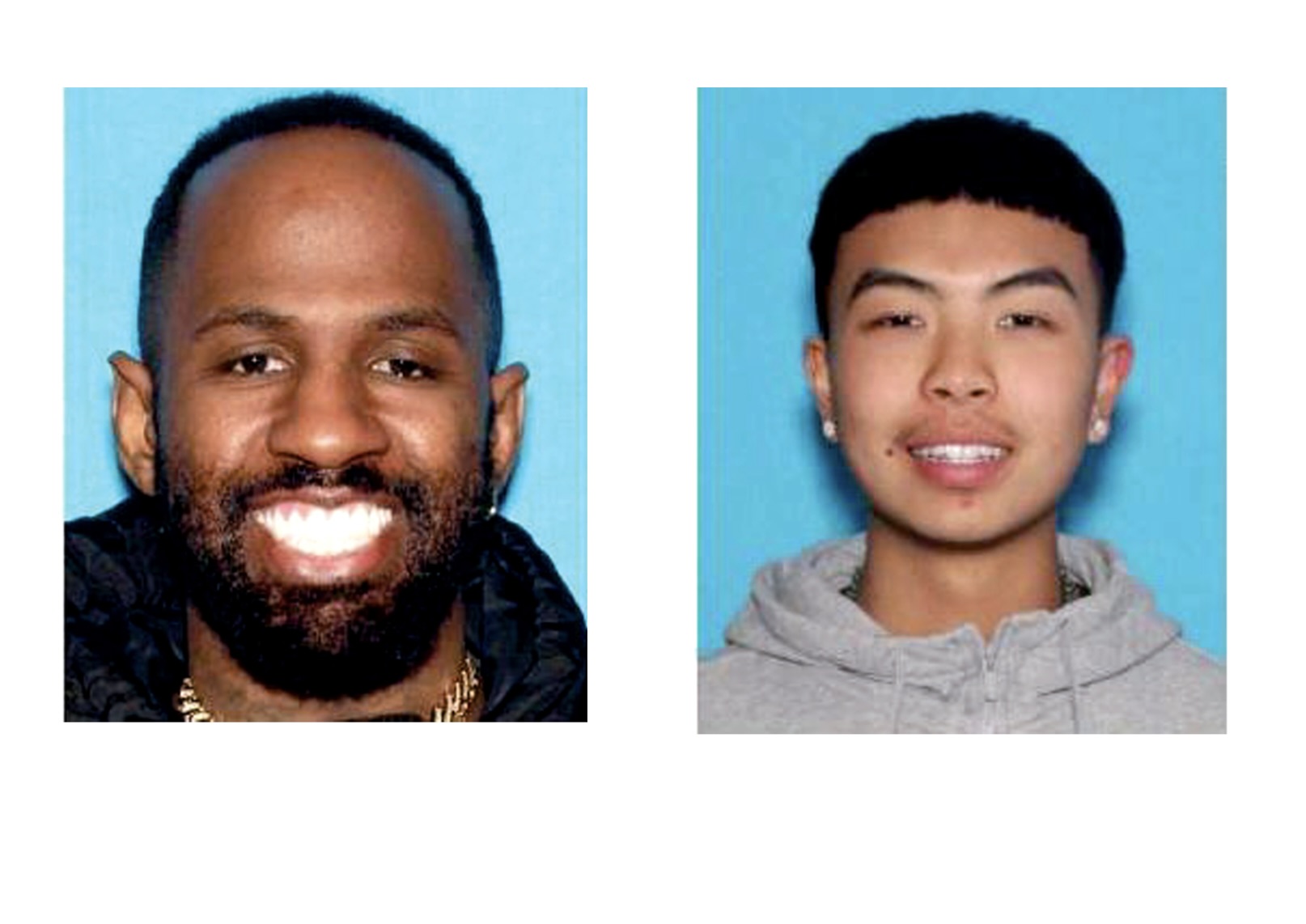
Daejon Labrayae Love (left) and Taylor Jamie Chan (right) | Photo: U.S. Attorney’s Office District of Oregon
On August 24, 2026, Daejon Labrayae Love, 35, and his 18-year-old accomplice, Taylor Jamie Chan, were arrested at an airport in Boise, Idaho. Their crime: posing as a San Francisco 49ers wide receiver, building fake romantic relationships with 26 women, and defrauding them of approximately $1.3 million. But the story is about more than just a con artist — it is a case study in how social media platforms are structurally optimized for fraud.
Love's scheme was devastatingly effective. He targeted women across California, Oregon, Washington, and Idaho using dating apps like Tinder, Hinge, and Facebook Dating. His playbook was straight out of the romance scammer's handbook: love-bombing, false promises of a shared future, and a gradual pivot to financial manipulation. But what set Love apart was how seamlessly the platforms themselves facilitated his deception. He didn't have to hack the system — he simply used it as it was designed to be used.
He claimed to be an undrafted NFL wide receiver for the 49ers, a wealthy real estate investor, a member of a rich Swiss family, and even a relative of Packers quarterback Jordan Love. To sell these lies, he posted videos on Instagram of himself running routes on a beach while wearing a football helmet. He used phone applications to generate completely fabricated banking and stock portfolio screenshots showing balances up to $15 million. And when victims looked him up online, a Google AI Overview hallucination explicitly stated that "Daejon Love is a wide receiver for the San Francisco 49ers."
How the Scam Unfolded
Love would initiate contact on dating apps and immediately shower his targets with affection, declaring love early and often. He told them he wanted to marry them, buy homes together, and build a family. This emotional anchoring made the women drop their natural financial guard.
Once emotionally invested, the victims were introduced to Love's carefully crafted identity. He framed his exclusive investment opportunities as a romantic gesture — a way to "secure their shared future." To close the deals, Love introduced his accomplice, Taylor Jamie Chan, who posed as his high-level corporate financial advisor. The pair staged professional three-way FaceTime calls where Chan presented fake financial terms, projected massive profits, and walked victims through transferring their money.
After a victim handed over money, Love and Chan used specialized apps like Fake Bank Account Pro to generate hyper-realistic, fake banking and stock dashboards. Victims watched their "investments" balloon into hundreds of thousands of dollars — a lie designed to make them pour in even more. When a woman emptied her bank accounts, Love didn't stop. He pressured victims to take out massive personal loans and lease luxury cars — a McLaren, a Lamborghini Urus — entirely under their names. He took the keys to drive around, using the vehicles as props to target his next victims, while the previous victims were left with crippling monthly payments.
According to FBI financial records, not a single victim ever received a single dollar back. The moment a woman was drained of cash, maxed out on loans, or began asking questions, Love blocked her phone number across all platforms and vanished. Behind the scenes, the duo mocked their victims in private texts, calculating how much more they could extract.
The Platforms That Made It Possible
Love's deception was not just psychological — it was technologically enabled at every turn. The most revealing detail from the FBI affidavit is that Google's AI search feature inadvertently validated Love's lie. He took a screenshot of a Google AI Overview that explicitly stated: "Daejon Love is a wide receiver for the San Francisco 49ers." Because generative AI can hallucinate information based on structured data or fake social media profiles, the search engine confirmed his identity to any victim who looked him up.
Love's Instagram was packed with videos of him running routes on a beach in full 49ers gear, driving supercars, and wearing Gucci and Louis Vuitton. But these symbols of success were all funded by previous victims. In Los Angeles and New York, brick-and-mortar studios rent out stationary plywood mock-ups of private jet interiors for $65 an hour. Creator groups split the cost of a single luxury Airbnb or supercar for a weekend, generating months of content. Love simply scaled this playbook to real life.
He carefully avoided claiming to be a famous star like Deebo Samuel. Instead, he said he was an undrafted free agent on the practice squad who was currently injured. To a casual fan, the NFL roster system is a confusing maze of practice squads, injured reserve, and offseason tryouts — all of which gave Love a built-in excuse for why he wasn't on TV or on official rosters. He also targeted women who were not sports fans. A sports fan would have checked official NFL transaction logs in seconds. But to someone unfamiliar with the sport, the jargon sounded technical and the Google AI summary sounded like confirmation.
Social Media Was Designed for This
This case perfectly illustrates a disturbing reality: social media platforms are structurally engineered to enable fraud. More than 55% of Instagram influencers are engaged in some form of fraud or metric manipulation. Roughly 37% of all influencer followers are entirely fake — bot accounts, purchased engagement, or inactive profiles. A UNESCO study found that 63% of digital content creators admit to publishing information without any independent fact-checking.
Why does this persist? Because the platforms profit from it. Internal documents leaked from major social media companies show that selling ads to scammers, fake gurus, and deceptive products accounts for nearly 10% of annual advertising revenue. Algorithms are designed to maximize engagement, and "flex culture" — luxury cars, designer clothes, and glamorous lifestyles — drives the highest engagement of all. Scammers are some of the most profitable ad buyers on the internet. The platforms know this, and they are built to look the other way.
Love didn't twist the platforms to his advantage — he used them exactly as they were designed. The algorithms rewarded his content by pushing it out to millions of users. The visual nature of the feeds made his lies believable. The AI validated his claims. Every feature that makes social media engaging and addictive also makes it an ideal environment for deception. Love didn't weaponize the system; he simply walked through the door it left wide open.
The Aftermath
The FBI tracked Love and Chan to the Boise Airport on August 24, 2026. They have been charged with conspiracy to commit wire fraud and wire fraud. Love had zero connection to the NFL or the 49ers, possessed no legitimate source of income, and used the stolen money for shopping sprees at luxury brands. The FBI notes that there may be "many more victims" who have not yet come forward. The emotional and financial devastation left in the wake of the scam is immeasurable — 26 women are now grappling with massive debt, ruined credit, and the psychological trauma of having been manipulated by someone they trusted.
But the deeper tragedy is that the infrastructure that enabled Love's fraud is still intact, still growing, and still optimized for the next con artist. Love's victims didn't fall for a man — they fell for a carefully constructed illusion that modern technology is practically designed to support. Until the platforms are forced to change their underlying architecture, the next Daejon Love is already building his profile.
No Ads. By Us. For Us.
This article was made possible by readers like you. We hope it inspired you to support Emerald Book, so we can continue producing content like this.
We will never show you ads, sell your data, or require a subscription to consume our content. Your gift helps us keep the truth accessible.
Click the Support button to give a gift of any amount today.
Thank you for making this work possible.