

Emerald Pages
◆
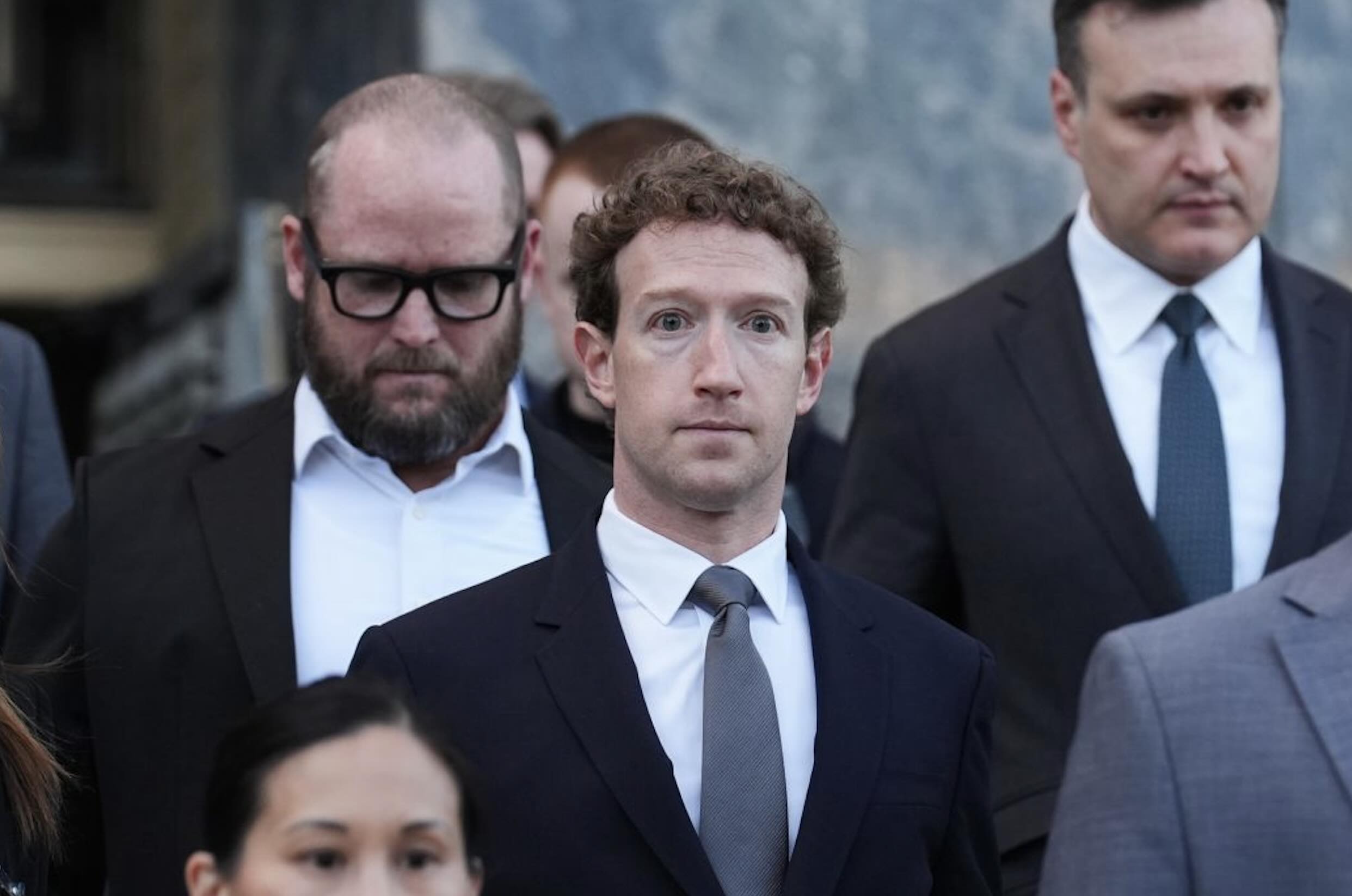
Photo: Damian Dovarganes | AP
On August 26, 2026, the world watched as Meta, the parent company of Facebook and Instagram, executed a masterclass in corporate spin. As a historic, multi-billion dollar settlement with 52 U.S. attorneys general was announced—a settlement that finally held the tech giant accountable for its role in a teen mental health crisis—Meta issued an open letter. It wasn't a letter of contrition, apology, or even a sincere admission of its own wrongdoings. Instead, Meta's letter was a call to arms, publicly challenging rivals TikTok and YouTube to join it in adopting a new, strict industry-wide teen safety framework.
On the surface, it appears to be a moment of leadership. A company using its own legal defeat to rally the industry for the greater good. However, a closer examination of the legal, financial, and behavioral evidence reveals a starkly different reality. This open letter is not a mission to protect children; it is a calculated, cutthroat business strategy to protect Meta's market share, its ad revenue, and its very future. After fighting regulation for over a decade and putting profits over the well-being of its youngest users, Meta has finally been cornered. Now, its primary goal is to ensure its competitors are dragged into the same regulatory quicksand.
The timing is everything. The letter was published at the exact same moment the news of the settlement broke. This was a carefully choreographed PR diversion. Instead of news cycles focusing entirely on "Meta Pays Record $17 Billion for Harming Kids," the narrative was subtly shifted to "Meta Challenges TikTok and YouTube to Join Teen Safety Pact." It was a deliberate attempt to control the narrative and frame a devastating legal loss as a moment of industry leadership.
A History of Knowledge, A Legacy of Inaction
The central flaw in Meta's "we care about kids" narrative is that it is contradicted by over a decade of its own internal evidence and public actions. The company has known about the harms of its products for years, and it chose to do nothing until a lawsuit forced its hand.
Internal Warnings Ignored: Long before the 2021 whistleblower leaks from Frances Haugen, Meta's internal data scientists were sounding alarms. By 2019, internal research showed that Instagram made body image issues worse for 1 in 3 teen girls and that 13% of UK teens with suicidal thoughts traced them back to the app. These findings were not used to redesign the product for safety; they were suppressed. The imperative was always to protect user growth and engagement at all costs.
Building a Drug, Not a Product: For years, tech companies used their immense engineering and data capabilities to build products explicitly designed to override human self-control. Features like infinite scroll and variable reward notifications are rooted in the psychology of slot machines. They were engineered to be "digital drugs." As the Surgeon General later warned, these apps were a primary driver of a national youth mental health crisis. Meta, TikTok, and YouTube didn't stumble upon this. They built it. A multinational, multi-billion-dollar supercomputer was aimed directly at the reward centers of developing teenage brains—and they knew it.
The Real Remedies: Why Mark Zuckerberg Won't Let His Own Kids Use Instagram
Perhaps the most glaring indictment of Meta's true priorities comes from within its own founder's home. Mark Zuckerberg does not allow his own children to use standard Instagram or Facebook feeds—a fact that places him in a well-documented pattern of Silicon Valley executives who enforce strict tech-free rules for their own families while selling addictive platforms to the rest of the world. Zuckerberg has publicly stated that he does not want his children engaging in "passive consumption" or scrolling through feeds; instead, he permits only video communication with actual relatives, keeping his daughters focused on offline activities, books, and nature. He is not alone. TikTok's CEO does not allow his children to use TikTok. Snapchat's CEO restricts his children to a tiny fraction of screen time. Apple's Tim Cook has stated he would not allow his nephew on any social network, and Steve Jobs famously limited his own children's technology use. The billionaires who weaponized behavioral psychology and AI to hook a generation of teenagers protect their own kids with strict, traditional boundaries at home—a double standard that exposes the truth: they know exactly how dangerous their products are.
The remedies that child safety advocates and lawmakers are actually pushing for go far beyond Meta's proposed time limits and notification muting. If the architects of these platforms won't let their own children near them, why should anyone else's children be exposed? Experts argue that real change requires ending algorithmic feeds for minors—forcing platforms to display content in reverse-chronological order to remove the AI that surfaces extreme content for engagement—alongside legally mandated "duty of care" laws that would make platforms criminally liable for prioritizing profit over minor safety, and device-level age verification that confirms a user's age through their phone rather than forcing every app to collect sensitive personal data. Some advocates, like the Center for Humane Technology, go even further, calling for a complete ban on social media for anyone under 18, treating it like tobacco or alcohol. Meanwhile, reactions to Meta's maneuver have been sharp. California Attorney General Rob Bonta, who helped secure the settlement, expressed skepticism, stating: "We are not naive. We will hold them to every letter of this agreement." James P. Steyer of Common Sense Media added: "This isn't about leadership. This is about a company that got caught and is now trying to control the narrative." As of publication, neither TikTok nor YouTube had responded to Meta's open letter.
The Financial Trap: A $5.3 Billion Weapon
If child safety were the true goal, why would Meta structure its settlement in such a bizarre way? The answer lies in the fine print.
Under the terms of the agreement, Meta will initially pay roughly $12.2 billion to $12.7 billion (70% of the total). The remaining $5.3 billion is being held back. Meta will only be required to pay that massive chunk of money if its core competitors—TikTok, YouTube, and Snap—also settle with the states and implement identical safety changes.
- It's a Bribe to the States: Meta is essentially telling the government, "Here's a huge financial incentive for you to go and put our rivals through the same legal hell we just went through."
- Leveling the Playing Field: Meta knows that if it is forced to impose strict, legally binding two-hour daily limits and overnight lockouts while its competitors do not, it will lose a generation of users. Teens won't stop using social media; they'll simply migrate to TikTok and YouTube.
- Protecting the Bottom Line: The "competition trap" is the key to understanding the entire strategy. Meta's primary goal is not to reduce teen screen time; it's to ensure that any reduction in teen screen time happens equally across all major platforms so that Meta doesn't lose its dominant market share.
The Existential Threat: Losing a Generation
The underlying fear driving Meta's open letter is simple and apocalyptic from a business perspective: if TikTok and YouTube don't join, Meta will lose a generation of users for a decade.
The court's injunction lasts for 10 years. A 13-year-old today will be 23 when these restrictions lift. If Instagram becomes the only app that kicks them off at 10 p.m. or forces them to stop scrolling after two hours, they won't just sit there in silence. They will turn to a competitor that offers an unrestricted, unmoderated experience. Teenagers value connection and entertainment; if their social circles migrate to TikTok because it's the only place they can communicate freely at night, they rarely come back.
The open letter is a desperate, public plea to the government to force its rivals into the same trap. It is a last-ditch attempt to avoid a 10-year death sentence in the most lucrative demographic for advertisers.
Ultimately, Meta's actions reveal the true nature of the game. These platforms spent years engineering a sophisticated behavioral dependency, knowing the harm it was causing, because the profits were too immense to ignore. Now that the legal consequences have finally caught up, their fight is not for the safety of children, but for their own corporate survival. They don't want to protect teenagers; they just don't want to lose them to TikTok.
No Ads. By Us. For Us.
This article was made possible by readers like you. We hope it inspired you to support Emerald Book, so we can continue producing content like this.
We will never show you ads, sell your data, or require a subscription to consume our content. Your gift helps us keep the truth accessible.
Click the Support button to give a gift of any amount today.
Thank you for making this work possible.