

Emerald Pages
◆
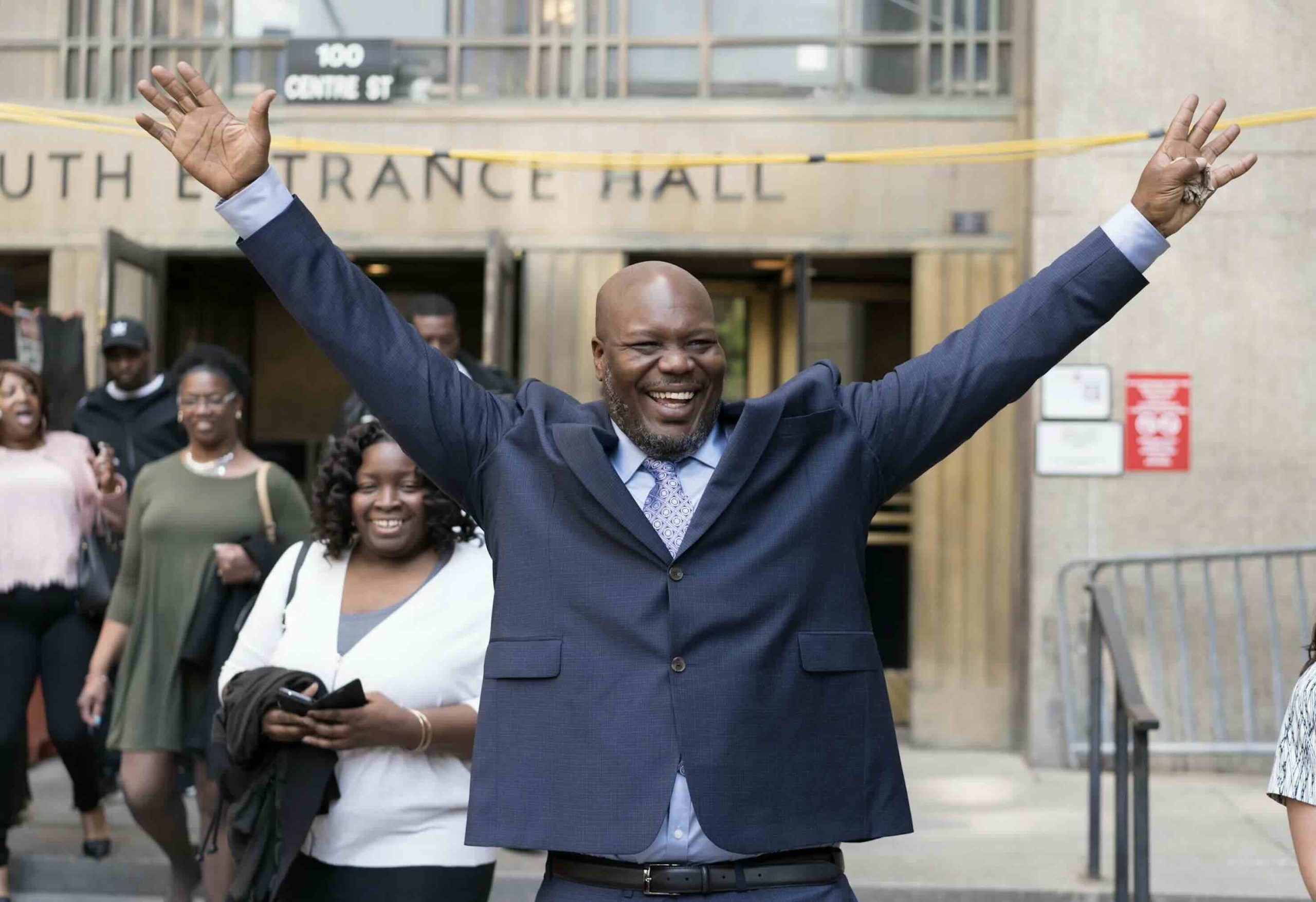
Gregory Counts celebrating his wrongful conviction from 1992 being vacated. | Photo: Steven Hirsch | New York Post
In the United States, the numbers paint a stark and undeniable picture of injustice. Black Americans make up approximately 13.6% of the U.S. population, yet they account for a staggering 53% of all documented exonerations since 1989. This massive disparity is not a random anomaly, but the predictable outcome of a criminal legal system where systemic biases, official misconduct, and discriminatory policing create a pipeline that disproportionately targets and convicts innocent Black individuals. The data strongly implies that thousands of innocent Black people are currently trapped behind bars, a hidden crisis the system seems ill-equipped and often unwilling to correct.
The statistics are more than just numbers; they are a reflection of a deeply flawed process. According to the National Registry of Exonerations, Black people are wrongfully convicted at rates that far exceed those of their white counterparts. For instance, innocent Black Americans are 7.5 times more likely to be wrongfully convicted of murder and eight times more likely to be wrongfully convicted of sexual assault. When it comes to drug crimes, Black individuals are a staggering 19 times more likely to be wrongfully convicted than white individuals. These figures are not accidents—they are the direct result of how the justice system operates from the first 911 call to the final jury verdict.
The problem begins with discriminatory policing. Law enforcement targets Black neighborhoods with disproportionate stop-and-search tactics, creating what researchers call a "funnel effect." The more arrests made in a specific demographic, the more errors and false convictions will occur. Since no system is perfect, the sheer volume of policing in Black communities guarantees a higher total number of mistakes—and those mistakes overwhelmingly fall on Black individuals.
Once an innocent person is arrested, they face another layer of systemic failure: cross-racial eyewitness misidentification. Extensive psychological research shows that people are statistically worse at identifying faces of a different race—a phenomenon known as the "own-race bias." When white victims or witnesses identify suspects, they are far more likely to mistakenly point to an innocent Black person. These incorrect identifications are incredibly persuasive to juries, despite being highly unreliable.
A System Built to Resist Correction
Perhaps the most damning aspect of this crisis is that the legal system is structurally designed to resist correcting its own mistakes. The U.S. Supreme Court has ruled that factual innocence alone is not a constitutional reason for a federal court to overturn a state conviction. In the landmark case Herrera v. Collins (1993), the Court held that the Constitution guarantees a fair trial, not a perfect outcome. If a state follows all procedural rules but convicts an innocent person, federal courts claim they have no authority to intervene.
This is compounded by the Antiterrorism and Effective Death Penalty Act (AEDPA), which severely limits federal courts from reviewing state convictions, even when new evidence of innocence emerges. AEDPA explicitly forbids federal judges from granting relief unless the state court's decision was an "unreasonable application" of clearly established federal law. If an innocent person discovers new DNA evidence 15 years after their trial, AEDPA essentially says: "Too late."
The result is a system that values procedural finality over actual justice. The courts treat a flawed verdict as sacred, making it nearly impossible to overturn even when definitive proof of innocence emerges. This is why there is no federal "Bureau of Wrongful Convictions"—the U.S. government treats wrongful convictions as localized, isolated errors rather than a national crisis requiring a centralized solution.
The Hidden Thousands
When researchers apply known error rates to the massive U.S. prison population, the scale of the crisis becomes clear. Peer-reviewed studies estimate that the wrongful conviction rate for serious violent crimes is between 1% and 5%. With roughly 1.2 million people currently incarcerated in U.S. prisons, a conservative 2% error rate means approximately 24,000 innocent people are behind bars right now.
Because Black Americans make up roughly 32% of the prison population and are statistically far more likely to be wrongfully convicted, they carry the overwhelming majority of that 2% error rate. This implies that thousands—possibly tens of thousands—of innocent Black individuals are currently incarcerated. These are fathers, mothers, sons, and daughters who have been ripped from their communities by a rigid system that refuses to look backward.
The tragedy is compounded by the plea bargain trap. Over 95% of criminal cases in the U.S. are resolved through plea bargains, not trials. Innocent people frequently take plea deals out of fear of facing decades in prison if they lose at trial. But accepting a plea bargain legally waives your right to appeal, permanently locking these innocent individuals out of the exoneration pipeline. They are trapped forever.
Who Profits from This?
Several powerful institutions face massive financial, political, and professional liabilities if a wrongful conviction is exposed. Keeping an innocent person in prison shields these entities from loss.
Private prison corporations like CoreCivic and GEO Group operate under contracts with occupancy guarantees. Releasing an exoneree reduces their inmate count and directly cuts into profit margins. Cities and municipalities face similar financial pressures: exonerees frequently sue for civil rights violations, resulting in multimillion-dollar payouts that local governments fight aggressively to avoid. Politicians and prosecutors also have skin in the game—admitting a wrongful conviction means admitting the state made a critical mistake, which opponents can use to label a prosecutor as incompetent or soft on crime.
Police departments and unions are another powerful force resisting exonerations. When a conviction is overturned, it regularly exposes systemic corruption, racial profiling, or illegal tactics. Police unions aggressively defend their members, fighting to protect officers from personal liability or reputational damage. Finally, the state itself benefits from delay. Many states have statutory compensation laws requiring them to pay exonerees fixed amounts for every year wrongly served. By aggressively fighting appeals, states delay or avoid these mandatory taxpayer-funded payouts. The system does not just tolerate wrongful convictions—it actively resists correcting them. The incentives are stacked against justice.
Fixable Problems, Political Barriers
The good news is that these problems are fixable. Legal scholars and advocates have proposed several clear reforms.
First, reforming AEDPA would create an explicit "actual innocence" exception that mandates federal review of new evidence. Second, abolishing time limits would eliminate statutes of limitations for introducing new non-DNA evidence, recanted testimony, or proof of official misconduct. Third, independent commissions modeled on the UK's Criminal Cases Review Commission could be established at the state level, independent of both prosecutors and courts. Fourth, mandatory CIUs would require every major judicial district to have a permanent Conviction Integrity Unit with guaranteed funding.
The barrier to passing these reforms is primarily political, not technical. Opponents argue that loosening procedural restrictions will open a floodgate of frivolous appeals and drain state budgets. Reformers counter that no system can claim moral legitimacy if it knowingly sacrifices innocent individuals for the sake of administrative efficiency.
Ultimately, the question is simple: Is the primary goal of the legal system to protect its own stability, or is it to ensure factual justice for every individual? As long as the answer remains the former, thousands of innocent Black people will remain behind bars, invisible to a system that refuses to look backward. The numbers are clear. The system is broken. And the cost is measured in human lives.
No Ads. By Us. For Us.
This article was made possible by readers like you. We hope it inspired you to support Emerald Book, so we can continue producing content like this.
We will never show you ads, sell your data, or require a subscription to consume our content. Your gift helps us keep the truth accessible.
Click the Support button to give a gift of any amount today.
Thank you for making this work possible.