

Emerald Pages
◆
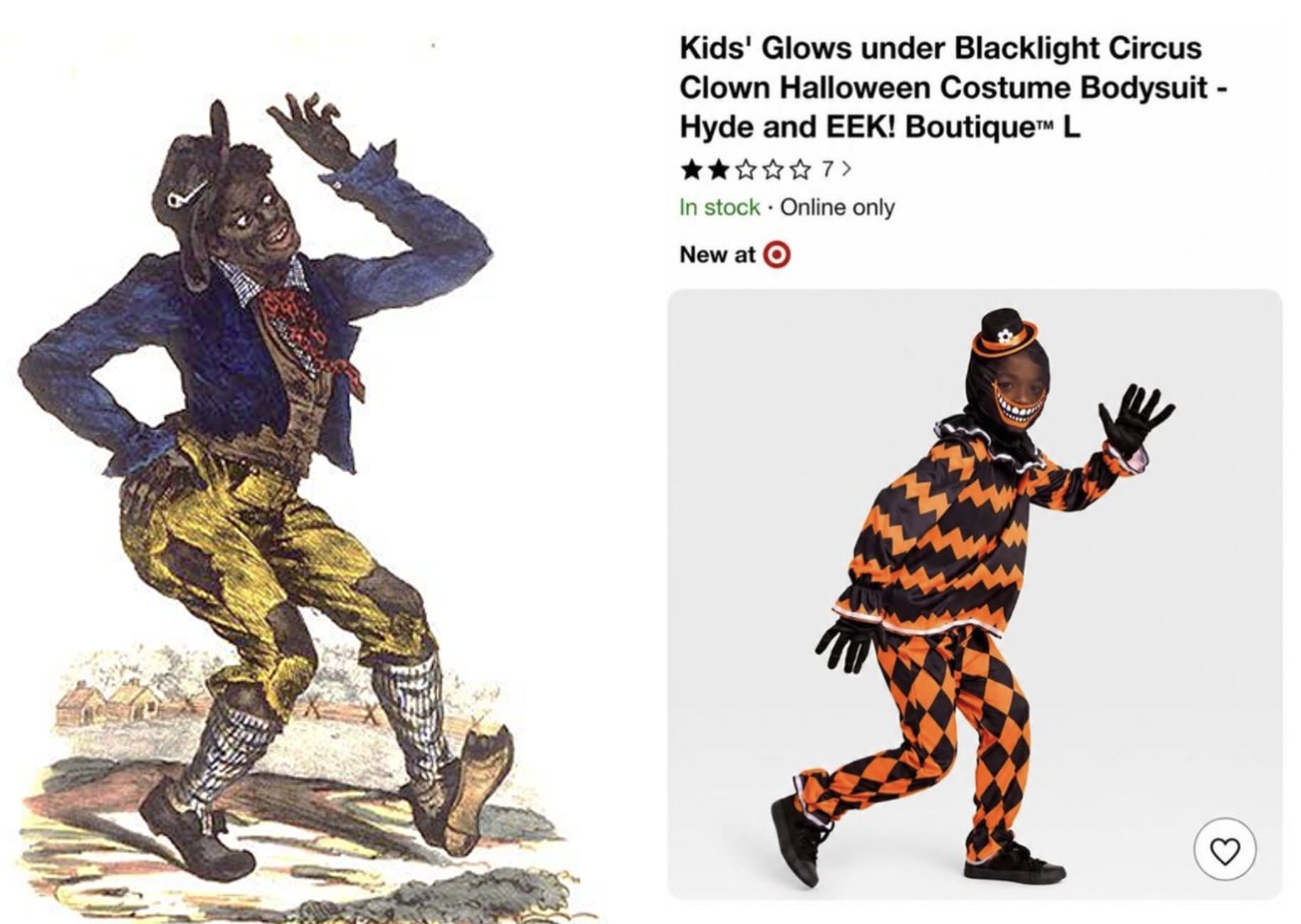
Photo: Emerald Book Image
On August 24, 2026, Target issued a formal apology and pulled a children's Halloween costume from its shelves. The product, a "Kids' Glows Under Blacklight Circus Clown Halloween Costume Bodysuit," featured a stark black face mask with an exaggerated, oversized white grin, paired with black gloves. In promotional images, a young Black child modeled the outfit, striking a theatrical pose that critics immediately identified as a direct echo of 19th-century minstrel show caricatures. The backlash was swift and severe, but the most damning revelation wasn't just the product's existence—it was the fact that an entire pipeline of designers, merchandisers, photographers, and executives saw the final image and approved it without a single person raising a red flag.
The incident has forced a difficult conversation about historical literacy in corporate America. How could a team of highly compensated, college-educated professionals look at an image of a Black child wearing a blackface-style mask and posing like a Jim Crow-era performer and see only a "fun Halloween trick"? The answer is a profound and systemic failure: the erasure of Black history from mainstream education and corporate culture, a problem exacerbated by the recent rollback of diversity initiatives that had been designed to prevent exactly this kind of oversight.
The costume itself was ostensibly designed as a "neon-glow circus clown," part of Target's in-house Hyde and EEK! Boutique brand. The intent was a blacklight trick: the black fabric would disappear in UV light, leaving only the neon orange pattern and the disembodied white smile to "float" in the darkness. However, this focus on the technical gimmick—creating a "blank canvas" for a light show—completely blinded the creative team to the visual reality of their product. In the harsh light of day, the costume was not a clown; it was a glaring visual replica of the dehumanizing imagery used to justify Jim Crow-era segregation and violence.
The Illusion of "Innocence" and the Need for Education
When these scandals occur, the immediate corporate defense is always, "We didn't mean any harm, it was an innocent mistake." This was Target’s position: the costume was "offensive" and "should never have been part of our assortment." But critics argue that at this stage in history, willful ignorance is not innocence—it is negligence. A multi-billion dollar company with the resources to educate its staff or include Black voices in the product pipeline bears a responsibility to avoid the visual tropes of historical trauma. This incident has become a powerful case study in why white America needs far more education on Black history.
The root of the problem lies in what can only be described as a "two Americas" reality. For many Black Americans, the history of minstrelsy—where white performers in blackface mocked and dehumanized Black people, creating caricatures that persisted for generations—is a deeply understood and painful symbol of oppression. This visual language is not ancient history; it is a lived memory of cultural trauma. For many white Americans, that same history is treated as a minor, ancient footnote in a textbook, if it is taught at all. Because it is not part of their daily reality or family history, it simply does not register. Standard U.S. history curricula often condense Black history into a few isolated topics, such as slavery and the 1960s Civil Rights Movement, leaving major gaps regarding the century of Jim Crow cultural propaganda and minstrelsy that followed.
A Pattern of Ignorance Across Industries
Target is far from the first company to display this exact brand of glaring ignorance. In recent years, Gucci faced a massive backlash for a $890 black balaclava sweater with a pull-up neck featuring giant, oversized red lips. H&M was forced to apologize after featuring a Black child model wearing a hoodie that read "Coolest Monkey in the Jungle." Prada had to stop selling "Pradamalia" keychains that directly mirrored classic, big-lipped Sambo caricatures. In every single case, the excuse was the same: "We didn't know."
The public is tired of hearing that excuse. It highlights a fundamental flaw in the American education system and corporate culture: a college degree or an Ivy League pedigree does not automatically mean a person possesses cultural literacy or historical empathy. These are not entry-level employees; they are highly compensated executives holding advanced degrees in business and design who graduated without ever having to learn the deep-seated visual triggers of anti-Black racism. A homogenous group of leaders can look identical on paper—holding the same prestigious degrees—but if they all share the same racial and cultural blind spots, their collective "higher education" won't save them from approving a glaringly offensive product.
The Escalating Crisis: How Book Bans Worsen the Problem
The situation is compounded by a growing crisis in American education: the coordinated effort to restrict and ban books. This connection between educational limits and corporate blind spots is a central theme in the modern conversation about systemic racism. Civil rights leaders and organizations like PEN America view the surge in book challenges as a direct threat to cultural literacy, arguing that these restrictions will actively ensure that the kind of cultural ignorance seen in the Target incident not only persists but worsens.
Data from the American Library Association (ALA) shows that approximately 40% of challenged or banned titles feature protagonists of color or directly address issues of race and racism. By removing biographies of Black icons, historical accounts of slavery, and literature detailing the Jim Crow era, these actions are effectively removing the very educational tools that could prevent future generations from repeating the same mistakes. The outcome is clear: future graduates will enter the corporate world with even fewer tools to recognize racial stereotypes, ensuring that "cultural blind spots" expand rather than shrink.
The restriction of educational materials has evolved into a highly coordinated legal and political movement driven largely by state-level legislation. States like Florida, Texas, Iowa, and Tennessee have passed laws penalizing schools and public libraries for carrying what they define as "divisive concepts" or age-inappropriate material. However, the chilling effect of these laws is even more widespread. Up to 97% of recent book removals were not explicitly ordered by a judge or a law; instead, school boards and librarians are proactively removing books out of fear of legal penalties or financial defunding. This widespread self-censorship drastically reduces exposure to Black history in predominantly white school districts.
The incident has also put a spotlight on the dismantling of DEI initiatives. In 2025, Target scaled back several of its corporate diversity, equity, and inclusion programs. Activists and Black business leaders argue that removing these internal oversight committees—the exact "rooms" where culturally aware perspectives can flag stereotypes—created the vacuum that allowed this disaster to occur. When executive leadership teams and internal review boards lack cultural diversity, severe historical blind spots are inevitable. The executives who approved this product were a group of white women and men who, due to systemic educational gaps, simply did not have the knowledge to recognize the harm.
The Target "clown" incident is a stark reminder that the fight for historical awareness is not a matter of political correctness; it is a matter of basic human decency and corporate responsibility. The immediate fallout—the apology, the product pull, and the internal investigations—addresses the symptom. But the underlying disease, a profound and systemic ignorance of Black history, remains a challenge that reaches far beyond a single retailer. As educators and historians are now using this moment to emphasize, the answer lies in embedding this history into our curriculums and our corporate cultures. Because as this case has shown, the cost of ignorance is not just a public relations crisis; it is the continued dehumanization of an entire community.
No Ads. By Us. For Us.
This article was made possible by readers like you. We hope it inspired you to support Emerald Book, so we can continue producing content like this.
We will never show you ads, sell your data, or require a subscription to consume our content. Your gift helps us keep the truth accessible.
Click the Support button to give a gift of any amount today.
Thank you for making this work possible.