

Emerald Pages
◆
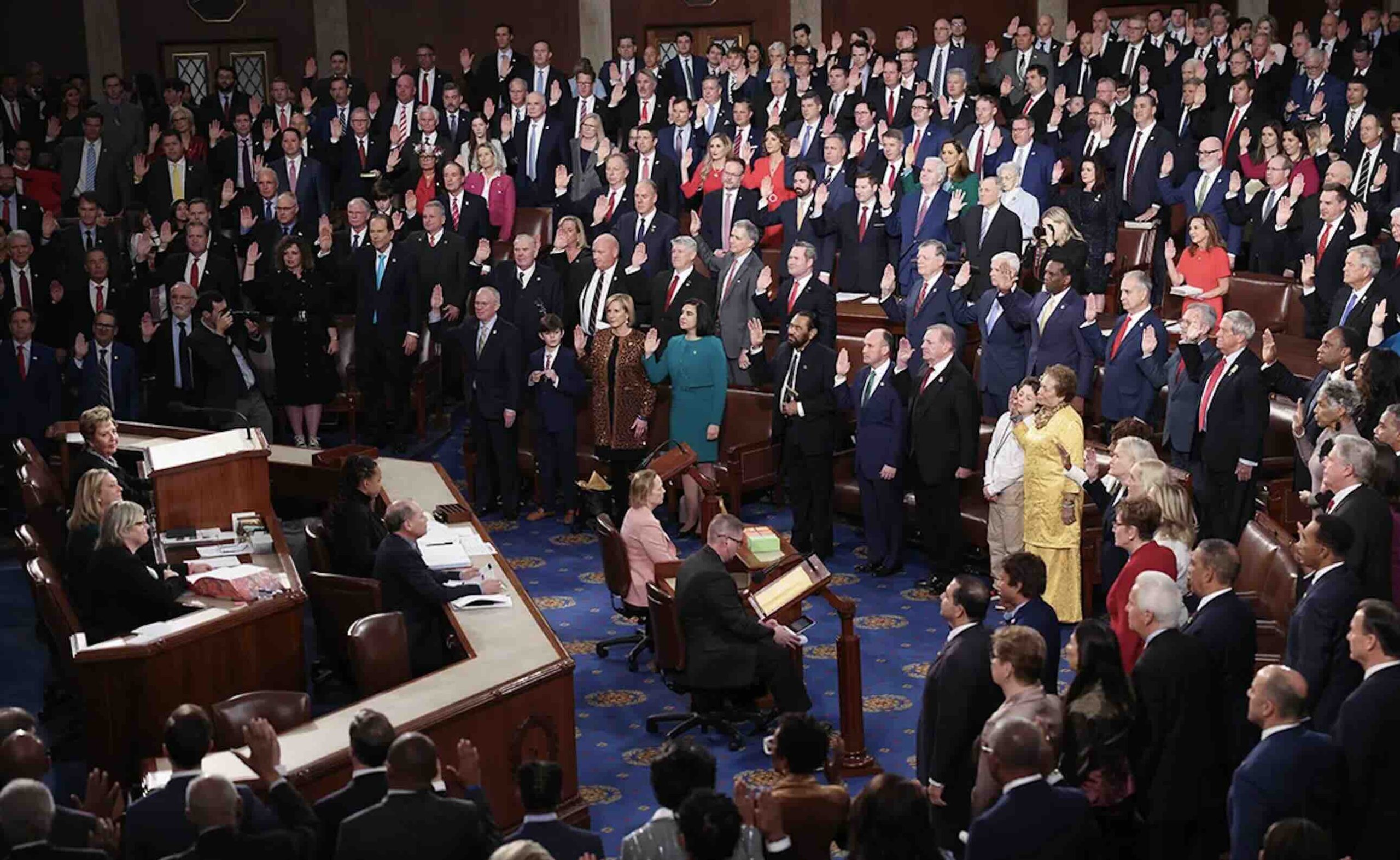
Photo: McNamee | Getty Images
In 2011, during a CNBC interview, Warren Buffett offered a deceptively simple solution to the burgeoning U.S. budget deficit. "I could end the deficit in five minutes," he said. "You just pass a law that says that any time there’s a deficit of more than 3% of GDP, all sitting members of Congress are ineligible for re-election." The quip was a thought experiment, but it cut to the heart of a profound truth: the $40 trillion national debt is not an economic problem, but a structural one.
Today, the U.S. deficit is on track to hit 6.6% of GDP—more than double Buffett's 3% threshold—and the national debt has more than doubled since his 2011 comment. The federal government is spending over $1 trillion annually just on interest payments, a staggering figure that consumes roughly 15% of all federal tax revenue. Yet, in the face of this fiscal fallout, Congress remains paralyzed. The question is not why they can't fix it, but why they would ever want to. The system is designed to reward deficit spending and punish fiscal responsibility, and this perverse incentive structure is the true engine of America's debt crisis.
Under the current rules of the political game, lawmakers face zero personal, professional, or financial penalties for running massive deficits. In fact, the system explicitly penalizes fiscal responsibility. This total lack of accountability is a textbook case of "public choice economics," which posits that politicians act in their own self-interest—maximizing votes and staying in power. The status quo makes overspending the path of least resistance.
Why "No Reason Not To" is the Rule
The structural flaws that drive congressional behavior are deep-seated, far exceeding a simple lack of willpower. They are embedded in the very mechanics of how elections are won and how power is maintained.
- 1. Personal Job Security: Incumbents in the U.S. House of Representatives are re-elected at a rate exceeding 90%, regardless of the national debt. Lawmakers face zero personal accountability for the collective national balance sheet. Buffett’s proposal works because it creates a direct personal threat: fail to manage the budget, and your career is over.
- 2. 'Bring Home the Bacon' Without the Tab: The easiest path to re-election is to promise voters popular new spending and tax cuts simultaneously. Deficit spending allows politicians to do both by pushing the true cost onto future generations. They receive immediate political praise for spending money, while the negative consequences—inflation and debt—take years to manifest, long after they are out of office.
- 3. The Penalty of Compromise: In a hyper-polarized climate, compromise is penalized by a politician's voting base. Passing a balanced budget requires Democrats to accept spending cuts and Republicans to accept tax increases—actions that are politically toxic and can lead to primary defeats. Gridlock, conversely, has no penalty, making it the safest political strategy.
- 4. The "Ghost Credit" of Borrowing: Congress has a unique power: it can buy things today using borrowed money, but it will not be in office when the bill comes due. This completely separates the political pleasure of spending from the political pain of raising taxes to pay for it.
The Doom Loop of Structural Flaws
The incentive problems are compounded by a series of structural design flaws that make the system nearly impossible to reform from within. These are the result of decades of policy choices that have created a self-sustaining fiscal crisis.
The first major structural flaw is mandatory spending autopilot. Over 70% of the federal budget goes toward programs like Social Security, Medicare, and net interest. These costs are largely automatic, determined by demographics and formulas written decades ago, insulating the biggest drivers of the deficit from annual fiscal discipline. The second is gerrymandering and radical primaries. Because most congressional seats are safe for one party, the only consequential election is the primary. This forces candidates to appeal to their extreme bases, making the necessary compromise for fiscal balance politically impossible. Finally, the Federal Reserve's debt monetization acts as a permanent safety valve. Knowing the central bank can buy government bonds and print money, Congress is shielded from the immediate crisis of a market refusal to fund its borrowing, masking the immediate penalties of overborrowing.
The Debt Ceiling: A Farce, Not a Brake
Even the debt ceiling, the supposed fiscal brake, has been stripped of its teeth. Instead of acting as a hard limit on spending, it has devolved into a predictable game of political chicken. Congress can vote for popular spending bills today and then use the debt ceiling vote a year later to blame the other party for the resulting debt. The Treasury Department can engage in "extraordinary measures"—accounting maneuvers that buy months of time—removing any sense of urgency. The ultimate penalty for a debt ceiling crisis—a credit downgrade that spikes interest rates for everyday Americans—does not touch the personal job security or bank accounts of the politicians who caused the crisis. This brings us directly back to Buffett's original point: until the penalty for a fiscal crisis impacts a politician's own career, the cycle will never stop.
In the end, the situation is grimly logical. For a member of Congress, the rational choice is to borrow. The rewards for spending are immediate and concentrated; the costs of debt are delayed and diffuse. The path to fiscal responsibility is paved with political landmines, while the path to re-election is paved with the promises of a future that someone else will have to pay for. Until the fundamental incentives of the system are rewired—perhaps by an idea as radical as Buffett's 3% rule—the U.S. will continue to hurtle toward a fiscal cliff, with a Congress that is structurally incapable of hitting the brakes.
No Ads. By Us. For Us.
This article was made possible by readers like you. We hope it inspired you to support Emerald Book, so we can continue producing content like this.
We will never show you ads, sell your data, or require a subscription to consume our content. Your gift helps us keep the truth accessible.
Click the Support button to give a gift of any amount today.
Thank you for making this work possible.