

Emerald Pages
◆
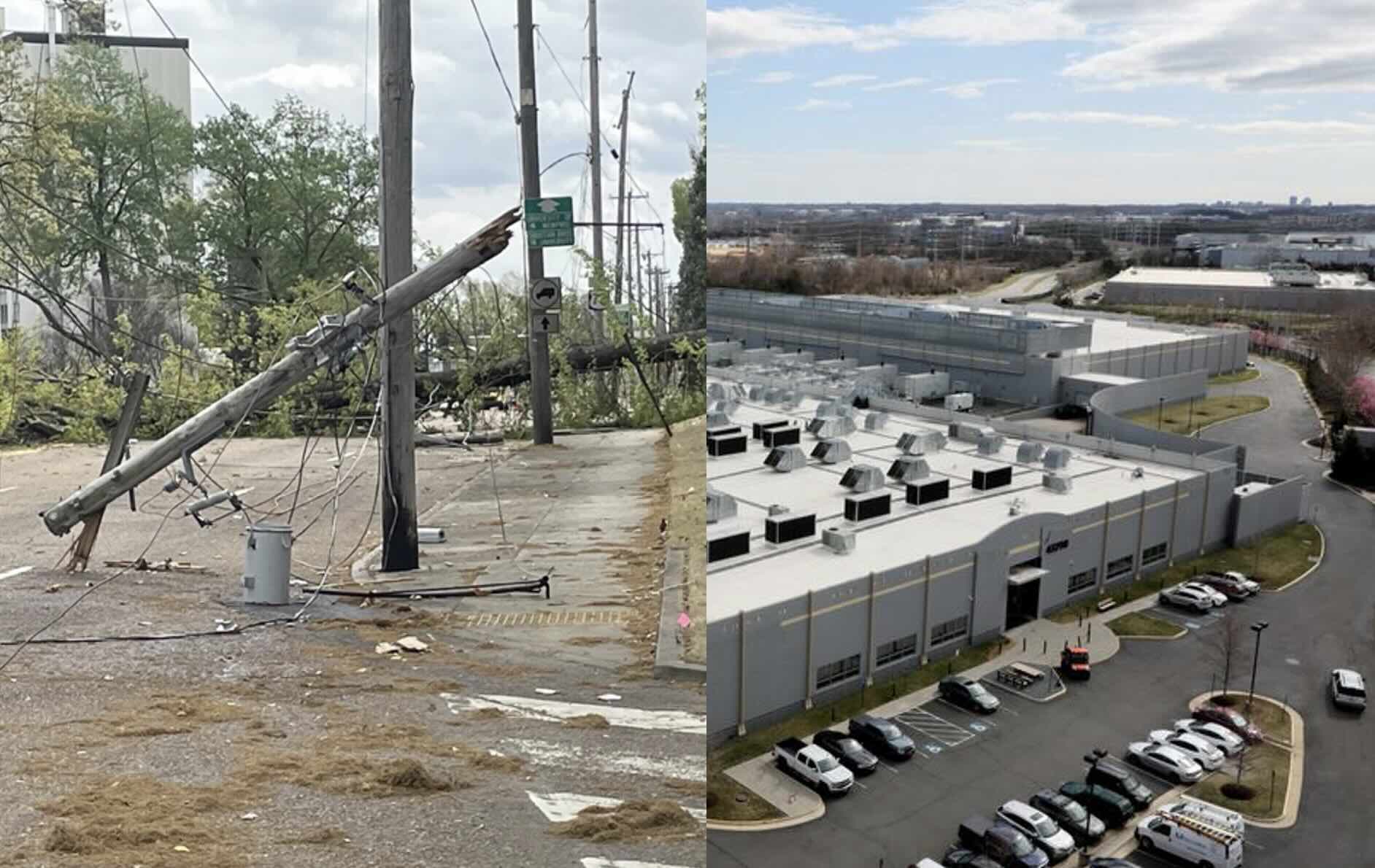
Photo: Emerald Book Image
T he image is stark and infuriatingly simple. On one side of Memphis, the "Colossus" supercomputer campus of Elon Musk's SpaceXAI burns through staggering amounts of electricity, its servers humming without a flicker, processing data for an artificial intelligence empire. Just a few miles away, over 35,000 residents remain in the dark. Their refrigerators are warming, their medical devices are silent, and their patience is exhausted, all following a severe storm that ripped through the city on Saturday evening.
The immediate trigger was a powerful "bow echo" storm system that brought destructive straight-line winds exceeding 70 mph. The storm toppled massive trees, snapped wooden utility poles, and knocked out power to 140,000 customers at its peak. While Memphis Light, Gas and Water (MLGW) crews have successfully restored power to over 100,000 residents, officials warn that full restoration for many on side streets could take until Thursday. Schools have been canceled. A water conservation advisory is in place. Residents are throwing away hundreds of dollars in spoiled food.
Yet, as the city struggles, the SpaceXAI data center operates as if the storm never happened. This is not a miracle of engineering or a testament to the resilience of private enterprise. It is a glaring symbol of a systemic failure that has been decades in the making. The question is not one of energy shortage—power plants are still generating electricity—but of priority, capital, and a deeply inequitable infrastructure designed to protect the powerful while leaving the public to fend for itself.
A Tale of Two Grids: The Bypass vs. The Burden
The explanation for this jarring disparity is not complex, but it is damning. Elon Musk’s data center has power because it was engineered from day one to completely bypass the vulnerable, aging public grid that serves Memphis residents. This was a deliberate choice made to achieve speed and reliability, and it was made possible by immense private wealth.
To understand how this bypass works, you have to look at the physical infrastructure. The Memphis residential grid relies on a vast network of exposed, overhead wires strung between wooden poles. These lines run directly beneath dense, mature tree canopies. When a storm hits, falling trees and limbs physically smash these wires and poles, cutting off power to hundreds of homes at once. The grid is old, and burying these lines—a solution that would virtually eliminate storm-related outages—is estimated to cost billions of dollars. That is a price tag that public utilities and local governments have historically been unable or unwilling to pay.
The SpaceXAI campus, by contrast, is a private power island built on top of the city. It does not rely on those vulnerable neighborhood lines. Instead, it utilizes a multi-layered system:
- On-Site Generation (The Microgrid): The facility installed a massive network of 69 mobile methane and natural gas-burning turbines on its property. These generators function as a private power plant, creating electricity right at the source. Because the power is generated on-site and sent directly into the servers via buried, heavily armored conduits, a tree falling on a neighborhood street three miles away has zero physical impact on the facility.
- Tesla Megapack Batteries: Supercomputers cannot tolerate even a millisecond of a power flicker. To prevent data corruption, the campus installed rows of industrial-scale Tesla Megapack batteries. These batteries sit between the power sources and the computers, acting as a massive shock absorber that instantly smooths out any grid instability.
- Transmission Line Tapping: For the portion of electricity the data center does draw from the public sector, it does not connect to the local distribution grid (the wooden poles). Instead, it connects directly to the Tennessee Valley Authority's (TVA) high-voltage transmission grid. These are the massive steel towers you see near highways, with wide, aggressively cleared right-of-ways that are kept entirely free of trees. They are virtually immune to localized storm debris.
In essence, Musk built a privatized, upgraded, 21st-century grid for his trillion-dollar venture while Memphis residents—who have paid their taxes and utility bills for decades—are left with a 20th-century public system that has not seen foundational upgrades in a generation. This is not an energy shortage; it is a stark demonstration of how private capital can insulate the powerful from the consequences of a crumbling public system.
Decades of Neglect
This contrast is a very recent development, only coming into existence over the last two years. The vulnerability of the Memphis residential grid has been building for decades. The city relies heavily on aging wooden utility poles and overhead lines. Because a significant portion of the city's power grid is not buried underground, it has remained highly susceptible to falling trees and severe weather for a generation. The money residents pay in utility bills is largely split between purchasing wholesale power from the TVA and funding reactive repairs—paying emergency crews to patch up damage after storms—rather than the multi-billion-dollar proactive project of burying lines or replacing thousands of aging poles at once.
The data center, meanwhile, was built with extreme speed starting in 2024. Because the local utility grid could not immediately supply the massive amount of energy needed for AI processing, Musk's team deployed trucked-in mobile gas turbines and Tesla Megapacks on-site. This "behind-the-meter" solution allowed the facility to achieve massive power capacity in months, completely bypassing the multi-year public infrastructure queue that local municipal projects must grind through.
The result is that by the time the Colossus 2 expansion scaled up in late 2025 and 2026, the facility was completely insulated from the traditional municipal grid. Memphis residents are bound to an older public distribution grid that takes days to physically piece back together after a storm; the data center operates on a highly compact, newly engineered, self-contained energy campus.
A Pattern of Systemic Inequity and Environmental Racism
This situation in Memphis is not an isolated incident. It echoes the prolonged grid failures in Gary, Indiana, where a majority-Black, working-class community has been without power for nearly two weeks following an August 11 storm. Civil rights leaders, including Bernice King, have pointed out that Black and low-income communities are systemically expected to "absorb the loss" and endure conditions that wealthier neighborhoods would find completely intolerable.
- The Demographics: Memphis is a 62% Black city, and Gary is 76% Black. Both are working-class communities with high poverty rates.
- The Outage Durations: While wealthier surrounding suburbs with modernized, buried lines have power restored quickly, these communities are left in "survival mode" for days or weeks.
- The Cause: In Indiana, a class-action lawsuit was just filed against the local utility company, NIPSCO, alleging they failed to proactively trim trees and vegetation around power lines, which directly caused catastrophic pole failures. Indiana Governor Mike Braun launched a formal state investigation, calling out the utility for taking ratepayers' money while failing to prepare its system.
The absurdity is compounded by the environmental injustice of the SpaceXAI data center. To run its private microgrid, the facility operates dozens of high-emission gas turbines. These turbines are located right next to historically marginalized, majority-Black communities. Local residents are forced to breathe in the resulting air pollution—the NAACP has sued over this—while the tech hub remains fully illuminated during the crisis. The community is forced to live with the environmental consequences of a massive tech hub, yet when a climate disaster strikes, the tech hub is insulated while the surrounding neighborhood sits in the dark.
Speed vs. Public Good
The speed contrast has sparked massive political anger across Tennessee. Memphis City Council members and local community advocates have pointed out that the city's laws and infrastructure plans were completely unprepared for a tech billionaire to arrive and absorb massive local resources.
Because the data center was built using a "move fast and break things" corporate philosophy, it achieved cutting-edge power reliability immediately—all while heavily polluting the air of neighboring communities. Meanwhile, the long-standing residents next door continue to weather severe storms with the same fragile, overhead wires the city has relied on for generations. The Memphis City Council is now debating a temporary moratorium on new data centers to evaluate how these massive facilities impact local resources and community equity.
No Ads. By Us. For Us.
This article was made possible by readers like you. We hope it inspired you to support Emerald Book, so we can continue producing content like this.
We will never show you ads, sell your data, or require a subscription to consume our content. Your gift helps us keep the truth accessible.
Click the Support button to give a gift of any amount today.
Thank you for making this work possible.